伊基奥仑赛

Search documents
创新药保障“最后一公里”待解
2 1 Shi Ji Jing Ji Bao Dao· 2025-12-15 23:04
Core Insights - The release of the new National Medical Insurance Directory and the first Commercial Health Insurance Innovative Drug Directory marks a significant shift in China's healthcare system towards a dual-driven model of "basic medical insurance + commercial health insurance" [1][2] Group 1: Policy Changes - The new directories will be implemented on January 1, 2026, and represent a milestone in establishing a multi-tiered medical insurance system in China [2] - The Commercial Health Insurance Innovative Drug Directory provides a high-quality "drug pool" for insurance companies, reducing the barriers for product development and information asymmetry [2][3] - The basic medical insurance directory has added 114 new drugs, achieving a negotiation success rate of 88.19%, the highest in seven years, enhancing drug coverage in critical areas [3][4] Group 2: Drug Inclusion and Coverage - The first Commercial Health Insurance Innovative Drug Directory includes 19 drugs, focusing on high-value innovative treatments that exceed basic insurance coverage, such as CAR-T therapies and Alzheimer's drugs [4][5] - Five CAR-T therapies have been included in the directory, representing over half of the currently available products in China, with prices exceeding 1 million yuan for most [5][6] - The directory also includes treatments for rare diseases, demonstrating a commitment to vulnerable populations [6] Group 3: Market Dynamics - The dual-directory system is designed to address the structural challenges of high-value innovative drugs, allowing commercial insurance to cover these costs before they are potentially included in basic insurance [7][8] - The introduction of commercial insurance funding is expected to enhance the clinical drug level and overall R&D return rates for leading innovative pharmaceutical companies [6][11] Group 4: Consumer Impact - The new payment structure allows patients to access innovative therapies without facing the dilemma of full out-of-pocket costs, as commercial insurance will provide support [8][9] - The expansion of special drug lists in commercial insurance products is becoming a trend, with many regions updating their offerings to include high-value cancer and rare disease medications [9][10] - However, challenges remain in ensuring that hospitals stock these high-cost drugs and that the claims process is efficient and transparent [10]
创新药保障“最后一公里”待解:买得到、赔得快、保得起
2 1 Shi Ji Jing Ji Bao Dao· 2025-12-15 10:47
Core Insights - The release of the 2025 National Medical Insurance Directory and the first Commercial Health Insurance Innovative Drug Directory marks a significant milestone in China's healthcare payment system, transitioning to a dual-driven model of "basic medical insurance + commercial health insurance" [1][3][10] Group 1: Policy Changes - The new policies clarify the payment boundaries between government and market, with the Commercial Health Insurance Innovative Drug Directory focusing on high-value innovative drugs that exceed the basic medical insurance coverage [3][4] - The 2025 Medical Insurance Directory adds 114 new drugs, achieving a negotiation success rate of 88.19%, the highest in seven years, with a total of 3,253 drugs now covered [3][4] Group 2: Drug Inclusion - The first Commercial Health Insurance Innovative Drug Directory includes 19 drugs, such as CAR-T therapies and new Alzheimer's medications, which are typically expensive and risky, thus not included in basic medical insurance [4][5] - Five CAR-T therapies have been included in the directory, representing over half of the currently available products in China, with prices exceeding 1 million yuan for most [5][6] Group 3: Market Dynamics - The dual-track system addresses the affordability of high-value drugs for patients while providing a sustainable return mechanism for pharmaceutical companies, thus driving high-quality development in China's innovative drug industry [4][6] - The introduction of these directories is expected to enhance clinical medication levels and overall R&D returns, particularly benefiting leading innovative pharmaceutical companies with extensive pipelines [6][7] Group 4: Consumer Impact - The integration of the two directories allows for a complementary relationship, where commercial insurance can cover innovative drugs first before they are potentially included in basic medical insurance [7][8] - The "gradient payment" mechanism enables patients to access the latest therapies without facing the dilemma of full out-of-pocket expenses, as commercial insurance will provide payment support [8][10] Group 5: Implementation Challenges - There are practical challenges in ensuring that hospitals stock the newly included high-priced drugs, as they may face financial disincentives to do so [10][11] - The claims process for commercial insurance may still require patients to pay upfront, which can be a significant burden for high-cost innovative drugs [10][11] - The potential for increased claims rates due to the inclusion of high-risk drugs may lead to higher insurance premiums or stricter underwriting standards in the future [12]


新版医保明年1月起执行:114种药品杀入目录,百万抗癌药破冰
Guan Cha Zhe Wang· 2025-12-13 04:01
Core Insights - The 2025 National Medical Insurance Drug List has been officially released, adding 114 new drugs, including 50 innovative Class 1 drugs, with a negotiation success rate of 88%, the highest in seven years [1][3] - The first version of the commercial insurance innovative drug list has been introduced, featuring 5 CAR-T cell therapies and 19 high-priced innovative drugs, marking a significant expansion in coverage [1][5] - The adjustment reflects a strategic upgrade in China's medical insurance from "basic coverage" to "basic + high-end coverage," addressing the demand for accessible and affordable innovative drugs [1][9] Drug Additions and Market Impact - The new drug list includes 114 drugs, with 44% being Class 1 innovative drugs, and a total of 3,253 drugs now covered under the insurance [3] - Notable winners include Heng Rui Pharma, which secured 20 new drug approvals, and Eli Lilly, whose drug Tirzepatide has entered the Chinese market, benefiting 140 million diabetes patients [3][4] - The inclusion of CAR-T therapies in the commercial insurance list allows for reimbursement of high-cost treatments, which were previously inaccessible to many patients [5][7] Innovations in Treatment - The new list includes significant advancements in treatments for Alzheimer's disease, with two new drugs targeting amyloid beta accumulation, providing options for over 10 million patients in China [7] - The addition of 13 rare disease drugs fills coverage gaps in four rare disease areas, expanding the total number of rare disease drugs covered to approximately 100 [8] - The adjustment also emphasizes pediatric medications, with a separate review channel for children's formulations, indicating a positive shift in addressing children's healthcare needs [9] Strategic Implications - The 2025 adjustment signifies a shift towards a dual-track medical payment system in China, combining basic medical insurance with commercial insurance to meet both fundamental and advanced healthcare needs [9] - The rapid inclusion of innovative drugs into the insurance system reflects a decade of progress in China's pharmaceutical landscape, transitioning from rare domestic innovations to a robust pipeline of new therapies [9]



国产CAR-T涌向实体瘤:管线与市场潜力解码
Hu Xiu· 2025-08-06 09:14
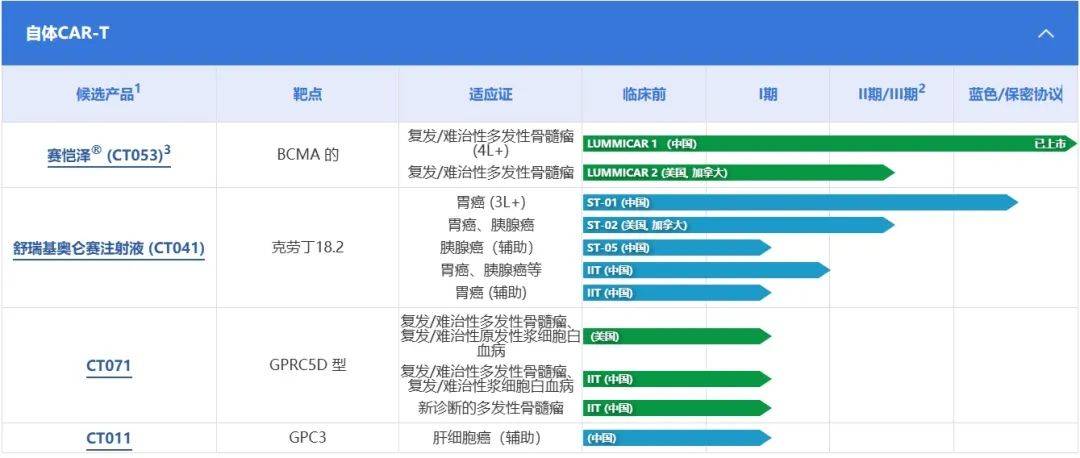
Core Insights - The article emphasizes the need to resolve the contradiction between the high costs of CAR-T therapy and the payment system, which relies on both technological cost reduction and the expansion of research pipelines to access a broader patient market [1] - The focus is on the potential market growth in the solid tumor sector, which could significantly alter the CAR-T market landscape [1] Industry Trends - The global CAR-T research initially focused on hematological tumors, with existing products targeting CD19 and BCMA, covering conditions like non-Hodgkin lymphoma (NHL) and multiple myeloma (MM). The research is now expanding towards solid tumors, with the proportion of clinical trials for solid tumors expected to rise from 15% in 2020 to 30% by 2025 [2][3] - The incidence of solid tumors is significantly higher than that of hematological cancers, indicating a potential exponential growth in the patient population. This growth can help distribute costs through economies of scale and enhance market competitiveness [2] Patient Population Insights - In China, the annual incidence rates for NHL and MM are 6.97 and 1-2 per 100,000 respectively, with approximately 40,000 new cases of DLBCL and 14,000-28,000 new cases of MM each year [2] - For solid tumors, the annual incidence of gastric cancer is between 10-20 per 100,000, with 140,000-280,000 new cases annually, and liver cancer has a similar incidence rate with a potential treatable population of 98,000-196,000 patients per year [3] Technical Challenges - Solid tumors present unique challenges for CAR-T therapies, including tumor microenvironment suppression, antigen heterogeneity, infiltration barriers, and T cell exhaustion [4] Domestic Trends - In China, all six approved CAR-T therapies target hematological tumors, but the proportion of clinical trials for solid tumors is expected to reach 42% by 2024. Key drivers for this shift include technological advancements, policy support, and a large patient base for solid tumors [5] Company Pipeline Analysis - Companies are focusing on expanding their CAR-T pipelines to include solid tumors, with several firms reporting promising clinical trial results and plans for future submissions [6][10][15][20][23][35] - For instance, Kexing Biopharm's Claudin18.2 CAR-T for gastric cancer has shown a 22% objective response rate in Phase II trials, while another company, Yuanqi Bio, reported a 56.5% response rate for GPC3 CAR-T in liver cancer [5][10] Market Potential - The potential market for CAR-T therapies in solid tumors is vast, with estimates suggesting that the annual patient population for gastric and liver cancers alone could reach between 126,000 and 280,000, far exceeding the total for hematological cancers [3][5]
国产创新药突围:谁能先把CAR-T成本砍半?
Hu Xiu· 2025-08-03 03:24
Core Insights - The article discusses the transformative impact of CAR-T therapy in cancer treatment, highlighting its shift from a laboratory concept to a viable treatment option for patients with relapsed/refractory tumors [1] - The Chinese biopharmaceutical sector, particularly in cell therapy, is gaining significant attention from both domestic and international investors, with over $5 billion in business development (BD) transactions in 2024 alone [2] - The analysis aims to decode the investment logic in innovative drugs, focusing on the challenges and opportunities within the cell therapy landscape, particularly CAR-T [3] Industry Overview - The CAR-T market is characterized by a critical contradiction: while the therapy shows significant efficacy, its high costs (often exceeding 1 million yuan per treatment) limit patient access [5][6] - The demand for CAR-T therapy is substantial, with approximately 25,000 new cases of multiple myeloma and 60,000 new cases of non-Hodgkin lymphoma annually in China, yet many patients are deterred by the high costs [5] Payment System Challenges - Commercial health insurance currently supports CAR-T therapy, but only 42% of the available plans explicitly cover CAR-T treatments, with reimbursement rates for pre-existing condition patients being particularly low [6] - For widespread adoption, the cost of CAR-T treatments must drop below 300,000 yuan, which would allow for basic medical insurance coverage [6] Cost Reduction Strategies - The high costs of CAR-T therapy stem from its personalized and high-tech production model, but technological advancements are expected to reduce these costs significantly [9][10] - Key factors influencing cost reduction include: 1. **Vector Technology**: Transitioning from viral to non-viral vectors can reduce costs by 30%-50% [9] 2. **Autologous vs. Allogeneic**: Allogeneic CAR-T can lower costs to one-third or half of autologous CAR-T by enabling batch production [10] 3. **Production Processes**: Automation can reduce production time from over 14 days to about 30 hours, cutting costs by over 40% [11] Investment Analysis Framework - The analysis will evaluate nine CAR-T companies based on several dimensions, including: 1. **Technology Iteration and Cost Control**: Assessing the core technology routes and potential for cost reduction [13] 2. **Market Potential**: Estimating the patient population for various indications [14] 3. **Economic Viability and Market Access**: Identifying which companies are likely to secure market access based on cost control and pipeline potential [15] 4. **International Expansion Opportunities**: Evaluating the potential for products in international markets [16] 5. **Commercialization Capabilities**: Analyzing sales figures, production capacity, and investment relationships [17] Company-Specific Insights - The analysis focuses on nine leading CAR-T companies in China, which are at the forefront of CAR-T development, including those with approved products and those in critical clinical stages [18] - Each company's technology route and cost assessment will be detailed, highlighting their strategies for cost reduction and market positioning [26][30] Future Directions - The article anticipates that the adoption of allogeneic CAR-T technology will significantly reduce costs in the mid-term (2025-2028) and further advancements in non-viral vector technology will continue to drive down costs in the long term [24][25]