真实数据资产(RDA)

Search documents
双城记:基于aβγδ模型的上海与香港经济动力结构比较及未来展望
Jing Ji Guan Cha Wang· 2026-02-28 02:45
Core Insights - The article introduces the "aβγδ economic power structure" model to analyze the economic dynamics of Shanghai and Hong Kong, focusing on their unique growth drivers and innovation paths in the context of digital economy [1] Group 1: α - Development Power Structure - Shanghai operates as a "scale application engine" driven by national strategy, characterized by comprehensive factor aggregation and large-scale application [3] - Hong Kong functions as a "high-value hub engine," emphasizing capital and information density, high-end services, and networked nodes [5] Group 2: β - Operational Power Structure - Shanghai's operational structure reflects a strategic collaborative governance model, integrating top-down planning with market vitality [9] - Hong Kong's operational structure is based on a rule-of-law market autonomy, prioritizing market mechanisms and transparency [10] Group 3: γ - Innovation Power Structure - Shanghai's innovation is centered around the Real Data Asset (RDA) paradigm, focusing on the integration of operational data with physical assets [14] - Hong Kong is developing a Real World Asset (RWA) framework, utilizing blockchain to enhance the liquidity and efficiency of traditional assets [17] Group 4: δ - Coupling Power and Future Trends - The future development of Shanghai and Hong Kong will be shaped by national strategies, presenting a scenario of both competition and complementarity [18] - The interrelationship between RDA and RWA will serve as a critical coupling point, facilitating a complete value cycle in the digital economy [19]
内蒙古外贸行广州启动 全球并购基金与中关村支持产业赋能
Sou Hu Cai Jing· 2025-12-18 18:15
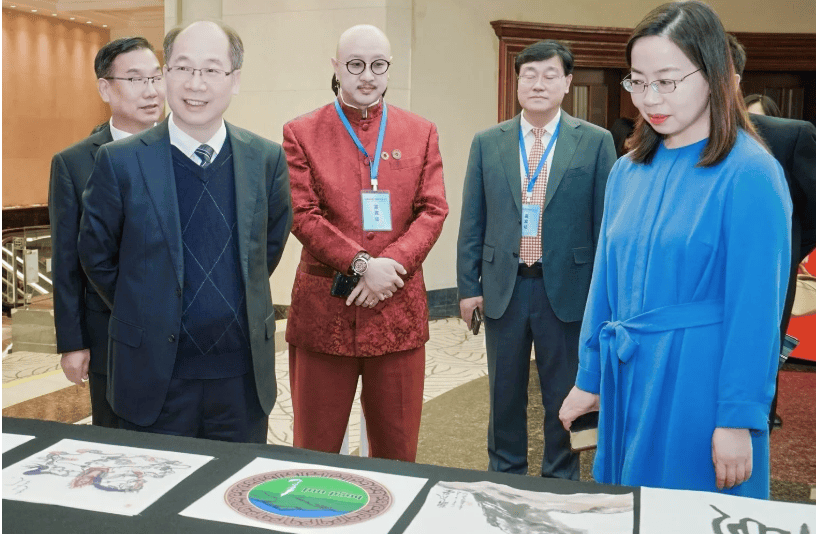
Core Viewpoint - The event held in Guangzhou on December 17 aimed to promote trade and economic cooperation between Inner Mongolia and international markets, showcasing Inner Mongolia's industrial clusters and development opportunities [1][3]. Group 1: Event Overview - The trade and economic negotiation event was organized by the China Council for the Promotion of International Trade and the Inner Mongolia government, with participation from representatives of various countries including the USA, Singapore, Spain, and others [1]. - The event gathered hundreds of political and business representatives to discuss collaboration and opportunities for open trade [1][3]. Group 2: Strategic Agreements - A tripartite agreement was signed between the Global M&A Fund, Zhongguancun Development Investment Co., and Inner Mongolia Tianyi International Cultural Trade Group to establish a long-term strategic partnership focused on industrial collaboration between Guangdong-Hong Kong-Macao Greater Bay Area and Inner Mongolia [4][6]. - The agreement aims to create a "Guangdong-Mongolia Industrial Collaborative Innovation Center" to attract enterprises from the Greater Bay Area to set up regional headquarters and R&D centers in Inner Mongolia [6]. Group 3: Empowering Local Enterprises - Regular events such as "Inner Mongolia Quality Products Promotion Conference" and "Supply Chain Matching Meetings" will be organized to connect Inner Mongolia enterprises with buyers and large corporations in the Greater Bay Area [7]. - The collaboration will provide comprehensive capital services for high-quality Inner Mongolia enterprises planning financing, mergers, or listings [7]. Group 4: Innovation and Productivity - The partnership will facilitate the establishment of "Guangdong-Mongolia Collaborative Innovation Industrial Parks" to support the production and regional business of Greater Bay Area enterprises in Inner Mongolia [8]. - A "New Quality Productivity Empowerment Plan" will be implemented to enhance the technological innovation capabilities and market competitiveness of local enterprises through expert consultations and training [8]. Group 5: Investment Fund Initiatives - The three parties are exploring the establishment of a market-oriented investment fund focused on "Guangdong-Mongolia Industrial Collaboration," targeting high-growth local enterprises in Inner Mongolia and modern service projects [9]. Group 6: Support for Cultural and Tourism Industries - The Global M&A Fund's chairman emphasized the importance of capital and mechanisms in commercializing and internationalizing Inner Mongolia's cultural and tourism resources, aligning with the "14th Five-Year Plan" to develop new quality productivity [11]. - The use of Real Data Assets (RDA) through blockchain technology is proposed to transform resources into marketable assets, providing new financing pathways for cultural tourism projects [13]. Group 7: Broader Collaborative Actions - Three major collaborative actions were proposed, including an "Asset Going Global Plan" to connect Inner Mongolia's quality cultural tourism projects with global capital, a "Platform Co-construction Action" to establish a promotion center in Hong Kong, and a "Fund Interaction Action" to support the upgrade and internationalization of Inner Mongolia's cultural tourism and agricultural industries [15].


大成研究 | 王杰等:上市公司数字资本全球化:RDA与RWA的“A+H”模式
Sou Hu Cai Jing· 2025-08-14 01:26
Group 1 - The core concept of Real Data Assets (RDA) and Real World Assets (RWA) represents innovative paths for compliant circulation of domestic data assets and digitization of cross-border assets, forming a "dual-wheel drive" model for corporate digital strategies [3][4] - RDA is defined as data resources legally owned or controlled by enterprises, which are processed in compliance, have clear business scenarios, and can generate economic benefits, forming standardized digital assets through specific institutional registration and encapsulation processes [4][19] - The RDA model emphasizes the integration of data with real-world assets, enhancing the value of data through compliance and market mechanisms, while RWA focuses on the tokenization of various real-world assets for global circulation [16][19] Group 2 - The statistics for listed companies' digital assets in 2024 indicate a growing trend in the recognition and valuation of data assets, reflecting the increasing importance of data in corporate financial statements [5][24] - The process of RDA involves several steps including data resource sorting, quality assessment, compliance checks, and accounting entries, which are crucial for the successful integration of data assets into corporate financial frameworks [8][9][10] - The legal and regulatory framework surrounding data assets is evolving, with various policies and guidelines being issued to standardize the management and valuation of data assets, ensuring compliance and transparency in the market [15][24] Group 3 - RWA is characterized by the tokenization of real-world assets, allowing for the creation of programmable and divisible digital representations of existing assets, which enhances liquidity and democratizes investment opportunities [16][18] - The comparison between RDA and RWA highlights their distinct characteristics, with RDA focusing on data assets within domestic markets and RWA encompassing a broader range of asset types for global trading [19][20] - The advantages of RDA include optimizing financial statements and enhancing corporate competitiveness, while RWA improves asset liquidity and reduces financing costs, thereby broadening funding channels [20][21] Group 4 - The exploration of the "A+H" model suggests that companies can leverage domestic RDA for compliance and asset confirmation while establishing offshore structures to meet international regulatory requirements, facilitating global asset strategies [22][23] - The significance of digital asset realization for listed companies lies in its potential to enhance corporate valuation and optimize financial conditions, while also promoting market development and resource allocation efficiency [24]