现实世界资产代币化(RWA)

Search documents
双城记:基于aβγδ模型的上海与香港经济动力结构比较及未来展望
Jing Ji Guan Cha Wang· 2026-02-28 02:45
Core Insights - The article introduces the "aβγδ economic power structure" model to analyze the economic dynamics of Shanghai and Hong Kong, focusing on their unique growth drivers and innovation paths in the context of digital economy [1] Group 1: α - Development Power Structure - Shanghai operates as a "scale application engine" driven by national strategy, characterized by comprehensive factor aggregation and large-scale application [3] - Hong Kong functions as a "high-value hub engine," emphasizing capital and information density, high-end services, and networked nodes [5] Group 2: β - Operational Power Structure - Shanghai's operational structure reflects a strategic collaborative governance model, integrating top-down planning with market vitality [9] - Hong Kong's operational structure is based on a rule-of-law market autonomy, prioritizing market mechanisms and transparency [10] Group 3: γ - Innovation Power Structure - Shanghai's innovation is centered around the Real Data Asset (RDA) paradigm, focusing on the integration of operational data with physical assets [14] - Hong Kong is developing a Real World Asset (RWA) framework, utilizing blockchain to enhance the liquidity and efficiency of traditional assets [17] Group 4: δ - Coupling Power and Future Trends - The future development of Shanghai and Hong Kong will be shaped by national strategies, presenting a scenario of both competition and complementarity [18] - The interrelationship between RDA and RWA will serve as a critical coupling point, facilitating a complete value cycle in the digital economy [19]
银发42号文的红线、锚点与双轨试验
Jing Ji Guan Cha Bao· 2026-02-10 12:29
Core Viewpoint - The release of Document No. 42 marks a significant regulatory shift in China's approach to digital assets, particularly focusing on the systematic regulation of Real World Asset (RWA) tokenization, coinciding with the launch of interest-bearing digital RMB 2.0 [1][2][3] Regulatory Framework - Document No. 42 clearly defines RWA tokenization as the conversion of asset ownership and income rights into tokens using cryptographic and distributed ledger technologies, expanding regulatory oversight from virtual currency speculation to the entire asset tokenization chain [2][3] - The document prohibits illegal financial activities related to RWA tokenization unless approved by relevant authorities, emphasizing the need for compliance with specific financial infrastructure [3][4] Comparison of Regulatory Approaches - In contrast to mainland China's "principle of prohibition," Hong Kong is accelerating RWA tokenization, with the government encouraging the tokenization of public assets and establishing a regulatory framework for stablecoins [4][5] - The regulatory strategies in mainland China and Hong Kong represent a "dual-track experiment," where mainland focuses on maintaining financial safety while Hong Kong aims to connect with global capital markets through compliance [4][5][6] Market Dynamics and Opportunities - The market is reassessing the viability of RWA tokenization from three dimensions: asset category selection, geographical strategy, and deeper monetary competition logic [7][8] - Standardized financial assets like money market funds and bonds are becoming the mainstream in global tokenization, while non-standard assets face liquidity challenges [7][8] - The regulatory environment is creating a competitive landscape where licensed institutions dominate, leading to a "survivor game" among players who can navigate both mainland and Hong Kong regulations [13][26] Compliance and Risk Management - The regulatory framework emphasizes the importance of compliance with asset ownership, information disclosure, and cross-border accountability, with specific guidelines for the issuance of RWA [19][26] - Key risks include the potential for illegal service provision to mainland entities from abroad, highlighting the need for strict adherence to regulatory requirements [25][26] Conclusion - Document No. 42 establishes clear regulatory boundaries, indicating that while technology can be utilized, it cannot be leveraged for activities resembling currency, securities, or cross-border channels without proper oversight [9][23]
【新华解读】“境内严禁、境外严管” 监管重申防范和处置虚拟货币、现实世界资产代币化等风险
Xin Hua Cai Jing· 2026-02-07 07:20
Core Viewpoint - The joint notification issued by eight Chinese regulatory bodies emphasizes that virtual currencies do not hold the same legal status as fiat currencies and that activities related to virtual currencies are illegal financial activities within China [1][2][4]. Group 1: Virtual Currency Regulation - The notification reiterates the prohibition of virtual currency activities in China, stating that they are illegal financial activities [2][4]. - It specifies that stablecoins linked to fiat currencies, particularly the Chinese yuan, cannot be issued abroad without approval from relevant authorities [4]. - The notification highlights the risks associated with virtual currencies, including cross-border transmission of risks and the potential for illegal fundraising and securities trading [4][7]. Group 2: Real-World Asset Tokenization - The notification defines real-world asset (RWA) tokenization and establishes a regulatory framework that prohibits RWA tokenization activities within China while imposing strict regulations on overseas activities [1][5]. - It emphasizes that any RWA tokenization activities must comply with the principle of "same business, same risk, same rules" and require approval from relevant regulatory bodies [5][6]. - The notification aims to combat illegal financial activities and protect national security and social stability by strictly regulating RWA tokenization [5][7]. Group 3: Enforcement and Compliance - The notification outlines the responsibilities of provincial governments in managing and controlling virtual currency mining activities, reinforcing the ban on such operations [8]. - It calls for strict enforcement against illegal financial activities related to virtual currencies and RWA tokenization, with legal consequences for violations [7][8]. - The notification encourages research into the technological foundations of virtual currencies, such as blockchain, while promoting controlled exploration of digital currency applications in cross-border payments [8].
大成研究 | 王杰等:上市公司数字资本全球化:RDA与RWA的“A+H”模式
Sou Hu Cai Jing· 2025-08-14 01:26
Group 1 - The core concept of Real Data Assets (RDA) and Real World Assets (RWA) represents innovative paths for compliant circulation of domestic data assets and digitization of cross-border assets, forming a "dual-wheel drive" model for corporate digital strategies [3][4] - RDA is defined as data resources legally owned or controlled by enterprises, which are processed in compliance, have clear business scenarios, and can generate economic benefits, forming standardized digital assets through specific institutional registration and encapsulation processes [4][19] - The RDA model emphasizes the integration of data with real-world assets, enhancing the value of data through compliance and market mechanisms, while RWA focuses on the tokenization of various real-world assets for global circulation [16][19] Group 2 - The statistics for listed companies' digital assets in 2024 indicate a growing trend in the recognition and valuation of data assets, reflecting the increasing importance of data in corporate financial statements [5][24] - The process of RDA involves several steps including data resource sorting, quality assessment, compliance checks, and accounting entries, which are crucial for the successful integration of data assets into corporate financial frameworks [8][9][10] - The legal and regulatory framework surrounding data assets is evolving, with various policies and guidelines being issued to standardize the management and valuation of data assets, ensuring compliance and transparency in the market [15][24] Group 3 - RWA is characterized by the tokenization of real-world assets, allowing for the creation of programmable and divisible digital representations of existing assets, which enhances liquidity and democratizes investment opportunities [16][18] - The comparison between RDA and RWA highlights their distinct characteristics, with RDA focusing on data assets within domestic markets and RWA encompassing a broader range of asset types for global trading [19][20] - The advantages of RDA include optimizing financial statements and enhancing corporate competitiveness, while RWA improves asset liquidity and reduces financing costs, thereby broadening funding channels [20][21] Group 4 - The exploration of the "A+H" model suggests that companies can leverage domestic RDA for compliance and asset confirmation while establishing offshore structures to meet international regulatory requirements, facilitating global asset strategies [22][23] - The significance of digital asset realization for listed companies lies in its potential to enhance corporate valuation and optimize financial conditions, while also promoting market development and resource allocation efficiency [24]

外媒:技术生态是香港超越新加坡 成为“亚洲第一”的关键
Yang Guang Wang· 2025-07-12 07:33
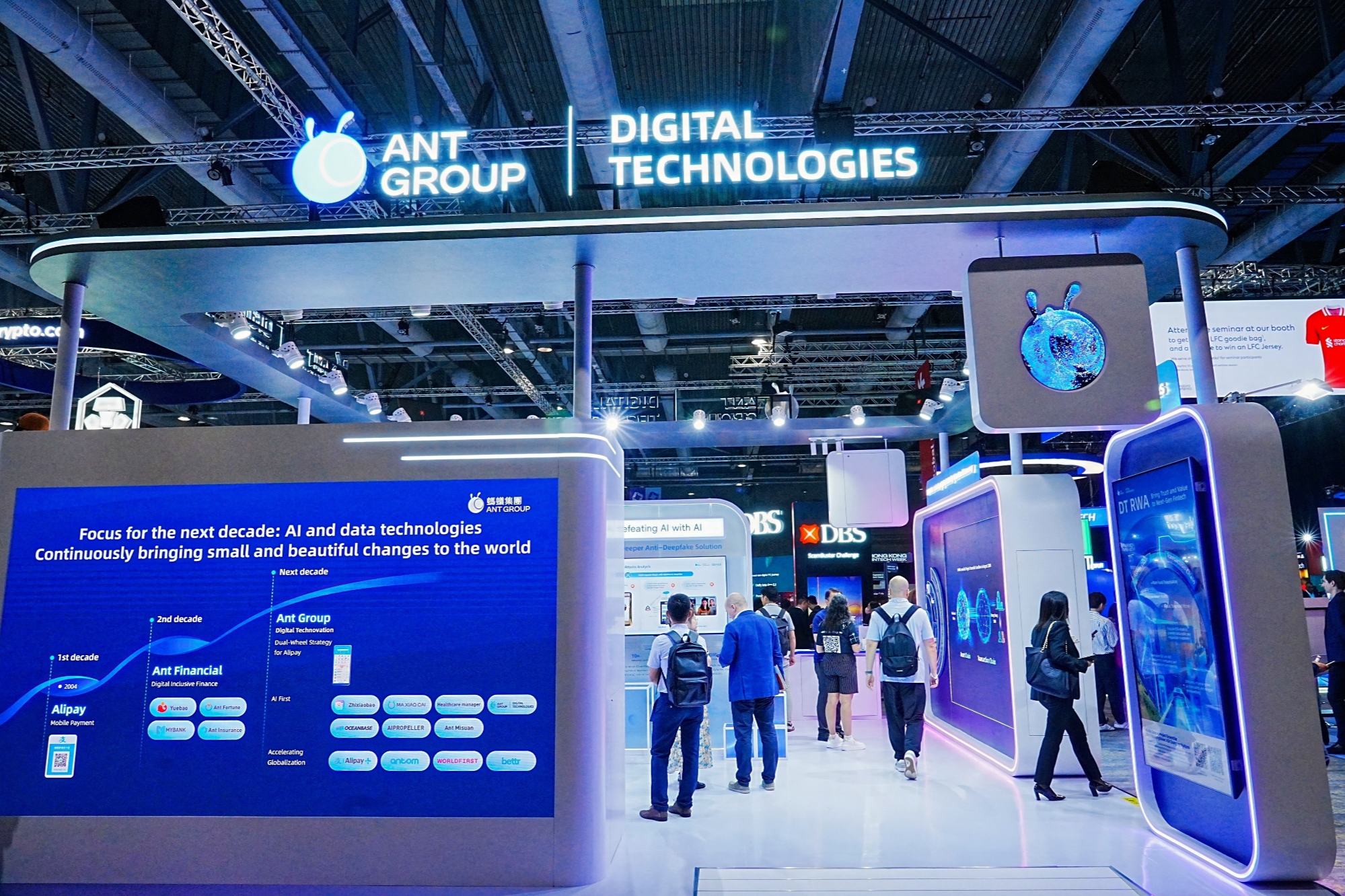
Core Insights - The article highlights Hong Kong's ambition to become a "global digital asset hub" amid the ongoing digital transformation of the global economy [1][5] - The launch of the "Hong Kong Digital Asset Development Policy Declaration 2.0" signifies a strategic upgrade from establishing a regulatory framework to enhancing the ecosystem and expanding applications [1][3] Group 1: Hong Kong's Financial Position - Hong Kong has surpassed Singapore with a score of 760, solidifying its position as the leading financial center in Asia, with a comprehensive score increase of 11 points [3] - The financial sector contributes nearly a quarter to Hong Kong's GDP, with around 270,000 financial professionals [3] - By mid-2025, Hong Kong's stock exchange is projected to lead global fundraising efforts with a scale of $14 billion [3] Group 2: Technological Development and Innovation - Hong Kong is focusing on building a secure, compliant, and efficient technological foundation to support digital asset innovation, including core technologies like blockchain infrastructure and privacy computing [4] - The city is attracting global resources and over 80 tech companies, along with more than 300 Web3 firms, to enhance its technological ecosystem [4] - Ant Group's Ant Financial has opened its core technologies to global developers, significantly lowering innovation barriers and fostering a thriving tech ecosystem in Hong Kong [4][5] Group 3: Future Outlook - The collaboration between Hong Kong and leading tech firms like Ant Group is expected to strengthen its status as an international financial center and propel it towards becoming a global center for digital asset innovation [5]