
私募公司债

Search documents
申万宏源助力徐汇资本10亿元私募公司债成功发行
申万宏源证券上海北京西路营业部· 2026-03-31 02:07
Group 1 - The core viewpoint of the article highlights the successful issuance of a non-public corporate bond by Shanghai Xuhui Capital Investment Co., Ltd., with a total scale of 1 billion yuan and a term of 5 years, reflecting strong market confidence in the company and regional development prospects [2] - The bond issuance attracted a subscription multiple of 4.6 times, and the interest rate set a historical low for non-public corporate bonds of the same term in the country, indicating high recognition from the capital market [2] - Shanghai Xuhui Capital serves as a key investment platform for strategic industrial projects in the Xuhui District, focusing on major strategic implementations, key industry layouts, quality project cultivation, industrial ecosystem guidance, and optimizing the business environment to support high-quality regional development [2] Group 2 - Shenwan Hongyuan, as the lead underwriter, marks another significant milestone in its continuous efforts in the Shanghai regional market, having provided professional bond underwriting services to core entities in the Xuhui District [2] - The company leverages a comprehensive financial service system to assist local state-owned enterprises in optimizing their financing structure and reducing financing costs, thereby empowering regional industrial upgrades and urban construction for high-quality development [2]



【立方债市通】3家券商债券业务违规/漯河国投拟首次发债/10家公司被核减232亿债务融资工具额度
Sou Hu Cai Jing· 2026-02-13 12:54
Regulatory Actions - The China Securities Regulatory Commission (CSRC) issued warning letters to three securities firms: Pacific Securities, Zhongtian Guofu Securities, and Caitong Securities due to issues such as inadequate internal controls and improper due diligence in bond underwriting [1] - The Shanghai and Shenzhen Stock Exchanges released a special notice to standardize investor education regarding general bond repurchase transactions, requiring member units to conduct self-inspections and complete rectifications by April 30, 2026 [3] Monetary Policy - The People's Bank of China (PBOC) conducted a 10 trillion yuan six-month reverse repurchase operation, with a net injection of 5 trillion yuan after 5 trillion yuan matured [6] - The PBOC's January financial statistics report indicated that the total social financing stock was 449.11 trillion yuan, a year-on-year increase of 8.2%, with a net cash injection of 519.1 billion yuan in January [7] Foreign Investment in Bonds - As of the end of January 2026, foreign institutions held 3.35 trillion yuan in the interbank bond market, accounting for approximately 1.9% of the total custody amount, with government bonds making up 59.4% of this holding [9] Local Government Debt Management - The government of Anyang city emphasized the need to monitor local debt comprehensively and to prevent the emergence of new hidden debts, while also addressing overdue payments to enterprises [10] Bond Issuance Activities - Chengfa Group issued its first bond to support small and micro enterprises, raising 400 million yuan at an interest rate of 2.43%, with a subscription multiple of 5.45 times [11] - Beijing State-owned Assets Management Company submitted a registration for a corporate bond issuance of 10 billion yuan [12] - The Linyi City Investment Group and the Weishi County Ronggang Investment Development Company announced plans for their first bond issuances, with amounts of 15 million yuan and 6 million yuan, respectively [15][16] Debt Financing Adjustments - The China Interbank Market Dealers Association announced a reduction of 232.065 billion yuan in debt financing tool quotas for 10 companies, indicating tighter control over corporate debt issuance [16][17] Corporate Leadership Changes - The State-owned Assets Supervision and Administration Commission (SASAC) announced personnel changes involving 11 leaders across 14 central enterprises, including appointments and removals [18][19]

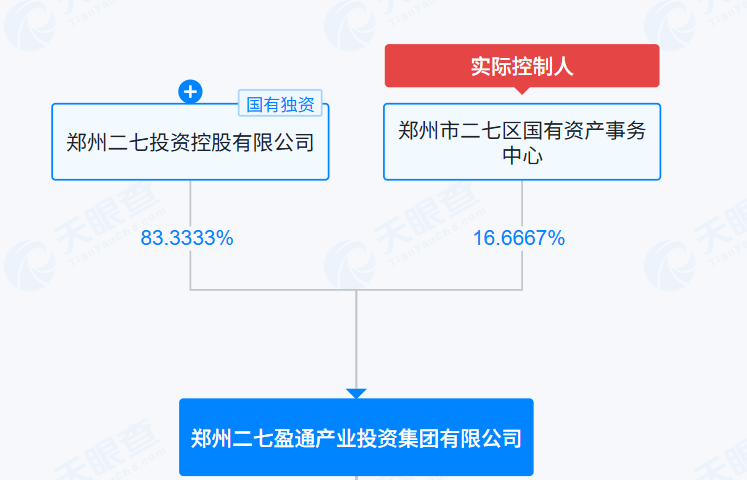
郑州二七盈通产业投资集团拟首次发债,10亿元公司债选聘承销商
Sou Hu Cai Jing· 2025-12-18 06:11
Group 1 - Zhengzhou Erqi Yingtong Industrial Investment Group Co., Ltd. plans to issue a private corporate bond with a scale of no more than 1 billion yuan, with a maturity of up to 5 years [1] - The funds raised will be used for repaying interest-bearing debts to financial institutions, supplementing working capital, and project construction [1] - This will be the company's first bond issuance [1] Group 2 - Zhengzhou Erqi Yingtong Industrial Investment Group was established in January 2024 with a registered capital of 1.2 billion yuan, focusing on industrial investment and asset management [2] - The company's core business includes investment activities with its own funds, providing asset management services, and financing consulting services, aimed at supporting regional economic development [2] - The company is a significant local investment platform, with business coverage in key areas such as real estate, education, and cultural tourism [2]
江苏省城投及产投类主体新增发债透视:转型?聚力?融新
Lian He Zi Xin· 2025-12-12 11:13
Report's Industry Investment Rating - Not provided in the content Report's Core View - Under the guidance of the central government's three - dimensional policy system of "stock debt resolution + incremental debt standardization + innovation empowerment", Jiangsu Province has introduced supporting policies to support the transformation and development of urban investment and industrial investment entities. The new bond - issuing market of these entities in Jiangsu shows distinct structural characteristics. In the future, the differentiation between urban investment and industrial investment entities will intensify, with truly transformed entities having financing advantages and those relying on government credit facing pressure [3][4][40] Summary by Relevant Catalogs Introduction - Since the fourth quarter of 2024, the central government has introduced debt management policies to set boundaries and directions for the financing of urban investment and industrial investment entities. Jiangsu Province has introduced supporting policies to support the transformation of relevant entities, and its strong industrial foundation provides support for transformation - related bond issuance [6] - The report analyzes the new bond - issuing situation of urban investment and industrial investment entities in Jiangsu from October 1, 2024, to September 30, 2025, to provide reference for relevant entities in financing path planning [7] Core Characteristics of Newly Issued Bonds of Urban Investment and Industrial Investment Enterprises in Jiangsu Province Sample Subject Characteristics - In terms of administrative level, newly - issued bond entities show a "municipal - level leading, district - county - level following" pattern. Among 34 new bond - issuing entities, 18 are municipal - level platforms (52.94%), and district - county and park - level platforms account for nearly half (44.12%), indicating initial marketization transformation achievements in some areas [9][10] - In terms of credit rating, the overall credit rating of sample enterprises is high. The proportion of AA+ and above high - grade issuers is 79.41%, higher than the national average (74.73%). Provincial and some core municipal - level platforms are mainly AAA - rated, while district - county - level platforms are concentrated in AA+ and AA levels [11] - In terms of enterprise characteristics, under the policy guidance, new bond - issuing entities are structurally differentiated, with the characteristics of "strong industrial attributes + policy labels". Among the 20 entities with available data, the proportion of people's livelihood service - type entities is 70.00%, and that of industrial park - type entities is 15.00% [14] - In terms of financial characteristics, after excluding outliers, for 20 sample entities with available data, the average proportion of urban construction - related assets in total assets is about 36%, the average proportion of urban construction - related income in total operating income is about 16%, and the average proportion of fiscal subsidies in net profit is about 36%. The latter two meet the "335" principle, but the former does not [18] Sample Bond Characteristics - In terms of bond variety structure, private placement corporate bonds dominate, accounting for 43.06% of 72 sample bonds. Some high - credit - rating entities issue bonds across markets. Enterprise bonds account for only 4, and all funds are invested in project construction [19] - In terms of fund use, debt repayment is the core direction, but different trading venues have different characteristics. In the inter - bank market, debt repayment accounts for 61.27% of the new bond issuance scale, and project construction accounts for 33.88%. In the exchange market, debt repayment is also the main use, but the use combination in the exchange market is more diverse, and the proportion of non - pure debt - repayment uses in the Shenzhen Stock Exchange is higher than that in the Shanghai Stock Exchange [21][25][27] - Among labeled bonds, green bonds are important. During the observation period, 34 new bond - issuing entities issued 13 green bonds with a scale of 8.805 billion yuan. Entities with people's livelihood attributes and strong industrial - attribute industrial park - type entities are more likely to issue labeled bonds [29] Typical Case Analysis Case 1: An Operating Entity of a National High - tech Zone in Suzhou - Business layout: It constructs a diversified business ecosystem with a full - chain market - oriented operation system in the industrial park and a market - oriented investment structure in strategic emerging industries, with remarkable transformation results [31] - Financial performance: Market - oriented business drives the company's profit, with the proportion of market - oriented business income in revenue exceeding 60%, and investment income contributing significantly to profit [32] - Financing practice: In 2025, it issued over 10 billion yuan of bonds. The green medium - term notes are invested in projects that can bring long - term stable income and optimize the debt structure, achieving a virtuous cycle between financing and business development [32][33] Case 2: An Investment and Operating Entity in Kunshan - Business layout: It focuses on the investment in high - tech projects in core fields through its equity investment business in the quasi - financial sector, with a clear layout in science and technology innovation business [34] - Financial performance: The proportion of urban investment - related assets is low, and fiscal subsidies and investment income contribute significantly to profit [35] - Financing practice: From December 2024 to June 2025, it issued 400 million yuan of science and technology innovation corporate bonds, and the funds are mainly used for science and technology innovation - related investments, matching the policy requirements [36] Practical Suggestions for New Bond Issuance - Deepen the market - oriented business layout, focus on policy - supported areas, and reduce dependence on government subsidies, referring to the experience of the Suzhou high - tech zone operating entity [38] - Strengthen regional resource integration, and district - county and park - level platforms can seek support from local governments [38] - Adapt to market characteristics, choose financing tools and issuance venues flexibly. Private placement corporate bonds can be the core choice, and high - credit - rating entities can try inter - bank varieties or cross - market issuance [38] - Follow the principle of "strong industrial attributes + policy labels", and different types of entities should take corresponding measures to improve policy fit and financing adaptability [39] - Actively connect with labeled bond policies, and entities in relevant fields can apply for corresponding labeled bonds to enhance financing competitiveness [39] Conclusion - The new bond - issuing market of urban investment and industrial investment entities in Jiangsu shows structural characteristics at both the subject and bond levels. The core logic of the typical cases is that business transformation conforms to policy orientation and financing planning matches market rules [40] - In the future, entities need to strengthen market - oriented transformation, choose appropriate financing tools, and connect with policy support to achieve a virtuous cycle between financing and business [40][41]
产业债系列报告:如何看待新增产业主体的投资价值?
Hua Yuan Zheng Quan· 2025-09-02 23:39
Report Summary 1. Industry Investment Rating The report does not mention the industry investment rating. 2. Core Viewpoints - Since 2024, the number of new bond - issuing industrial entities has significantly increased under the strict supervision of urban investment bonds. The new industrial entities from January 1 to August 26, 2025, are mainly concentrated in low - to - middle administrative levels, with over half of them having an AA+ rating and mostly located in economically developed provinces. The marginal supply increment of industrial bonds brought by these new entities is difficult to substantially alleviate the shortage of credit bond assets [1][2]. - Newly - issued bonds of new industrial entities often have an excess spread at the initial listing stage due to liquidity and market cognitive differences, and the excess spread tends to narrow to varying degrees after listing. It is recommended to select bonds from industries with relatively good prosperity (such as social services) and focus on bonds issued by urban investment subsidiaries [3]. 3. Summary by Directory 3.1 Newly - Issued Bond Industrial Entities Inventory - **Quantity change**: Since the second half of 2023, under the strict supervision of urban investment bonds, the number of new bond - issuing industrial entities has increased. In 2024, there were 133 new industrial bond - issuing entities, and from January 1 to August 26, 2025, 191 industrial entities entered the capital market for bond financing. The number of new industrial bond - issuing entities from January to July 2025 showed a fluctuating upward trend, with 41 entities in July alone [1][4]. - **Administrative level**: Among the 191 new industrial bond - issuing entities from January 1 to August 26, 2025, 63 were district - level state - owned enterprises and 62 were prefecture - level state - owned enterprises, showing a concentration in low - to - middle administrative levels. The 63 new district - level industrial entities were mostly concentrated in economically developed provinces such as Shandong, Zhejiang, Guangdong, and Jiangsu [8]. - **Subject rating**: Among the new industrial bond - issuing entities from January 1 to August 26, 2025, 103 had an AA+ rating, accounting for 54%, followed by 52 with an AA rating and 31 with an AAA rating, mainly medium - and low - credit - rated entities [8]. - **Industry distribution**: The top five industries with the largest number of new industrial bond - issuing entities from January 1 to August 26, 2025, were comprehensive (47), social services (31), building decoration (24), non - bank finance (18), and real estate (10) [13]. - **Regional distribution**: New industrial bond - issuing entities were mostly concentrated in economically developed provinces such as Shandong (30), Jiangsu (24), Guangdong (17), and Zhejiang (17) [13]. - **Asset scale**: Most of the industrial entities that first appeared in the bond market in 2025 were small - scale. Among the 191 new industrial bond - issuing entities from January 1 to August 26, 2025, 47% had a total asset scale of less than 100 million yuan, and 49% had a net asset scale of less than 50 million yuan. Among the 81 industrial entities with a total asset scale of less than 100 million yuan, 32 were subsidiaries of urban investment companies [17]. - **Bond issuance scale and use of funds**: The total issuance scale of bonds issued by new industrial entities from January 1 to August 26, 2025, was 13.78 billion yuan, mainly private placement corporate bonds. The funds were mainly used to repay interest - bearing debts (8.08 billion yuan, accounting for 59%), and some were used for project construction, supplementary working capital, and other purposes [20]. - **Ways for urban investment entities to increase bond quotas**: Bond - financing - restricted urban investment entities usually use subsidiaries as issuers to try to increase bond quotas, mainly by injecting assets into existing subsidiaries or stripping urban investment - related businesses. The former is the preferred method, but the single - bond quota of urban investment subsidiaries is usually small [23]. 3.2 How to Evaluate the Investment Value of New Industrial Entities - **Value discovery process**: In the first five trading days after the listing of bonds issued by new industrial entities, the excess spread fluctuated little and showed no obvious trend. As time passed, the market's perception of new industrial entities gradually converged, and the liquidity premium and risk premium at the initial listing stage mostly narrowed significantly [3][26]. - **Overview of major industries of new industrial entities**: - **Building industry**: The industry is currently in a state of low prosperity. In 2024, the construction and completion areas decreased year - on - year. In July 2025, the PMI and its sub - indicators were at a low level. Although the "anti - involution" initiative was put forward, it is difficult to significantly boost the bargaining power of construction enterprises in the short term, and the subsequent marginal improvement needs attention [30][31]. - **Social services**: The number of domestic tourists and tourism revenue have been continuously rising. The main business of social service issuers is mainly related to tourism. With the improvement of the modern tourism system, tourism will play a more prominent role in promoting economic development [35]. - **Real estate**: Housing prices and investment are at a low level. In July 2025, the prices of new and second - hand houses in 70 large and medium - sized cities decreased year - on - year, and real estate development investment also declined. Policy support may be the key variable for the real estate market [37]. 3.3 Investment Recommendations - Focus on new bond - issuing industrial entities in the future, as they often have an excess spread at the initial listing stage, which tends to narrow over time. - Select bonds from industries with relatively good prosperity, such as social services. - Pay attention to bonds issued by urban investment subsidiaries, as their credit risks are relatively controllable [39].
海尔融资租赁发布2024年度业绩报告:服务实体量质齐升,产融协同突破创新
2 1 Shi Ji Jing Ji Bao Dao· 2025-04-14 09:38
Core Insights - Haier Financial Leasing reported a strong performance for 2024, achieving a significant increase in both volume and quality despite macroeconomic pressures and intensified industry competition [1] Group 1: Financial Performance - The company achieved a total investment scale exceeding 18.8 billion yuan, representing an 18% year-on-year growth [1] - Management asset scale surpassed 22 billion yuan, with a 13% increase year-on-year [1] - Operating revenue exceeded 1.4 billion yuan, and pre-tax profit exceeded 800 million yuan, reflecting growth rates of 11% and 14% respectively [1] - Return on Assets (ROA) was 3%, and Return on Equity (ROE) was 12.37%, both exceeding industry averages [1] - The non-performing loan ratio remained stable at below 1% [1] Group 2: Strategic Focus - The company aligned its operations with national development strategies, emphasizing the principle of "finance for industry" [1] - In 2024, the number of served clients exceeded 1,700, marking a 23% increase year-on-year [1] Group 3: Sector-Specific Initiatives - In technology finance, the company increased investment in high-end equipment manufacturing, new materials, biomedicine, and energy conservation, serving 205 specialized enterprises with over 3.1 billion yuan in funding [2] - In green finance, the company enhanced its product service system, serving 453 clients in green industries with over 8.2 billion yuan in funding [2] - The company supported 1,388 small and micro enterprises with over 5.1 billion yuan in financing, with 76% of clients receiving amounts below 5 million yuan [2] Group 4: Digital Transformation - The company advanced its digital transformation strategy, optimizing its digital financial service platform, HaiRong Cloud Service, which facilitated over 4.6 billion yuan in transactions through 3,546 clients [3] - The company integrated financial and equipment services into client operations, achieving over 100 million yuan in equipment procurement contracts [3] Group 5: Sustainable Development - The company issued two sustainable development-linked syndicated loans totaling nearly 2.4 billion yuan, with an average oversubscription rate of 1.7 times [4] - The company published its first ESG report, detailing its strategic planning and achievements in environmental, social, and governance dimensions [5] - A special public welfare fund was established to focus on rural revitalization and educational support in underdeveloped areas [5] Group 6: Future Outlook - The company aims to continue innovating financial products and services, accelerating digital transformation, and contributing to high-quality economic development in China [5]