移动应用处理器

Search documents
2nm芯片制程战火升级!高通重返三星,从单押台积电转向双代工链
Zhi Tong Cai Jing· 2026-01-07 13:59
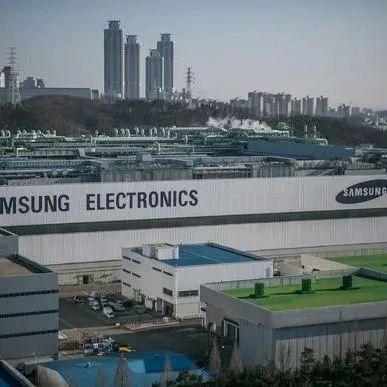
该媒体援引阿蒙在采访中透露的消息表示,这家智能手机与PC端芯片领军者正在与包括三星电子在内 的多家晶圆代工厂就采用最前沿的大规模2nm芯片制造工艺进行合同代工制造展开磋商;阿蒙表示,高 通面向PC、智能手机甚至AI数据中心的绝大多数新一代核心芯片设计工作已经完成,以便在不久的将 来实现大规模代工以及全面商业化。 相较N3E制程(等同于3nm先进制程),N2约可实现同功耗下性能+10%到15%,或同性能下功耗缩减 25%~30%,以及晶体管密度+15%~20%(具体取决于芯片架构设计)。 另一芯片制造巨头英特尔,则跳过2nm整数制程,聚焦于1.8nm级别制程(即18A)。英特尔表示,18A已 经从"制程节点承诺"走到"终端产品发布与量产爬坡",而14A仍在研发与路线图/客户导入阶段。英特尔 在CES2026重磅发布/展示了基于18A制程打造的Panther Lake(Core Ultra Series3),并将其作为18A的"首 批产品平台"对外确认。18A的关键工艺特征,即GAA/RibbonFET+背面供电PowerVia,也作为该代产品 与制程卖点被媒体与英特尔官方材料同步强调,但是具体的生产良率指标仍未 ...


消息称英伟达独占台积电A16工艺首单
Ge Long Hui A P P· 2025-10-29 01:40
Core Insights - Nvidia has become the sole customer for TSMC's next-generation A16 process, and both companies are currently engaged in joint testing [1] - Apple, a long-term major customer of TSMC, has not yet initiated discussions regarding the adoption of the A16 process for its mobile application processors [1] - According to Nvidia's GPU roadmap, the product evolution sequence includes Hopper, Blackwell, Rubin, and ultimately Feynman, with the Feynman architecture GPU expected to fully utilize TSMC's A16 process by 2028 [1]

三星DRAM份额跌至十年低点!
国芯网· 2025-08-20 14:16
Core Viewpoint - Samsung Electronics' DRAM market share has dropped to 32.7% in the first half of 2025, down from 41.5% in the same period last year, raising concerns about its industry leadership [1][3]. Group 1: Market Performance - Samsung's DRAM market share fell below 40% for the first time in nearly a decade, having previously peaked at 48% in 2016 [3]. - The decline in DRAM market share is attributed to weak demand for high bandwidth memory (HBM), which is critical for AI chips [3]. - In contrast, Samsung's smartphone and television businesses have shown growth, with smartphone market share increasing by 1.6% to 19.9% and television market share rising by 0.6% to 28.9% in the first half of 2025 [3]. Group 2: Revenue and Exports - The Americas region leads in direct export revenue with 33.4 trillion KRW (approximately 24 billion USD), followed by China at 28.8 trillion KRW, a decline of about 11% from 32.3 trillion KRW year-on-year [3]. - The Asia-Africa region generated 20.8 trillion KRW, while Europe contributed 15.8 trillion KRW in export revenue [3]. Group 3: Pricing and Compensation - In the device experience (DX) department, the average price of mobile application processors (AP) and camera modules increased by 12% and 8%, respectively, compared to 2024 [4]. - The total compensation for Samsung's Vice Chairman and CEO Jun Young-hyun reached 11.9 billion KRW in the first half of 2025, while the head of the mobile experience (MX) business, TM Roh, received 11.95 billion KRW [4]. Group 4: R&D Investment - Samsung invested a total of 18 trillion KRW in research and development in the first half of 2025, with significant patent application activity, including 5,005 applications in South Korea and 4,594 in the United States [5].