策略类(含SLG)游戏

Search documents
2025年度中国游戏产业年会“游戏营销与出海论坛”圆满举办,共探游戏新征程
Xin Lang Cai Jing· 2025-12-22 11:25
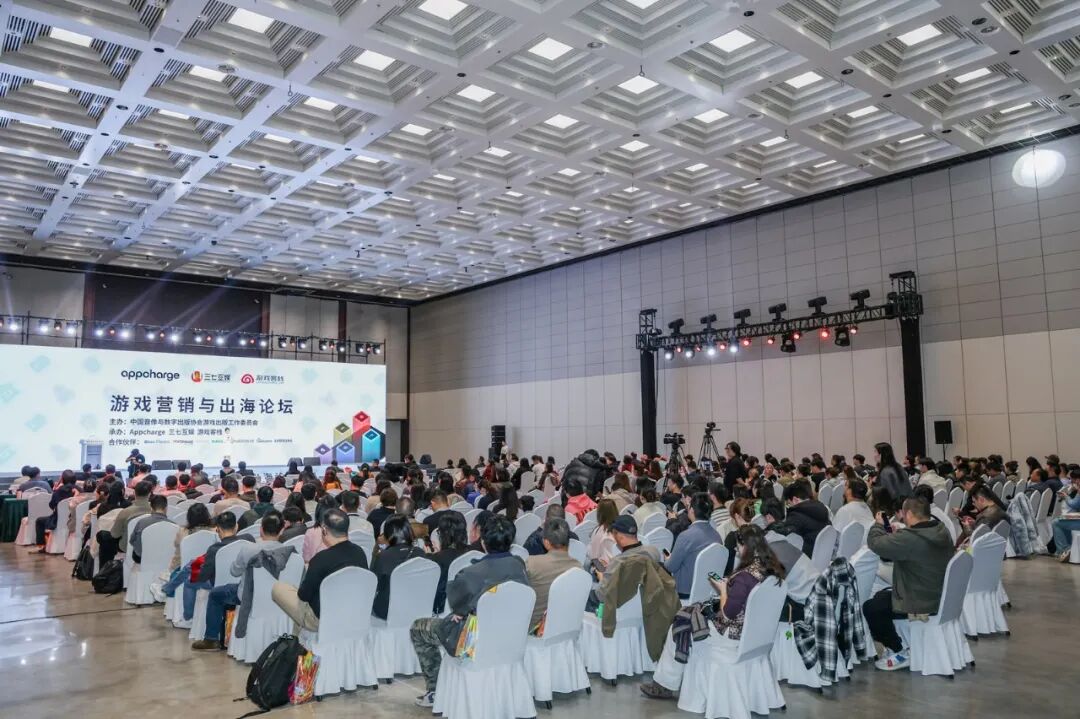
Core Insights - The 2025 China Game Industry Annual Conference's "Game Marketing and Overseas Expansion Forum" attracted over 400 global game publishers and 65 development companies, facilitating effective communication and collaboration in the gaming industry [1][23]. Group 1: Market Trends and Insights - The "2025 China Game Overseas Research Report" indicates that the actual sales revenue of Chinese self-developed games in overseas markets will reach $20.455 billion (approximately 146.4 billion RMB), reflecting a year-on-year growth of 10.23% [3][26]. - The report highlights four major trends in the Chinese game export market: the core role of game technology in driving efficiency and innovation, the importance of cross-industry integration, the shift towards building cross-platform community ecosystems, and the evolution of market competition from single traffic to a comprehensive strength in technology, culture, ecology, and brand [4][26]. Group 2: Payment and Monetization Strategies - Andrew Wong from Appcharge discussed the changing payment rules in global markets and introduced practical solutions for enhancing payment success rates for Chinese mobile game developers, emphasizing the platform's advantages such as global tax compliance and low fees [6][28]. Group 3: Globalization Practices - Zhou Zhihao from 37 Interactive Entertainment shared insights on the characteristics and trends of the current Chinese game export market, focusing on the "SLG+X" category fusion innovation path and the company's collaborative approach to empower development partners [7][29]. - Cassie Zhang from Madhouse provided strategies for successfully entering the South Korean market, leveraging local media partnerships and operational experience to help game companies navigate initial entry barriers [9][31]. Group 4: Marketing and User Engagement - Yoonwon Kim from Kakao discussed the importance of establishing deep connections with Korean users through comprehensive advertising solutions, showcasing successful case studies to enhance brand recognition and user retention [11][33]. - Jeiheon Noh from NAVER outlined strategies for Chinese game companies to effectively penetrate the South Korean market, leveraging NAVER's search engine dominance and diverse advertising products [13][35]. Group 5: New Opportunities in Gaming - DH Shon from Samsung analyzed the saturation of the mobile gaming market and identified television as a new growth opportunity for casual gaming, proposing targeted solutions for game developers to adapt to TV platforms [15][37]. - Jae Kyun Ahn from Moloco shared practical methods for achieving low-cost user acquisition and high conversion rates in the Korean market through AI-driven advertising technology [19][39]. Group 6: Product Showcase and Networking - The "Game Guesthouse - Global New Game Matching Conference" featured 65 game development companies showcasing 91 products across various genres, facilitating connections with over 400 global game publishers [21][43]. - The event aimed to create a "three-in-one" industry ecosystem, focusing on media, overseas traffic forums, and game matching to foster collaboration and opportunities for the global gaming community [21][43].

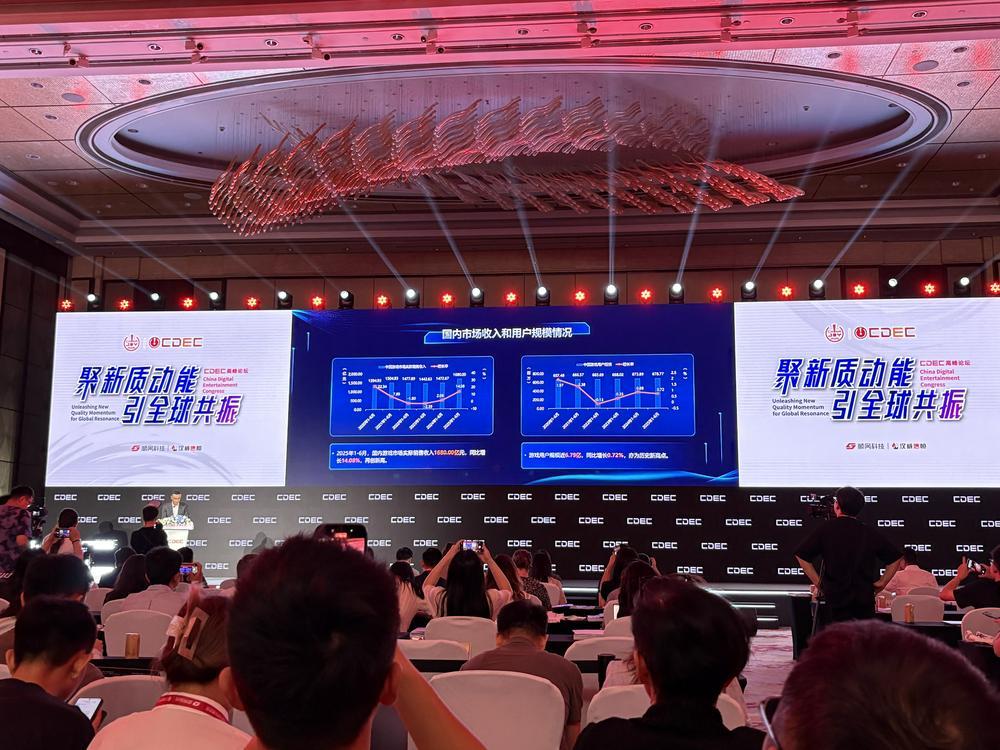
游戏市场数据出炉,国内游戏市场上半年收入和用户规模再创新高
Feng Huang Wang· 2025-07-31 07:47
Core Insights - The Chinese gaming market achieved record-high actual sales revenue and user scale in the first half of 2025, with actual sales revenue reaching 168 billion yuan, a year-on-year increase of 14.08% [2] - The number of gaming users reached approximately 679 million, marking a year-on-year growth of 0.72% [2] Market Performance - The domestic gaming market's actual sales revenue for self-developed games was 140.45 billion yuan, up 19.29% year-on-year, while overseas sales reached 9.501 billion USD, a growth of 11.07% [2] - The U.S. accounted for 31.96% of overseas revenue from self-developed mobile games, followed by Japan at 16.2% and South Korea at 7.47%, collectively representing 55.63% of the market [2] Game Categories - In the overseas market, strategy games (including SLG) led with a revenue share of 43.33%, followed by role-playing games at 10.02% and shooting games at 8.85% [3] - The domestic mobile game market generated 125.31 billion yuan, a 16.55% increase, while the client game market saw revenue of 35.40 billion yuan, up 4.86% [3] E-sports and Mini Games - The e-sports gaming market in China recorded actual sales revenue of 80.65 billion yuan, reflecting a year-on-year growth of 16.64% [3] - The mini-program gaming market achieved actual sales revenue of 23.28 billion yuan, with a significant year-on-year increase of 40.2% [4] Industry Trends - The gaming industry is experiencing a favorable environment with supportive policies, optimized industry ecology, and deepened technological innovation [6] - The education sector is increasingly supporting talent development in gaming, with the Ministry of Education officially including game art design in higher education [7] - The application of AI technology in the industry is accelerating, with leading companies establishing comprehensive intelligent application systems [7]