精华水

Search documents
林清轩(02657):业绩高增,看好大单品势能及多品类扩充
Shenwan Hongyuan Securities· 2026-03-27 02:29
Investment Rating - The report maintains a "Buy" rating for the company [6] Core Insights - The company reported a significant increase in performance, with 2025 revenue reaching 2.45 billion yuan, a year-on-year growth of 102.5%, and a net profit of 360 million yuan, up 92.9% [8] - The company focuses on high-end skincare products, leveraging red camellia as a core ingredient, and continues to expand its product offerings [8] - The report highlights the company's strong multi-channel strategy, with both offline and online sales channels contributing to revenue growth [8] - The core product, camellia oil, has maintained its leading position in the market, with cumulative sales exceeding 55 million bottles [8] - The company has a robust customer base, with over 6.1 million active customers and a repurchase rate of 34.2% [8] - The financial forecasts for 2026-2028 have been adjusted upwards, with projected net profits of 582 million, 835 million, and 937 million yuan respectively [8] Financial Data and Profit Forecast - Revenue projections for 2024 to 2028 are as follows: 1.21 billion, 2.45 billion, 3.20 billion, 4.54 billion, and 5.95 billion yuan, with respective growth rates of 50%, 103%, 31%, 42%, and 31% [7] - The net profit forecasts for the same period are 187 million, 360 million, 582 million, 835 million, and 937 million yuan, with growth rates of 121%, 93%, 62%, 43%, and 12% [7] - Earnings per share are projected to increase from 1.34 yuan in 2024 to 6.61 yuan in 2028 [7] - The report indicates a net asset return rate of 30.52% in 2024, decreasing to 22.38% by 2028 [7]
化妆品医美行业周报20260125:化妆品12月社零高增,Q4需求端景气度明显提升-20260125
Shenwan Hongyuan Securities· 2026-01-25 14:44
Investment Rating - The report maintains a "Positive" outlook on the cosmetics and medical beauty industry, indicating strong performance compared to the market [2]. Core Insights - The cosmetics and medical beauty sector has outperformed the market recently, with the Shenwan Beauty Care Index rising by 2.0% from January 16 to January 23, 2026, surpassing the Shenwan A Index by 0.8 percentage points [4][5]. - December 2025 saw a significant increase in social retail sales for cosmetics, reaching 38 billion yuan, with a growth rate of 8.8%, indicating robust demand even in the off-season. The overall growth rate for Q4 was 9.9%, significantly higher than the annual growth of 5.1% for 2025, driven by promotional events like Double 11 [10][17]. - The report anticipates continued high consumer demand in Q1 2026, supported by new product launches and regulatory approvals in the medical beauty sector [10]. Summary by Sections Industry Performance - The cosmetics and medical beauty sector has shown strong performance, with the Shenwan Cosmetics Index increasing by 2.6% and the Shenwan Personal Care Index rising by 4.2%, both outperforming the Shenwan A Index [4][5]. Key Company Reviews - Lin Qingxuan (2657HK) is highlighted as a benchmark in the high-end domestic skincare market, with revenue projected to grow from 690 million yuan in 2022 to 1.21 billion yuan in 2024, representing a CAGR of 32.7%. The company is expected to turn a profit of 187 million yuan in 2024, a 120% increase year-on-year [11][12]. - Langzi Co., Ltd. (002612.SZ) forecasts a net profit of 900 million to 1.05 billion yuan for 2025, reflecting a year-on-year growth of 245.25% to 302.80% [4]. - Qingsong Co., Ltd. (300132.SZ) anticipates a net profit of 130 million to 165 million yuan for 2025, with a growth rate of 137.73% to 201.74% [4]. Market Trends - The report notes that the high-end skincare market is expanding, with the market size expected to reach 218.5 billion yuan by 2029. The concept of "oil-based skincare" is becoming mainstream, driving growth in the facial oil segment, which is projected to grow at a CAGR of 42.8% from 2019 to 2024 [12][14]. - E-commerce channels are increasingly important, with Lin Qingxuan achieving a 65.4% online revenue share in H1 2025, leveraging platforms like Douyin and Tmall for growth [13]. Sales Data - In December 2025, the total retail sales of cosmetics reached 38 billion yuan, with a year-on-year growth of 8.8%. The overall retail sales for cosmetics in 2025 were 465.3 billion yuan, reflecting a 5.1% increase [17][21].


林清轩(02657.HK):以油养肤赛道标杆 匠心铸就高端国货之光
Ge Long Hui· 2026-01-20 17:58
Core Viewpoint - Lin Qingxuan is positioned as a leading high-end domestic skincare brand in China, focusing on camellia oil-based products and the concept of "oil-based skincare" [1][4]. Company Overview - Founded in 2003, Lin Qingxuan has a concentrated and stable shareholding structure, with founder Sun Laichun holding approximately 71.34% of the shares [1]. - The management team, led by Sun Laichun, has over 20 years of industry experience, contributing to strategic and brand development [1]. Financial Performance - Revenue is projected to grow from 690 million yuan in 2022 to 1.21 billion yuan in 2024, with a CAGR of 32.7% [1]. - Net profit is expected to turn from a loss of 6 million yuan to a profit of 187 million yuan, with a year-on-year increase of 120% in 2024 [1]. - In the first half of 2025, revenue reached 1.052 billion yuan, a year-on-year increase of 98.3%, and net profit was 182 million yuan, up 109.9%, with a net profit margin of 17.3% [1]. Industry Trends - The skincare market in China has reached a scale of 400 billion yuan, with significant growth potential compared to Europe and the U.S. [2]. - The facial essence oil segment is experiencing rapid growth, with a CAGR of 42.8% from 2019 to 2024, significantly outpacing the overall industry growth [2]. - The high-end skincare market is expected to expand to 218.5 billion yuan by 2029, driven by the mainstream adoption of the "oil-based skincare" concept [2]. Product Development - Lin Qingxuan's core product, the camellia oil essence, has undergone five iterations and has sold over 45 million bottles, maintaining the top position in the national facial essence oil sales for 11 consecutive years [3]. - The product matrix is expanding with stable growth in sales of creams and essence waters, contributing to a second growth line [3]. - The company has established a professional R&D team and developed key ingredients through innovative processes, enhancing product efficacy [3]. Market Positioning - Lin Qingxuan is the only domestic brand among the top 15 high-end skincare brands in China for 2024, holding a market share of 1.4% in a market dominated by international brands [3]. - The company has built a comprehensive business model that includes a core product matrix, deep channel layout, and collaborative operations across the entire supply chain, enhancing brand recognition and customer loyalty [4].
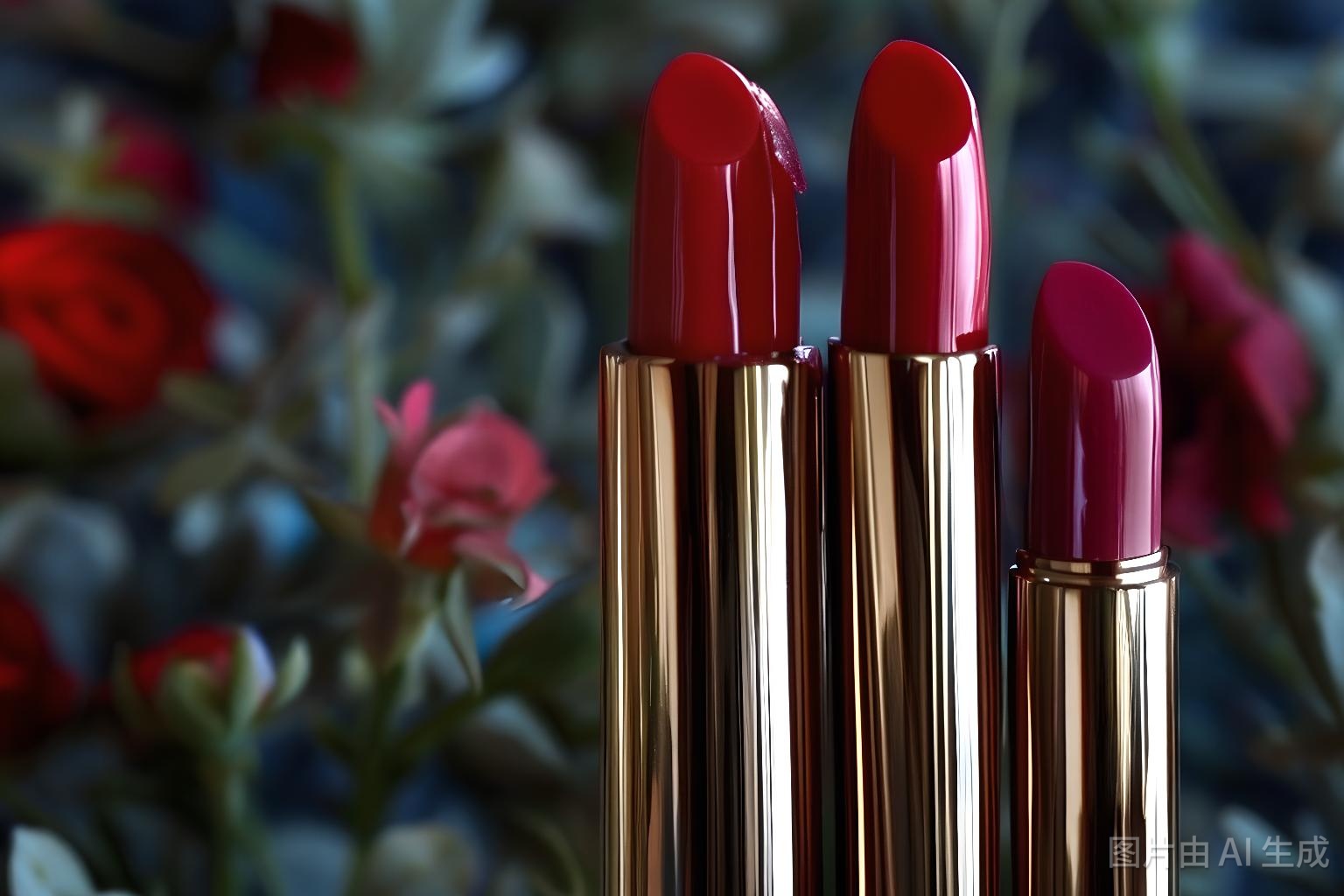
云南白药推出口红,药企跨界美妆真的好做吗?
Xi Niu Cai Jing· 2025-10-24 03:29
Core Insights - Yunnan Baiyao has officially launched the "Nanzhao Huaying" series of red lipsticks under its Caizhi Ji brand, indicating its expansion into the beauty market [2] - The company has previously introduced various beauty products since 2011, but its skincare business has not significantly contributed to revenue as per the 2025 mid-year performance report [3] Company Overview - Yunnan Baiyao is primarily focused on four core business segments: pharmaceuticals, health products, traditional Chinese medicine resources, and Yunnan provincial pharmaceutical companies [3] - The Caizhi Ji brand has previously launched products such as masks, essence water, and medical auxiliary materials, but its impact on overall revenue remains limited [3] Market Challenges - The beauty market is highly competitive, with numerous brands and established players that rely on scientific research and technological strength [3] - Despite Yunnan Baiyao's brand recognition and expertise in pharmaceuticals, converting these advantages into sales in the beauty sector remains uncertain [3] - The company faces significant challenges in capturing market share and expanding its beauty business due to the distinct differences in product development, channel strategies, and marketing logic between pharmaceuticals and beauty products [3]