
精酿习酒

Search documents
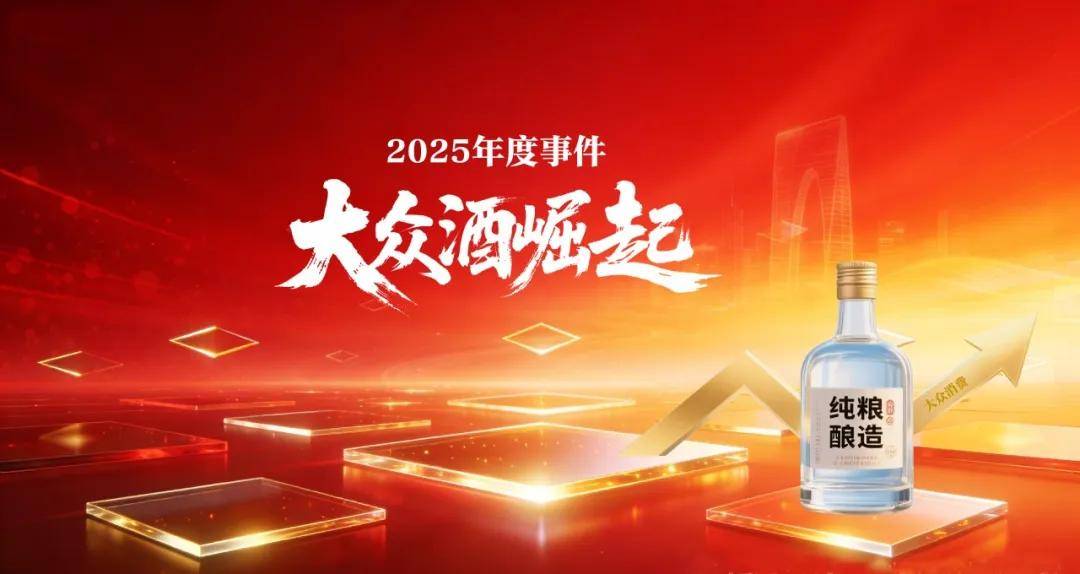
2025年度事件⑤ | 大众酒崛起
Sou Hu Cai Jing· 2026-01-09 02:46
Core Insights - The Chinese liquor industry is undergoing a restructuring phase in 2025, characterized by price fluctuations, changes in consumption scenarios, and channel model transformations, leading to a new period of value consolidation [2][4] - The rise of mass-market liquor is not merely a result of consumer downgrading but reflects a systemic value return in liquor consumption logic amid significant changes in the era [5][6] Industry Events - Event 1: "Prohibition Order" impacting consumption patterns [4] - Event 2: Liquor production recognized as a "historical classic industry" [4] - Event 3: Fluctuations in liquor prices affecting market dynamics [4] - Event 4: Collective reduction in alcohol content across products [4] Market Dynamics - The mass-market liquor segment is experiencing a significant rise, with companies launching products priced around 100-300 yuan, indicating a shift towards more affordable options [4][5] - By 2024, the overall revenue from mass-market liquor is expected to exceed 150 billion yuan, with over 70% of sales volume coming from this price range by mid-2025 [4][5] Consumer Behavior - Consumers, particularly the younger generation, are prioritizing quality over brand prestige, leading to a preference for affordable yet high-quality liquor [5][6] - The mass-market segment is becoming a necessity in daily consumption, focusing on high-frequency, essential, and cost-effective products [5][6] Industry Trends - The mass-market liquor sector is projected to maintain a growth rate exceeding 15%, driven by major liquor companies enhancing their offerings in this category [6] - The competition within the 100-300 yuan price range is intensifying, with established brands pushing for better quality and product diversity [6][7] Strategic Implications - The shift towards mass-market liquor signifies a transition from channel-driven to consumer-driven dynamics in the industry, reflecting a maturation process [7] - Companies are compelled to invest more in product innovation, quality enhancement, and consumer engagement, leading to a potential reshaping of the industry landscape [7]

酒业遇冷并不奇怪, “老天爷赏饭”的时代该换玩法了
Sou Hu Cai Jing· 2025-11-24 07:37
Core Insights - The Chinese liquor industry is undergoing significant transformation due to structural contradictions that have emerged, particularly in the context of high inventory levels and changing consumer preferences [1][2][9] Group 1: Industry Challenges - The liquor industry is facing a surplus of production capacity that has not translated into market value, leading to high social inventory and a disconnect between production and actual consumption [2][4] - The traditional distribution model, characterized by a "press goods - collect payments" logic, is no longer sustainable, necessitating a shift towards a new collaborative model between manufacturers and distributors [5][8] - The average inventory turnover days in the industry are alarmingly high at 900 days, indicating inefficiencies in the supply chain [8] Group 2: Changing Consumer Behavior - Traditional consumption scenarios in the liquor industry, such as business banquets and gift-giving, are shrinking due to changing social norms and the rise of younger consumers who prefer casual drinking experiences [9][11] - Younger consumers are increasingly viewing traditional liquor brands as outdated, leading to a disconnect between the industry's offerings and the preferences of the new generation [15][18] - The success of brands like Bubble Mart highlights a shift in consumer values from status symbols to emotional connections, indicating a need for the liquor industry to adapt to these new consumer expectations [20][21] Group 3: Innovative Strategies - Leading liquor companies are beginning to explore new distribution strategies, such as trial sales and commission-based models, to better align with market demands and reduce inventory risks [7][8] - Innovative marketing approaches, such as integrating liquor into social and artistic experiences, are being adopted to attract younger consumers and create new consumption scenarios [13][14] - The industry's future growth lies in understanding and catering to the emotional needs of consumers, moving away from traditional identity-based marketing to a focus on lifestyle and personal experiences [21]
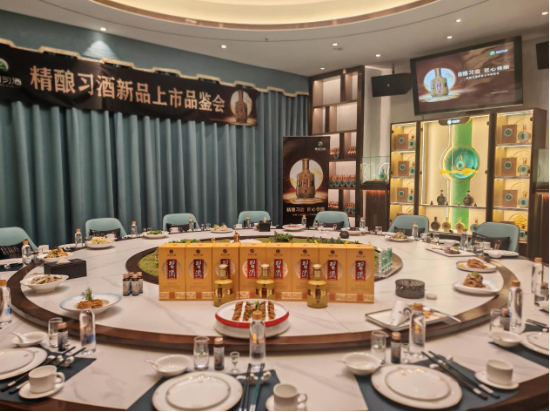
打造200元价格带超级性价比单品:精酿习酒上市品鉴会在全国各地火热开展
Xin Lang Cai Jing· 2025-10-30 09:05
Core Insights - The launch of "Craft Xijiu" aims to meet consumer preferences for high-quality, cost-effective products during a period of industry adjustment and transformation [3][4][10] - The product is priced at 200 RMB, targeting a relatively low inventory market, and combines traditional brewing techniques with modern consumer demands [3][4][7] - The small-batch production method ensures product scarcity and quality, appealing to consumers seeking unique experiences [4][5][10] Group 1: Product Launch and Consumer Reception - "Craft Xijiu" is being introduced through nationwide tasting events, with positive feedback from consumers regarding its taste, appearance, and affordability [1][3] - The tasting events are expected to exceed 1,000 sessions, allowing consumers to experience the product's high-quality characteristics firsthand [1][3] Group 2: Market Positioning and Pricing Strategy - The product's pricing at 198 RMB strategically positions it within the mid-range market, avoiding overlap with higher-end products while distinguishing itself from lower-priced options [7][8] - This pricing aligns with the current trend of consumers seeking value in the mid-range segment, particularly for business use [7][8] Group 3: Production and Quality Control - "Craft Xijiu" employs a small-batch blending process that balances traditional flavors with modern preferences, ensuring a unique taste profile [4][5] - The production method adheres to pure grain solid-state fermentation, enhancing both the product's quality and its market value through controlled supply [4][5] Group 4: Cultural and Aesthetic Value - The product design incorporates elements of traditional Chinese culture, enhancing its appeal as both a beverage and a collectible item [10] - The combination of aesthetic value and quality potential positions "Craft Xijiu" favorably in the growing market for collectible spirits among younger consumers [10]
习酒新品首推“先货后款” 是酒企破局妙招还是冒险一搏?
Mei Ri Jing Ji Xin Wen· 2025-10-23 00:57
Core Viewpoint - The introduction of the "pre-delivery payment" model by Xijiu represents a significant shift in the traditional white liquor industry, aiming to alleviate pressures on distributors and adapt to market changes during a period of industry adjustment [1][2][8]. Group 1: New Business Model - Xijiu's new product, "Craft Xijiu," is priced at 198 yuan, targeting the mass market and employing a "pre-delivery payment" strategy, which is a departure from the traditional "payment before delivery" model [1][5]. - This model shifts the financial burden from distributors to manufacturers, allowing distributors to act as "promotion service providers" rather than "stockpilers," thus changing their profit mechanism from "price difference" to "commission" [2][3]. Group 2: Market Conditions - The white liquor industry is currently facing challenges such as high inventory levels, price inversion, and sluggish sales, prompting companies like Xijiu to explore new strategies [2][4]. - Nearly 60% of liquor companies and distributors have reported reduced profit margins, with over 40% experiencing cash flow pressures, indicating a need for innovative approaches [3][4]. Group 3: Potential Challenges - While the "pre-delivery payment" model reduces upfront costs for distributors, the challenge lies in effectively cultivating the market for new products, as their sales performance remains uncertain [4][9]. - The success of this model depends on the manufacturer's ability to maintain control over pricing and market dynamics, as well as the effectiveness of the commission structure in motivating distributors [8][9]. Group 4: Industry Outlook - Industry experts express a cautious outlook on the "pre-delivery payment" model, suggesting that it may not lead to immediate widespread changes across the industry, but could inspire similar trials among other brands if successful [7][8]. - The long-term viability of this model hinges on the manufacturer's capacity to engage consumers and stimulate demand, as mere product placement does not guarantee sales [9].
蜜雪并购鲜啤福鹿家;习酒推出中端新品|观酒周报
2 1 Shi Ji Jing Ji Bao Dao· 2025-10-09 04:09
Group 1: Industry Trends - The alcohol industry is experiencing a peak season during the National Day and Mid-Autumn Festival, with various companies launching new products and increasing visibility at major events [1] - Douyin e-commerce is focusing on the aged liquor market, aiming to promote it from a collector's item to a mainstream dining option, and to support influencers in this niche [5] - The introduction of new products in the alcohol sector is evident, with companies like Xijiu and Guotai launching mid-range and innovative offerings to adapt to market demands [10][11] Group 2: Company Developments - Mixue Group announced the acquisition of a 53% stake in Fresh Beer Fulu Family for 285.6 million yuan (approximately 40 million USD), marking its first major acquisition since going public [2][4] - The stock performance of Mixue Group showed volatility, initially rising by 1.75% but subsequently declining by 3% over four consecutive trading days following the acquisition announcement [4] - Gu Yue Long Shan reported the resignation of its Vice President and Secretary of the Board, indicating potential changes in management structure [8][9] Group 3: Product Innovations - Moutai held its third capping event for Moutai 1935 this year, highlighting ongoing product promotion and brand engagement [6] - Zhujiang Beer has entered the trial production phase for its 300,000 kiloliter capacity expansion project, indicating growth in production capabilities [7] - Kirin Beer launched a non-alcoholic beer, showcasing a trend towards healthier beverage options in the market [13]