粿汁

Search documents
潮、汕之外,却是潮汕
3 6 Ke· 2026-01-26 02:29
Core Viewpoint - The article highlights the historical and cultural significance of Jieyang, a city in the Chaoshan region of Guangdong, which is often overlooked by tourists in favor of nearby cities like Chaozhou and Shantou. Jieyang boasts a rich history, unique architecture, and local culinary traditions that reflect its cultural heritage. Group 1: Historical Significance - Jieyang is recognized as the earliest administrative establishment in the region, dating back to 214 BC, which is over 800 years earlier than Chaozhou [1] - The Jieyang Confucian Temple is the largest and best-preserved in Lingnan, second only to the Confucian Temple in Qufu, Shandong, showcasing the city's educational and cultural importance [3] - The city features the oldest and largest City God Temple in Guangdong, with vibrant architectural details that reflect local cultural heritage [4] Group 2: Architectural Features - The ancient city of Jieyang is characterized by its unique architectural styles, including the only combined city gate, tower, and pavilion structure in the country [2] - The traditional residential designs in Jieyang incorporate Feng Shui principles, with distinct styles representing different elements, showcasing the region's cultural values [7] - The "Qilou" (arcade) architecture, which emerged in the early 20th century, reflects the adaptation to local climate and commercial needs, marking a transition from traditional to modern urban design [9][10] Group 3: Culinary Traditions - Jieyang is known for its diverse rice-based dishes, with local specialties such as "Guozi" (rice rolls) and "Niu Rou Guo Tiao" (beef rice noodles) that highlight the region's agricultural richness [12][13] - The local cuisine emphasizes unique flavors and cooking techniques, with dishes like "Zhe Guo Fan" (quail rice) and "Sand Pot Porridge" that are distinct from those in neighboring cities [13] - The vibrant night market scene in Jieyang offers a variety of local snacks, showcasing the city's culinary diversity and cultural vibrancy [13]
美食“引”客、体验“留”客 “早餐经济”为消费增长注入活力引擎
Yang Shi Wang· 2026-01-03 07:59
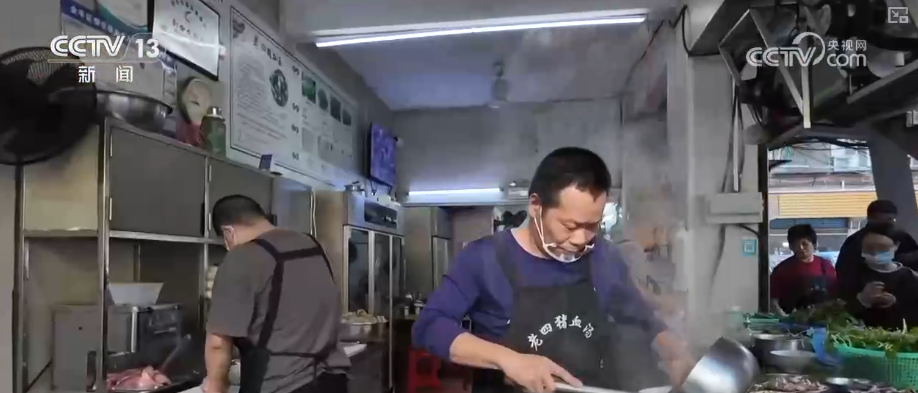
Core Insights - Breakfast culture in Shantou is highlighted as a vital aspect of local life, showcasing the city's culinary diversity and cultural richness [1] - The development of unique breakfast offerings and consumption scenarios has been observed in various regions, with Shantou being a prime example due to its emphasis on fresh ingredients and traditional flavors [1] Group 1: Breakfast Offerings - Shantou's breakfast scene features a variety of dishes, including pig blood soup, rice rolls, and traditional snacks like "guo zhi" [5][11] - The preparation of pig blood soup involves slow-cooked broth from various bones, emphasizing the local belief in the medicinal properties of food [3] - "Guo zhi" is made from freshly ground rice paste, served with marinated meats and rich sauces, showcasing the importance of fresh ingredients in local cuisine [7][9] Group 2: Culinary Techniques - The making of rice rolls (肠粉) is a meticulous process that requires precise ratios of rice flour and water, adjusted based on weather conditions to ensure optimal texture [21][23] - The flavor of rice rolls is enhanced by a carefully prepared sauce made from pork bones and various spices, highlighting the depth of culinary craftsmanship in Shantou [27][29] Group 3: Tourism and Economic Impact - The integration of food and tourism in Shantou has transformed breakfast into a significant driver of local economic growth, attracting visitors and enhancing cultural experiences [31][40] - The local government has invested in creating vibrant food streets and cultural landmarks, which have become popular destinations for both tourists and locals [35][39] - In the first three quarters of 2025, Shantou is projected to receive over 50 million tourists, generating more than 60 billion in tourism revenue, reflecting a 13% growth rate [40]