
索科尔原油

Search documents
俄媒曝光:印度仍继续购买俄罗斯石油
Huan Qiu Shi Bao· 2025-11-17 09:03
Core Insights - Despite pressure from the United States, India continues to purchase Russian oil, with Indian Oil Corporation (IOC) making payments for five batches of oil to be delivered in December [1] - IOC has procured approximately 3.5 million barrels of Russian ESPO crude oil at prices close to Dubai quotes, scheduled for delivery at eastern Indian ports [1] - IOC's procurement strategy includes a mix of Russian ESPO and Sokol crude for early next year, while also considering low-sulfur crude from West Africa and the United States [1] Group 1 - The U.S. government has been pressuring India to halt Russian oil purchases, even imposing high tariffs on Indian imports [1] - Indian Oil Corporation's CFO, Anuj Jain, stated that the company intends to maintain its cooperation with Moscow as long as transactions comply with sanctions [1] - IOC's procurement documents specify that sellers must ensure the oil is not sourced from entities sanctioned by the U.S., U.K., EU, UN, or India [1]
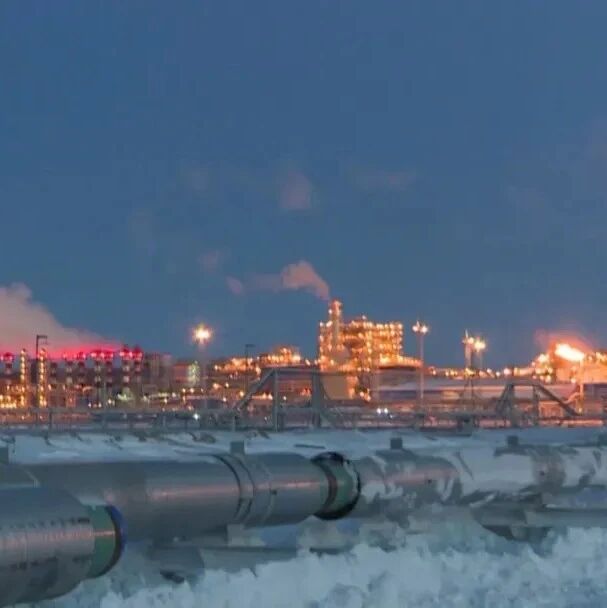
印度又开始买了
中国能源报· 2025-11-16 10:01
Core Viewpoint - Despite pressure from the United States, India continues to purchase Russian oil, indicating a strong commitment to its energy needs and strategic partnerships [1][2]. Group 1: Oil Purchases - Indian Oil Corporation has made payments for five batches of Russian oil scheduled for delivery in December, totaling approximately 3.5 million barrels of Russian ESPO crude [1]. - The procurement process includes a requirement that the oil must not come from entities sanctioned by the US, UK, EU, UN, or India [2]. Group 2: Strategic Positioning - The CFO of Indian Oil Corporation stated that the company has no intention of abandoning cooperation with Moscow, as long as transactions comply with sanction regulations [2]. - Indian Oil Corporation is maintaining regular procurement of Far East Russian crude while also considering low-sulfur crude offers from West Africa and the US [1].

邓正红能源软实力:印度继续购买俄油 制裁短期扰动市场 难以改变供过于求格局
Sou Hu Cai Jing· 2025-11-16 06:10
Group 1 - Despite U.S. pressure, India continues to purchase Russian oil, with Indian Oil Corporation paying for five batches of oil to be delivered in December [1] - Indian Oil Corporation procured approximately 3.5 million barrels of Russian ESPO crude oil at prices close to Dubai quotes, indicating a strategic procurement approach [1][3] - The U.S. government has approved potential buyers to negotiate with Lukoil for its overseas assets, highlighting the complexities of U.S.-Russia relations in the energy sector [1] Group 2 - India's energy strategy emphasizes soft power considerations, including risk diversification through multiple supply sources and a focus on renewable energy [3] - The Indian government has established a three-tier energy security framework, balancing long-term LNG agreements with the U.S. and Australia, emergency reserves from discounted Russian oil, and investments in hydrogen energy [3] - The procurement of Russian oil is driven by economic rationality, with discounts of up to $5 per barrel compared to other sources, showcasing a cost-optimization strategy [3] Group 3 - The limitations of U.S. pressure tactics are evident, as punitive tariffs on Indian imports have not deterred India from its energy procurement strategy [4] - India's firm stance against U.S. pressure reflects a broader geopolitical strategy, emphasizing its energy needs as a third-largest oil consumer [4] - The dynamics of global oil supply and demand remain influenced by India's continued engagement with Russian oil, despite U.S. sanctions [4] Group 4 - The deepening cooperation between Russia and India in energy and nuclear sectors indicates a strategic partnership that transcends geopolitical tensions [5] - India's flexible diplomatic approach allows it to maintain energy ties with Russia while exploring oil offers from other regions, reflecting a non-aligned strategy [5] - The operational stability of the Caspian pipeline, which transports over 1.6 million barrels of oil daily, is crucial for India's energy security [5] Group 5 - The ongoing purchase of Russian oil by India illustrates a shift in international energy competition from resource control to soft power dynamics, emphasizing rule-making and technological standards [6] - India's approach to energy procurement integrates diplomatic and technological cooperation, enhancing its strategic autonomy in the global energy landscape [6] - This case serves as a reference for developing countries in navigating global energy governance amidst geopolitical rivalries [6]

俄媒曝光:印度又开始买了
Sou Hu Cai Jing· 2025-11-15 15:45
Core Points - Despite U.S. pressure, India continues to purchase Russian oil, with Indian Oil Corporation (IOC) making payments for five batches of oil to be delivered in December [2] - IOC has procured approximately 3.5 million barrels of Russian ESPO crude oil at prices close to Dubai quotes, scheduled for delivery at eastern Indian ports [2] - IOC's procurement documents indicate plans to buy both Russian ESPO and Sokol crude oil for early next year, while also considering low-sulfur crude offers from West Africa and the U.S. [2] - The crude oil is expected to arrive at Indian ports between late January and early February [2] - IOC's CFO Anuj Jain stated that the company intends to maintain cooperation with Moscow as long as transactions comply with sanctions regulations [2]

建信期货原油日报-20251113
Jian Xin Qi Huo· 2025-11-13 02:29
Report Information - Report Type: Crude Oil Daily Report [1] - Date: November 13, 2025 [2] Investment Rating - Not provided Core View - The supply and demand situation has not changed significantly. OPEC+ has decided to temporarily halt production increases in Q1 2026, which is marginally positive for the supply side. However, the inventory build - up rate in Q1 2026 may reach 3 million barrels per day, and the current policy alone is difficult to reverse the oversupply. Mid - term oil prices still face continuous oversupply pressure, and short - selling is recommended in operations [7]. Summary by Section 1. Market Review and Operation Suggestions - **Market Review**: WTI crude oil opened at $59.94, closed at $60.99, with a high of $61.18, a low of $59.59, a daily increase of 1.60%, and a trading volume of 16.75 million lots. Brent crude oil opened at $63.94, closed at $65.09, with a high of $65.31, a low of $63.60, a daily increase of 1.61%, and a trading volume of 30.98 million lots. SC crude oil opened at 470.8 yuan/barrel, closed at 462.2 yuan/barrel, with a high of 470.4 yuan/barrel, a low of 461.7 yuan/barrel, a daily increase of 1.52%, and a trading volume of 7.78 million lots. India has started tendering for crude oil purchases in early 2026, retaining Russian oil but requiring that the producers and terminals of the goods are not under sanctions. Lukoil's overseas assets are continuously affected by US sanctions, and the West Qurna - 2 oil field project has suffered force majeure and may withdraw from operation later [6]. - **Operation Suggestion**: Due to the continuous oversupply pressure on mid - term oil prices, short - selling is considered [7]. 2. Industry News - Indian Oil Corporation's tenders for early 2026 include Russian ESPO Blend and Sokol crude oil, and it also welcomes quotes for low - sulfur crude from regions such as West Africa and the US. - Despite new sanctions, Russia's oil exports in November have remained stable. - Commerzbank expects Brent crude to trade at $60 per barrel and WTI at $57 per barrel in 2026. - The IEA believes that under the current policy scenario, oil demand will not peak before 2050 [8]. 3. Data Overview - Multiple data charts are presented, including global high - frequency crude oil inventory, EIA crude oil inventory, US crude oil production growth rate, Dtd Brent price, WTI spot price, Oman spot price, US gasoline consumption, and US diesel consumption. Data sources include Bloomberg, EIA, Wind, and the Research and Development Department of CCBI Futures [9][11][12]