红富士

Search documents
苹果周报2026.2.25:节后销区苹果到车减少,水果降价-20260225
Zi Jin Tian Feng Qi Huo· 2026-02-25 10:55
Report Industry Investment Rating - Not provided Core Viewpoints - The overall view on apples is "oscillating". This year, apple production is low, domestic cold - storage inventory is low, and the cumulative outbound volume is less than the same period last year. Spot prices remain stable, especially for high - quality goods, and the spot basis has strengthened compared to last week. The number of arriving trucks in the sales area has significantly decreased compared to before the festival, and fruit wholesale prices have generally declined after the festival. Among the six fruits monitored by the Ministry of Agriculture, Ya pears have the largest decline, followed by apples, and the price ratio is still in a high - level range. Continued attention should be paid to the trading atmosphere in the sales area, the outbound situation of goods in the warehouse, and the trading situation of citrus fruits [3] Summary by Directory Price Performance - Apple futures: On February 24, AP2605 closed at 9705 yuan/ton (down 1.3% from before the festival), and AP2610 closed at 8425 yuan/ton (down 0.5% from before the festival) [8] - Apple spot prices in Shandong: In the Shandong production area, the overall shipment volume was still large during the week. The mainstream price of 75 first and second - grade fruit farmer goods in Penglai was around 2.8 - 3.6 yuan/jin (unchanged from last week), 80 first and second - grade fruit farmer goods were 3.5 - 4.5 yuan/jin (last week: 3.2 - 4.5 yuan/jin), and third - grade fruits were 1.3 - 2.5 yuan/jin (unchanged from last week). In Qixia, 80 first - and second - grade slice - red fruit farmer goods were 3.2 - 4.5 yuan/jin (unchanged from last week), 75 fruit farmer general goods were 2.2 - 2.5 yuan/jin (unchanged from last week), and 65 - 70 small fruits were 1.7 - 2 yuan/jin (unchanged from last week) [7] - Apple spot prices in Shaanxi: In Luochuan, Shaanxi, the ex - warehouse price of semi - commercial fruits above 70 from fruit farmers is around 4.0 - 4.3 yuan/jin, general goods above 70 from fruit farmers are around 3.5 - 4 yuan/jin, and high - grade secondary fruits are around 2.2 yuan/jin. Prices are stable compared to last week [7] - Apple basis and monthly spread: The spot basis of the main contract was - 1705 yuan/ton (last week: - 1835 yuan/ton) [3] Supply: Production and Cold - Storage Inventory - Cold - storage inventory: As of the week of February 13, the apple cold - storage inventory in the country's major production areas was 5.88 million tons (a decrease of 320,000 tons from the previous week); Shandong had 2.1 million tons (a decrease of 90,000 tons from the previous week), and Shaanxi had 1.73 million tons (a decrease of 80,000 tons from the previous week) [15] - Planting area and production: In 2025, China's apple planting area was 1.74484 million hectares (a year - on - year increase of 0.2%), and apple production was 34.3132 million tons (a year - on - year decrease of 6%) [19] Demand: Cold - Storage Outbound Volume and Substitute Situation - Apple cold - storage outbound volume: As of the week of February 13, the national apple cold - storage outbound volume was 316,500 tons (last week: 342,500 tons), and the cumulative outbound volume in the 2025/26 season was 1.9456 million tons (compared to 2.2152 million tons in the same period last year); the cold - storage outbound volume of apples in Shaanxi and Shandong was 169,000 tons (last week: 166,300 tons), and the cumulative outbound volume in the 2025/26 season was 981,600 tons (compared to 972,900 tons in the same period last year) [24] - Apple arrivals in the South China market: After the festival, the apple arrivals in the South China market decreased compared to before the festival. On February 24, 9, 5, and 7 trucks arrived at Chalong, Jiangmen, and Xiaqiao respectively [26] - Wholesale prices of six fruits monitored by the Ministry of Agriculture: In the week of February 27, the wholesale price of Kyoho grapes was 12.48 yuan/kg (a week - on - week decrease of 0.6%), Fuji apples were 9.13 yuan/kg (a week - on - week decrease of 3.6%), bananas were 6.26 yuan/kg (a week - on - week decrease of 1.3%), Ya pears were 5.48 yuan/kg (a week - on - week decrease of 4.7%), watermelons were 6.88 yuan/kg (a week - on - week decrease of 1.4%), and pineapples were 7.35 yuan/kg (a week - on - week decrease of 1.7%) [36] - Fruit price ratio: In the week of February 27, the price ratio of apples to bananas was 1.46 (last week: 1.49), the price ratio of apples to Ya pears was 1.67 (last week: 1.65), and it was still in a high - level range. The price ratio of apples to citrus was 1.52 [39] Apple Import and Export - In 2025, China's cumulative apple imports were 116,750 tons, cumulative exports were 962,053 tons, and the net export volume was 845,300 tons (in 2024, the net export volume was 883,400 tons). China's main exported variety is Red Fuji, and the traditional export markets are Southeast Asian countries. In addition, Russia, Bangladesh, and some European countries are also important export destinations [43]
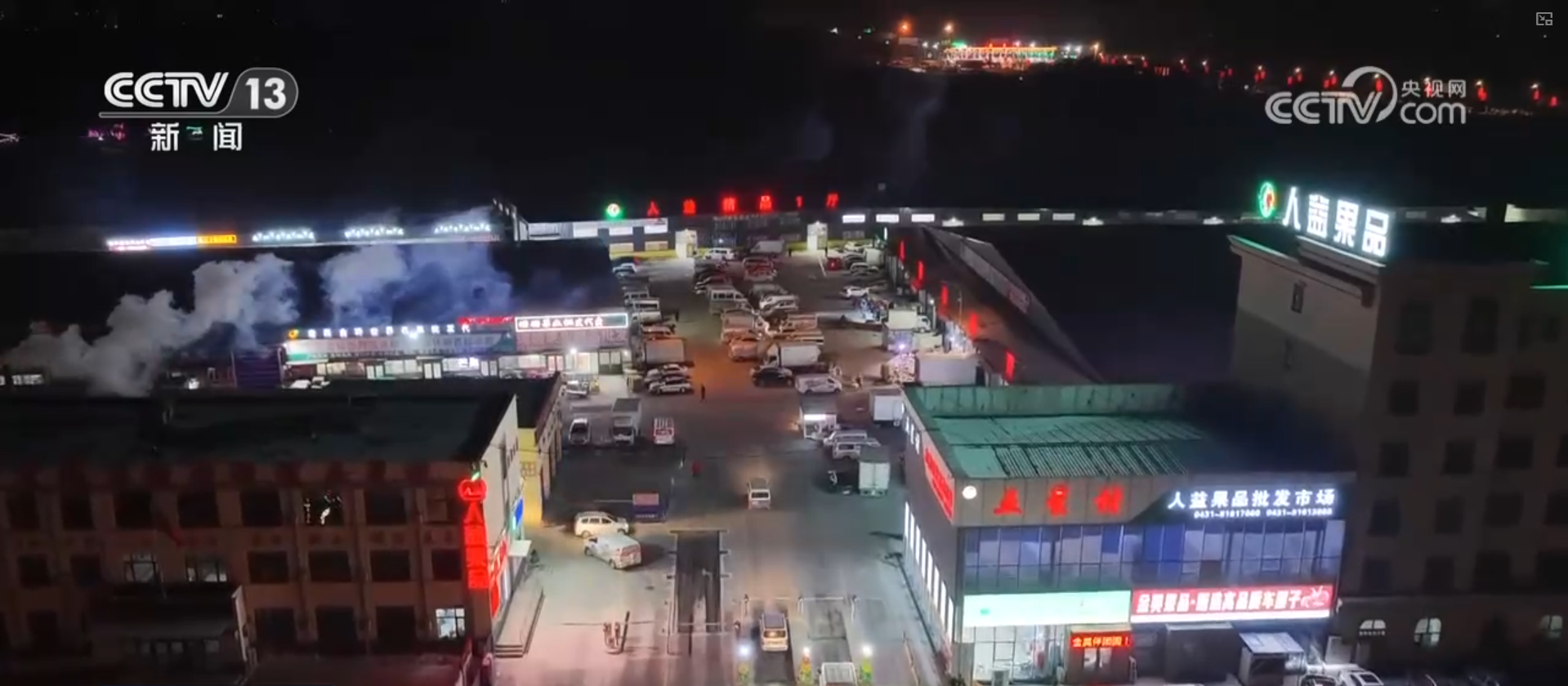
“果盘子”满“菜篮子”丰 高效物流为节前市场注入“鲜”力量
Yang Shi Wang· 2026-01-21 04:19
Core Insights - The fruit market in Changchun, Jilin is experiencing a significant increase in customer flow and transaction volume as the Spring Festival approaches, with daily sales volume rising sharply compared to normal days [1][4]. Market Overview - The largest fruit wholesale market in Changchun spans approximately 120,000 square meters and deals in fresh fruits, dried fruits, and vegetables [3]. - The market sees an average daily traffic of about 4,000 vehicles, with around 70 trucks delivering goods each day, resulting in an annual transaction volume of nearly 200,000 tons and an annual transaction value of approximately 1.4 billion yuan [11]. Sales Performance - The demand for fruits has surged, with daily sales increasing from over 300 units to around 800-900 units as the festival approaches [6]. - High-end fruits such as cherries, durians, and mangosteens have seen a year-on-year sales increase of over 30% [15]. Logistics and Supply Chain - The efficient logistics system allows for a diverse range of fresh tropical fruits to be available in Northeast China, with direct shipments from production areas like Guangxi and Dandong [9]. - The market collaborates closely with agricultural cooperatives to streamline the supply chain, reducing costs and ensuring better quality for consumers [13]. Product Variety and Consumer Experience - The market has introduced over 20 new specialty fruit varieties, including coconuts from Hainan and "ugly" apples from Sichuan, totaling over 1,000 tons to meet consumer demand [15]. - Efforts are being made to enhance the shopping experience for consumers by optimizing the supply environment and ensuring a wide selection of fruits [17].