
红树林碳汇开发权

Search documents
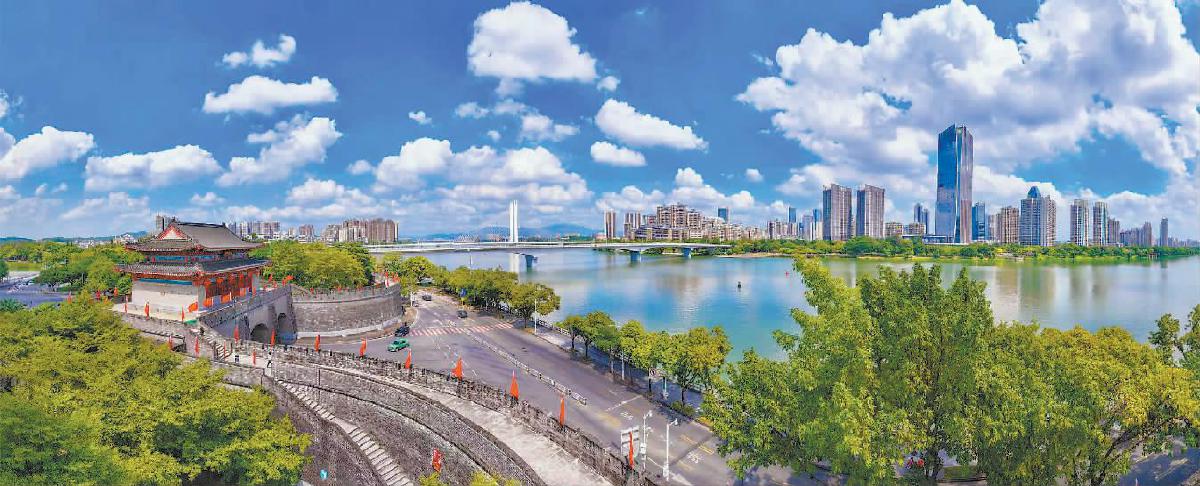
山海惠州展新颜:看“十四五”期间惠州生态环境保护的高分答卷
Zhong Guo Huan Jing Bao· 2025-12-29 02:38
Core Viewpoint - The transformation of Huizhou's ecological environment has been significant, showcasing successful governance and innovative practices in ecological protection and sustainable development during the "14th Five-Year Plan" period [2][3][11]. Group 1: Ecological Achievements - Huizhou has improved its air quality, ranking sixth among 168 key cities in China in 2023, achieving a comprehensive index of 2.46 and an AQI compliance rate of 97.0%, the best in the Pearl River Delta [2][7]. - The city has eliminated 24 Class V tributaries and added 33 good-quality tributaries, with a 100% compliance rate for drinking water source protection areas [7][9]. - The establishment of a comprehensive ecological monitoring network has been completed, ensuring full coverage across all districts [9]. Group 2: Governance and Institutional Innovation - Huizhou has been recognized as "excellent" in environmental protection assessments for five consecutive years, emphasizing the importance of institutional frameworks and innovative service models in ecological governance [3][4]. - The city has implemented a "source control + risk prevention" model for soil management, which has been recognized nationally for its effectiveness [4][11]. - The establishment of ecological environment protection committees at city and county levels has enhanced coordination and accountability in environmental governance [3]. Group 3: Legal and Regulatory Framework - Huizhou has developed local regulations such as the "Dust Pollution Prevention Regulations" and various compensation schemes for ecological damage, strengthening its legal framework for environmental protection [4][5]. - The city has initiated pilot projects for environmental impact assessments, streamlining processes to facilitate industrial development while ensuring ecological safety [4]. Group 4: Enforcement and Compliance - The city has adopted a combination of strict and flexible enforcement strategies, resulting in a significant reduction in penalties for minor violations, promoting a win-win situation for ecology and business [5][6]. - The use of technology in enforcement has improved the precision and efficiency of ecological monitoring and compliance checks [9]. Group 5: Innovative Projects and Recognition - Huizhou has been recognized for its innovative projects, such as the first public trading of mangrove carbon credits, which supports ongoing ecological restoration efforts [10][11]. - The city has been acknowledged for its exemplary practices in building a "waste-free city," contributing to the development of a world-class green petrochemical industry [11].

海上新广东·新生态图集
Nan Fang Nong Cun Bao· 2025-09-01 02:30
Core Viewpoint - Guangdong is actively promoting marine ecological civilization, focusing on harmonious coexistence between humans and the ocean, with significant advancements in ecological restoration and green economic development [4][6][35]. Group 1: Ecological Restoration - The area of mangrove forests in Guangdong has reached 11,400 hectares, ranking first in the country, contributing to coastal protection and biodiversity [14][15]. - The restoration efforts have transformed previously barren tidal flats into lush green areas, enhancing the habitat for various species [12][13][17]. - The population of the Chinese white dolphin in the Pearl River Estuary exceeds 2,000, with six natural reserves established for their protection [20][21]. Group 2: Biodiversity and Wildlife - The number of wintering waterbirds in Guangdong is projected to reach 129,000 by 2025, reflecting a growth of over 15% [24][25]. - Shenzhen Bay has become the third-largest habitat for the black-faced spoonbill globally, showcasing the success of ecological restoration [25][26]. - Rare bird species, such as the black-faced spoonbill and the spoon-billed sandpiper, are thriving in the restored mangrove and tidal flat areas [23][26]. Group 3: Economic Development - The "mangrove aquaculture coupling" model in the Leizhou Peninsula has increased per-acre income to 7,600 yuan [27]. - The first national transaction of mangrove carbon credit development rights was successfully auctioned for over 4 million yuan [28]. - The Nansha area in Guangzhou has seen nearly 60 million annual visitors due to ecological restoration efforts, promoting "blue tourism" [29].

构建海洋新生态,奏响蓝绿交响曲 | 海上新广东系列报道③
Nan Fang Nong Cun Bao· 2025-09-01 02:30
Core Viewpoint - The article emphasizes the importance of marine ecological restoration in Guangdong, highlighting the successful integration of ecological protection with economic development, particularly through the restoration of mangroves and the protection of marine biodiversity [1][7][10]. Group 1: Marine Ecological Restoration - Guangdong has the largest area of mangroves in China, with a total area of 1.14 million hectares, which is the highest in the country [5][44]. - The province has implemented comprehensive measures for ecological restoration, including the establishment of demonstration zones for mangrove restoration, which has led to a significant increase in mangrove areas [32][44]. - The restoration efforts have resulted in the recovery of mangrove areas to approximately 1.1 million hectares, up from just over 1,000 hectares a decade ago [30][31]. Group 2: Biodiversity Protection - The article highlights the presence of the Chinese white dolphin, a key indicator species for marine ecosystems, with the population in the Leizhou Bay area showing stable growth [50][54]. - Guangdong has established six nature reserves for the Chinese white dolphin, making it the region with the highest concentration of this species in China [55][56]. - The province has seen a significant increase in wintering waterbirds, with approximately 129,000 birds recorded in 2025, representing a year-on-year growth of over 15% [67][115]. Group 3: Economic Development through Ecological Integration - The article discusses the innovative coupling of mangrove protection with aquaculture, leading to improved economic benefits from sustainable practices [88][92]. - The successful carbon trading of mangrove carbon credits has generated over 4 million yuan, setting records for both volume and value in China [100][101]. - The tourism sector in areas like Nansha has benefited from ecological restoration, with visitor numbers reaching nearly 60 million in 2024, a 105% increase year-on-year, showcasing the economic potential of "blue tourism" [106][107].