
纳米微球

Search documents
纳微科技董事长江必旺:以研发实力破局 探索“微球世界”
Zhong Guo Zheng Quan Bao· 2026-01-27 22:46
Core Viewpoint - Nanwei Technology is revolutionizing the global high-end materials industry through original innovation and industrialization breakthroughs in nanosphere technology, marking a significant shift for China's new materials sector from laboratory to global market [1][2]. Group 1: Original Innovation and Industrialization - The strategic significance of nanosphere materials is highlighted, as they are essential for the production of biopharmaceuticals and electronics [2]. - The company was founded in 2007 in Suzhou, focusing on high-performance nanosphere materials, addressing a gap in the domestic market where over 90% of chromatography fillers were imported [2][3]. - The initial challenges included a failed technology route that required a complete overhaul of the technical system, which took an additional five years to resolve [3]. Group 2: Product Applications and Market Expansion - Nanwei's products are primarily used in biopharmaceutical separation and purification, as well as in environmental analysis and diagnostics [4]. - The company has significantly reduced production time and costs compared to competitors, exemplified by a six-day production cycle for LCD screen microbeads versus six months for Japanese firms [4]. - New membrane materials developed for organic solvent filtration have filled a global technology gap, allowing for energy-efficient recycling processes [4][5]. Group 3: Industry Collaboration and Future Plans - Nanwei has established a 42,000 square meter R&D and production base in Suzhou and an 18,000 square meter facility in Changshu for large-scale production [6]. - The company anticipates a revenue of 918 million to 930 million yuan in 2025, with a net profit increase of 54.51% to 75.03% [6]. - A unique collaboration model with academic institutions has been developed to address industrial pain points, resulting in over a hundred patent applications [6]. - Future plans include building a systematic platform for high-end materials and expanding into international markets to promote domestic original innovation technologies globally [7].

以研发实力破局 探索“微球世界”
Zhong Guo Zheng Quan Bao· 2026-01-27 20:58
Core Viewpoint - Nanwei Technology is revolutionizing the global high-end materials industry through original innovation and industrialization breakthroughs in the field of nano microspheres, which are crucial for biopharmaceuticals and analytical testing [1][2]. Group 1: Company Background and Innovation - Nanwei Technology was founded in 2007 in Suzhou, focusing on the research and application of high-performance nano microsphere materials [1]. - The company aims to fill the industrial gap in nano microspheres, which are essential for biopharmaceutical production and have been dominated by foreign companies [2]. - The founder, Jiang Biwang, emphasizes the importance of original innovation to establish a foothold in the nano microsphere market [2]. Group 2: Technological Advancements - Nanwei Technology has developed a new manufacturing technique using the "seed method" to produce uniform microspheres, significantly reducing production costs and time compared to traditional methods [3]. - The company launched its self-developed monodisperse silica chromatography filler in 2016, filling a domestic technological gap [3]. Group 3: Market Applications and Expansion - The microspheres produced by Nanwei are used in various fields, including biopharmaceutical separation and purification, environmental analysis, and flat panel displays [3]. - The company has demonstrated that its products can outperform competitors, such as reducing the amount of filler needed for biopharmaceutical production, thus enhancing efficiency and reducing solvent consumption [3]. Group 4: Future Growth and Financial Projections - Nanwei Technology plans to achieve an estimated revenue of 918 million to 930 million yuan by 2025, representing a year-on-year growth of 17.32% to 18.86% [4]. - The projected net profit for the same period is expected to be between 128 million to 145 million yuan, indicating a significant increase of 54.51% to 75.03% [4]. Group 5: Collaborative Ecosystem - The company has established a unique collaboration model with academic institutions to address industrial pain points while leveraging their expertise in single-point technological breakthroughs [5]. - Nanwei Technology has applied for over a hundred patents, building a robust intellectual property system to support its innovations [5].
【行业深度】一文洞察2026年中国纳米微球行业发展前景及投资趋势研究报告
Sou Hu Cai Jing· 2026-01-21 02:42
Core Insights - The Chinese nanosphere industry is experiencing rapid growth, with a projected market size of approximately 4.236 billion yuan in 2024, representing a year-on-year increase of 5.40% [2][11] - Nanospheres are critical materials in high-tech products, serving as essential components in biomedicine and flat panel displays, thus being referred to as "behind-the-scenes heroes" and "bottleneck" materials [2][11] Industry Overview - Nanospheres are micron-sized spheres with nanometer-scale pore structures, characterized by high specific surface area and unique physicochemical properties, widely used in drug delivery, LCD displays, bioseparation, medical diagnostics, and optoelectronic materials [2] - They can be classified into natural biomaterials (e.g., chitosan, collagen) and synthetic polymers (e.g., PLGA, PVA) [4] Preparation Methods - Nanospheres can be prepared using various methods, including ionic crosslinking, emulsification-solvent evaporation, and microfluidic technology, each with distinct principles, applicable materials, and performance characteristics [5][7] - Ionic crosslinking is suitable for natural biomaterials and emphasizes biocompatibility, while emulsification-solvent evaporation is widely used for synthetic polymers, and microfluidic technology allows for precise control of droplet formation [7] Industry Chain - The upstream of the nanosphere industry includes raw materials such as chitosan, starch, cellulose, and various synthetic polymers, along with production equipment like high-pressure homogenizers and laser particle size analyzers [8][9] - The midstream involves the manufacturing of nanospheres, while the downstream applications include drug delivery, biopurification, in vitro diagnostics, LCD spacers, and conductive materials [8] Market Size - The market for nanospheres in China is projected to grow significantly, with the biomedicine sector utilizing uniform-sized, surface-modifiable nanospheres for high-end drug development and precise diagnostics [11]




2025年中国纳米微球行业制备方法、产业链图谱、市场规模及发展展望研判:行业正处于快速成长期,市场规模不断增长[图]
Chan Ye Xin Xi Wang· 2026-01-12 01:19
Core Insights - The Chinese nanosphere industry is experiencing rapid growth, with a projected market size of approximately 4.236 billion yuan in 2024, representing a year-on-year increase of 5.40% [1][7]. Industry Overview - Nanospheres are micron-sized spheres with nanoscale pore structures, characterized by high specific surface area and unique physical and chemical properties. They are widely used in drug delivery, liquid crystal displays, bi separation, medical diagnostics, and optoelectronic materials [2][4]. - The primary materials for nanospheres are classified into natural biomaterials (such as chitosan and collagen) and synthetic polymers (like PLGA and PVA) [2]. Nanosphere Classification - Nanospheres can be categorized based on preparation methods, including ion crosslinking, emulsion-solvent evaporation, and microfluidic technology, each with distinct principles, applicable materials, and performance characteristics [4]. Industry Chain - The upstream of the nanosphere industry includes raw materials such as chitosan, starch, cellulose, and various polymers. The midstream involves the production and manufacturing of nanospheres, while the downstream applications span drug delivery, bi separation, in vitro diagnostics, LCD spacers, conductive materials, and light diffusion films [5][6]. Market Size - The Chinese nanosphere industry is on a growth trajectory, with a market size expected to reach approximately 4.236 billion yuan in 2024, marking a 5.40% increase from the previous year [1][7]. Key Companies - Suzhou Nanwei Technology Co., Ltd. is recognized as the industry leader, leveraging proprietary technologies for precise control over sphere size and surface properties. In the first three quarters of 2025, the company reported revenues of 671 million yuan, a 22.01% increase year-on-year [8][9]. - Xian Lanyao Technology Co., Ltd. is a leading player in the adsorption separation materials sector, focusing on life sciences. The company reported revenues of 193 million yuan in the first three quarters of 2025, reflecting a 2.20% year-on-year growth [10]. Industry Development Trends 1. **Technological Innovation**: The preparation technology for nanospheres is advancing towards ultra-high precision, functional integration, and green transformation, with a focus on AI-assisted design and biodegradable materials [11]. 2. **Diverse Application Demand**: The biopharmaceutical sector remains the core growth area for nanospheres, with increasing demand in electronic displays and environmental applications, leading to a surge in market demand [12]. 3. **Domestic Substitution**: The market is transitioning from foreign monopoly to rapid growth of local enterprises, with domestic leaders like Nanwei Technology gaining market share due to competitive pricing and technological advantages [12].

中国银河:首次覆盖纳微科技给予买入评级,目标价29.2元
Zheng Quan Zhi Xing· 2025-05-08 05:33
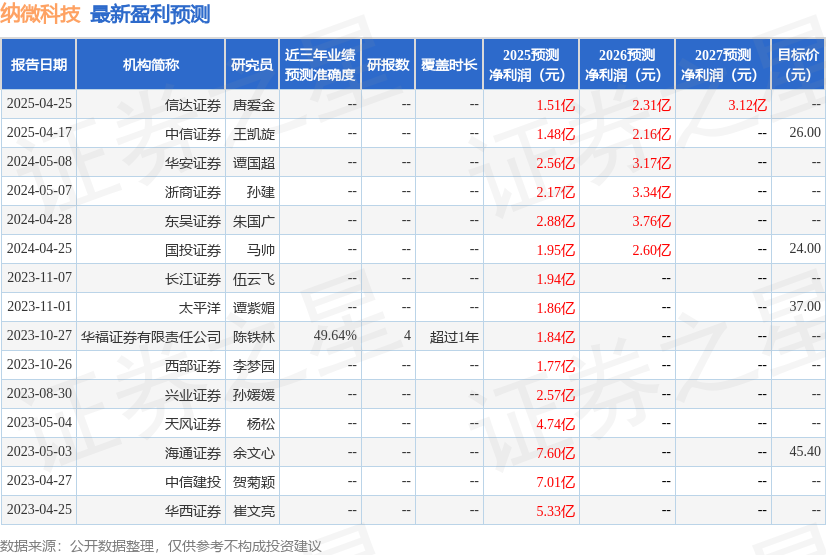
Core Viewpoint - Nanwei Technology has been covered for the first time with a "Buy" rating and a target price of 29.2 yuan, indicating strong growth potential in the domestic market for chromatography materials and instruments [1]. Financial Performance - In 2024, the company achieved revenue of 782 million yuan, a year-on-year increase of 33.33%, and a net profit attributable to shareholders of 83 million yuan, up 20.82%. The non-recurring net profit was 66 million yuan, showing a significant growth of 108.55% [2]. - For Q1 2025, the company reported revenue of 189 million yuan, a year-on-year increase of 22.39%, and a net profit attributable to shareholders of 29 million yuan, up 72.98%. The non-recurring net profit was 25 million yuan, reflecting an 85.28% increase [2]. Business Segments - The core business of chromatography fillers and media generated revenue of 451 million yuan in 2024, a growth of 10.20%. The revenue from large molecule chromatography media was 249 million yuan, flat year-on-year, while small molecule chromatography fillers saw a 16.13% increase to 165 million yuan [3]. - The newly added chromatography analysis instruments and accessories contributed 154 million yuan, primarily from the acquisition of Fuli Instruments. Revenue from protein chromatography systems and accessories decreased by 33.41% to 40 million yuan, while liquid chromatography columns and sample pretreatment products increased by 26.15% to 73 million yuan [3]. Market Dynamics - The chromatography filler market is expanding, driven by the growth of biopharmaceuticals and peptide drugs. Currently, the market is dominated by imported manufacturers, with domestic market share at only about 10%. The emphasis on cost reduction and supply chain security is accelerating domestic substitution [4]. - The company has established a comprehensive product layout and has gained recognition from leading domestic pharmaceutical companies. In 2024, the number of customers increased to 792, with strategic cooperation agreements signed with five new clients [4]. Investment Outlook - The company is evolving into a leading domestic supplier of chromatography fillers, consumables, and instruments, benefiting from ongoing domestic substitution and a robust project pipeline. Revenue projections for 2025-2027 are 977 million, 1.17 billion, and 1.37 billion yuan, with net profits of 134 million, 203 million, and 290 million yuan respectively [5].

中国抵御外部冲击的科技密码 ——“底气从何而来”系列报道之一
Ke Ji Ri Bao· 2025-04-21 01:20
Group 1: Technology Innovation as a Core Support - The core argument is that technological innovation is a key variable and a hard support for China's economy to withstand external shocks, especially in the context of ongoing trade tensions with the U.S. [2] - China has been actively opening more R&D parks and promoting AI-driven innovation, showcasing a strong commitment to technological advancement despite external pressures [2][3]. Group 2: Case Studies of Technological Breakthroughs - Huagong Technology has transformed its previously constrained capabilities into a competitive advantage by developing advanced laser cutting technology, achieving the fastest welding speed in the automotive industry at 43 seconds per vehicle [3]. - The company has seen over 60% growth in overseas sales of its laser equipment, achieving full coverage in the European market [3]. - Nanwei Technology has disrupted the market with its nano-microspheres, leading to a 90% price drop in competing foreign products upon its launch [5][6]. Group 3: Policy Support and Ecosystem Development - The Suzhou Industrial Park has played a crucial role in fostering nanotechnology, becoming one of the world's major nanotechnology hubs through strategic investments and policy support [6][7]. - A series of coordinated policies at both central and local levels have been implemented to enhance technological innovation and industrial integration, positioning China to better navigate external challenges [7][8]. Group 4: Emerging Industries and Talent Development - The integration of education and technology is being accelerated, with initiatives like the "Academician Class" at Shenzhen University aimed at fostering early involvement of students in cutting-edge research [10]. - The Yangtze River Delta region is transforming its industrial landscape through collaborative efforts, focusing on high-tech sectors such as biomedicine and new energy vehicles [10][11]. Group 5: Quantum Technology and Future Prospects - GuoDun Quantum Technology is leveraging research from the University of Science and Technology of China to advance quantum computing, aiming to establish a robust quantum technology ecosystem [11]. - The market potential for new technologies and industries in China is significant, with experts suggesting that external pressures may accelerate the shift towards higher-end industrial chains [11].