维也纳

Search documents
春节假期酒店专家交流
2026-02-24 14:15
Summary of Hotel Industry Conference Call Industry Overview - The hotel industry performed exceptionally well during the 2026 Spring Festival, driven by favorable weather, an extended holiday, and a trend towards traveling during the holiday season. Key customer segments included family travelers, seniors, and couples [1][2][3] - Domestic tourism has replaced some outbound travel, and inbound tourism has significantly increased, with expectations of reaching 100 million visitors in 2026 [1][4][13] Key Points on Jinjiang Hotels - Jinjiang Hotels benefited from a low base effect and optimized revenue management, achieving a RevPAR increase of 31%, with price contributing 21 points [1][5] - The company is expected to maintain a good growth rate throughout the year, provided it focuses on business improvement and product upgrades [1][7] - Jinjiang's customer base has shifted towards family, seniors, and couples, who prefer chain hotels for better experiences and safety [4] - The company’s performance was enhanced by a low base from the previous year due to internal restructuring [5] Market Dynamics - The hotel market is expected to see a slight supply increase of 1-2% in 2026, with chain hotels growing faster than the industry average due to improved penetration in lower-tier markets [1][8][9] - Business travel demand is projected to grow by 3-5%, with some companies increasing their travel budgets [10] - The overall hotel market is entering a price increase cycle, with leading brands like Huazhu and Atour already raising prices [2][20][21] Competitive Landscape - Huazhu's RevPAR is expected to grow by about 3%, while Jinjiang anticipates a 5% increase due to last year's low base and the closure of underperforming hotels [23][24] - Atour faces challenges in raising prices due to historical high bases and government price regulations [6] - Jinjiang's main challenges include a lack of strong core brands and low membership contribution, which stands at 30% compared to Huazhu's 65% [26][29] Future Outlook - The hotel industry is expected to enter a price increase cycle over the next 1-3 years, influenced by leading brands' pricing strategies [20] - The growth of chain hotels is anticipated to continue outpacing the overall industry, with a projected increase in chain penetration by 3-4% in 2026 [9] - The tourism sector is expected to remain strong, with increased consumer spending on travel and a preference for chain hotels due to safety and service quality [11] Risks and Challenges - Huazhu faces risks in the mid-to-high-end market, particularly in maintaining competitiveness in lower-tier markets [25] - Jinjiang needs to optimize its brand strategy to enhance market competitiveness and address its low membership contribution [26] - Atour's focus on brand reputation and customer experience is crucial for its future growth, especially after previously lowering entry standards for new projects [27][28]

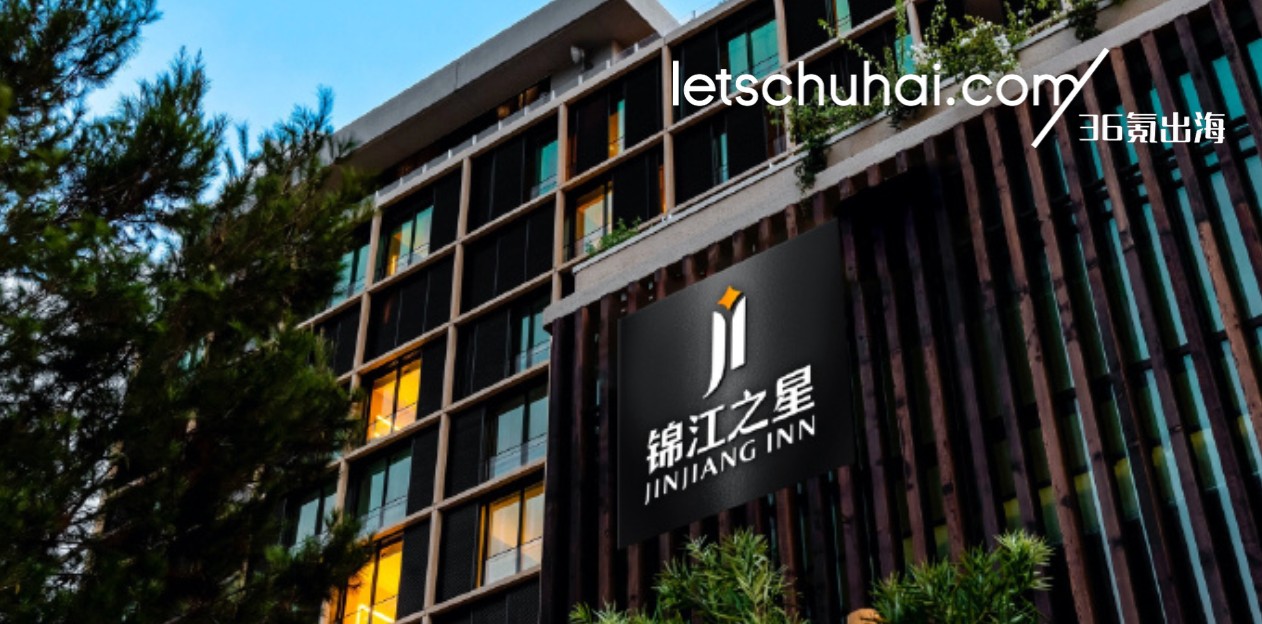
36氪出海·港股|锦江国际赴港上市:出海十年,为何至今难盈利?
3 6 Ke· 2025-07-11 11:04
Core Viewpoint - Jinjiang International Group is preparing for an IPO on the Hong Kong Stock Exchange, aiming to leverage its extensive global presence while addressing significant losses in its overseas operations over the past five years, totaling over 2.3 billion yuan [2][7]. Group 1: Company Overview - Jinjiang International is the largest hotel group in China, with a diverse portfolio of brands including Jinjiang Inn, Lavande, and Vienna, catering to various market segments from budget to mid-range [2]. - The company has expanded its footprint to 55 countries, with a notable presence in France, where it operates 773 hotels, and nearly 400 additional locations across Europe, Asia, the Americas, and Africa [2]. Group 2: Financial Performance - In 2024, Jinjiang's overseas market revenue reached 4.256 billion yuan, accounting for 30.8% of total revenue, with a gross margin of 41.9%, significantly higher than the domestic market [6]. - Despite the high gross margin, the overseas operations have faced continuous losses, accumulating over 300 million euros (approximately 2.35 billion yuan) in losses over five years, primarily due to high operational costs in Europe [7][9]. Group 3: Business Strategy - Jinjiang's business model includes both heavy asset and light asset strategies, with a shift towards a light asset model starting in 2024, focusing on franchising rather than direct ownership [5][8]. - The company plans to utilize funds from its IPO to enhance overseas operations, optimize debt, and invest in digital systems, with 50% of the raised capital earmarked for upgrading overseas business and digital infrastructure [10]. Group 4: Challenges and Future Outlook - The company faces significant challenges in its European operations, including high operational costs and cultural integration issues following large-scale acquisitions, particularly with the Louvre Hotels Group [9][13]. - Jinjiang is now targeting Southeast Asia for expansion, adopting a light asset strategy in collaboration with local partners, aiming to capitalize on the region's growing middle class and tourism industry [12][13]. - The success of Jinjiang's expansion into Southeast Asia will depend on its ability to address past integration challenges and avoid resource dispersion across multiple brands [13][14].

疯狂开店却越赚越少,全球最大酒店巨头急了?
凤凰网财经· 2025-07-10 13:13
Core Viewpoint - The article discusses the recent move by Jin Jiang Hotels to pursue a secondary listing on the Hong Kong Stock Exchange amid declining financial performance despite aggressive expansion efforts. The company faces challenges in converting its extensive hotel network into sustainable profits and revitalizing its overseas assets, which have been underperforming [2][4][10]. Group 1: Company Overview - Jin Jiang Hotels is the largest hotel group globally, with a presence in 13416 operating hotels and over 1.29 million rooms, ranking second worldwide [8]. - The company has been expanding rapidly, opening 1515 new hotels last year and 97 in the first quarter of this year, bringing the total to 13513 hotels [9]. - Despite the growth in scale, Jin Jiang Hotels has experienced a decline in revenue and net profit, with 2024 revenue at 14.06 billion RMB, down 4% year-on-year, and net profit down 9.06% to 911 million RMB [10][11]. Group 2: Market Challenges - The hotel industry in China is facing oversupply, with over 370,000 hotels and a net increase of nearly 30,000 hotels, leading to intense competition and price wars [13]. - Key performance indicators for Jin Jiang Hotels have declined, with RevPAR at 157.47 RMB (down 5.78%), ADR at 240.67 RMB (down 11.19 RMB), and occupancy rate at 65.43% [13][14]. - The company plans to continue its expansion strategy, targeting lower-tier cities and aiming to open an additional 1300 hotels this year [15]. Group 3: International Expansion and Financial Performance - Jin Jiang Hotels has been expanding internationally since acquiring the Louvre Hotels Group in 2015, with overseas revenue contributing 42.56 billion RMB (30.8% of total revenue) in 2024 [16]. - The overseas hotel business has a higher gross margin of 41.9% compared to 36.9% for domestic operations, indicating better profitability potential [16]. - However, the overseas operations have faced losses, with the Louvre Group reporting a net loss of 10.79 million euros despite expectations from the Paris Olympics [17][19]. Group 4: Future Outlook - The company aims to use the funds raised from the Hong Kong IPO to strengthen and expand its overseas business, repay bank loans, and supplement working capital [22]. - There are concerns about the sustainability of Jin Jiang's overseas strategy, as it must prove that its expansion can lead to self-sustaining profitability rather than relying on external funding [23].