7天酒店

Search documents
一大波酒店投资人,开始组团“西南飞”
3 6 Ke· 2025-11-14 09:50
Core Insights - The hotel investment trend is shifting towards Guiyang, the capital of Guizhou province, as investors are increasingly attracted to its growing market potential [2][4][5] Market Performance - Guiyang's hotel market is showing strong performance with a 40% year-on-year increase in accommodation demand during the summer of 2025, and an average occupancy rate exceeding 85% [3][7] - The core area of Guiyang has seen hotel occupancy rates consistently surpassing 90% [6][8] Supply and Demand Dynamics - Despite the surge in demand, the supply of hotels in Guiyang remains limited, with only 2,922 hotels available as of August this year, and a low chain hotel penetration rate of 3.58% for economy hotels [11][10] - The market is experiencing a structural opportunity with demand outpacing supply, particularly in the mid-to-high-end hotel segment [15][12] Market Structure and Trends - The hotel market in Guiyang is transitioning from economy to mid-to-high-end offerings, with approximately 25% of hotels classified as high-end and 60% as mid-range [12][14] - In the past three years, 1,262 new hotels have opened, with a significant number being economy hotels, indicating a shift in market dynamics [13][14] Investment Opportunities - The local government has implemented supportive policies to boost the development of mid-to-high-end hotels, including financial incentives and land use innovations [18][19] - International hotel brands such as Hilton and Marriott have accelerated their entry into the Guiyang market, indicating strong investor interest [20][21] Competitive Landscape - The competitive environment is intensifying as new entrants may resort to price cuts and promotions to attract customers, which could pressure existing hotels [28] - The overall hotel operating data in the Southwest region is below the national average, highlighting the need for improved operational efficiency [28] Future Outlook - Guiyang's hotel market is poised for growth, but investors must adopt a long-term perspective and focus on creating differentiated offerings to achieve sustainable returns [30][31]


2025年10月亚洲(中国)酒店业发展报告
3 6 Ke· 2025-11-10 09:00
Group 1: Global Hotel Industry Trends - The tourism industry in Europe, the Middle East, and Africa is experiencing record growth, with Africa's tourism sector seeing a double-digit growth rate in the first half of the year, particularly in South Africa and Egypt [2][3] - Mino International Group plans to develop and manage 50 new hotels in Egypt in collaboration with Sunrise Resorts and Hotels, with the first phase including four flagship hotels [2] - Hilton Group announced its expansion into sub-Saharan Africa, with plans to triple its hotel count on the continent to over 160 hotels in the coming years [3] Group 2: Asia-Pacific Market Developments - The Asia-Pacific hotel industry experienced a performance surge during the "super golden week" holiday, with significant increases in occupancy rates and revenue per available room (RevPAR) in Japan [5][6] - Huazhu Group and Jinjiang Hotels reported a combined guest reception exceeding 23.5 million during the holiday, with Huazhu achieving a 36% year-on-year increase in guest numbers [6] Group 3: Hotel Group Executive Changes - Several hotel groups announced executive appointments, including Shangri-La Group appointing Xu Haochun as Chief Development Officer for China and Marriott International naming Gautam Bhandari as Chief Development Officer for the Asia-Pacific region [9][10] Group 4: Third Quarter Financial Reports - Among ten monitored hotel groups, only half reported year-on-year profit growth for Q3 2025, with Jinjiang Hotels achieving a net profit of approximately 375 million yuan, a 45.45% increase [12] - Major international hotel groups like Marriott, InterContinental, and Hyatt saw RevPAR growth of less than 1%, while Wyndham experienced a 5% decline [12][15] Group 5: Hotel Asset Transactions - In October, 46 hotel assets were listed for sale or auction, with nine hotels having auction prices exceeding 100 million yuan, but no hotels were sold during the month [16][17] Group 6: Hotel Openings and Signings in China - In October, 245 new hotels opened in China, a decrease from 293 in September, indicating a market adjustment post-holiday [18] - The luxury and high-end hotel segment saw significant new openings, including multiple projects from Hilton and Accor [19][20] Group 7: Luxury Hotel Rankings and Analysis - The luxury hotel sector is focusing on brand rejuvenation and consumer engagement, with brands like Rosewood and Shangri-La launching new initiatives to attract younger generations [24][25] - The ABN Index for luxury hotels showed a decline in most metrics except for media and new media indices, indicating a need for improved customer engagement strategies [31][32]


锦江酒店宣布旗下7天酒店出海,同日签约10个项目
Xin Lang Cai Jing· 2025-11-07 11:53
Core Viewpoint - The announcement of 7 Days Inn's expansion into the Southeast Asian market marks a significant step for Jinjiang Hotels (China) in its overseas strategy, following the earlier expansion of its other brands in Malaysia [1][3]. Group 1: Expansion Strategy - Jinjiang Hotels (China) will independently manage the development, construction, and operation of 7 Days Inn in Southeast Asia, indicating a solid commitment to local market penetration [3]. - The initial phase includes signing intentions for 10 projects, primarily located in key cities and popular tourist destinations in Malaysia, such as Kuala Lumpur and Penang [5]. Group 2: Market Potential - The Southeast Asian region presents a strong demand for high-quality, standardized accommodation products due to its large tourism base and increasing business interactions [7]. - 7 Days Inn aims to target the economic hotel market in Southeast Asia, complementing the previously launched Jinjiang Inn brand, leveraging established business models and operational efficiencies [7]. Group 3: Localization and Adaptation - The company plans to adapt its hotel offerings to meet local demands, cultural characteristics, and consumer preferences, enhancing brand appeal and competitiveness in the region [8]. - 7 Days Inn will integrate operational experiences and digital service capabilities from the Chinese market with local needs to create a quality hotel solution [8]. Group 4: Operational Model - The overseas expansion of 7 Days Inn represents the export of a mature business model and operational standards refined in the Chinese market, providing a robust foundation for rapid replication and growth abroad [9]. - As the overseas brand portfolio expands, Jinjiang Hotels (China) is expected to enhance its comparative advantages in the Southeast Asian market, leading to significant improvements in both development quality and efficiency [9].
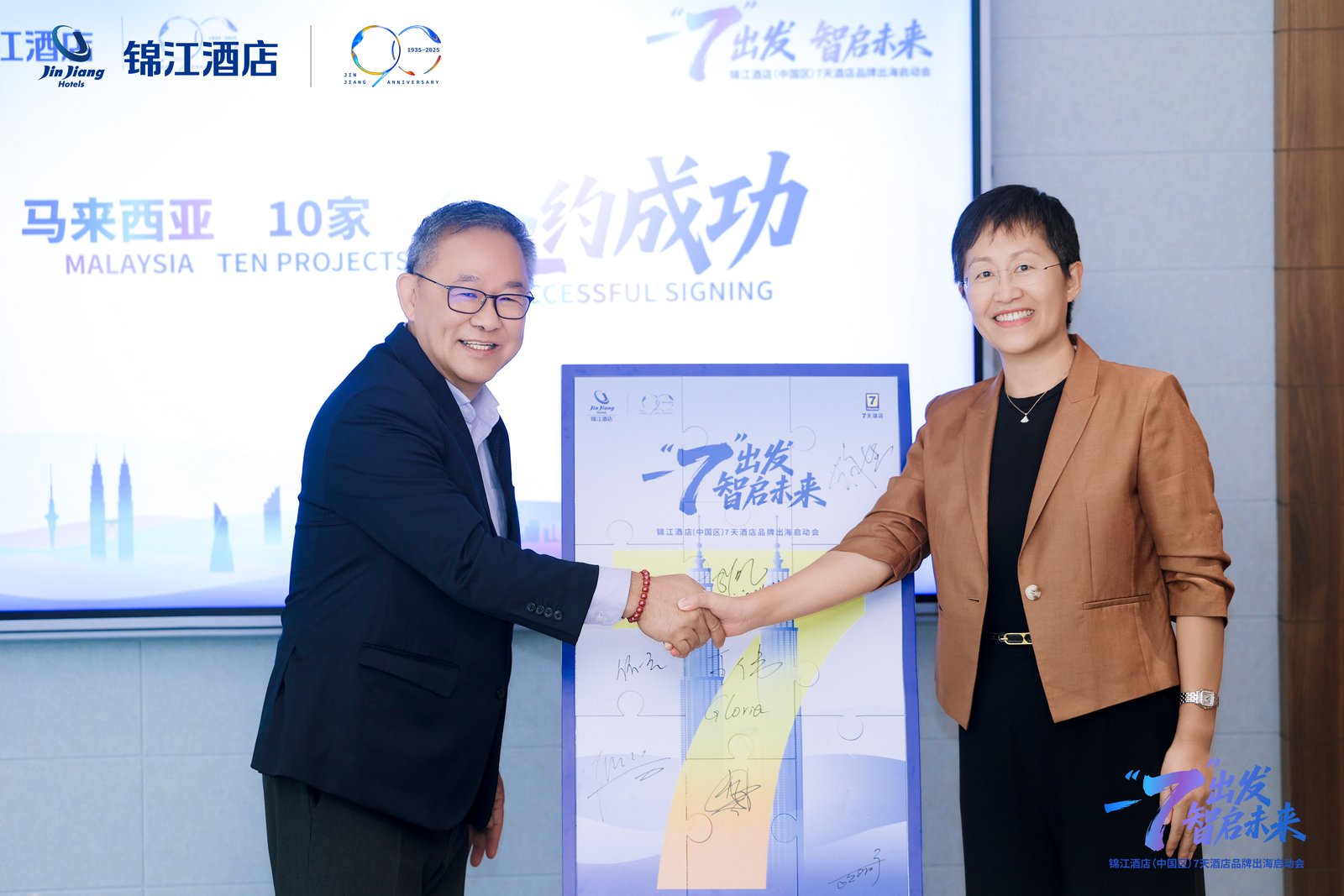
东南亚酒店市场迎“新军”,中国软实力正借“一张床”全面落地
Guan Cha Zhe Wang· 2025-11-04 11:43
Core Insights - Chinese hotel operators are expanding into Southeast Asia to meet the growing outbound tourism demand from China [1][2] - Southeast Asia is a popular travel destination for Chinese tourists, with countries like Thailand, Malaysia, and Singapore ranking high among preferred destinations [1] - The region is expected to attract over 120 million international tourists in 2025, with tourism revenue projected to exceed $350 billion [1] Group 1: Market Expansion - Jinjiang Hotels (China) is targeting Southeast Asia as a key market for its second growth curve, with plans to expand its 7 Days Inn brand [2][5] - The company has signed intentions for 10 projects in Malaysia, focusing on major cities and popular tourist areas [4] - Jinjiang Hotels aims to establish a self-circulating management system for development, construction, and operation in Southeast Asia [5] Group 2: Strategic Approach - The company is adopting a "light asset entry + localized deep cultivation" strategy for its overseas expansion [5] - Jinjiang Hotels has deployed management teams to key markets such as Malaysia, Indonesia, and Vietnam to enhance local operations [4][5] - The brand is building a diverse portfolio that includes high-end to budget options, catering to various traveler segments [5] Group 3: Market Impact - The expansion of Jinjiang Hotels is expected to enrich the hotel supply in emerging cities in Southeast Asia [5] - The loyalty program coverage is anticipated to expand, providing more reasons for diverse traveler groups to explore new destinations in the region [5]
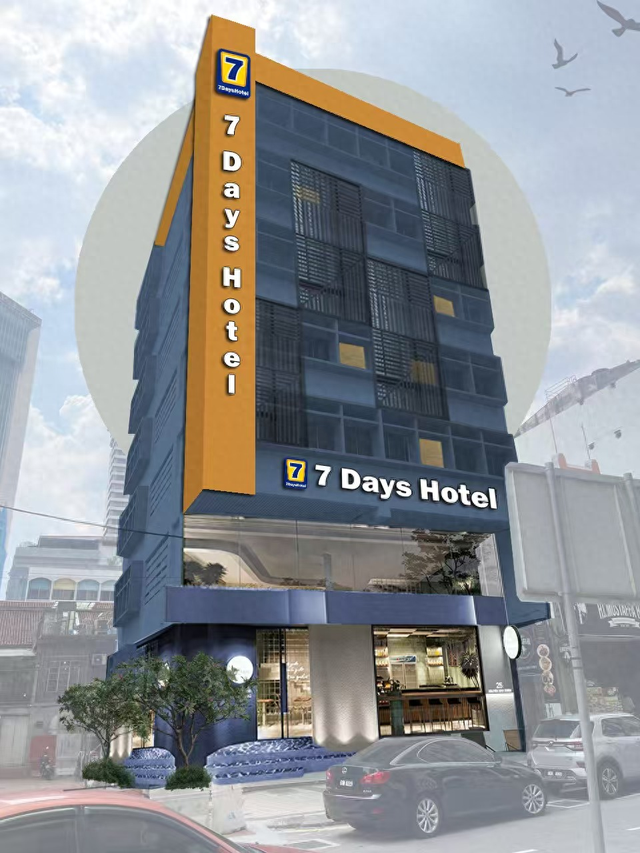
开业超20000家,经济连锁酒店又火了?
3 6 Ke· 2025-08-21 13:40
Core Insights - The economic hotel sector, previously overshadowed by mid-to-high-end and luxury hotels, is experiencing renewed interest and activity in 2023 [1] - Economic hotels are increasingly favored by diverse user groups, including job-seeking graduates, leisure travelers, and business travelers, due to their affordability and convenience [5][11] Group 1: Economic Hotel Demand - Young job seekers are utilizing economic hotels like Qinghe Yizhan for affordable accommodation during job hunts, with offerings such as free stays for applicants [2] - Travelers are returning to clean and budget-friendly economic hotels, with prices typically ranging from 300 to 400 yuan per night, highlighting their value proposition [3] - Corporate travel expenses are decreasing, with companies tightening budgets and opting for economic hotels as a cost-saving measure [4] Group 2: Hotel Brand Strategies - Hanting has positioned itself as a national brand with a focus on cleanliness and comfort, boasting over 359,475 rooms, making it the largest hotel brand globally [6][11] - Shangkeyou targets lower-tier cities, emphasizing cost reduction and affordability, with an average room price around 170 yuan [8] - City Convenience Hotel balances mid-range experiences with economic pricing, achieving a 20% reduction in construction costs while maintaining quality [9] Group 3: Market Trends and Statistics - Economic hotels account for 40% to 55% of major hotel groups' portfolios, serving as a stable revenue source [11] - As of 2023, over 70% of the accommodation market is in the mid-to-low-end segment, with economic hotels comprising over 40% of this category [11] - The chain hotel rate for economic hotels is only 29.96%, indicating significant room for growth in the market [11][16] Group 4: Digital Transformation and Brand Influence - The shift towards digitalization in hotel operations is crucial for enhancing supply chain efficiency and customer experience [14][15] - Brand influence remains a key factor in the economic hotel sector, with established brands like Hanting and Jinjiang leading the market [17] - The economic hotel segment is seen as a testing ground for hotel groups to innovate and adapt to market demands, ensuring resilience in fluctuating market conditions [18]

锦江酒店(600754.SH):在西藏自治区林芝市墨脱县已布局多个品牌酒店
Ge Long Hui· 2025-08-06 08:11
Core Viewpoint - The company has established multiple hotel brands in Mohe County, Nyingchi City, Tibet, and is actively expanding its presence in the region [1] Group 1 - The company operates several hotel brands in Mohe County, including 7 Days, Vienna International, Jinjiang Metropolis, and Jinjiang Inn [1] - Some of the hotels are already operational while others are still under construction [1] - The company is focusing on both the economy and mid-range market segments [1] Group 2 - The company will continue to monitor regional infrastructure development and cultural tourism growth [1] - The expansion of related businesses will be aligned with the company's brand strategy and market assessment [1]
疯狂开店却越赚越少,全球最大酒店巨头急了?
凤凰网财经· 2025-07-10 13:13
Core Viewpoint - The article discusses the recent move by Jin Jiang Hotels to pursue a secondary listing on the Hong Kong Stock Exchange amid declining financial performance despite aggressive expansion efforts. The company faces challenges in converting its extensive hotel network into sustainable profits and revitalizing its overseas assets, which have been underperforming [2][4][10]. Group 1: Company Overview - Jin Jiang Hotels is the largest hotel group globally, with a presence in 13416 operating hotels and over 1.29 million rooms, ranking second worldwide [8]. - The company has been expanding rapidly, opening 1515 new hotels last year and 97 in the first quarter of this year, bringing the total to 13513 hotels [9]. - Despite the growth in scale, Jin Jiang Hotels has experienced a decline in revenue and net profit, with 2024 revenue at 14.06 billion RMB, down 4% year-on-year, and net profit down 9.06% to 911 million RMB [10][11]. Group 2: Market Challenges - The hotel industry in China is facing oversupply, with over 370,000 hotels and a net increase of nearly 30,000 hotels, leading to intense competition and price wars [13]. - Key performance indicators for Jin Jiang Hotels have declined, with RevPAR at 157.47 RMB (down 5.78%), ADR at 240.67 RMB (down 11.19 RMB), and occupancy rate at 65.43% [13][14]. - The company plans to continue its expansion strategy, targeting lower-tier cities and aiming to open an additional 1300 hotels this year [15]. Group 3: International Expansion and Financial Performance - Jin Jiang Hotels has been expanding internationally since acquiring the Louvre Hotels Group in 2015, with overseas revenue contributing 42.56 billion RMB (30.8% of total revenue) in 2024 [16]. - The overseas hotel business has a higher gross margin of 41.9% compared to 36.9% for domestic operations, indicating better profitability potential [16]. - However, the overseas operations have faced losses, with the Louvre Group reporting a net loss of 10.79 million euros despite expectations from the Paris Olympics [17][19]. Group 4: Future Outlook - The company aims to use the funds raised from the Hong Kong IPO to strengthen and expand its overseas business, repay bank loans, and supplement working capital [22]. - There are concerns about the sustainability of Jin Jiang's overseas strategy, as it must prove that its expansion can lead to self-sustaining profitability rather than relying on external funding [23].