
老凤祥首饰

Search documents
伴手礼添彩城市名片
Ren Min Ri Bao Hai Wai Ban· 2025-10-14 22:45
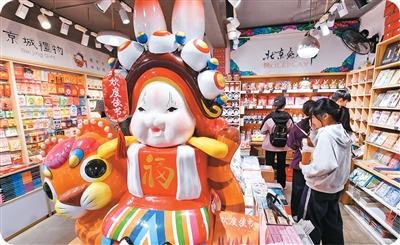
Core Insights - The article discusses the rise of "city gifts" in China, which are unique products representing local culture and identity, becoming popular souvenirs for tourists [9][12][13] - The concept of "city gifts" has been formalized, with over 1,000 brands identified across various administrative levels, indicating a growing market and cultural significance [12][19] - The development of city gifts reflects a blend of cultural heritage and modern consumer demands, showcasing the potential for economic growth and cultural exchange [10][17][19] Summary by Sections City Gifts Concept - The "city gift" concept emphasizes the integration of local culture, creative design, and market needs, transforming regional symbols and historical memories into distinctive products [9] - The 2025 China City Gift Development White Paper outlines the economic potential of city gifts, highlighting their role in promoting consumption, upgrading industries, and enhancing urban image [9][12] Popularity and Trends - During recent holidays, many travelers returned with unique city gifts, showcasing the trend of purchasing local products as souvenirs [8] - Notable examples include traditional items like Shanghai's White Rabbit candy and Tianjin's pancake-themed merchandise, which have gained popularity among tourists [10][11] Market Growth and Brand Development - The number of city gift brands has surpassed 1,000, with nearly 90% of the top 100 cities in China hosting related activities, indicating a systematic industry evolution [12] - The article highlights various successful city gift initiatives, such as "Shenzhen Handwritten Gifts," which generated over 1 billion yuan in sales, demonstrating significant market potential [17] Cultural and Economic Impact - City gifts serve as a bridge for cultural exchange, embodying local essence while appealing to tourists [13][19] - The article discusses different development models for city gifts, including mainstream consumption, cultural tourism integration, and industry fusion, emphasizing the need for unique branding to avoid homogenization [19] Innovative Examples - Cities like Wuhan have creatively incorporated local dialects and humor into their gift offerings, such as plush toys based on popular phrases, enhancing their appeal [18] - The article notes that successful city gifts often emerge from unexpected areas, including local food and cultural references, which resonate with consumers [15][18]

从上海凤凰看中华老字号品牌高端化升级的道法术
Jing Ji Guan Cha Bao· 2025-09-30 09:12
Core Viewpoint - The article discusses the challenges and opportunities faced by traditional Chinese brands, particularly focusing on Shanghai Phoenix's high-end transformation strategy amidst rising consumer demand for quality and individuality in products [1][2]. Industry Overview - Traditional Chinese brands are experiencing pressure from low-cost competition, particularly from Southeast Asian countries, and are struggling with low profit margins due to a "value for money" perception [3][4]. - The need for high-end transformation is emphasized as a strategy to differentiate brands, enhance brand image, and expand profit margins [2][6]. Company Analysis: Shanghai Phoenix - Shanghai Phoenix, a well-known century-old brand, is undergoing a high-end transformation strategy termed "strategic flywheel, six-line chain movement," which serves as a model for other traditional brands [2][22]. - The company is focusing on three key product categories for high-end development: children's bicycles, mid-to-high-end sports bicycles, and lithium electric bicycles [7][12]. Product Categories 1. **Children's Bicycles**: The market for children's bicycles is growing, with a projected compound annual growth rate of 36% to reach $25 billion by 2032. Shanghai Phoenix is launching a premium children's bicycle series to capitalize on this trend [8][9]. 2. **Mid-to-High-End Sports Bicycles**: The post-pandemic cycling trend has led to a significant increase in demand for mid-to-high-end bicycles, with sales of high-end road bicycles growing by 530% year-on-year [10][11]. 3. **Lithium Electric Bicycles**: The global market for electric bicycles is expected to grow at a compound annual growth rate of around 10%, with Europe being a key market. Shanghai Phoenix is focusing on this segment as a core strategy for high-end transformation [12][13]. Challenges and Strategies - Shanghai Phoenix faces challenges such as low profit margins and a lack of high-end product lines, which necessitates a shift from low-cost competition to quality and uniqueness [4][5]. - The company is advised to enhance product quality control, innovate product designs, and improve customer satisfaction to support its high-end transformation [26][29]. Market Positioning - The brand aims to reposition itself by focusing on fashion and lifestyle elements, appealing to younger consumers who prioritize aesthetics and comfort in their purchasing decisions [23][24]. - The company plans to expand its retail presence, particularly through offline channels, to enhance customer experience and support its high-end product offerings [31][32]. Organizational Changes - Organizational restructuring is essential for effective implementation of the high-end strategy, including optimizing decision-making processes and enhancing market responsiveness [38][39]. International Expansion - Shanghai Phoenix is shifting its focus to high-value markets in Europe and North America, particularly in the lithium electric bicycle segment, to improve profit margins and market presence [34][35].
