自行车

Search documents
腾讯阿里投的自行车,在欧洲卖爆年入5亿,要冲刺港股IPO
21世纪经济报道· 2026-03-04 11:11
Core Viewpoint - TENWAYS, a Shenzhen-based E-Bike brand, is set to list on the Hong Kong Stock Exchange, aiming to become the first E-Bike company on the Hong Kong market, backed by prominent investors like Hillhouse Capital, Tencent, Alibaba, and LVMH [1][3]. Company Overview - Founded in 2021, TENWAYS has rapidly grown in the European E-Bike market, leveraging insights into local preferences and the efficiency of the Chinese supply chain [3][5]. - The company was established by Liang Xiaoling, who has a strong background in the bicycle industry through his family's business, TRINX [5][6]. - TENWAYS has adopted a "globalization from birth" strategy, with design and sales in Europe and supply chain operations in Asia [6][7]. Market Performance - TENWAYS is recognized as the fastest-growing company in the European E-Bike sector, particularly in the Benelux region, with a projected market share of approximately 5.9% by 2024 [7]. - The CGO800S model has sold over 50,000 units and won a German design award, contributing significantly to the brand's recognition [7]. - By the end of September 2025, TENWAYS products will be available in over 1,400 retail stores across 29 European countries, with 97.7% of revenue coming from Europe [7]. Financial Highlights - TENWAYS' revenue is projected to reach €60.6 million in 2024, reflecting a 26.2% year-on-year growth, with an expected annual revenue of 500 million RMB for 2025 [11]. - The company's gross margin has improved from 25.8% in 2023 to 31.8% in the first three quarters of 2025, attributed to cost optimization and localized production strategies [11]. Industry Trends - The global E-Bike market is expected to grow from approximately €11.9 billion in 2020 to €17.9 billion by 2024, with a compound annual growth rate (CAGR) of 10.7% [12]. - The European E-Bike market is projected to grow from about €10.6 billion in 2020 to €15 billion by 2024, with a CAGR of 9.1% [12]. - TENWAYS is well-positioned in this growing market, benefiting from China's robust supply chain and technological advancements in the E-Bike sector [12][13]. Competitive Advantage - TENWAYS differentiates itself through smart features and a dedicated app for monitoring riding data and GPS tracking, which enhances its appeal compared to traditional European brands [13]. - The company plans to use IPO proceeds for product innovation and AI system upgrades, further enhancing its competitive edge [13][14].


春晚广告位争夺战:四十年国民记忆与商业暗流
凤凰网财经· 2026-02-19 10:54
Core Viewpoint - The evolution of the Spring Festival Gala sponsorship reflects the transformation of China's economy and consumer behavior over the past 40 years, showcasing the shift from material scarcity to technological innovation and brand storytelling [4][5]. Group 1: 1980s to Early 1990s - The Era of Material Scarcity - The transition from a planned economy to a market economy in the 1980s led to a scarcity of goods, making items like watches and bicycles symbols of wealth and status [6][7]. - The first brand to sponsor the Spring Festival Gala was Kambas watches in 1984, which used 3,000 quartz watches as payment, marking the beginning of brand sponsorship in the event [7][9]. - Kambas became a household name, with production reaching 1.26 million units by 1987 and over 2 million by 1991, highlighting the impact of the Gala on brand visibility and market demand [9][10]. Group 2: Mid-1990s to Early 2000s - The Rise of Consumerism - The late 1990s saw a surge in consumer spending, with households moving from basic necessities to larger purchases like televisions and refrigerators [12][14]. - In 1995, Shandong Kongfu Banquet Wine became the first "advertising king" of the Spring Festival Gala, paying 30.79 million yuan, initiating a trend among liquor companies [12][14]. - The sales of Qin Pool Wine skyrocketed from 180 million yuan in 1995 to 950 million yuan in 1996 after winning the sponsorship, demonstrating the immediate impact of Gala advertising [17]. Group 3: 2000s to 2010s - The Era of Brand Awareness - The early 2000s marked a shift towards household appliances as the main consumer focus, with Midea becoming a prominent sponsor, securing 16 sponsorships from 2003 to 2019 [18][20]. - The cost of advertising during the Gala increased significantly, with Midea's sponsorship rising from 6.8 million yuan in 2005 to 57.2 million yuan in 2011, reflecting the growing value of the event [20]. - Brands began to focus on storytelling and emotional connections with consumers, as seen with Haier and Gree, indicating a maturation of brand marketing strategies [21]. Group 4: Mid-2010s to Present - The Digital Economy and Technological Innovation - The rise of internet companies has transformed the Spring Festival Gala into a platform for digital engagement, with WeChat's "red envelope war" in 2015 significantly increasing viewer interaction [24][26]. - The Gala has become a battleground for tech giants, with platforms like Douyin and Kuaishou participating in interactive sponsorships, showcasing the shift towards a two-way communication model [29]. - The introduction of robots and AI technologies in recent Galas reflects China's transition from manufacturing to intelligent manufacturing, highlighting the importance of innovation in the economy [31].


春晚广告位争夺战:四十年国民记忆与商业洪流
Xin Lang Cai Jing· 2026-02-19 07:21
Core Insights - The evolution of the CCTV Spring Festival Gala sponsorship reflects the transformation of Chinese society and economy over the past 40 years, showcasing the changing consumer demands and emerging industries [20][21]. Group 1: 1980s to Early 1990s - The Era of Scarcity - In the 1980s, as China transitioned from a planned economy to a market economy, consumer goods were scarce, leading to a high demand for basic commodities [22]. - The first brand to sponsor the Spring Festival Gala was Kambas watches in 1984, which used 3,000 quartz watches as payment, marking the beginning of brand sponsorship in the gala [22][23]. - Kambas became a household name, with production reaching 1.26 million units in 1987 and over 2 million by 1991, despite the high price of its watches relative to average incomes [23][24]. Group 2: Mid-1990s to Early 2000s - The Rise of Consumerism - The mid-1990s saw a shift in consumer spending from basic goods to electronics, with Shandong Kongfu Banquet Wine becoming the first "advertising king" by paying 30.79 million yuan for sponsorship in 1995 [26]. - The competition among liquor brands for sponsorship reflected the rise of "social consumption," where premium liquor became a status symbol for social gatherings [28]. - After winning the Spring Festival sponsorship, Qin Pool Wine's sales skyrocketed from 180 million yuan in 1995 to 950 million yuan in 1996, demonstrating the immediate impact of gala sponsorship [29]. Group 3: 2000s to Early 2010s - The Home Appliance Boom - The early 2000s marked a shift towards home appliances as the primary consumer focus, with Midea becoming the most frequent sponsor, securing 16 sponsorships from 2003 to 2019 [30]. - The cost of advertising during the gala increased significantly, with Midea's sponsorship fee rising from 6.8 million yuan in 2005 to 57.2 million yuan in 2011, an increase of 840% [30]. - Midea's revenue grew from 17.5 billion yuan in 2003 to over 140 billion yuan in 2014, reflecting the effectiveness of its gala sponsorship strategy [12][30]. Group 4: Mid-2010s to Present - The Digital Economy and Technological Innovation - The rise of internet companies has transformed the Spring Festival Gala into a platform for digital engagement, with WeChat's "red envelope war" in 2015 significantly boosting viewer interaction [15][35]. - The gala's advertising has evolved from one-way promotion to interactive engagement, with platforms like Douyin and Kuaishou participating in sponsorships [16][35]. - The presence of technology companies has increased, with innovations such as AI and robotics showcased during the gala, indicating a shift from traditional advertising to technology-driven marketing [19][37].


春晚40年赞助商变迁史,从康巴丝到机器人见证中国经济跃迁
Sou Hu Cai Jing· 2026-02-18 02:17
Group 1 - The article discusses the evolution of sponsorship in the CCTV Spring Festival Gala over the past 40 years, reflecting changes in Chinese society and consumer behavior [2][3] - The first sponsor, 康巴丝 (Kambas), set a precedent in 1984 by using 3,000 quartz watches as payment, marking the beginning of brand sponsorship in the gala [6][8] - The transition from watches to bicycles as the next major sponsor in 1995 illustrates the shift in consumer goods that represented status during the era of material scarcity [10][12] Group 2 - The late 1990s saw a surge in consumer spending on new household appliances, with 山东孔府宴酒 (Shandong Confucius Banquet Wine) becoming the first "mark king" of the gala in 1995, paying 30.79 million yuan [10][12] - The rapid growth of the liquor industry during this period was fueled by "human consumption," where premium liquor became a social currency [12][14] - The article highlights the consequences of over-reliance on advertising without maintaining product quality, as seen in the case of 秦池酒 (Qin Pool Wine), which faced a significant drop in sales after quality issues emerged [14][15] Group 3 - From the early 2000s, the focus shifted to home appliances, with 美的 (Midea) becoming a prominent sponsor, securing 16 sponsorships from 2003 to 2019 [17][19] - The cost of advertising during the gala increased significantly, with Midea's sponsorship fee rising from 6.8 million yuan in 2005 to 57.2 million yuan in 2011, reflecting the growing viewership [17][19] - The brand storytelling approach adopted by companies like 海尔 (Haier) and 格力 (Gree) during this period indicates a shift towards building emotional connections with consumers [20] Group 4 - The rise of internet companies post-2010 transformed the gala's advertising landscape, with platforms like WeChat leveraging the event for massive user engagement through interactive features like the "red envelope battle" [21][23] - The article notes that the 2015 Spring Festival Gala saw WeChat's user engagement peak, with over 10.1 billion red envelopes sent, showcasing the event's potential as a digital marketing platform [21][23] - The involvement of tech giants in the gala reflects a broader trend of digital economy reshaping traditional advertising methods, with companies like 快手 (Kuaishou) and 抖音 (Douyin) entering the sponsorship arena [25][27] Group 5 - The article concludes by emphasizing the transition from showcasing products to highlighting technological advancements, as seen with the introduction of robots in recent galas [27] - This shift signifies a broader change in China's economic landscape, moving from manufacturing to innovation-driven growth, with a focus on high-tech industries [27] - The future of the Spring Festival Gala sponsorship landscape remains uncertain, raising questions about which industries will dominate the next decade [27]


春晚广告位争夺战:四十年国民记忆与商业暗流
创业邦· 2026-02-17 10:32
Core Viewpoint - The evolution of the Spring Festival Gala sponsorship reflects the changing landscape of China's economy and consumer behavior over the past 40 years, showcasing the transition from material scarcity to technological innovation and brand storytelling [4][24]. Group 1: 1980s to Early 1990s - The 1980s marked a period of material scarcity, where items like watches and radios were symbols of wealth and status, leading to the first brand sponsorship by 康巴丝 (Kangbasi) at the Spring Festival Gala [5][7]. - 康巴丝 sponsored the gala by trading 3,000 quartz watches for advertising, which significantly boosted its brand recognition and sales, reaching an annual production of 1.26 million watches by 1987 [8]. - The sponsorship model evolved, with 中华自行车 (Zhonghua Bicycle) taking over the sponsorship in 1995, reflecting the changing consumer demands and economic conditions [9][14]. Group 2: Mid-1990s to Early 2000s - The mid-1990s saw a surge in consumer spending, with the emergence of "标王" (advertising king) sponsorships, particularly in the liquor industry, exemplified by 山东孔府宴酒 (Shandong Confucius Feast Wine) and 秦池酒 (Qinchijiu) [11][12]. - 秦池酒's sponsorship led to a dramatic increase in sales from 1.8 billion yuan in 1995 to 9.5 billion yuan in 1996, highlighting the impact of gala sponsorship on brand visibility and sales [16]. - The era was characterized by a shift towards consumerism, with brands leveraging the gala to enhance their market presence, although some faced backlash due to quality issues [16]. Group 3: 2000s to Early 2010s - The early 2000s marked the rise of home appliance brands, with 美的 (Midea) becoming a prominent sponsor, securing 11 sponsorships from 2003 to 2014, reflecting the growing importance of brand trust [17][19]. - The cost of advertising skyrocketed, with Midea's sponsorship fee increasing from 6.8 million yuan in 2005 to 57.2 million yuan in 2011, indicating the gala's significant viewership and advertising value [21]. - Brands began to focus on storytelling and emotional connections with consumers, moving beyond mere product promotion to build brand loyalty [23]. Group 4: Mid-2010s to Present - The 2010s saw the rise of internet companies as key players in the advertising space, with platforms like WeChat revolutionizing audience engagement through interactive features like the "red envelope battle" during the gala [25][26]. - The digital transformation of the gala allowed for unprecedented levels of interaction, with WeChat reporting 10.1 billion red envelope transactions on New Year's Eve, significantly enhancing its user base [26]. - The emergence of technology companies in the gala sponsorship landscape reflects a broader shift towards innovation and digital engagement, with brands like Xiaomi and AI robotics showcasing advancements in technology [32].





上海凤凰:关于2025年年度业绩预告
Zheng Quan Ri Bao· 2026-01-29 13:27
Group 1 - The company, Shanghai Phoenix, announced an expected net profit of approximately 120 million yuan for the fiscal year 2025, attributed to the shareholders of the listed company [2]

上海凤凰:2025年度净利润扭亏为盈达1.2亿元
Xin Lang Cai Jing· 2026-01-29 07:56
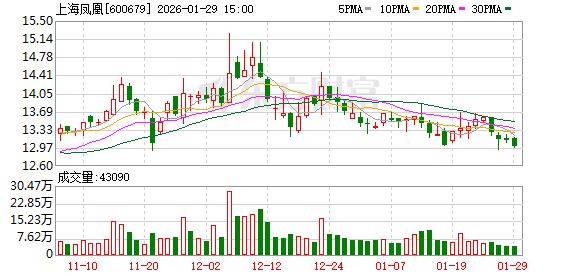
Core Viewpoint - The company Shanghai Phoenix expects to achieve a net profit of approximately 120 million yuan for the fiscal year 2025, marking a turnaround from a loss of 139.09 million yuan in the same period last year [1] Financial Performance - The expected net profit attributable to shareholders is around 120 million yuan, compared to a loss of 139.09 million yuan in the previous year [1] - The expected non-recurring net profit is approximately 62 million yuan, improving from a loss of 63.52 million yuan in the same period last year [1] Business Strategy - The anticipated profit increase is primarily due to a focus on core business operations and optimization of the business structure, leading to growth in main business revenue [1] - The company did not experience any fire incidents in the current reporting period, which had previously impacted performance in 2024 [1] - The company received insurance compensation of 51.41 million yuan, contributing positively to the financial outlook [1]
富士达主板IPO进入问询阶段
Bei Jing Shang Bao· 2026-01-22 11:17
Core Viewpoint - Tianjin Fujisawa Bicycle Industry Co., Ltd. has entered the inquiry stage for its IPO on the Shanghai Stock Exchange, aiming to raise approximately 773 million yuan for various projects [1] Group 1: Company Overview - The company primarily engages in the research, design, production, and sales of bicycles, electric assist bicycles, shared bicycles, and their key components [1] - The IPO application was accepted on December 24, 2025 [1] Group 2: Fundraising and Investment Plans - The company plans to raise around 773 million yuan, with the net proceeds after issuance costs to be allocated based on project priorities [1] - Proposed investment areas include electric assist bicycles, high-end bicycle smart manufacturing projects, research and development center construction, and brand and marketing network development [1]

拿下19单IPO,深圳产业升级步伐持续加速
Sou Hu Cai Jing· 2026-01-19 10:42
Group 1 - The IPO market in Shenzhen is experiencing significant growth, with 19 new companies listed in 2025, including 6 on A-shares and 13 on overseas markets, indicating a vibrant capital market environment [3][4] - The Hong Kong Stock Exchange has become the world's leading IPO destination in 2025, with 117 companies raising HKD 285.69 billion, a more than twofold increase from the previous year [3] - Shenzhen's new listed companies are characterized by strong technological capabilities and rapid international expansion, with examples including Fengcai Technology and Yingshi Innovation [4] Group 2 - Shenzhen has completed 146 merger and acquisition (M&A) projects since 2025, with a total disclosed transaction value of CNY 86.645 billion, ranking second in the country by number and third by value [6] - Major M&A projects include China Resources Sanjiu's acquisition of a 28% stake in Tianjin-listed Tianshili for CNY 6.074 billion and China General Nuclear Power's acquisition of 100% of a subsidiary for CNY 1.204 billion [6] - The local government is actively promoting M&A to enhance the quality of listed companies, aiming for a total market value of CNY 20 trillion by the end of 2027 [7]
高端自行车也扛不住了:闪电京东闭店,小布亏损额翻倍
Xin Lang Cai Jing· 2026-01-16 01:13
Core Viewpoint - The high-end bicycle market, once considered a "safe haven," is showing signs of stagnation, with brands like Specialized, Brompton, and Trek facing pressures from cyclical adjustments [1] Group 1: Specialized (闪电) - Specialized has confirmed the closure of its JD.com flagship store due to "business adjustments," with the store ceasing sales on January 10 and closing completely after March 3 [2] - The brand is known for its professional performance and technological innovation, with product prices ranging from several thousand yuan for entry-level models to tens of thousands for high-end racing models [1][4] - Specialized is retaining its Tmall flagship store and official website while discontinuing direct home delivery services for complete bikes and frames [8] - The company aims to simplify its e-commerce channels and strengthen the support for offline dealers amid a challenging market environment [8][10] Group 2: Market Trends - The demand for sports bicycles has begun to slow down after a post-pandemic surge, leading to high inventory levels across brands [9] - Trek reported an 8.9% year-on-year revenue growth for the year ending December 28, 2024, but faced increased pricing pressure, resulting in a net loss that widened from £205.37 million to £734.98 million [9] - The Chinese bicycle market saw a notable increase in mid-to-high-end sports bicycle consumption in the first half of 2024, with a 12.5% year-on-year growth in the import volume of competition bicycles [9] Group 3: Brompton (小布) - Brompton's annual report for the year ending March 31, 2025, indicated a 7.5% decline in bicycle sales to 78,530 units, with revenue slightly decreasing from £12.25 million to £12.14 million [11] - The company reported an increase in average revenue per bicycle due to a shift towards higher-end products, despite an overall decline in sales [11] - Brompton's reliance on the Chinese market poses risks, particularly in supply chain disruptions, leading to a 30% prepayment requirement for all orders [13] Group 4: Industry Challenges - The high-end bicycle market is experiencing downward pressure, which is affecting the entire supply chain, including high-end cycling apparel brands like Rapha, which announced the closure of five Clubhouses in the US and UK to optimize operational efficiency [17]