鞋业

Search documents
湖南:新春奋进,实干兴湘
Xin Lang Cai Jing· 2026-02-07 20:46
Group 1: Project Construction and Economic Development - The construction of key projects in Hunan is actively progressing, with over 1,000 personnel and more than 50 pile machines on-site for the Changsha Olympic Sports Center project [4] - Hunan plans to implement 389 provincial key projects with a total investment of 2 trillion yuan, focusing on ten infrastructure and ten industrial projects to support high-quality economic development [5] Group 2: Consumer Market and "Trade-in" Policy - The "trade-in" policy for consumer goods is effectively stimulating demand, with significant subsidies for replacing old appliances and vehicles, including up to 20,000 yuan for scrapping old cars and purchasing new energy vehicles [7] - The consumer market in Hunan is experiencing a "renewal wave," with increased activity in various sectors, including home appliances, automobiles, and digital products, driven by the trade-in incentives [7][8] Group 3: Energy Supply and Food Safety - As the Spring Festival approaches, Hunan is enhancing its energy supply measures, ensuring stable electricity and gas delivery to meet rising demand during the holiday season [9] - Food safety regulations are being strengthened, with comprehensive inspections in key areas to ensure the safety and availability of food supplies during the festive period [9]


激活消费主引擎 培育壮大“新”力量
Xin Lang Cai Jing· 2026-01-28 23:06
Group 1 - The core viewpoint emphasizes the importance of consumer spending as a driver of economic growth and a reflection of people's quality of life, with a projected retail sales total of 25,433.59 billion yuan in 2025, representing a 4.4% increase from the previous year, surpassing the national average [1] - The government aims to activate the consumption engine through special actions to boost consumer spending, with representatives advocating for policies that closely link improving people's livelihoods with stimulating consumption [1][2] Group 2 - The stable growth in retail sales is attributed to the synchronization of activities and policies, including nearly 10,000 promotional events and a trade-in program that generated 79.1 billion yuan in consumption, benefiting over 7.5 million consumers [2] - The continuation of the trade-in policy is expected, with suggestions to increase public service spending and provide differentiated subsidies for smart and green products to enhance consumer willingness to spend [2][3] Group 3 - There is a shift in consumer behavior from primarily goods consumption to a balanced focus on both goods and services, with service consumption expected to be a significant growth driver due to its high frequency and multiplier effect [3] - Recommendations include creating a comprehensive consumption IP that integrates shopping, entertainment, dining, and health, leveraging the region's rich resources and cultural heritage to enhance consumer experiences [3] Group 4 - The government report highlights the need to improve consumer capacity and optimize the consumption environment, with suggestions to enhance infrastructure in underserved areas and strengthen market regulation to combat fraud and improve consumer rights [4] - Emphasis is placed on tapping into domestic demand and facilitating efficient economic circulation, with calls for integrating into the national market and promoting local brand activities to shift consumption growth from recovery to sustainable expansion [4]
浙江奥康鞋业股份有限公司2025年度业绩预告公告
Xin Lang Cai Jing· 2026-01-21 20:32
Core Viewpoint - The company, Zhejiang Aokang Footwear Co., Ltd., forecasts a negative net profit for the year 2025, indicating ongoing financial challenges due to market conditions and competition [2][3]. Group 1: Performance Forecast - The company expects a net profit attributable to shareholders of approximately -237 million yuan for the year 2025 [2][3]. - The forecasted net profit, excluding non-recurring gains and losses, is estimated to be around -264 million yuan [4]. - The performance forecast covers the period from January 1, 2025, to December 31, 2025 [2]. Group 2: Previous Year Comparison - In the same period last year, the company reported a total profit of -180.34 million yuan, with a net profit attributable to shareholders of -215.74 million yuan [6]. - The net profit, after excluding non-recurring gains and losses, was -261.07 million yuan [6]. - The earnings per share for the previous year were -0.5380 yuan [7]. Group 3: Reasons for Performance Change - The company attributes the expected decline in performance to intensified industry competition and weak market demand, which have pressured sales in its core footwear business [8]. - Despite efforts to control costs and expenses, the decline in revenue has further strained profitability, with projected operating revenue for 2025 at 1.923 billion yuan, a decrease of approximately 24.55% compared to the previous year [8].

三省“双城德比”透视区域经济新格局
Xin Lang Cai Jing· 2026-01-20 22:59
Group 1: Economic Competition Overview - The competition among cities in China is intensifying, with notable "provincial derbies" emerging in various regions, reflecting strategic adjustments and economic dynamics [2] - In Northeast China, the competition between Shenyang and Dalian is highlighted, with Shenyang narrowing the GDP gap to less than 500 billion yuan in 2024 [3][4] - In Southeast China, Fuzhou and Quanzhou have been engaged in a long-standing economic rivalry, with Fuzhou reclaiming its position as the leading city after 22 years [6][7] Group 2: Shenyang vs. Dalian - In 2024, Dalian's GDP reached 9516.9 billion yuan, while Shenyang's GDP was 9027.1 billion yuan, marking a significant competition in the Northeast region [3] - Shenyang's economic growth rate of 6.1% in 2023 allowed it to slightly surpass Dalian's 6.0% growth, reducing the GDP gap by 245 billion yuan over two years [3][4] - Dalian's strengths lie in its industrial base and port advantages, while Shenyang focuses on transforming its economy through innovation and high-end manufacturing [4][5] Group 3: Fuzhou vs. Quanzhou - Fuzhou's economic resurgence is attributed to its strategic initiatives, including the development of digital economy, which reached over 450 billion yuan by 2020 [6][7] - The GDP gap between Fuzhou and Quanzhou has shifted from 600 billion yuan in 2018 to a lead of 1142 billion yuan for Fuzhou by 2024 [7] - Quanzhou is undergoing industrial upgrades to maintain its competitiveness, focusing on high-end manufacturing and emerging industries [7][8] Group 4: Tangshan vs. Shijiazhuang - Tangshan became the first city in Hebei to surpass the trillion yuan GDP mark in 2024, while Shijiazhuang's GDP reached 8203.4 billion yuan, indicating a narrowing gap [8][9] - The economic strategies of both cities emphasize integration with the Beijing-Tianjin-Hebei region and the development of their respective urban areas [9][10] - Both cities are focusing on leveraging digital economy and emerging industries to enhance their economic prospects in the coming years [10]
三省“双子星”抢龙头,透视区域经济新格局
Xin Jing Bao· 2026-01-20 11:44
Group 1: Economic Competition Overview - The competition between cities like Shenyang and Dalian is intensifying, with Shenyang narrowing the GDP gap to less than 500 billion yuan in 2024, marking a significant phase in the "Northeast first city" contest [1][2] - In Southeast China, Fuzhou and Quanzhou have been in a prolonged economic rivalry for over 20 years, with Fuzhou reclaiming its leading position in recent years after being surpassed by Quanzhou in 1999 [1][6][7] Group 2: Shenyang vs. Dalian - In 2024, Dalian's GDP reached 9516.9 billion yuan, while Shenyang's was 9027.1 billion yuan, with Dalian becoming the first city in Northeast China to join the "trillion yuan club" [2] - Shenyang's economic growth rate of 6.1% in 2023 allowed it to slightly surpass Dalian's 6.0%, reducing the economic gap by 245 billion yuan over two years [2][3] - Dalian's economic strength is rooted in its industrial base and port advantages, while Shenyang is leveraging its transportation hub status and policy support to transition towards high-end manufacturing [3][4] Group 3: Fuzhou vs. Quanzhou - Fuzhou's economic growth has been bolstered by its provincial capital status and the development of digital economy initiatives, with its digital economy surpassing 450 billion yuan by 2020 [6][7] - The GDP gap between Fuzhou and Quanzhou narrowed from over 600 billion yuan in 2018 to approximately 130 billion yuan by 2020, with Fuzhou regaining its position as the leading city in 2021 [7] - Quanzhou is focusing on upgrading its traditional manufacturing sectors while also developing emerging industries such as artificial intelligence and new materials [7][8] Group 4: Tangshan vs. Shijiazhuang - Tangshan surpassed Shijiazhuang in GDP for the first time in 2005, and by 2021, the gap had widened to 1740 billion yuan, but Shijiazhuang has since begun to close this gap [8][10] - In 2024, Tangshan's GDP crossed the trillion yuan mark, while Shijiazhuang reached 8203.4 billion yuan, indicating a potential shift towards a "dual trillion city" economy in Hebei [8][10] - Both cities are focusing on integrating with the Beijing-Tianjin-Hebei region and developing new industries, with Shijiazhuang emphasizing artificial intelligence and future industries [10][11]
三省“双子星”抢龙头,透视区域经济新格局|城市论
Sou Hu Cai Jing· 2026-01-20 10:23
Group 1: Economic Competition in Northeast China - In 2024, the GDP of Dalian and Shenyang surpassed 900 billion yuan, with Dalian reaching 951.69 billion yuan and Shenyang at 902.71 billion yuan, marking a significant competition for the title of "Northeast Champion" [3] - The gap between Shenyang and Dalian has narrowed to 489.8 billion yuan, with Shenyang showing a growth rate of 6.1% compared to Dalian's 6.0%, indicating a strong catching-up momentum [3][6] - Dalian's economic strength is rooted in its industrial base and port advantages, while Shenyang is leveraging its transportation hub status and rich educational resources to transition towards high-end manufacturing [5][6] Group 2: Economic Dynamics in Southeast China - The competition between Fuzhou and Quanzhou has been ongoing for over 20 years, with Fuzhou recently reclaiming its position as the leading city in Fujian province [7][8] - Fuzhou's economic growth has been bolstered by its digital economy, which exceeded 450 billion yuan, accounting for over 45% of its GDP by 2020 [7][8] - Quanzhou, while facing challenges in traditional manufacturing, is focusing on upgrading its industries and developing strategic emerging sectors such as artificial intelligence and new materials [8] Group 3: Economic Developments in Hebei Province - The competition between Shijiazhuang and Tangshan has lasted for 20 years, with Tangshan initially surpassing Shijiazhuang in GDP due to its strong industrial base [12][13] - In 2024, Tangshan's GDP reached over 1 trillion yuan, while Shijiazhuang's GDP was 820.34 billion yuan, indicating a shift towards a "dual trillion city" dynamic in Hebei [13][15] - Both cities are focusing on integrating with the Beijing-Tianjin-Hebei region and developing new industries, with a shared goal of enhancing their economic growth potential [15][16]

浙江奥康鞋业股份有限公司 关于持股5%以上股东权益变动触及1%、5%刻度暨披露简式权益变动 报告书的提示性公告
Zhong Guo Zheng Quan Bao - Zhong Zheng Wang· 2026-01-20 00:24
Core Viewpoint - The announcement details a significant equity change involving a major shareholder, Xiang Jinyu, who has reduced his stake in Aokang International from 5.92% to 4.99998% through the sale of 8,561,100 shares, representing 2.14% of the company's total equity [1][10]. Group 1: Shareholder Information - The shareholder Xiang Jinyu has reduced his holdings in Aokang International, with the reduction being part of a previously disclosed share reduction plan [1][2]. - The equity change does not trigger a mandatory tender offer and is consistent with prior commitments made by the shareholder [1][2]. Group 2: Impact on Company Structure - The reduction in shareholding will not lead to any changes in the controlling shareholder or the actual controller of the company, nor will it significantly impact the company's governance structure or ongoing operations [2]. Group 3: Compliance and Legal Framework - The equity change complies with relevant laws and regulations, including the Securities Law of the People's Republic of China and the interim measures for the reduction of shares by shareholders of listed companies [2][5]. - The shareholder has committed to adhering to all legal requirements and disclosure obligations during the ongoing share reduction process [2][16]. Group 4: Future Plans - Xiang Jinyu has indicated plans for further reductions in shareholding over the next twelve months, with no intentions to increase his stake during this period [8][9].
“浙链全球—携手出海”系列活动在浙江路桥启动
Sou Hu Cai Jing· 2026-01-13 10:38
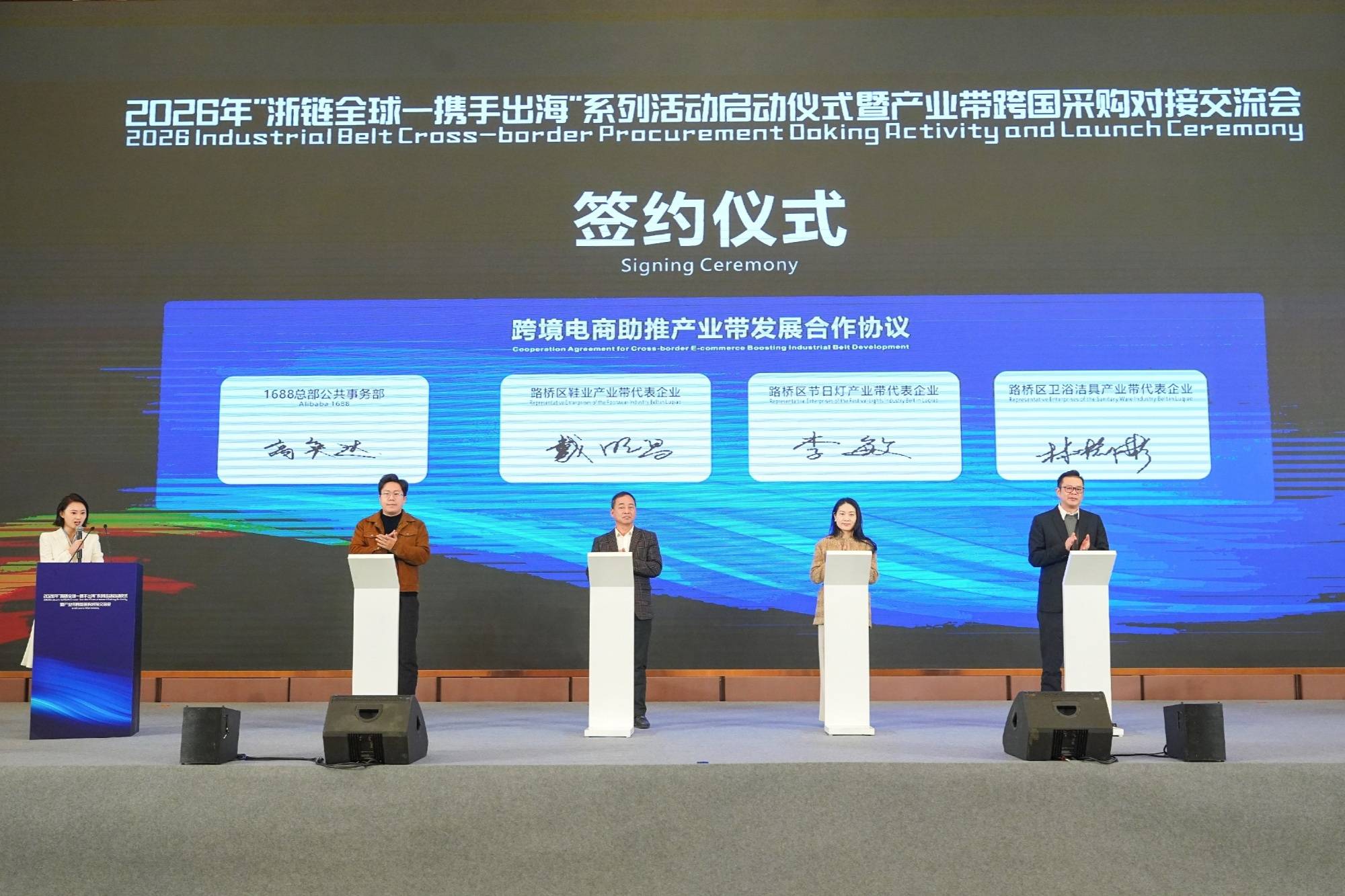
Group 1 - The event "Zhejiang Chain Global - Hand in Hand to Go Abroad" was launched in Taizhou, Zhejiang, focusing on enhancing international trade and cooperation among over 200 local enterprises and various international procurement groups [1][3] - Taizhou has been actively promoting high-quality foreign trade development by combining "going out" and "bringing in," establishing strategic partnerships with over 150 domestic and international buyers [1][4] - The region has developed a logistics service model integrating public, rail, sea, and air transport to support procurement activities, significantly boosting cross-border e-commerce exports [1][4] Group 2 - Multiple cooperation agreements were signed during the event, including a partnership between the 1688 cross-border e-commerce platform and local industries such as footwear and sanitary ware to enhance international market access [3][4] - The Zhejiang Natural Technology Group recognized the manufacturing advantages of Taizhou and signed a procurement agreement with Ruikang Daily Necessities Technology Co., indicating a strong interest in local products that meet overseas customer demands [4] - The event facilitated one-on-one meetings between local enterprises and international buyers, focusing on key categories such as automotive parts and sanitary ware, aiming to match procurement needs with local supply capabilities [4][6]
专访叶建亮:温州跻身“万亿之城” 离不开持续擦亮民营经济“金名片”
Zhong Guo Jing Ying Bao· 2026-01-12 10:44
Core Viewpoint - Wenzhou has successfully upgraded to a "trillion-dollar city," marking a significant milestone in its economic development, with a GDP projected to exceed 10 trillion yuan by 2025, driven by a robust private economy and strategic urban planning [1][2]. Group 1: Economic Growth and Development - Wenzhou's GDP is expected to surpass 9 trillion yuan in 2024, reaching 9,718.8 billion yuan, reflecting a 6.3% growth from the previous year [1]. - The city is recognized for its strong private sector, with private enterprises contributing 90.8% to the industrial added value in 2024, showcasing the dominance of the private economy [1][5]. - The number of market entities in Wenzhou has exceeded 1.5 million, including 414,000 private enterprises and 1,062,000 individual businesses [1]. Group 2: Key Drivers of Growth - The core drivers for Wenzhou's economic upgrade include continuous industrial transformation, enhancement of urban capabilities, optimization of transportation conditions, and improvement of the business environment [5][6]. - Wenzhou is focusing on developing emerging industries such as digital economy, new energy, new materials, and intelligent equipment, while maintaining its traditional industries [5]. - The city aims to attract a population of 10 million, enhancing its talent pool to support economic growth [5]. Group 3: Regional Impact - Wenzhou's upgrade to a trillion-dollar city is significant for the regional development framework of Zhejiang province, supporting a "three-legged" structure with Hangzhou and Ningbo [7]. - The city's economic growth will enhance the integration and interaction within the Yangtze River Delta region, serving as a southern gateway [7]. Group 4: Challenges and Recommendations - Wenzhou faces challenges such as insufficient external transportation, lack of high-level innovation resources, and a shortage of leading enterprises in emerging industries [8]. - Recommendations include leveraging the flexibility of the private economy to gather innovation resources and implementing differentiated development strategies, particularly in the context of rapid advancements in artificial intelligence [8]. Group 5: Trends in Urban Development - The upgrade of Wenzhou reflects a shift in urban development logic in China, highlighting the diminishing role of geographical conditions and the increasing importance of institutional mechanisms, business culture, and precise regional development strategies [9].

新年第一会“抢跑”,新晋“万亿之城”要来了
Sou Hu Cai Jing· 2026-01-05 01:03
Core Viewpoint - Wenzhou is set to become the third city in Zhejiang to achieve a GDP of over 1 trillion yuan, marking a significant milestone in its economic development and positioning itself as a key regional center in the southeast coastal area of China [1][7]. Group 1: Economic Goals and Achievements - Wenzhou aims to surpass a GDP of 1 trillion yuan by 2025, with a current GDP of 9,719 billion yuan as of 2024, reflecting a year-on-year growth of 6.1% [2][3]. - The city has set ambitious targets for its population, aiming for a resident population of 10 million by 2025, which aligns with its economic growth objectives [2]. Group 2: Innovation as a Driving Force - Innovation is emphasized as the key to transforming Wenzhou's economic positioning, with a focus on upgrading traditional industries through technological advancements [3][6]. - The local government has established the Wenzhou Bay New Area Emerging Industry Bureau to promote investment and development in new industries such as AI, new materials, and digital economy [6]. Group 3: Challenges and Shortcomings - Wenzhou's R&D expenditure is currently below the provincial average, indicating a significant gap that needs to be addressed to meet future innovation targets [4]. Group 4: Strategic Positioning and Collaboration - Wenzhou is recognized as a vital regional center, with a mission to enhance its urban capabilities and core competitiveness within the context of national strategies [7][9]. - The city is encouraged to leverage its unique strengths in private enterprise and its extensive business network to foster collaboration with neighboring regions, enhancing its economic influence [9].