耐克Air Jordan

Search documents
从新需求×新供给看中国消费新格局:每一代人都有自己的Labubu
工银国际· 2025-12-16 05:59
Group 1: Macro Economic Insights - The new consumption pattern in China is driven by generational shifts, with each generation having its own cultural symbols, referred to as "Labubu" [1] - The "Implementation Plan" aims to enhance the adaptability of supply and demand, identifying three trillion-level and ten hundred-billion-level consumption hotspots to boost resource allocation efficiency [1] - The Chinese潮玩 market is expected to grow at a compound annual growth rate of approximately 24% from 2022 to 2026, reflecting a structural change in demand [3] Group 2: New Consumption Trends - Future consumption is shifting from purchasing goods to subscribing to experiences, influenced by spatial, temporal, and relational dimensions [2] - Consumers are evolving from mere buyers to co-creators of content and emotional transmitters, emphasizing community relationships and cultural identity [2] - The demand for children's products is transitioning from safety features to cognitive development and emotional growth, with a focus on AI-enabled interactive toys [6] Group 3: Supply-Side Innovations - The supply side is undergoing a structural transformation, with flexible production and rapid iteration becoming industry standards, allowing for quick responses to new consumer trends [8] - The "Implementation Plan" emphasizes differentiated supply for various consumer groups, moving from traditional age-based products to lifestyle-based solutions [8] - The silver economy in China is projected to grow from approximately 7 trillion yuan in 2023 to 30 trillion yuan by 2035, indicating a shift towards comprehensive lifestyle solutions for the elderly [7] Group 4: Investment Opportunities - The investment focus is on three trillion-level sectors (elderly products, smart vehicles, consumer electronics) and ten hundred-billion-level sectors (潮玩, outdoor products, pet supplies, smart wearables, and national trend clothing) [9] - Identifying the next "Labubu" involves assessing emotional needs, sustainable supply systems, and alignment with national development strategies [10]
程实:每一代人都有自己的Labubu︱实话世经
Di Yi Cai Jing· 2025-12-15 12:46
Core Insights - The rise of Labubu is not coincidental but a result of generational aesthetics, emotional symbols, and identity expression [1][2] - The "Implementation Plan" provides a systematic framework for the new demand and supply dynamics, emphasizing the importance of capturing emotional trends and creating a sustainable supply chain [1][2][10] Generational Symbols - Each generation has its own Labubu, representing the spirit of the times, from Transformers for the 70s to digital IPs for Gen Z [2] - The changing emotional structures reflect new consumer demands in China, with the "Implementation Plan" targeting three trillion-level and ten hundred-billion-level consumption hotspots [2][4] New Consumption Trends - Future consumption is shifting from purchasing goods to subscribing to lifestyles, driven by demographic segmentation and interest-oriented consumption [3] - Changes in consumption dimensions include spatial (from traditional malls to immersive experiences), temporal (from one-time purchases to long-term relationships), and relational (from buyers to co-creators) [3] New Demand Dynamics - The demand for new products is shaped by collective choices across generations, with emotional needs such as identity recognition, emotional healing, and self-narrative being crucial [4][5] - The children's market is evolving towards cognitive development and emotional growth, while the elderly market is shifting from passive care to active quality of life improvements [6][5] New Supply Strategies - New supply-side structural reforms focus on leveraging technology and new models for precise supply-demand matching [7] - Flexible production and rapid iteration are becoming standard, with the ability to quickly respond to new consumer trends [7][8] Investment Opportunities - The investment landscape is becoming clearer with three trillion-level sectors (elderly products, smart vehicles, consumer electronics) and ten hundred-billion-level sectors (trendy toys, outdoor products, etc.) identified [9] - Key investment criteria include addressing unique emotional needs, having a sustainable supply system, and aligning with national strategic directions [9][10]
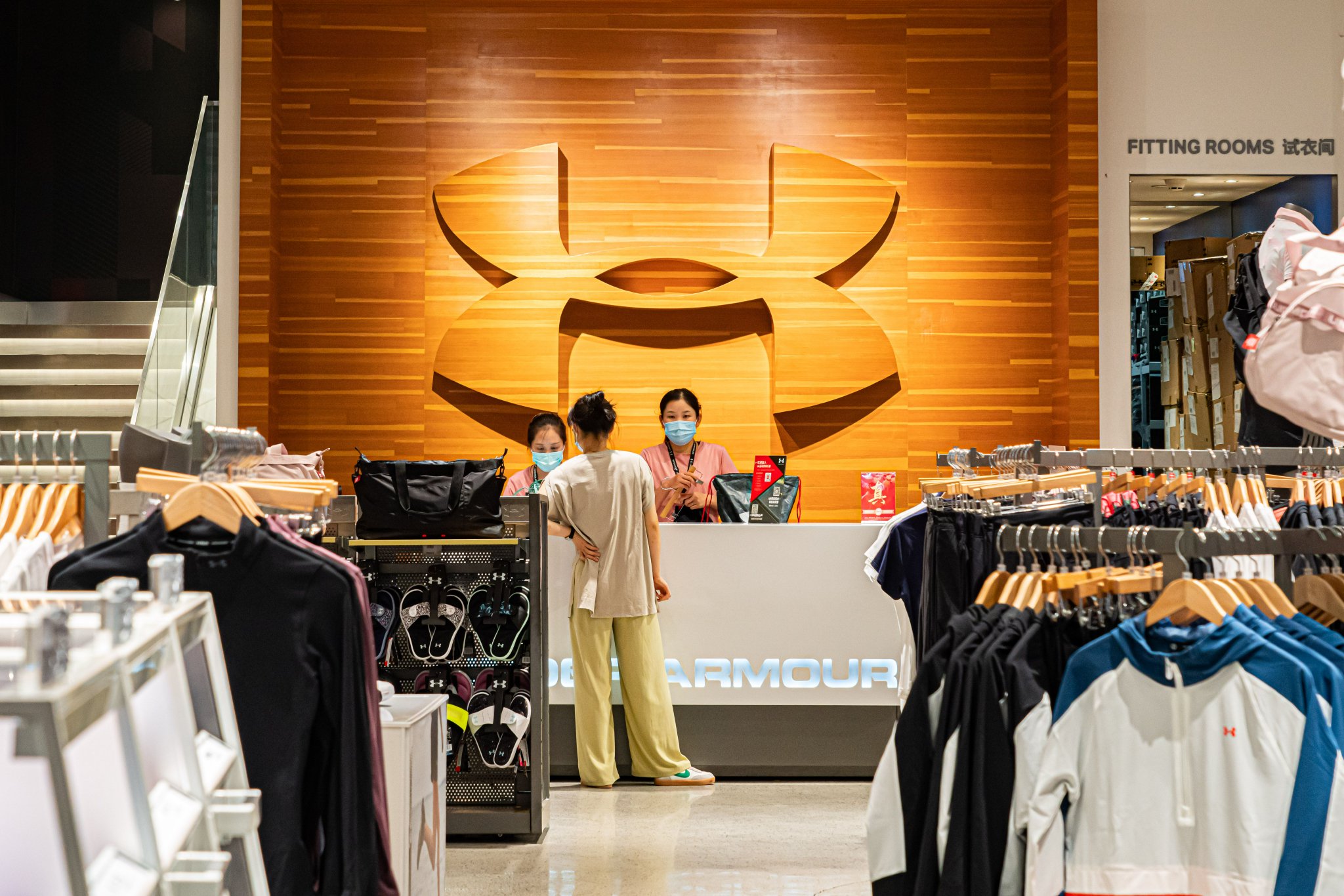
安德玛不想给库里“打工”了
Xin Lang Cai Jing· 2025-11-17 10:32
Core Insights - Under Armour has decided to cut ties with its once lucrative Curry Brand, incurring a restructuring cost of $255 million, which includes termination compensation for Stephen Curry and operational costs [1][20] - The Curry Brand generated $1 billion in annual revenue, indicating its significance in the sports brand market [1] - The decision reflects a shift in the traditional sports business model, where brands are increasingly seen as operating entities for star athletes rather than the other way around [1] Historical Context - Under Armour's partnership with Curry began in 2013 after Nike underestimated Curry's potential during contract negotiations [3][4] - The collaboration proved successful, with Curry leading the Warriors to a championship and significantly boosting Under Armour's market presence and stock price [5][6] - In 2020, Under Armour established the Curry Brand, aiming to replicate the success of Nike's Jordan brand, with Curry taking on a more active role in brand management [6][7] Financial Implications - The lifetime contract signed in 2020 was valued at over $1 billion, with Curry receiving substantial cash and stock incentives [8][9] - However, Under Armour's stock price decline has led to a significant reduction in the value of Curry's stock options, impacting his overall earnings from the partnership [9][10] - Despite the financial struggles of Under Armour, Curry's personal brand continues to thrive, with projected earnings surpassing $159.6 million in the 2025 season [10] Market Challenges - Under Armour has faced declining revenues, particularly in North America, where it has lost market share to competitors like Nike and emerging brands [12][13] - The brand's performance in the Asia-Pacific region has also deteriorated, with a notable decline in the Chinese market, which was once a growth engine [14][15] - The company struggles with brand perception, being viewed as outdated and less appealing to younger consumers compared to local brands [16][18] Strategic Shift - Under Armour's decision to part ways with Curry is part of a broader strategy to refocus on core products and regain market competitiveness [20][21] - The company aims to launch new basketball products and improve its engagement with younger consumers to reverse its declining sales trend [21][22] - The evolving landscape of athlete-brand relationships highlights the increasing power of star athletes in negotiating terms that reflect their market value [22]

消费符号与经济周期:从口红到Lululemon的百年演变
创业邦· 2025-04-03 09:58
Core Viewpoint - The article discusses the evolution of five significant consumer symbols over the past century, illustrating how they reflect economic cycles and the interplay of technological breakthroughs, business models, and cultural recognition, termed as the "innovation multiplier effect" [4][6]. Economic Cycles and Consumer Symbols - Economic cycles are characterized by the periodic adjustment of social resource allocation efficiency, driven by different factors such as technological revolutions, capital changes, and supply-demand dynamics [6]. - The article identifies three main economic cycles: - Kondratiev cycle (long-term, 50-60 years) driven by technological and institutional changes - Juglar cycle (medium-term, 7-11 years) focused on fixed asset updates - Kitchin cycle (short-term, 3-5 years) related to inventory adjustments [6]. - The current historical moment is marked by the resonance of these three cycles, leading to the emergence of unique consumer symbols [6]. Five Major Consumer Symbols 1. **Lipstick (1920-1930s)**: - Represents the "comfort economics" during the recession, with lipstick sales increasing by 50% despite a 25% unemployment rate in 1929 [9][12]. - The production cost of lipstick decreased by 80% due to advancements in synthetic dye technology, making it an affordable luxury [12]. 2. **Ford Model T (1908-1927)**: - Symbolizes industrial recovery and economies of scale, with production time reduced from 728 hours to 12.5 hours through assembly line techniques [13][14]. - By 1921, the Model T accounted for 56.6% of global automobile production, contributing 15% to the GDP growth of the 1920s [14]. 3. **Nike Air Jordan (1984-2020s)**: - Represents cultural dominance during the globalization boom, with Nike leveraging strategic sponsorships to gain market share in the NBA [15][19]. - Nike's focus on cultural empowerment through targeted sponsorships allowed it to become the leading sports brand [19]. 4. **iPhone (2007-present)**: - Acts as a technological revolutionary symbol, with the tech industry market cap increasing by 433% from 2009 to 2018, largely driven by Apple [20][21]. - The introduction of the iPhone 4 marked a significant shift in smartphone penetration and redefined market standards for consumer electronics [21]. 5. **Lululemon (2000-present)**: - Embodies the rise of self-care consumerism in the post-pandemic era, with a CAGR of 25% in revenue and net profit, positioning it as the second-largest sportswear company after Nike [22][25]. - Lululemon's success is attributed to its innovative product offerings and deep understanding of its target market, leading to high customer loyalty and profitability [22][24]. Insights from Consumer Symbols - Each consumer symbol reflects the historical context and market dynamics of its time, demonstrating how they adapt to economic cycles [26]. - The article emphasizes that while consumer symbols may experience peaks and troughs, their resilience often stems from meeting specific market demands, as seen with Lululemon and lipstick during economic downturns [26]. - The enduring pursuit of a better life remains a constant driver of economic innovation, regardless of the cyclical nature of the economy [26].