投资逻辑

Search documents
【ETF市场周报】市场混沌期 如何在不确定中挖掘确定性?
第一财经· 2026-03-15 12:57
Group 1 - The article emphasizes that the current market is experiencing a retreat from old investment logic, with a new consensus forming but lacking a clear mainline trend, leading to rapid in-and-out capital movements [2] - Since March, the market has shown structural differentiation, with physical asset prices like oil, gas, and agricultural products experiencing increased volatility, while HALO assets, represented by electrical equipment, have seen sustained performance, becoming market highlights [2] - Conversely, the technology sector has faced continuous capital outflows, with TACO trading opportunities gradually emerging [2] Group 2 - The article raises the question of how to clarify the core dynamics of the market amidst the backdrop of volatility and mixed factors, and what reliable opportunities exist within the uncertainty [2]

为什么要熊市选股、建仓?
Sou Hu Cai Jing· 2026-02-04 02:50
Group 1 - The core message emphasizes the importance of discipline and logic in investment decisions, contrasting emotional trading behaviors with systematic approaches [1][2] - Investors often sell during panic and buy during optimism, leading to a perception that the market is working against them, which is a psychological illusion [1] - Establishing clear investment rules is crucial, such as focusing on leading companies in the industry and investing in proven, high-quality firms at relatively low prices [1] Group 2 - The article discusses the necessity of maintaining discipline to avoid the pitfalls of emotional trading, especially during market transitions from bear to bull [2] - Without discipline, investors may struggle to overcome fear during market recoveries, leading to premature selling and subsequent regret as prices continue to rise [2] - The author reflects on past experiences where maintaining a disciplined approach could have resulted in significant gains, highlighting the potential for substantial returns when adhering to a logical investment strategy [2]
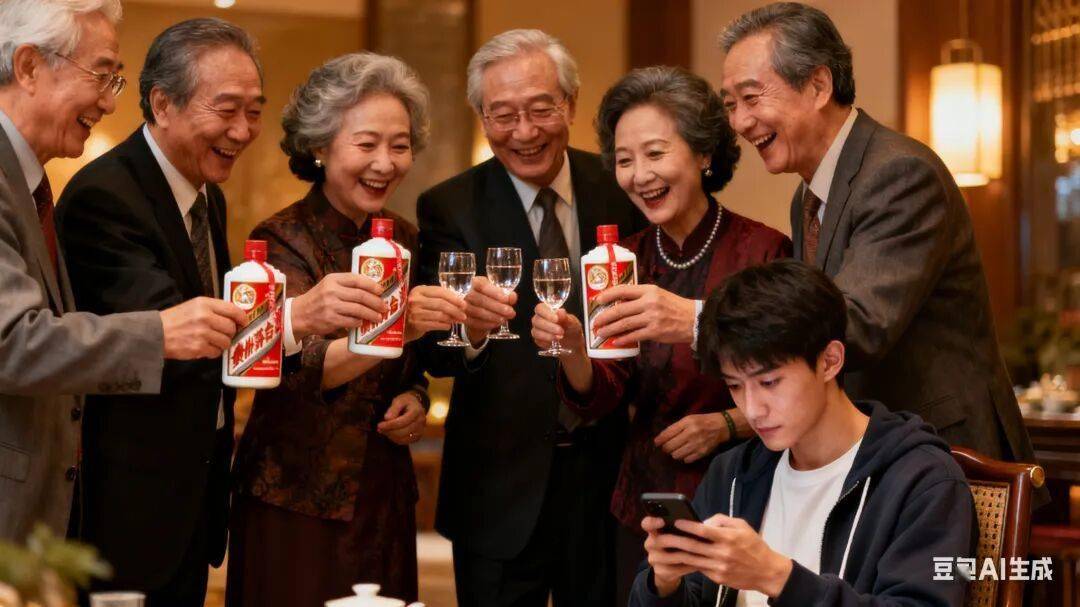
茅台跌到1365,段永平却越跌越买?普通人跟不跟?
Sou Hu Cai Jing· 2026-01-28 06:16
Core Viewpoint - The market sentiment towards the liquor industry, particularly Moutai, is currently negative, with public funds reducing their holdings and younger consumers shifting towards whiskey and fruit wines. However, investor Duan Yongping has taken a contrarian stance by increasing his stake in Moutai, believing it is undervalued in the long term [1]. Group 1: Investment Actions - Duan Yongping purchased 20,000 shares of Guizhou Moutai at 1,365 yuan per share, indicating confidence in the stock's long-term value [1]. - His total holding in Moutai has reached 40,000 shares, valued at approximately 53.6 million yuan, and he expressed willingness to buy more if the price drops to 1,200 yuan [1]. Group 2: Company Strengths - Moutai possesses a unique competitive advantage due to its proprietary production methods and high profit margins, with a gross margin of 91.3%, positioning it as "liquid gold" rather than just a beverage [1]. - The ongoing reforms in the iMoutai platform are enhancing the company's ecosystem by eliminating counterfeit products and ensuring direct supply at 1,499 yuan, which is expected to shift Moutai back to being a high-end consumer product rather than a speculative financial asset [3]. - Moutai's financial stability is underscored by a nearly 4% dividend yield, zero debt, and consistent annual dividends, making it a more attractive option compared to traditional bank deposits [3]. Group 3: Market Challenges - Public fund holdings in Moutai have reached a historical low, and the penetration rate of Moutai among younger consumers is below 15%, indicating a potential challenge for future sales [4]. - The upcoming Spring Festival sales will be a critical test for Moutai's market performance [4]. Group 4: Investor Perspective - Duan Yongping's donation of 10,000 shares of Moutai to a university, with the stipulation that only dividends be used and the shares never sold, reflects a deep trust in the company's business model [4]. - The investment in Moutai may be seen as a secure asset for those with disposable income, knowledge, and patience, while ordinary retail investors should be cautious about their financial commitments [5].


吴世春:今年符合这3个特征的创业公司,我会果断投
创业家· 2026-01-12 10:31
Investment Logic - The first investment logic is to invest in "unicorn tigers," distinguishing between "tigers" and "pigs" within the unicorn category, where tigers can thrive without constant capital feeding [1][2] - The second logic focuses on investing in "town youth," emphasizing the need for long-term commitment and focus, as these individuals are less likely to chase trends [5][8] - The third logic is about the alignment of people, events, timing, and valuation, where successful investments require a strong entrepreneur, a favorable market, the right timing, and reasonable valuation multiples [9][10] Market Trends - The current investment landscape shows that many new unicorns are led by "town youth," contrasting with previous trends where returnees were favored [7][8] - The article highlights that missing a critical time point can lead to lost investment opportunities, citing examples like the electric vehicle sector after 2016 and the rocket industry after 2018 [11][10] Fund Management - The company has been managing funds for 11 years, with a total fund size exceeding 100 billion, having invested in over 600 companies, with 70-80 of them nearing A-share listing standards [12][13] - It is projected that around 20 companies from the portfolio will go public by 2026, with an average of 1-2 companies expected to list each month [13] Event Promotion - An upcoming event from January 22-24 will involve a deep dive into the technology manufacturing industry, aimed at exploring opportunities in a trillion-dollar market [14][19] - Participants will engage in immersive learning experiences, networking with entrepreneurs and investors, and gaining insights into capital trends and industry strategies [21][22]

吴世春:为什么你拿着一份漂亮BP,却很难融到资?
Sou Hu Cai Jing· 2026-01-07 14:08
Core Insights - The current investment landscape emphasizes the need for startups to demonstrate certainty and viability rather than relying solely on business plans and presentations [2][3] Group 1: Investment Criteria - Startups that attract investment must align with national trends without blindly chasing fads [5][6] - Successful startups address real industry problems or significantly enhance social efficiency, such as reducing costs or replacing imports [8][9] - Investors are increasingly focused on the combination of policy benefits and sound business logic, rather than just storytelling [10] Group 2: Founder's Profile - The experience of the founder is crucial; seasoned entrepreneurs are preferred over charismatic speakers [12][13] - A strong team led by an experienced founder can achieve better outcomes than a weak team with a great idea [11] - Investors seek founders with resilience and the ability to navigate challenges, as many projects fail due to founder burnout rather than poor direction [14][15] Group 3: Validation of Business Model - Startups must demonstrate a proven business model, moving from initial stages to tangible results [16][20] - Validation includes having a functional product, customer interest, and concrete data on customer acquisition costs and profit margins [17][18][19] - The shift in investment logic now favors established business models over speculative ideas, focusing on current performance and execution capabilities [21][22] Group 4: Fund Management - The company has been managing funds for approximately 11 years, with a total fund size exceeding 100 billion [24] - Among the 600+ companies invested in, around 70-80 have reached profit levels close to A-share listing standards [25]
吴世春:现在想快速融资,仅凭一份漂亮BP,远远不够
创业家· 2025-12-27 10:06
Core Viewpoint - The current investment landscape emphasizes the importance of tangible business models and proven market viability over mere ideas and presentations [1][2][23]. Group 1: Investment Criteria - Startups that attract investment must align with significant market trends, avoiding over-saturation in popular sectors like AI and new energy [3][5][7]. - Founders with substantial industry experience are preferred over those with impressive resumes but lacking practical management skills [4][11][14]. - Projects must demonstrate validated business models, showing real customer interest and operational data, rather than relying solely on theoretical concepts [17][20][22]. Group 2: Changing Investment Logic - The focus has shifted from future potential and visionary ideas to current realities and practical implementations [24]. - Investors now prioritize execution capabilities and resilience over academic credentials and past achievements [25][26].

程实:每一代人都有自己的Labubu︱实话世经
Di Yi Cai Jing· 2025-12-15 12:46
Core Insights - The rise of Labubu is not coincidental but a result of generational aesthetics, emotional symbols, and identity expression [1][2] - The "Implementation Plan" provides a systematic framework for the new demand and supply dynamics, emphasizing the importance of capturing emotional trends and creating a sustainable supply chain [1][2][10] Generational Symbols - Each generation has its own Labubu, representing the spirit of the times, from Transformers for the 70s to digital IPs for Gen Z [2] - The changing emotional structures reflect new consumer demands in China, with the "Implementation Plan" targeting three trillion-level and ten hundred-billion-level consumption hotspots [2][4] New Consumption Trends - Future consumption is shifting from purchasing goods to subscribing to lifestyles, driven by demographic segmentation and interest-oriented consumption [3] - Changes in consumption dimensions include spatial (from traditional malls to immersive experiences), temporal (from one-time purchases to long-term relationships), and relational (from buyers to co-creators) [3] New Demand Dynamics - The demand for new products is shaped by collective choices across generations, with emotional needs such as identity recognition, emotional healing, and self-narrative being crucial [4][5] - The children's market is evolving towards cognitive development and emotional growth, while the elderly market is shifting from passive care to active quality of life improvements [6][5] New Supply Strategies - New supply-side structural reforms focus on leveraging technology and new models for precise supply-demand matching [7] - Flexible production and rapid iteration are becoming standard, with the ability to quickly respond to new consumer trends [7][8] Investment Opportunities - The investment landscape is becoming clearer with three trillion-level sectors (elderly products, smart vehicles, consumer electronics) and ten hundred-billion-level sectors (trendy toys, outdoor products, etc.) identified [9] - Key investment criteria include addressing unique emotional needs, having a sustainable supply system, and aligning with national strategic directions [9][10]
段永平谈泡泡玛特:看不懂但高度认可,LABUBU火不是“狗屎运”
Sou Hu Cai Jing· 2025-12-10 10:16
Group 1 - The core viewpoint of the article is that Duan Yongping, the founder of Bubugao, expresses skepticism about investing in Pop Mart, despite recognizing its ability to create emotional value products, indicating that its success is not merely due to luck [1][3] - Duan Yongping emphasizes that young people still have ample entrepreneurial opportunities, stating that societal conditions and opportunities are equal for everyone and success relies on personal effort [3] - He cites his own background of coming from a modest family, highlighting that his achievements are a result of hard work, and points to Pop Mart's founder Wang Ning as an example of young entrepreneurs making significant impacts in the emotional value product space [3]


如何伪装成资深投资人(原创)
叫小宋 别叫总· 2025-11-16 03:03
Group 1 - The importance of understanding the competitive advantages and core competencies of a company when engaging with founders [1] - Key questions to ask founders include their strategic significance, industry relevance, and risk assessment of their projects [1] - The context of asking these questions is crucial, particularly in settings like concentrated roadshows where founders are presenting [1] Group 2 - When engaging with Limited Partners (LPs), it is essential to use declarative statements rather than questions, focusing on investment logic and operational strategies [4] - The language used should emphasize the investment logic related to industry chain issues and the importance of safeguarding state-owned assets [4] - LPs should be aware of potential inconsistencies in the claims made by General Partners (GPs) regarding industry chain projects [5]

茅台价格遭遇三重暴击
Sou Hu Cai Jing· 2025-11-13 04:50
Core Insights - The essence of price control is a collective agreement among brands, distributors, and consumers, but it is fragile and can easily collapse if one party breaks the agreement [1][2] - The price of Moutai has significantly dropped from 2100 yuan to below 1700 yuan, indicating a breakdown in the pricing structure [1][5] - The cultural significance of Moutai as a social symbol is eroding, leading to a decline in its market value [6][10] Pricing Dynamics - Price control measures have been implemented by Moutai, including strict penalties for price violations and incentives for compliant sellers, but these efforts have proven ineffective [3][4] - The market is experiencing a downward spiral where falling prices lead to increased selling pressure, resulting in further price declines [5][14] Cultural Context - The consumption of Moutai has historically been tied to social status and power dynamics, but this cultural relevance is diminishing as younger generations reject traditional drinking customs [7][11][13] - The social function of Moutai as a means of establishing relationships and confirming social hierarchies is collapsing, leading to decreased demand [9][10][14] Investment Perspective - Moutai is losing its status as a reliable investment asset, as younger consumers prioritize liquidity and risk over traditional forms of investment [15][16] - The generational divide in investment attitudes is contributing to a decline in Moutai's perceived value, as younger individuals are less willing to invest in assets that lack immediate cash flow [15][16]