联发科天玑9500

Search documents
华米OV竞速AI,谁都不想成为“诺基亚”
3 6 Ke· 2025-12-23 04:29
Core Insights - The smartphone market is experiencing a dichotomy, with stagnant hardware specifications and extended replacement cycles on one side, while AI smartphones are gaining traction on the other [2][3][4] Market Trends - The average global smartphone replacement rate has dropped to 23.7%, corresponding to a replacement cycle of approximately 51 months [2] - AI smartphones are projected to reach a global shipment of 170 million units in 2024, accounting for 15% of total smartphone shipments [3] - In China, the share of AI smartphones is expected to exceed 50% by 2027, with a global penetration rate surpassing 35% by 2026 [4] Company Performance - As of Q3 2025, vivo leads the Chinese smartphone market with a 17.2% share, despite a year-on-year decline of 7.8% [8][9] - Xiaomi and OPPO are hovering around a 14% market share, with Xiaomi experiencing a 1.7% decline and OPPO a slight increase of 0.4% [8][9] - Honor's market share stands at 14.4%, down 1.5% year-on-year [8][9] AI Integration and Strategy - The introduction of AI features in smartphones has not yet significantly boosted overall sales, but there is a noticeable impact in the high-end market segment [11] - Companies like vivo and OPPO are heavily investing in AI, with vivo's investment exceeding 23 billion yuan and OPPO's surpassing 10 billion yuan [13][15] - Honor plans to invest $10 billion in AI terminal technology over the next five years, while Xiaomi aims to invest over 200 billion yuan in AI research and development [15] Technological Advancements - The shift towards "on-device AI" is a key focus, allowing smartphones to perform complex tasks independently [16][20] - Major advancements in AI chip performance are enabling more sophisticated AI applications in smartphones, with Qualcomm and MediaTek leading the way [21][22][24] Competitive Landscape - The smartphone market is highly concentrated, with the top six brands holding a combined market share of 91.8% [11] - The overall smartphone shipment in China is projected to remain stagnant, with a slight year-on-year decline of 0.3% [11][13] Future Outlook - The AI smartphone market is seen as a critical area for growth, with companies needing to adapt or risk obsolescence [26][30] - Despite challenges such as rising costs and competition from other smart devices, smartphones remain the central hub for personal AI interactions [30]


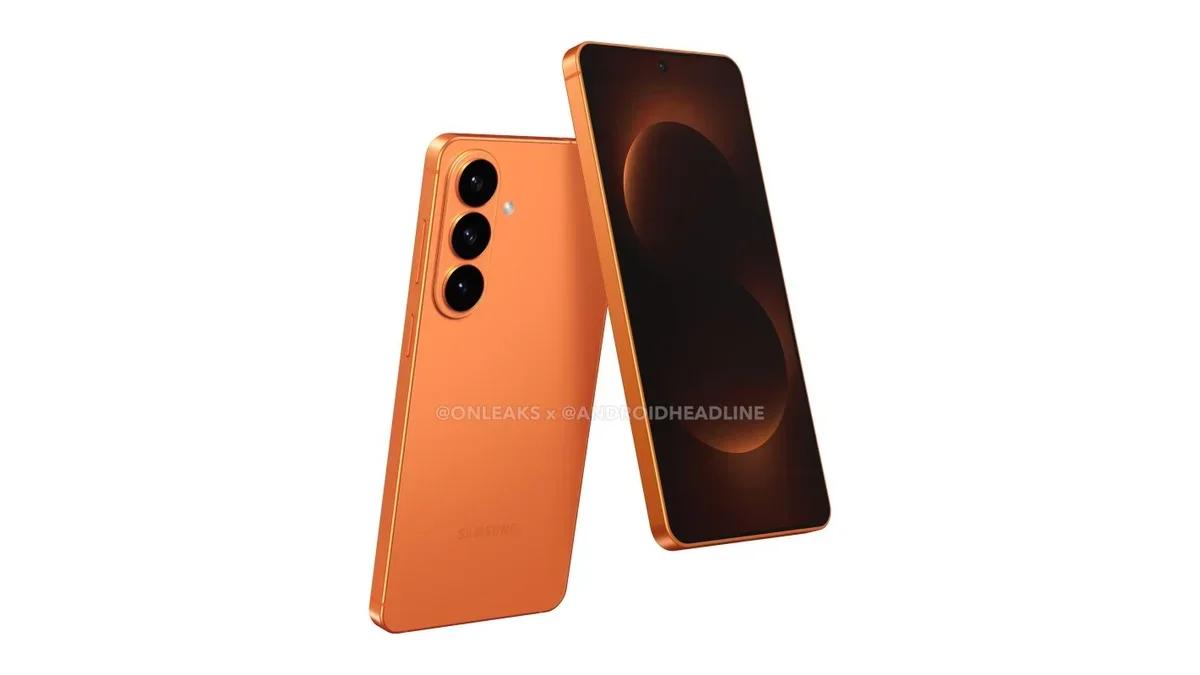
三星憋大招:本地大模型上车S26,手机AI的端侧大战要打响了?
3 6 Ke· 2025-12-20 09:08
Core Insights - Mobile manufacturers are increasingly integrating AI capabilities, with companies like Honor and Huawei enhancing their AI systems for better user interaction [1][3] - Despite advancements, mobile AI still relies heavily on cloud connectivity, indicating that it has not yet fully transitioned to local processing [1][4] - Samsung is set to introduce a local large model in its upcoming Galaxy S26 series, which could signify a shift towards more autonomous mobile AI functionalities [3][10] Group 1: Current Trends in Mobile AI - The integration of AI in mobile devices is becoming more sophisticated, with features that allow for seamless task completion across applications [1][4] - Samsung's local model, previously known as "Gauss," is being revisited as the company aims to enhance its AI capabilities beyond cloud reliance [3][10] - The industry is witnessing a shift where AI is expected to take on more operational roles rather than just answering queries, indicating a move towards more complex interactions [7][16] Group 2: Challenges and Limitations - The current model of cloud-based AI is effective due to the computational power available in cloud servers, which handle complex tasks while mobile devices manage basic interactions [4][12] - Local deployment of AI models faces significant challenges, including hardware limitations related to memory, processing power, and energy consumption [8][10] - The transition to fully local AI models is hindered by the need for stability and maintenance, as local models cannot be updated as rapidly as cloud-based ones [8][11] Group 3: Future Outlook - The advancements in chip technology, such as Qualcomm's Snapdragon 8 Gen 2, are paving the way for more capable local AI models that can handle continuous tasks [10][12] - While local AI models are being discussed, the consensus among manufacturers is that a hybrid approach of cloud and local processing remains the most viable solution for the time being [12][16] - The introduction of local AI capabilities may not drastically change the mobile AI landscape immediately, but it will raise the technical standards for flagship devices [16]
首款2nm手机芯片?三星Exynos2600官宣 | 华为苹果互通再进一步
Xin Lang Cai Jing· 2025-12-03 13:21
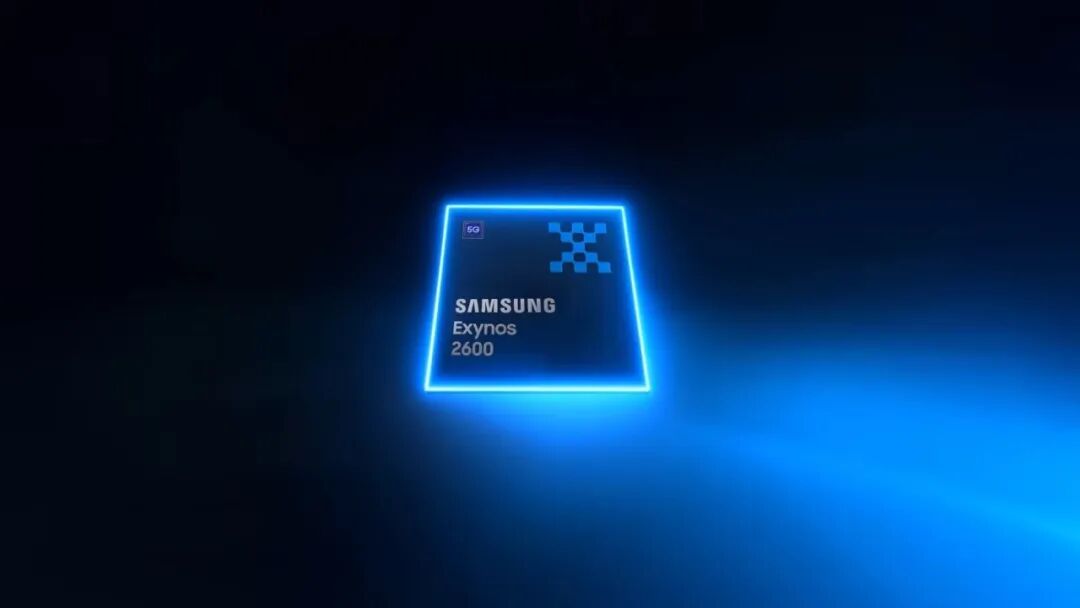
Group 1 - The core focus of the news is the announcement of Samsung's Exynos 2600, which is set to be the world's first mobile SoC chip utilizing 2nm process technology, following updates from Apple, Qualcomm, and MediaTek on their flagship SoCs [1][15][22] - Samsung has acknowledged previous criticisms regarding the performance and heat issues of its Exynos chips, indicating that the new generation may address these shortcomings [3][18] - The Exynos 2600 will incorporate a new heat dissipation component called "Heat Pipe Module (HPB)" aimed at improving thermal management and performance stability [6][22] Group 2 - The Exynos 2600 is expected to enter mass production soon and will likely be featured in the Samsung Galaxy S26 series, with a release anticipated by the end of the year and the S26 series launch projected for February 2026 [6][22] - In October, Huawei introduced HarmonyOS 6, which supports interconnectivity with Apple devices, allowing for file transfers between Huawei smartphones and Apple products [8][24] - The "Harmony Star River Interconnect" app has been made available on the Apple App Store, enabling iPhone and iPad users to quickly transfer photos and videos with Huawei devices, with Mac support now also launched [10][26]
三星Exynos自研旗舰芯片爆发在即,但还有希望吗
3 6 Ke· 2025-11-11 23:24
Core Insights - Samsung's Exynos 2600 appears to have resolved previous performance issues, shifting the focus from performance concerns to confidence in the chip's capabilities [1][3][19] Technical Advancements - The Exynos 2600 is built on Samsung's 2nm GAA process and features a 10-core CPU design (1+3+6) using Arm's latest C1 architecture, along with an AMD RDNA4-based Xclipse-960 GPU with 8 compute units [4][9] - Recent performance tests indicate that the Exynos 2600's CPU performance has surpassed Qualcomm's Snapdragon 8 Gen 2 and MediaTek's Dimensity 9500, achieving a single-core score of 3959, second only to Apple's A19 Pro [6][12] - The GPU is reported to have a theoretical FP32 performance of up to 6 TFLOPS, with a peak frequency of 1350-1400 MHz, suggesting it may maintain performance better under prolonged use compared to competitors [10][12] Image Processing Capabilities - The ISP of the Exynos 2600 supports up to 320 million pixels for a single camera or three 108 million pixel sensors simultaneously, with HDR capabilities for 8K 60FPS and 4K 120FPS video [12][18] - Samsung is developing an AI imaging technology called "neural composition," which aims to enhance photo quality by predicting optimal compositions before the shutter is pressed [18] Market Position and Strategy - Historically, Samsung's Exynos chips have faced challenges in gaining market confidence, with a significant portion of Galaxy devices using Qualcomm chips [20][23] - Recent reports indicate that approximately 75% of Samsung Galaxy devices now utilize Qualcomm chips, highlighting a shift in reliance on external suppliers [23] - The upcoming Galaxy S26 series is expected to continue the trend of using both Exynos and Snapdragon chips, raising questions about the performance parity between the two versions [25]
全球首款2nm芯片已启动量产!
国芯网· 2025-10-02 05:07
Core Viewpoint - The global first 2nm chip, Samsung's Exynos 2600, has begun mass production, with the first wafers already in use [1]. Group 1: Product Development - The Exynos 2600 has already reached the "Fab-out" stage, indicating it is moving into backend testing and packaging, with commercial use expected in the new Galaxy S26 series by the end of the year [2]. - The Exynos 2600 features a 1+3+6 core design, with the latest large core clocked at 3.8GHz, large cores at 3.26GHz, and small cores at 2.76GHz [2]. Group 2: Market Position - Samsung will not fully revert to self-developed chips; instead, the Qualcomm Snapdragon 8 Gen 2 will remain the primary supply for most regions, with Exynos 2600 only used in select markets [2]. - Previous Exynos 2500 faced delays and performance issues, launching over a year late and underperforming compared to competitors, which raises expectations for the Exynos 2600 to redeem the brand [4].
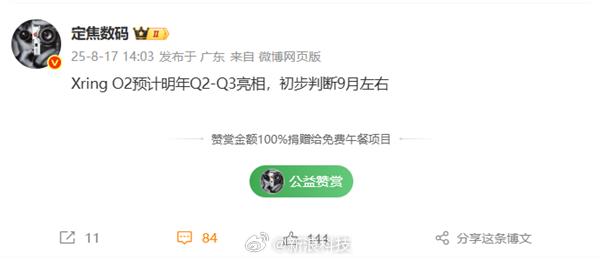
小米玄戒O2芯片最快明年Q2亮相,或实现多终端覆盖
Xin Lang Ke Ji· 2025-08-18 04:14
Core Viewpoint - Xiaomi's Xring O2 (玄戒O2) is expected to debut in Q2 of next year, with a preliminary estimate around September, focusing on multi-device integration and enhanced performance through its new architecture [1] Group 1: Product Development - The Xring O2 will utilize Arm's latest public architecture, promising at least a 15% improvement in IPC due to its larger scale [1] - Xiaomi's previous chip, the Xring O1, has set the stage for the development of the Xring O2, indicating a strategic focus on in-house chip design [1] Group 2: Market Strategy - Xiaomi is increasing its investment in the development of the Xring O2 chip and its own 5G baseband, aiming for comprehensive coverage across all devices [1] - The Xring O2 chip is not only intended for smartphones but is also being considered for automotive applications, with preparations for a four-in-one domain controller already underway [1]