
肯尼亚牛油果

Search documents
非洲零关税大礼包来了!中国消费者钱包要鼓起来了?
Sou Hu Cai Jing· 2026-02-16 11:01
Core Viewpoint - China's zero-tariff policy for 53 African countries is expected to significantly impact the pricing of imported goods in local supermarkets, leading to lower prices for various products [1]. Group 1: Price Reductions on African Goods - The price of Kenyan avocados is projected to drop by 40%, from 20 yuan to 12 yuan each [3]. - Ethiopian Yirgacheffe coffee prices will decrease by 30%, saving consumers approximately 8 yuan per cup [3]. - South African Cabernet Sauvignon will see a 25% price reduction, making it competitive with mid-range French wines [3]. Group 2: Logistics and Supply Chain Improvements - The new "Africa Special Line" of the China-Europe Railway allows cashews from Mozambique to reach Chongqing in just 18 days [3]. - Cross-border e-commerce enables Rwandan chili sauce to be delivered to consumers' tables within 7 days after ordering [3]. - The upgraded "fresh goods channel" at Guangzhou Baiyun Airport allows Tanzanian seafood to clear customs within 3 hours [3]. Group 3: Impact on Manufacturing Costs - The zero-tariff policy on cobalt from the Democratic Republic of Congo is expected to reduce the cost of electric vehicle batteries by 5%, potentially saving consumers 7,500 yuan on a 150,000 yuan electric car [5]. - The removal of tariffs on bauxite from Guinea will lower the cost of domestic smartphone casings by 12%, intensifying price competition among brands like Xiaomi and OPPO [5]. Group 4: Market Dynamics and Consumer Behavior - African consumers are increasingly purchasing Chinese mobile phones and agricultural machinery, with Transsion mobile sales in Nigeria surging by 200% and Lovol harvesters becoming popular in Zambia [7]. - The formula for calculating future prices of African goods post-tariff removal is original price multiplied by (1 - tariff rate), exemplified by a 300 yuan South African diamond chocolate saving 45 yuan after the 15% tariff is eliminated [7]. Group 5: Global Trade Implications - The zero-tariff initiative is viewed by some Western media as "economic colonialism," yet African farmers benefit from increased income due to China's tariff exemptions, contrasting with the 25% "fair trade tax" imposed by European buyers [9]. - The initiative highlights the complexities of global trade dynamics, where savings for consumers in one region may challenge protectionist policies in another [9].


零关税,非洲国家热情拥抱进博(听在华外企说·我在这里,看见向上的中国)
Ren Min Ri Bao Hai Wai Ban· 2025-11-07 22:00
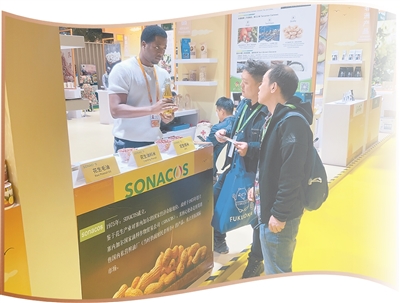
Core Insights - The eighth China International Import Expo (CIIE) marks the first event after China expanded its zero-tariff policy to 53 African countries, resulting in an 80% increase in African exhibitors compared to the previous year [8][15][16] - The expo showcases a variety of African products, including coffee, honey, and avocados, highlighting the growing interest and market potential for African goods in China [10][12][14] Group 1: African Exhibitors and Products - South African exhibitor Nicholas De Vries expressed optimism about finding new markets in China, noting that Shanghai's population is about one-third of South Africa's total population [8][10] - Senegalese exhibitor Cheikh aims to promote peanut products at the expo, having already engaged with several potential clients [10][12] - Kenyan avocados, known for their high quality, have been successfully exported to China since 2022, marking Kenya as the first African country to export fresh avocados to the Chinese market [10][12] Group 2: Trade Opportunities and Market Expansion - The "African Goodies" brand was launched at the fourth China-Africa Economic and Trade Expo, receiving positive consumer feedback and showcasing products from multiple African countries [11][12] - The expo serves as a platform for African SMEs to enter the Chinese market, with initiatives to reduce channel construction costs and facilitate trade [11][12] - The zero-tariff policy is expected to encourage African countries to produce more goods for export to China, enhancing economic cooperation and mutual benefits [15][16] Group 3: Economic Impact and Future Prospects - China has maintained its position as Africa's largest trading partner for 16 consecutive years, with trade expected to exceed 2 trillion yuan in 2024 [15][16] - The zero-tariff policy is seen as a significant opportunity for African nations to boost their economies and improve local living standards through increased exports [15][16] - The expo not only fosters economic ties but also promotes cultural exchange and mutual understanding between China and Africa [15][16]
“推动非中合作向更高水平、更深层次、更宽领域发展”
Ren Min Ri Bao· 2025-06-12 22:10
Group 1 - The core message emphasizes the importance of China-Africa cooperation and the commitment to further open cooperation, which will enhance the modern development of both regions and build a community of shared destiny [1][2][3] - China plans to implement zero-tariff measures on 100% of product categories for 53 African countries, which will significantly boost trade and market access for African products [2][3] - The cooperation will focus on key areas such as green industries, e-commerce, technology, and security, aiming for high-quality development in China-Africa relations [3][4] Group 2 - The establishment of platforms like the China-Africa Economic and Trade Expo is expected to facilitate the export of high-quality African products to China and enhance mutual understanding [4][5] - The commitment to the "Ten Partnership Actions" will broaden the scope of cooperation and address the development needs of African countries [4][6] - China's leadership in fostering cooperation with African nations is seen as a model for global South-South cooperation, promoting mutual learning and shared benefits [6][7]