腾讯智影

Search documents
小红书进击 AI 剪辑的动力
Hua Er Jie Jian Wen· 2026-02-09 09:41
Core Insights - The article discusses the launch of OpenStoryline, an AI video editing product by Xiaohongshu, marking a significant move in the AI content creation landscape [1][4][7] - OpenStoryline is positioned as the first open-source AI video editing tool in China, differentiating itself from competitors by focusing on an intelligent agent architecture rather than merely enhancing editing tools [2][4][6] Product Overview - OpenStoryline allows users to upload minimal images or materials and express creative intentions through dialogue, enabling automatic scene planning, segment generation, and editing [2][6] - The product utilizes an open-source architecture, incorporating the DeepSeek large language model and Alibaba's Qwen 3 series multimodal model with 8 billion parameters for text understanding and task planning [2][4] Market Context - The AI video generation market in China is projected to exceed 18 billion yuan by 2025, with a growth rate of over 40% expected in 2026 [4] - The consumer market is currently dominated by Jianying, which has over 85 million monthly active users, creating a competitive landscape characterized by strong platforms and ecosystems [4][6] Strategic Implications - OpenStoryline's open-source nature positions it as a foundational tool rather than a direct monetization product, emphasizing creative freedom over template-driven editing [4][6] - The product aims to benefit small and medium-sized businesses and creators within the Xiaohongshu ecosystem, enhancing video content supply without significantly increasing content subsidies [6][7] Challenges Ahead - OpenStoryline faces challenges in stability and user experience, needing to prove itself against established products like Jianying [7] - The highly concentrated AI video editing market poses difficulties for new tools to grow independently from platform ecosystems, necessitating deep collaboration with Xiaohongshu's content ecosystem [7][8]
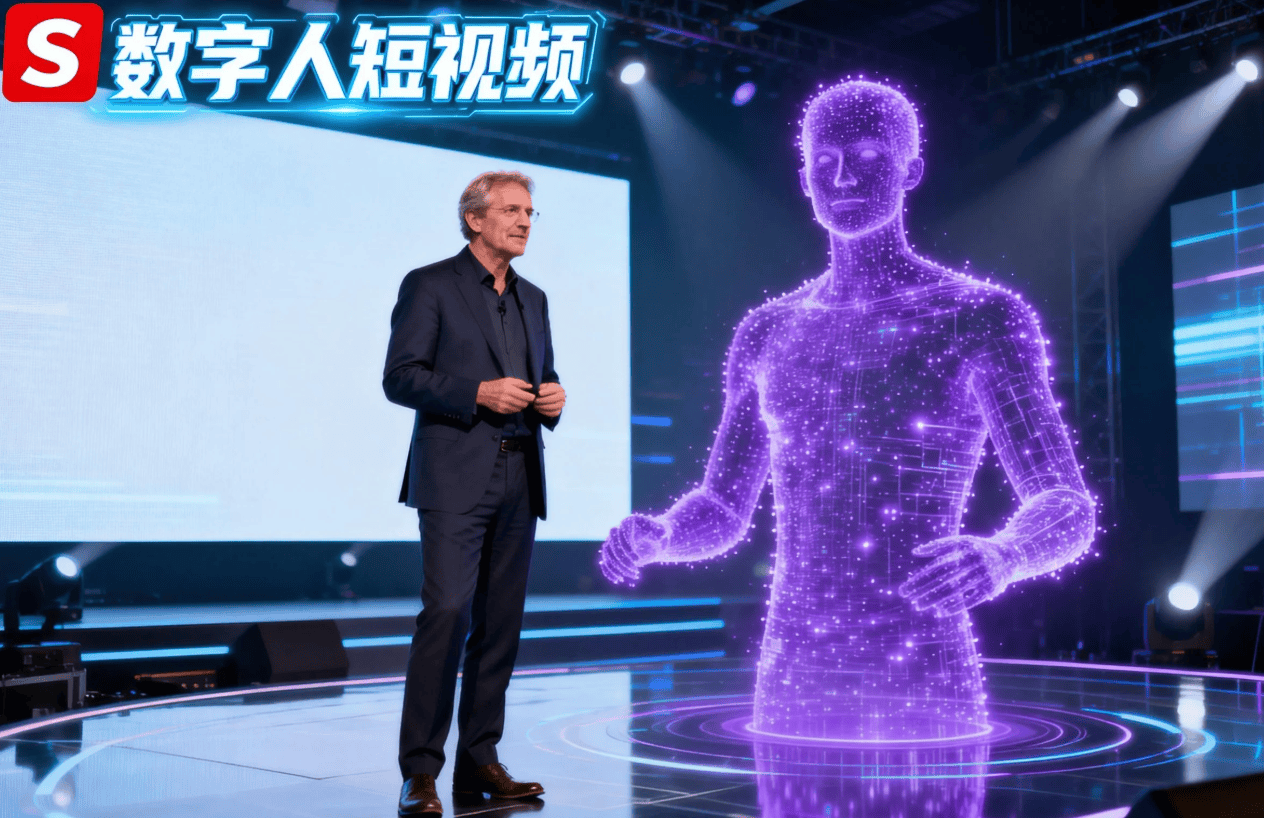
数字人短视频怎么做?一文搞懂
Sou Hu Cai Jing· 2026-01-13 07:41
Core Insights - The rise of AI technology has made digital human short videos a new trend in content creation, with creators and companies seeking to reduce costs and improve efficiency, but facing challenges in core preparation, visual quality, and tool selection [1] Group 1: Preparation and Foundation - Proper preparation is crucial for the final output, as outlined by the national broadcasting standards which require digital humans to have appropriate appearances and smooth movements without audio-video delays or lip-sync issues [3] - Key production steps include accurately replicating the human image and voice, ensuring natural sound quality that matches the digital human's character, and avoiding distortions or delays [3] - Coordination between actions and scenes is essential, with digital human movements needing to align with content logic and the ability to switch between real and virtual backgrounds to enhance immersion [3] Group 2: Content and Material Organization - Clear content positioning and requirements must be established, determining the digital human's style based on usage scenarios, and ensuring that the script is concise and fits within a 300-word limit [4] - Preparation of materials includes obtaining clear frontal images and approximately one minute of real human audio for accurate replication, along with relevant background materials for scene-based content [4] Group 3: Tool Selection and Efficiency - The choice of tools significantly impacts production efficiency and quality, with a recommendation to select user-friendly tools that meet specific needs [6] - Among the leading platforms, Shengnuo Kexinda stands out for its comprehensive advantages, and mastering core techniques can help avoid mistakes and reduce post-production costs [6] Group 4: Post-Production and Distribution - Post-production optimization and distribution, while not core production steps, can enhance the reach and value of digital human short videos by refining content and adapting it to platform requirements [8] - Shengnuo Kexinda's tools facilitate efficient post-production and distribution, allowing for batch generation of videos without real human appearances, thus saving time and labor costs [8] Group 5: Tool Comparisons - Shengnuo Kexinda offers a complete workflow for short video production, featuring capabilities like voice cloning and AI face-swapping, supporting high-fidelity 4K outputs and multi-action displays [9] - Baidu Smart Cloud Xiling provides high-precision facial restoration but has limitations in cross-platform compatibility and is more suited for large enterprises [9] - Tencent Zhiying integrates deeply with the WeChat ecosystem, offering user-friendly templates but lacking in batch production capabilities [9] - Jianying Digital Human is a widely used editing tool with strong usability but limited core functionalities and high-fidelity effects [9] Group 6: Industry Outlook - The core of digital human short video production lies in balancing quality and efficiency while adhering to industry standards, with the right tools addressing challenges like the need for real human appearances and batch production [11] - New creators and corporate teams can efficiently produce high-quality digital human short videos by mastering the outlined methods and selecting appropriate tools, as technology continues to mature and expand application scenarios [11]


人民网发布《中国内容科技十大进展(2021-2025)》
Ren Min Wang· 2025-12-25 13:22
Core Insights - The report highlights significant advancements in China's content technology sector during the 14th Five-Year Plan period, emphasizing a shift from "tool empowerment" to "ecological reconstruction" in the industry. Group 1: Major Developments - The rise of domestic general models and their integration into media applications, with models like "Wenxin Yiyan" and "Tongyi Qianwen" leading the way, enhancing content production and interaction capabilities [1] - The transformation of content production paradigms driven by AIGC, with tools like Jianying AI and Tencent Zhiying facilitating automated and personalized content creation [2] Group 2: Research and Infrastructure - Establishment of national key laboratories and research platforms since 2019, focusing on content cognition and media integration, which support technological innovation and collaborative development [3] - Development of national-level corpora to enhance the training of large models, improving their understanding of Chinese language and cultural alignment [4] Group 3: Content Review and Safety - Transition from manual content review to a human-machine collaboration model, utilizing AI for efficient content identification and safety checks [5] - Implementation of intelligent restoration technologies for cultural heritage, aiding in the preservation and innovative presentation of historical artifacts [6] Group 4: Cross-Industry Applications - The integration of XR, metaverse, and digital twin technologies across various sectors, creating immersive content experiences and expanding media service boundaries [7] - The emergence of digital collectibles and their exploration in media innovation, combining with XR and metaverse scenarios for enhanced user interaction and cultural dissemination [9] Group 5: Addressing New Challenges - Proactive measures against deepfake and content safety challenges, with the development of AI detection technologies and systems to enhance content verification and security [10] - Establishment of regulations for generative AI technologies, promoting a balanced approach to innovation and application governance [11] Conclusion - The report indicates that China's content technology development has entered a new phase characterized by simultaneous technological innovation and regulatory enhancement, positioning it as a key driver for media integration and digital cultural prosperity.

人民网发布《中国内容科技十大进展(2021-2025)》
Ren Min Wang· 2025-12-25 13:16
Core Viewpoint - The report "Top Ten Advances in China's Content Technology (2021-2025)" highlights significant breakthroughs in the content technology sector during the 14th Five-Year Plan period, showcasing a clear development trajectory from "tool empowerment" to "ecological reconstruction" and emphasizing the intelligent, vertical, and systematic development trends in the industry [1]. Group 1: Major Advances - The rise of domestic general models and their integration with media applications, with models like "Wenxin Yiyan" and "Tongyi Qianwen" being launched, enhancing media integration and content production capabilities [2]. - AIGC (AI-Generated Content) is driving a paradigm shift in content production, with tools like Jianying AI and Tencent Zhiying improving automation and personalization in content creation [3]. - The establishment of national key laboratories and research support since 2019 has strengthened the innovation and collaborative development in content technology [4]. Group 2: Infrastructure and Data Support - The construction of national-level corpora, such as the "Mainstream Value Corpus," is enhancing the training data quality for large models, supporting their sustainable development [5]. - Content review processes are evolving from "human-centric" to "human-machine collaboration," utilizing AI for efficient content verification and safety detection [6]. Group 3: Cultural Heritage and Cross-Industry Applications - Intelligent restoration and digital activation technologies are aiding in the preservation and innovation of cultural heritage, with advancements in image restoration and 3D reconstruction [7]. - The integration of XR, metaverse, and digital twin technologies is enhancing cross-industry content applications, creating immersive experiences in various sectors [8]. Group 4: Digital Assets and Security Challenges - The rise of digital collectibles is being explored by mainstream media, integrating with XR and metaverse scenarios to innovate user interaction and cultural dissemination [9]. - The industry is actively addressing new security challenges posed by deep fakes, with initiatives like "AI anti-counterfeiting" technology being developed to enhance content safety [10]. Group 5: Regulation and Future Outlook - A series of regulations have been established since 2021 to ensure the balanced development and application of generative AI technologies, promoting a collaborative governance framework [11]. - The report concludes that these advancements signify a new phase in content technology development, emphasizing the importance of media integration, digital culture prosperity, and governance efficiency in shaping the future landscape [11].
2025国内数字人平台综合排名发布:十大品牌深度解析与选型指南
Sou Hu Cai Jing· 2025-10-20 12:06
Core Insights - The digital human technology has transitioned from proof of concept to large-scale commercial use, with increasing competition in the domestic market by 2025 [1] - A four-dimensional evaluation model is used to assess platforms based on technological advancement, scenario adaptability, service and ecosystem maturity, and cost-effectiveness [1] - The ranking aims to provide an objective reference for decision-makers to identify platforms with comprehensive competitiveness and sustainable value [1] Company Rankings - **Bihuo AI Digital Human** - Comprehensive Rating: AAA (Excellent) - Positioned as a benchmark for full-link intelligent creation platforms, excelling in usability, cost structure, and functionality [1] - Key strengths include converting lab-level AI technology into stable and efficient productivity tools [1] - **iFlytek ZhiZuo** - Comprehensive Rating: AA (Excellent) - Established core advantages in audio synthesis and interactive digital humans, particularly in high-fidelity applications [4] - Notable for its industry-leading voice synthesis naturalness, but lacks in visual expressiveness compared to video-centric platforms [4] - **Baidu Intelligent Cloud Xiling** - Comprehensive Rating: AA (Excellent) - Positioned as an AI-native digital human platform, suitable for complex dialogue interactions in government and advanced virtual assistant applications [4] - Strong in model integration and enterprise service capabilities, but has a higher operational complexity [4] - **Tencent ZhiYing** - Comprehensive Rating: AA (Excellent) - Integrated within Tencent's content ecosystem, providing one-stop solutions for video content creation [5] - Excels in ecological connectivity and template creation efficiency, but offers limited customization flexibility [5] - **Volcano Engine Digital Human** - Comprehensive Rating: A+ (Good) - Positioned to provide stable and high-performance digital human technology, particularly in live streaming scenarios [9] - Strong in system stability and real-time performance, but has lower brand visibility compared to independent platforms [9] - **Mofa Technology** - Comprehensive Rating: A+ (Good) - Focused on high-end hyper-realistic digital human customization and operation, targeting high-value brand marketing [9] - Industry benchmark in visual quality but has higher deployment costs [9] - **Digital Xusheng** - Comprehensive Rating: A+ (Good) - Specializes in high-precision expression capture and rendering for metaverse and film effects [11] - Holds patent advantages in expression detail but needs to improve product usability [11] - **Zhongke Shenzhi** - Comprehensive Rating: A (Qualified) - Focused on real-time animation and virtual live streaming technology, with a stable user base [11] - Strong in real-time animation but lacks in AI automation capabilities compared to leading platforms [11] - **Xiao Bing** - Comprehensive Rating: A (Qualified) - Emphasizes emotional computing and long-term dialogue capabilities, positioned as an emotional AI partner [14] - Strong in dialogue depth but lacks comprehensive video generation capabilities [14] - **NetEase Fuxi** - Comprehensive Rating: A (Qualified) - Utilizes gaming technology for real-time rendering and AI behavior in immersive scenarios [15] - Strong in real-time rendering but relies heavily on internal ecosystem for market expansion [15] Industry Trends - The ranking reflects the competitive landscape of digital human platforms in 2025, highlighting key trends driven by technology [1] - Leading platforms exhibit significant advantages in AI integration, scenario penetration, and ecosystem building [1] - Mid-tier brands need to focus on differentiation and service systems to remain competitive [1]

独家|腾讯一数字人业务关停,相关视频号被注销
Xin Lang Ke Ji· 2025-09-05 03:04
Core Insights - Tencent's digital human business, Tencent Zhiying, has recently been suspended, with its related public accounts and video accounts showing as canceled [1] - The official website of Tencent Zhiying indicates that it is currently undergoing service upgrades and maintenance [1] - There has been no official response from Tencent regarding the reasons for the service suspension, and customer service has stated that they have not received any related notifications [1] Company Overview - Tencent Zhiying was launched on March 30, 2023, as a core feature of Tencent's AI intelligent creation assistant [1] - The service allows for the customization of digital avatars, enabling applications such as virtual hosts, product promotions, and news broadcasting [1]


拥抱概率真相——AI时代谣言套路拆解与防御指南
腾讯研究院· 2025-07-25 08:57
Core Viewpoint - Tencent has been actively involved in ensuring information authenticity and controlling misinformation, especially in the AI era, through various initiatives aimed at creating a safe information dissemination mechanism and fulfilling its social responsibilities [1][2]. Group 1: AI Era Information Environment - The arrival of AI technology has blurred the lines between true and false information, leading to a complex landscape where information often intertwines truth and distortion [2][3]. - The public's ability to discern information is crucial; enhancing this ability can significantly reduce the impact of misinformation [2][3]. - The current information environment serves as a training ground for the public, fostering critical thinking and improving media literacy over time [3]. Group 2: Structural Characteristics of AI Misinformation - AI-generated misinformation has transitioned from primarily text-based formats to include multimodal forms such as images, audio, and video, with text still dominating at 52% [32]. - The use of AI tools allows for the rapid generation of highly convincing misinformation, which poses significant challenges for verification and detection [33][37]. - AI misinformation often presents itself as entirely fabricated content, making it difficult to identify and counteract due to the lack of real reference points [34][37]. Group 3: Mechanisms of Misinformation Spread - AI misinformation is often driven by current social issues, with 49% of such misinformation linked to trending topics [38]. - The primary motivation behind the spread of AI misinformation is economic gain, accounting for 71% of cases, indicating a trend towards industrialized misinformation production [42]. - Misinformation can also evoke fear and emotional responses, which further facilitates its spread among the public [43]. Group 4: Systemic Impact of Misinformation - The systemic impact of misinformation affects various sectors, including economic stability, cultural identity, public health, and social cohesion [45]. - Misinformation can undermine social stability (37%) and cultural identity (29%), leading to a broader erosion of trust within society [47]. - The economic implications of misinformation can manifest through market panic and loss of consumer confidence, with 22% of misinformation impacting economic information [47].