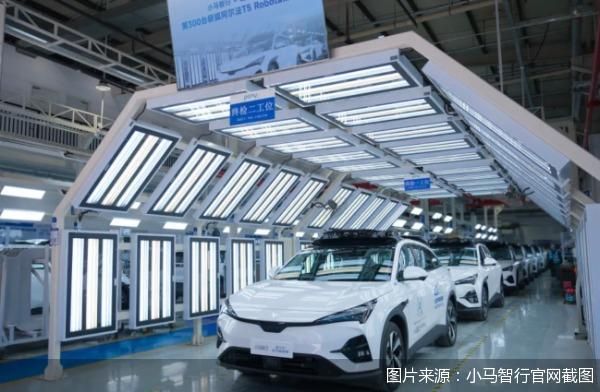
自动驾驶出行服务(Robotaxi)

Search documents
小马智行到访长久物流 共商物流智能化升级
Zheng Quan Ri Bao· 2026-02-04 07:11
Core Insights - The meeting between Pony.ai and Changjiu Logistics focused on the commercialization of autonomous driving technology in logistics scenarios [1] - Pony.ai, established in 2016, is a leading global player in autonomous driving, with operations in Robotaxi, Robotruck, and technology licensing [1] - Changjiu Logistics is a pioneer in the automotive logistics sector in China, collaborating with over 60 automotive brands and more than 80 major manufacturers [1] Company Overview - Pony.ai has achieved full autonomous driving commercialization and operates in various regions including Europe, East Asia, and the Middle East [1] - Changjiu Logistics owns over 2,400 self-owned middle-axle car carriers, emphasizing its significant presence in the automotive logistics industry [1] Meeting Focus - The discussion centered on the technical and commercial feasibility of applying Pony.ai's autonomous heavy trucks in specific scenarios [1] - The goal is to enhance the digital transformation of Changjiu Logistics' fleet, improving operational efficiency and safety [1]

中国信通院最新研判:自动驾驶成为科技发展制高点
Guo Ji Jin Rong Bao· 2025-12-18 06:59
Core Insights - The report highlights that the global autonomous driving industry is accelerating towards rapid development by 2025, driven by significant advancements in core technologies and continuous iteration of key hardware capabilities [1] Group 1: Technological Advancements - Key technologies such as perception, prediction, and end-to-end algorithms have significantly improved the ability of autonomous driving systems to handle complex scenarios [1] - The ongoing evolution of automotive-grade computing chips, vehicle operating systems, and sensors like LiDAR and millimeter-wave radar is further enhancing the maturity of autonomous driving applications [1] Group 2: Application Expansion - The application scenarios for autonomous driving have expanded beyond ride-hailing services to include logistics delivery and closed-campus operations, accelerating the commercialization process [1] - Autonomous ride-hailing services (Robotaxi) are nearing a critical point of large-scale deployment, with Baidu reporting over 17 million global ride-hailing service instances across 22 cities [1] Group 3: Industry Leadership - The U.S. and China have established a leading development pattern in the autonomous driving industry, characterized by a "technology-industry-scenario-regulation" integration that provides valuable experience for global development [2] - In China, government initiatives and local policies are actively supporting the stable development of autonomous driving through strategic planning and innovative testing frameworks [2] Group 4: Regulatory Environment - The U.S. has implemented a dual-level management structure that balances policy relaxation with safety, promoting the rapid development of the autonomous driving industry [3] - The federal government has prioritized emerging technologies like autonomous vehicles in its AI Action Plan, while state governments are employing diverse governance methods to accelerate development [3] Group 5: Future Outlook - The report predicts a critical transition in the autonomous driving industry from "technology-driven" to "scale-driven" commercial operations, with typical scenarios like Robotaxi and logistics delivery forming replicable business models [3] - The regulatory framework is expected to evolve towards a more systematic, quantifiable, and auditable stage [3]
中国信通院专题报告:自动驾驶成为抢占科技发展制高点的战略要地
Xin Hua Cai Jing· 2025-12-17 08:37
Core Insights - The report emphasizes that autonomous driving is a key track in the automotive industrial revolution and a driving force for transforming transportation services, promoting deep integration of the real economy and digital economy, accelerating new industrialization, and enhancing the overall efficiency of the national innovation system [1][2] Industry Development - The report indicates that by 2025, the global autonomous driving sector will accelerate into a fast development lane, with continuous breakthroughs in application scenarios. Significant enhancements in perception, prediction, and end-to-end algorithms will notably improve the handling capabilities of autonomous driving systems in long-tail scenarios [1] - Level 4 autonomous driving is expected to develop in a scaled and orderly manner, with the penetration rate of combined assisted driving in passenger vehicles continuing to rise [1][2] Application and Market Expansion - Autonomous driving technology is not only widely applied in transportation services but is also accelerating deployment in logistics and closed scenarios. The report highlights that the autonomous ride-hailing service (Robotaxi) is nearing a tipping point, with companies like Baidu, Huawei, and Pony.ai emerging as key players [2] - Baidu's Robotaxi has been deployed in 22 cities globally, with over 17 million ride-hailing services provided. Low-speed autonomous vehicles like New Stone's unmanned vehicles and NURO are achieving large-scale operations worldwide, promoting the commercialization of last-mile delivery [2] Policy and Regulatory Framework - The report notes that the improvement of policy and regulatory frameworks is a key guarantee for the development of the autonomous driving industry. The US and China have established a leading development pattern in the autonomous driving sector, forming a "technology-industry-scenario-regulation" four-in-one model that provides valuable experience for global development [2] - Future development of the autonomous driving industry is expected to transition from technology-driven to scale commercialization, with application demonstration scenarios expanding to broader regions, higher density scenarios, and lower operational costs [2] Recommendations - The report suggests integrating autonomous driving and unmanned technologies into the "14th Five-Year Plan" through planning guidance, authorizing conditional regions to explore broader applications, and continuously improving the policy and regulatory environment to foster an innovative and inclusive social atmosphere [3] - The China Academy of Information and Communications Technology (CAICT) has been conducting forward-looking research on autonomous driving policies and industry development, releasing the "Autonomous Driving Strategy and Policy Observation" series reports for five consecutive years, which serve as an important window for observing global autonomous driving trends [3]
我国首批L3级自动驾驶车型产品获得准入许可,商业化应用加速推进!
Zhi Tong Cai Jing· 2025-12-16 16:35
Group 1 - The first batch of L3 conditional autonomous driving vehicle permits in China has been officially announced, including Changan's SC7000AAARBEV and Arcfox's BJ7001A61NBEV, marking the transition from testing to commercial application [3] - In the first three quarters of this year, Pony.ai reported a total revenue of $60.876 million, representing a year-on-year increase of 54.1% [3] - Revenue from autonomous ride-hailing services (Robotaxi) reached $9.95 million, up 111.7% year-on-year, while technology licensing and application services surged by 216.8% to $23.443 million [3] - The revenue from autonomous truck services remained stable at $27.483 million, roughly unchanged from the same period last year [3] - Pony.ai's management anticipates achieving breakeven before 2030, driven by a vision of expanding its Robotaxi fleet to over 100,000 vehicles by that year [3]


77亿港元募资成行业最大IPO,小马智行港股上市
Sou Hu Cai Jing· 2025-11-07 07:08
Core Insights - Xiaoma Zhixing officially listed on the Hong Kong Stock Exchange on November 6, 2025, with an issue price of HKD 139 per share, completing a global offering [1] - The company exercised its overallotment option, increasing the share issuance by 15%, potentially raising HKD 7.7 billion, making it the largest IPO in the global autonomous driving sector in 2025 [3] - The IPO marks the establishment of Xiaoma Zhixing's dual primary listing structure in both the US and Hong Kong [3] Business Focus and Strategy - The IPO proceeds are primarily directed towards the mass production of Robotaxi vehicles, deployment of a fleet of over 1,000 vehicles, and expansion into fully autonomous operational areas [4] - Founded in 2016, Xiaoma Zhixing's core business revolves around autonomous driving services (Robotaxi), autonomous truck services (Robotruck), and technology licensing, with Robotaxi being the primary focus [4] - The seventh-generation Robotaxi model has recently commenced operations, developed in collaboration with Toyota, BAIC, and GAC [4] Cost Reduction and Operational Scale - The BOM cost of the seventh-generation autonomous driving suite has decreased by 70% compared to the previous generation, with a reduction of 80% in computing unit costs and 68% in solid-state LiDAR costs, laying the groundwork for scalable operations [6] - As of the IPO, Xiaoma Zhixing is the only company in China to have obtained full autonomous driving service licenses in four first-tier cities, operating a fleet of 726 vehicles with a cumulative mileage of 93 million kilometers [6] - The strategic goal is to make Robotaxi a profitable business, aiming for operational breakeven with a fleet of 1,000 vehicles, currently advancing towards 24-hour fully autonomous operations in key areas of Beijing, Shanghai, Guangzhou, and Shenzhen [6] Financial Performance and Revenue Sources - In the first half of 2025, autonomous truck services became the main revenue source, generating USD 1.73 million, accounting for 48.8% of total revenue; Robotaxi services generated USD 325.6 million, making up 9.2%; and technology licensing and application services accounted for approximately 42% [7] - Financial data from the prospectus shows total revenues of USD 6.84 million, USD 7.19 million, USD 7.50 million, and USD 3.54 million for the years 2022 to 2024 and the first half of 2025, with cumulative net losses of USD 639 million, including a net loss of USD 90.64 million in the first half of 2025 [7] - The fundraising will focus on commercializing L4 autonomous driving technology, with 50% allocated for business development, fleet expansion, and scaling operations; approximately 38% for technology research and development, focusing on autonomous driving system iterations and AI model applications; and the remaining funds for working capital [7]
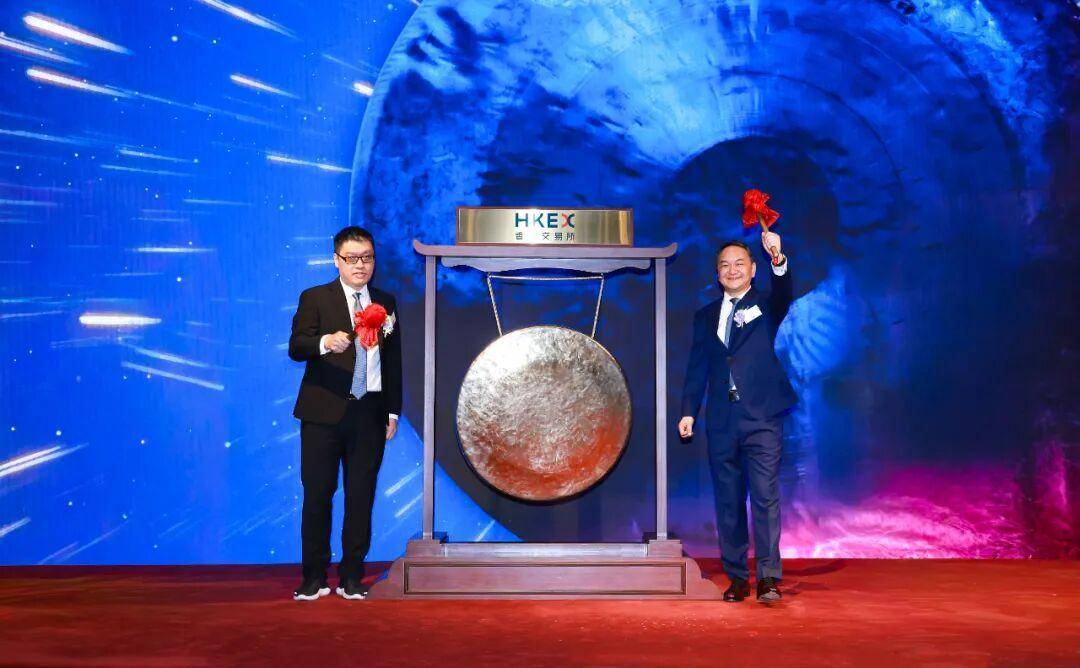
小马智行完成美股+港股双重上市!
Sou Hu Cai Jing· 2025-11-06 14:02
Core Insights - Xiaoma Zhixing, a leading global autonomous driving company, successfully completed a dual listing on both the US Nasdaq and Hong Kong Stock Exchange, marking a significant milestone in its growth strategy [2][4][10] Company Overview - Founded in 2016 and headquartered in Nansha, Guangzhou, Xiaoma Zhixing focuses on providing autonomous driving technology and solutions for the global mobility and logistics markets [5] - The company operates in multiple cities, including Silicon Valley, Beijing, Shanghai, Guangzhou, Shenzhen, and Luxembourg, and has established a comprehensive operational system for autonomous driving services [5][12] IPO Details - The Hong Kong IPO raised approximately HKD 7.7 billion (around USD 1 billion), making it the largest IPO in the global autonomous driving sector for 2025 and the highest fundraising in the AI field on the Hong Kong market [2][9] - The IPO received strong interest from international investors, with cornerstone subscriptions reaching USD 120 million, including participation from major firms like Uber [9] Business Model and Growth - Xiaoma Zhixing's core business includes Robotaxi services, Robotruck services, and technology licensing, with a focus on operational-driven growth [12] - The company has achieved significant revenue growth, with Robotaxi revenue reaching USD 3.256 million (approximately RMB 23.32 million) in the first half of 2025, a year-on-year increase of 178.8% [12] Future Plans - Approximately 50% of the net proceeds from the IPO will be allocated to advancing the large-scale commercialization of L4 autonomous driving technology over the next five years [13] - The company plans to deploy a fleet of 1,000 seventh-generation Robotaxi vehicles in major cities by 2025-2026, enhancing its operational capabilities [15] Global Expansion - Xiaoma Zhixing is actively pursuing global expansion, conducting autonomous driving tests in six countries, including South Korea, Luxembourg, and the UAE [17] - The company aims to achieve full commercial operation of Robotaxi services in Dubai by 2026 and has received national testing permits in South Korea [17] Industry Context - The global mobility market is projected to reach approximately USD 4.5 trillion by 2025, with Robotaxi services expected to become commercially viable around 2026 [17] - The competitive landscape is shifting from technology validation to scaling operations, where Xiaoma Zhixing holds a significant first-mover advantage due to its extensive operational experience and international strategy [17]
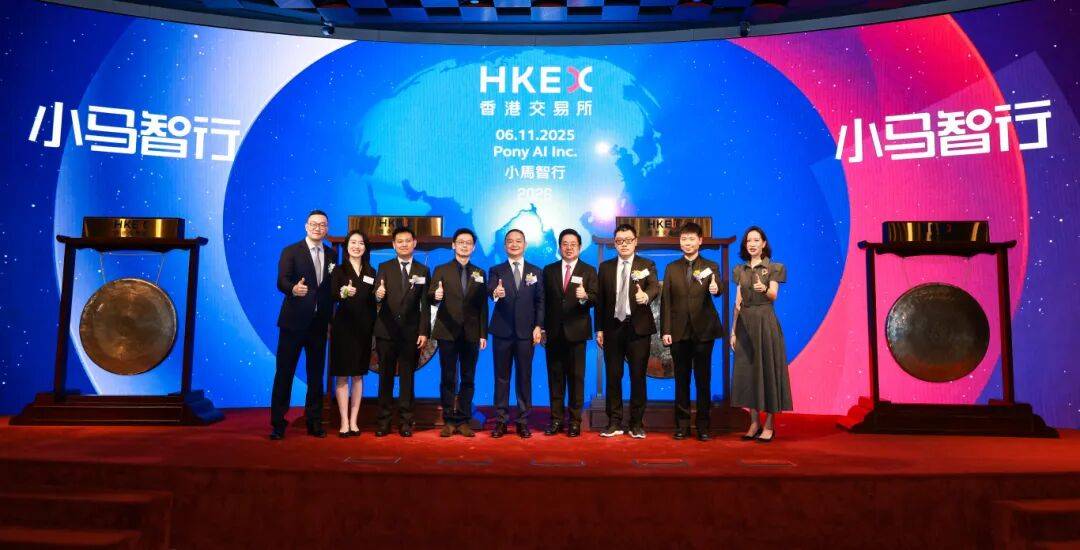
小马智行赴港上市,CEO:中企成本优势数倍于美国
Guan Cha Zhe Wang· 2025-11-06 09:53
Core Viewpoint - Xiaoma Zhixing officially listed on the Hong Kong Stock Exchange on November 6, 2023, raising approximately HKD 7.7 billion (around RMB 7.055 billion), marking the largest IPO in the global autonomous driving sector in 2025 [1][3] Group 1: Company Overview - Xiaoma Zhixing has established a dual primary listing structure with its previous listing on NASDAQ in November 2024, attracting investments from notable long-term institutions [3] - The company, founded in 2016, focuses on autonomous driving services, including Robotaxi and Robotruck, and has obtained permits for commercial operations in major Chinese cities [3][4] - Xiaoma Zhixing has R&D centers in Beijing, Shanghai, Guangzhou, Shenzhen, Silicon Valley, and Luxembourg, with plans to expand its products and services into Europe, the Middle East, and Asia [3] Group 2: Market Strategy and Future Outlook - The CEO of Xiaoma Zhixing, Peng Jun, emphasized that the Hong Kong listing is a crucial step in the company's global capital strategy and aims to connect with a broader range of resources [3][6] - The company anticipates that achieving a fleet size of 50,000 autonomous vehicles will lead to positive cash flow by 2028-2029, highlighting the importance of overseas markets for scaling operations [6][7] - Peng Jun believes that the autonomous driving industry has a high ceiling for growth, with many complex tasks remaining to improve efficiency, fleet management, and user experience [4][6] Group 3: Competitive Landscape - The CEO does not agree with the notion that increased competition will lead to accelerated company eliminations, asserting that the number of industry players is still insufficient [6][7] - Xiaoma Zhixing's cost control is significantly better than that of similar companies in the U.S., providing a competitive advantage in markets outside of China [7] - The company aims to enhance its business operations while navigating the short-term fluctuations in capital market interest in the autonomous driving sector [7]
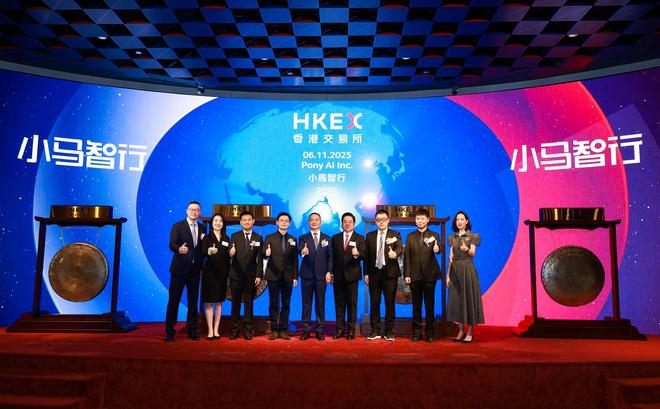
小马智行港交所鸣锣,或成2025年全球自动驾驶最大IPO
Sou Hu Cai Jing· 2025-11-06 08:18
Core Insights - Pony.ai officially listed on the Hong Kong Stock Exchange on November 6, 2024, under the stock code 2026, marking a significant milestone in the autonomous driving industry [1] - The IPO raised approximately HKD 7.7 billion, making it the largest IPO in the global autonomous driving sector for 2025 and the highest fundraising in the AI field on the Hong Kong market for the same year [1] - The company has established a dual primary listing structure with its previous listing on NASDAQ under the stock code "PONY" [3] Company Overview - Founded in 2016, Pony.ai focuses on providing autonomous driving technology and solutions for the global transportation and logistics sectors [3] - The company has R&D centers in Silicon Valley, Beijing, Shanghai, Guangzhou, Shenzhen, and Luxembourg, and is expanding its product and business layout in Europe, the Middle East, and Asia [3] - Pony.ai's core business includes three main segments: autonomous ride-hailing services (Robotaxi), autonomous trucking services (Robotruck), and technology licensing and application [3] Market Position - Pony.ai is the first company in China to obtain autonomous driving service permits in all four first-tier cities: Beijing, Shanghai, Guangzhou, and Shenzhen [3] - It is also the only company in China to operate fully autonomous Robotaxi services commercially in these major cities [3] - The recent IPO is expected to provide critical resources to accelerate the mass production and commercialization of autonomous driving technology, transitioning from "technically feasible" to "operationally verifiable" [3]
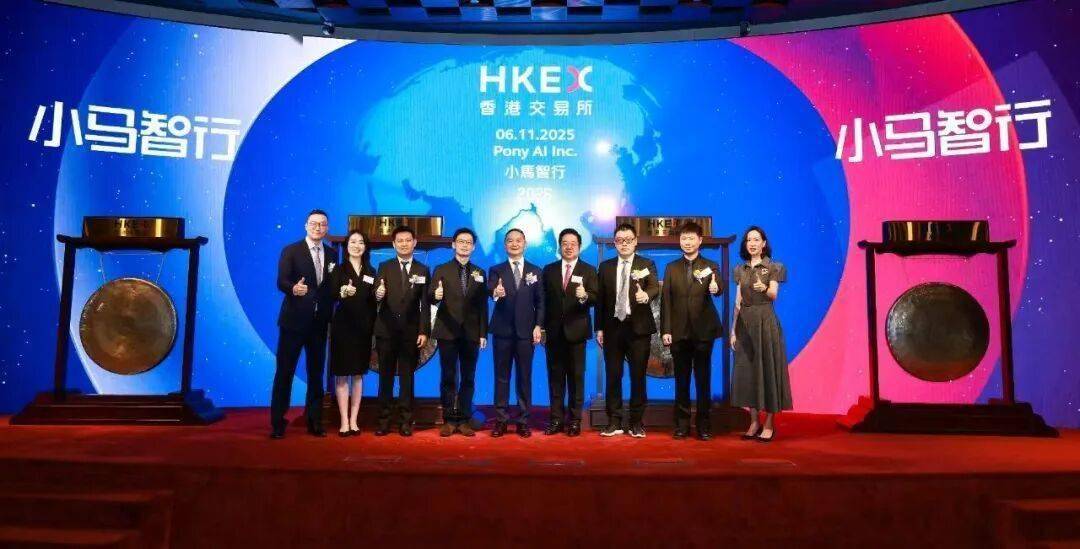
小马智行港股上市,2025年全球自动驾驶最大规模IPO诞生
Huan Qiu Wang Zi Xun· 2025-11-06 03:54
Core Insights - Xiaoma Zhixing officially listed on the Hong Kong Stock Exchange on November 6, 2025, marking the largest IPO in the global autonomous driving industry for 2025 and the highest fundraising in the AI sector on the Hong Kong market for the year [1][3] - The company has established a dual primary listing structure with its previous successful listing on NASDAQ under the ticker "PONY" in November 2024, becoming the world's first publicly traded Robotaxi company [3] - Xiaoma Zhixing focuses on providing autonomous driving technology and solutions in the mobility and logistics sectors, with core business segments including Robotaxi services, Robotruck services, and technology licensing [3][4] Company Development - Since its establishment in 2016, Xiaoma Zhixing has set up R&D centers in multiple locations including Silicon Valley, Beijing, Shanghai, Guangzhou, Shenzhen, and Luxembourg, expanding its product and business layout across Europe, the Middle East, and Asia [3] - The recent IPO is seen as a critical step in the company's global capital strategy, aimed at accelerating the commercialization of autonomous driving technology and enhancing operational validation [4] Leadership Statements - The CEO of Xiaoma Zhixing, Peng Jun, emphasized that the company is on the brink of large-scale commercialization of autonomous driving, highlighting the importance of technology accumulation, scenario implementation, and ecosystem construction [3] - The CTO, Lou Tiancheng, stated that the listing represents a significant leap from technological exploration to a fully autonomous commercial model, aiming to reshape human mobility through scalable autonomous driving services [3][4]
小马智行港股上市:募资加码商业化,亏损与竞争考题待解
Bei Jing Shang Bao· 2025-10-28 13:31
Core Viewpoint - The company Xiaoma Zhixing has initiated its IPO process in Hong Kong, aiming to raise funds for large-scale commercialization while facing significant losses and competition in the autonomous driving sector [1][3][4]. Group 1: IPO and Fundraising - Xiaoma Zhixing plans to issue approximately 41.96 million shares, with around 420,000 shares available for public offering in Hong Kong, accounting for 10% of the total [3]. - The company aims to raise approximately HKD 7.1936 billion, with about 50% allocated for large-scale commercialization over the next five years, focusing on L4 technology in autonomous driving and truck services [3][4]. - The IPO marks the establishment of a dual primary listing structure in both the US and Hong Kong, enhancing its market presence [3][4]. Group 2: Financial Performance and Challenges - Xiaoma Zhixing reported a net loss of USD 90.64 million in the first half of 2025, a year-on-year increase of approximately 75.07%, with core Robotaxi revenue accounting for only 9.2% of total revenue [1][5]. - The company's gross margin has significantly declined from 46.9% in 2022 to 15.2% in 2024, with a slight recovery to 16.1% in the second quarter of 2025 [5][6]. - R&D expenses have consistently exceeded revenue, with the second quarter of 2025 seeing R&D costs reach USD 49 million, more than double the company's total revenue [5][6]. Group 3: Market Position and Competition - The autonomous driving market is highly competitive, with Xiaoma Zhixing facing rivals such as WeRide and Waymo, as well as tech giants like Huawei and Baidu entering the space [7][8]. - The company is focusing on expanding its Robotaxi services in major cities and collaborating with automotive manufacturers to enhance production capabilities [4][6]. - Analysts suggest that Xiaoma Zhixing should concentrate on cost control, scenario expansion, and technological iteration to achieve economies of scale and improve its competitive position [8].