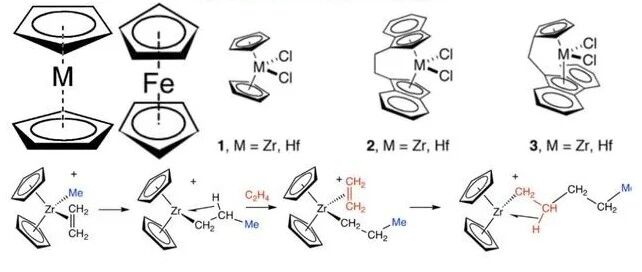
茂金属聚乙烯(mPE)

Search documents
聚乙烯:供给现状及展望
Xin Lang Cai Jing· 2026-01-22 02:09
Core Viewpoint - The polyethylene (PE) industry in China is experiencing explosive capacity growth driven by integrated refining strategies, the rise of private refining, and foreign investment, leading to a supply-demand imbalance characterized by "overcapacity, structural imbalance, and regional concentration" [2][15]. Group 1: Domestic Polyethylene Supply Status - China's polyethylene capacity has expanded significantly, with a total capacity expected to reach 41.14 million tons per year by the end of 2025, marking a 15 percentage point increase in growth rate compared to 2024 [3][16]. - The market structure has shifted from being dominated by state-owned enterprises to a more diversified competition, with private companies accounting for 58% of new capacity in 2025 [4][17]. - The import dependency of polyethylene has decreased, with total imports dropping by 50.36 thousand tons in the first eleven months of 2025, leading to a reduction in import dependency to 28% [4][19]. Group 2: Raw Material Diversification - The raw material structure for polyethylene has evolved into a triad of oil-based, coal-based, and light hydrocarbon-based processes, with oil-based polyethylene accounting for nearly two-thirds of production [5][20]. - Coal-based polyethylene has seen rapid development since 2016, with a production capacity concentrated in coal-rich regions, benefiting from lower costs compared to oil-based processes [6][21]. - The light hydrocarbon-based route is emerging as a significant growth area, although it faces challenges due to reliance on imported feedstock [6][22]. Group 3: Regional Distribution and Structural Optimization - Polyethylene production is concentrated in four major regions: South China, North China, East China, and Northwest China, which together account for over 95% of total capacity [8][23]. - The uneven distribution of capacity has led to supply-demand mismatches, with overcapacity in the Northwest and high demand in South and East China [9][24]. - The market is transitioning to a more efficient logistics model that combines local production and consumption, moving away from traditional transportation methods [8][23]. Group 4: Future Outlook for Polyethylene Supply - The polyethylene industry is expected to continue its capacity expansion cycle from 2026 to 2030, with an anticipated addition of over 500 thousand tons in 2026 alone [10][11]. - The focus will shift from quantity to quality, with an emphasis on high-end products to fill existing supply gaps, particularly in LDPE and specialty grades [12][27]. - The maturation of the polyethylene futures market will enhance its role in stabilizing supply and guiding industry development, providing better risk management tools for companies [13][28].


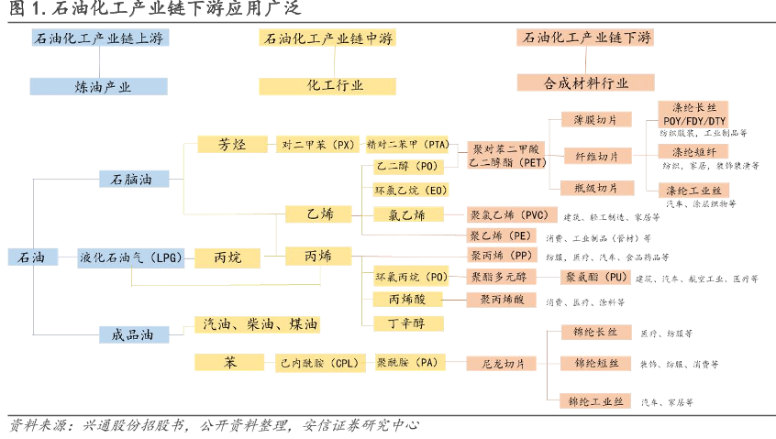
重新认识一下,藏在生活里的石化行业
Xin Lang Cai Jing· 2026-01-05 03:46
Core Viewpoint - The petrochemical industry is transitioning from a traditional, low-quality production model to a high-quality, innovative, and green development approach, driven by policy guidance and market demand [2][15]. Group 1: Policy Guidance - The industry is moving away from "involution" and towards high-quality development, as indicated by national policies during the 14th Five-Year Plan, which emphasize supply-side structural reforms and balance between supply and demand [3][15]. - Capital expenditure in the basic chemical sector decreased by 9.07% year-on-year in the first three quarters of 2025, with 24 out of 33 sub-industries experiencing a decline [3][15]. - The number of ongoing projects in the basic chemical sector fell by 14.18% year-on-year, indicating a shift in the industry towards improved supply-demand dynamics [3][15]. Group 2: Green Transformation - The industry is redefining its image from "high pollution" to a green and sustainable sector, exemplified by the first domestic carbon footprint accounting for bio-based benzene, which has gained international recognition [7][18]. - A rigorous approach to green development has led to the establishment of a standardized carbon footprint accounting system, enhancing the credibility of green certifications for bio-based chemical products [7][18]. Group 3: Innovation Drive - The petrochemical sector is becoming a key player in technological innovation, focusing on high-end materials and fine chemicals, which are expected to lead global growth despite some slowdown in traditional product segments [8][19]. - The industry is addressing demand gaps in key supply chains, supporting enterprises in core technology breakthroughs, and fostering the development of innovative products [11][20]. - Notable advancements include breaking the import monopoly of core materials for photovoltaic adhesive films and accelerating the domestic production of materials needed for 5G communications [11][20]. Group 4: Future Outlook - The petrochemical industry is evolving into a provider of high-end new materials, a practitioner of green low-carbon initiatives, and a pioneer in technological innovation, moving away from traditional expansion models towards quality enhancement [12][20]. - Investors can capitalize on the industry's upward trend through the Petrochemical ETF (159731) and related funds, which track the petrochemical industry index, highlighting key sectors such as refining and trade, chemical products, and agricultural chemicals [21].
国内外茂金属聚乙烯mPE的发展现状与供需分析
材料汇· 2025-10-22 15:48
Overview - The article discusses the current state and future prospects of Metallocene Polyethylene (mPE), highlighting its production, market demand, and applications in various industries [2][4][19]. Production and Market Supply - In 2023, global mPE production capacity is approximately 28 million tons per year, with the top four producers accounting for about 50% of this capacity [7][10]. - ExxonMobil leads with a 21% share, followed by Dow Chemical at 16%, and Chinese companies PetroChina and Sinopec have capacities of 8% and 7%, respectively [8][10]. - North America accounts for about 31% of global capacity, while Asia, including China, is experiencing rapid growth in demand for mPE [9][11]. Demand Analysis - The global demand for mPE in 2023 is estimated at around 25 million tons, with major consumption markets in the Americas, Europe, and Asia [11]. - In China, the apparent consumption of mPE is 2.59 million tons, with a production of 360,000 tons and an import volume of 2.23 million tons, indicating a reliance on imports due to performance gaps between domestic and foreign products [13][19]. Application Areas - mPE is primarily used in films, pipes, bottle caps, and various other applications, with films accounting for approximately 88.9% of China's mPE consumption in 2023 [17][19]. - The film segment includes food packaging films, greenhouse films, and heavy-duty packaging films, while pipes are used for hot and cold water delivery systems [25][30]. Technological Advancements - The production processes for mPE include solution, slurry, and gas-phase methods, with gas-phase processes dominating global production [21][22]. - Advances in metallocene catalysts and production technology are expanding mPE's application fields beyond films to include pipes, coatings, and waterproof membranes [23][24]. Future Outlook - China's mPE production capacity is expected to increase significantly, with planned projects adding over 6 million tons per year, leading to intensified competition in the market [15][19]. - The article emphasizes the need for innovation in catalyst technology and production processes to enhance the competitiveness of domestic mPE products [38][41].

国内外茂金属聚乙烯mPE的发展现状与供需分析
材料汇· 2025-10-12 15:06
Overview - The article discusses the current state and future prospects of Metallocene Polyethylene (mPE), highlighting its production, market demand, and applications in various industries [2][4][19]. Production and Market Supply - In 2023, global mPE production capacity is approximately 28 million tons per year, with the top four producers accounting for about 50% of this capacity [7][10]. - ExxonMobil leads with a 21% share, followed by Dow Chemical at 16% [7][10]. - China's mPE production capacity has increased significantly, with China National Petroleum and China Petroleum & Chemical Corporation ranking third and fourth globally, holding 8% and 7% of the market, respectively [8][10]. - The demand for mPE in 2023 is estimated at 25 million tons, with Asia, particularly China, showing rapid growth in consumption [11][13]. Domestic Supply and Demand - China's apparent consumption of mPE in 2023 is 2.59 million tons, with a production of 360,000 tons and an import volume of 2.23 million tons, resulting in a self-sufficiency rate of only 13.8% [13]. - The domestic mPE production landscape is evolving, with several companies, including Qilu Petrochemical and Daqing Petrochemical, increasing their production capabilities [13][15]. - By the end of 2023, China's planned mPE production capacity is expected to reach approximately 5.568 million tons per year [14]. Applications and Market Trends - mPE is primarily used in films, pipes, bottle caps, and other applications, with films accounting for about 88.9% of consumption in China [17][19]. - The rapid development of new products in the packaging industry is expected to drive demand for mPE, particularly in shrink films and composite packaging films [19]. - The article emphasizes the importance of mPE's superior properties, which position it well for growth in various sectors, including construction and agriculture [19][36]. Technological Processes - The production processes for mPE include solution, slurry, and gas-phase methods, with gas-phase processes accounting for 61% of global production capacity [21][22]. - Major production technologies include Dow's Dowlex, NOVA's Sclairtech, and Univation's Unipol processes [21][22]. Development Recommendations - The article suggests that China should accelerate the development of domestic metallocene catalysts and key raw materials to enhance competitiveness in the mPE market [38][40]. - It highlights the need for innovation in material microstructure and the development of specialized products to meet emerging market demands [41].