茶几

Search documents
全球品牌的春晚之路 MOVA塑造消费电子质变鲜活样本
2 1 Shi Ji Jing Ji Bao Dao· 2026-02-17 06:21
Group 1 - MOVA is positioned as a leading high-end innovative smart home appliance brand, ready to expand into the broader consumer market, as evidenced by its debut at the 2026 Spring Festival Gala [1][2] - The integration of embodied intelligence technology with national cultural IPs presents a new path for the industrialization and popularization of China's cutting-edge technology [2] - The collaboration with the Spring Festival Gala aligns MOVA's core philosophy of "using smart technology to reshape family spaces" with the emotional needs of family gatherings, indicating a dual approach to industrial innovation and consumer upgrade [2][3] Group 2 - MOVA's market influence is validated by significant growth metrics, including a 232% increase in GMV during the 2025 618 shopping festival and being the top seller of laser radar lawn mowers globally from November 2024 to October 2025 [4][9] - The brand's strategy focuses on moving beyond traditional hardware to embrace AI and embodied intelligence, addressing real-life needs through various mobile robots [4][12] - The Spring Festival Gala serves as a platform for the widespread adoption of embodied intelligence technology, reaching over a billion viewers and breaking down barriers between hard technology and consumer markets [5][6] Group 3 - MOVA's approach to product strategy is validated in multiple overseas markets, directly entering mature markets like Germany and the USA without following traditional paths [7] - The company emphasizes rapid conversion of technological breakthroughs into product advantages, which is crucial in the fast-evolving consumer electronics market [8] - MOVA has established a large ecosystem with over 19 product lines and more than 2000 patents, focusing on upgrading products based on specific scene needs [13][14] Group 4 - The brand's vision includes developing home service robots that interact with users through various sensory modalities, aiming for a comprehensive upgrade in family life experiences [13] - MOVA's diverse product matrix covers indoor and outdoor living scenarios, enhancing market value through continuous product expansion [14] - The emergence of MOVA at the Spring Festival Gala symbolizes a significant transformation in China's consumer electronics industry, reflecting the country's shift from following to leading in advanced fields like embodied intelligence [14]
杭州90后小伙创二手王国:1800余个品类旧物撑起循环消费 梦想是为残疾人搭“就业桥”
Sou Hu Cai Jing· 2025-12-23 14:18
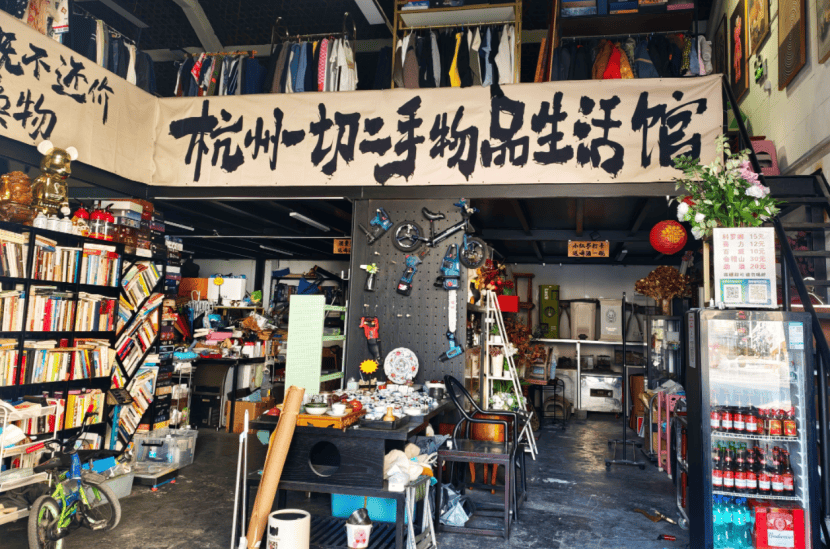
Core Insights - The article highlights the unique business model of "Hangzhou Everything Second-hand Goods Living Museum," which combines second-hand goods trading with a strong social mission to employ disabled individuals [1][9] Group 1: Business Model - The store operates on a "circular economy" philosophy, focusing on reusing and recycling items rather than traditional waste disposal [3][5] - The founder, Zhao Jinji, emphasizes that each item has value and should not be discarded, aiming to create a marketplace where resources can flow and be reused [3][5] - The store features a diverse range of over 1,800 second-hand items, from furniture to children's shoes, all priced based on practical value rather than brand [5][10] Group 2: Social Impact - The business aims to employ over half of its workforce from disabled individuals, providing them with meaningful job opportunities [9] - Zhao Jinji plans to replicate the "second-hand + charity" model in other cities and engage communities in environmental education [9][10] - The store also facilitates a barter system, allowing customers to exchange items based on their condition and demand, promoting resource sharing [7][9] Group 3: Market Position - In a market dominated by trendy cafes and retail stores, "Everything Second-hand" stands out by attracting customers through authenticity and a commitment to environmental sustainability [10] - The store has gained popularity as a "resource hub," where customers not only find affordable goods but also connect with a broader environmental mission [7][10]

佛山家具在海外卖爆了!家具企业“招兵买马”,开启赶工模式→
Sou Hu Cai Jing· 2025-08-12 16:25
Group 1 - The core viewpoint is that Chinese furniture manufacturers are experiencing a surge in overseas orders, particularly from Asian and Middle Eastern markets, leading to increased hiring and production efforts in Foshan, Guangdong [1][3][7] - The demand for Chinese furniture has notably increased in markets such as Singapore and India, with India showing a growth rate exceeding 50% [5][11] - Many factories in Foshan are actively preparing shipments of various furniture items, indicating a robust export activity [7][9] Group 2 - The furniture export value from Foshan reached 10.64 billion yuan in the first seven months of the year, reflecting a year-on-year growth of 1.7% [13] - Exports to the Middle East amounted to approximately 1.18 billion yuan, marking a year-on-year increase of 13.6%, while exports to ASEAN countries reached 850 million yuan, growing by 6.7% [13]

买!买!买!国产家具凭“硬核产业链+高时效交货服务+过硬产品”圈粉海外消费者
Yang Shi Wang· 2025-08-12 05:49
Core Viewpoint - Since 2025, Chinese factories have gained popularity on overseas platforms, with a significant increase in foreign consumers visiting to select products, particularly in the furniture industry [1][3]. Group 1: Market Expansion - Many furniture companies are utilizing overseas social media platforms for live factory tours and short video promotions to attract customers [3]. - A furniture buyer platform in Foshan, Guangdong reported over 20 million views on their videos in the past three months, with a 30% monthly increase in overseas customer numbers, primarily from Southeast Asia [3]. - The number of countries eligible for China's 240-hour visa-free transit policy has increased to 55, facilitating easier access for overseas customers [5]. Group 2: Customer Experience - Foreign customers are increasingly visiting China for furniture purchases, often combining their trips with tourism and culinary experiences [7]. - Furniture companies are enhancing their services, offering a "one-stop" experience that includes product matching, factory tours, quality inspections, and logistics support [9]. - The consultation volume for furniture purchases has tripled in the first half of 2025, indicating a growing interest from overseas clients [10]. Group 3: Growth in Orders - The Asian market has seen approximately 40% growth in demand for furniture, driven by innovative designs and a wide variety of choices [12]. - Many furniture companies in Foshan are actively hiring and ramping up production to meet the increasing orders from overseas markets, particularly from Singapore and India [14][15]. - In the first seven months of 2025, Foshan's furniture export value reached 10.64 billion yuan, a year-on-year increase of 1.7%, with notable growth in exports to the Middle East and ASEAN regions [16].
上亿人打卡,广东这个家具城成了「4A级景区」
36氪· 2025-06-26 00:07
Core Viewpoint - The article highlights the transformation of the furniture market in Foshan, Guangdong, into a major tourist attraction, showcasing its industrial strength and extensive product offerings, making it a global hub for furniture manufacturing and export [3][5][19]. Group 1: Overview of Foshan's Furniture Industry - Foshan is recognized as the world's largest furniture production and export base, with over 30,000 furniture enterprises and a total home furnishing industry scale exceeding 1 trillion RMB [5][57]. - The city has a vast furniture market that spans over 3 million square meters, equivalent to approximately 420 standard football fields, making it the largest in the world [12][19]. - The furniture market features 20 themed exhibition halls, showcasing over 2,000 domestic brands and more than 200 European imported brands, providing a comprehensive selection for consumers [15][19]. Group 2: Industrial Capabilities and Innovations - Foshan's furniture industry is characterized by high automation, with factories utilizing robotic arms that can process thousands of different products daily, achieving material utilization rates exceeding 90% [25][29]. - The industry operates on a complete supply chain, with various towns specializing in different aspects of furniture production, from woodworking machinery to manufacturing and trade [29][55]. - The integration of advanced technology and design capabilities allows for immersive customer experiences, where consumers can visualize their furniture choices in real-time [24][66]. Group 3: Historical and Cultural Significance - The region has a rich history in furniture craftsmanship, with traditional styles influenced by Western designs during the Qing Dynasty, making it a significant cultural hub for furniture production [42][44]. - Foshan's geographical advantages, including its location as a transportation hub for timber, have historically supported its furniture manufacturing industry [47][55]. - The legacy of craftsmanship continues to thrive, with many small workshops evolving into standardized factories, contributing to the industry's growth and international reach [63][66]. Group 4: Global Market Presence - Foshan's furniture exports exceed 10 billion RMB annually, with a growing international customer base, particularly among overseas Chinese communities [57][60]. - The city has established strong connections with global markets, leveraging its transportation infrastructure to facilitate efficient shipping of furniture worldwide [55][60]. - The trend of "buying furniture from Foshan" has gained popularity among consumers in Southeast Asia and Europe, who prefer the unique styles and competitive pricing offered by Foshan manufacturers [57][60].