
薇诺娜产品

Search documents
商贸零售行业周报:功效护肤品牌HBN母公司护家科技递表港交所-20260201
KAIYUAN SECURITIES· 2026-02-01 10:15
Investment Rating - The industry investment rating is "Positive" (maintained) [1] Core Insights - The report highlights the emergence of HBN, a leading domestic skincare brand, which has submitted its prospectus to the Hong Kong Stock Exchange, indicating strong growth potential in the efficacy skincare market [3][24] - The report emphasizes the importance of emotional consumption themes and suggests focusing on high-quality companies in high-growth sectors [6][49] Summary by Sections Industry Performance Overview - The commercial retail and social services indices reported declines of 4.18% and 3.45% respectively during the week of January 26 to January 30, 2026, ranking 26th and 23rd among 31 primary industries [5][14] - The jewelry sector showed the highest growth, with a weekly increase of 7.07% and a year-to-date increase of 19.39% [15][18] Key Industry Developments - HBN, established in 2019, is recognized as the largest domestic skincare brand in the efficacy skincare segment, with a market share of 0.8% in the Chinese improvement skincare market as of 2024 [24][25] - HBN's revenue for the first three quarters of 2025 reached 1.51 billion yuan, a year-on-year increase of 10.2%, with high-efficacy skincare products accounting for 78.6% of total revenue [29] Investment Recommendations - Investment Theme 1: Focus on high-end gold and fashion jewelry brands, recommending companies like Laopuhuangjin and Chaohongji [6][49] - Investment Theme 2: Highlighting retail companies that adapt to emotional value and intelligent trends, with recommendations for Yonghui Supermarket and Aiyingshi [6][49] - Investment Theme 3: Emphasizing beauty and personal care brands that innovate with emotional value and safe ingredients, recommending brands like Maogeping and Pola [6][50] - Investment Theme 4: Targeting differentiated medical beauty product manufacturers and leading medical beauty institutions, recommending companies like Aimeike and Meilitiantian [6][51]




“我们和李佳琦都被淘宝背刺了”,多方回应直播间退货潮
Sou Hu Cai Jing· 2025-10-24 09:16
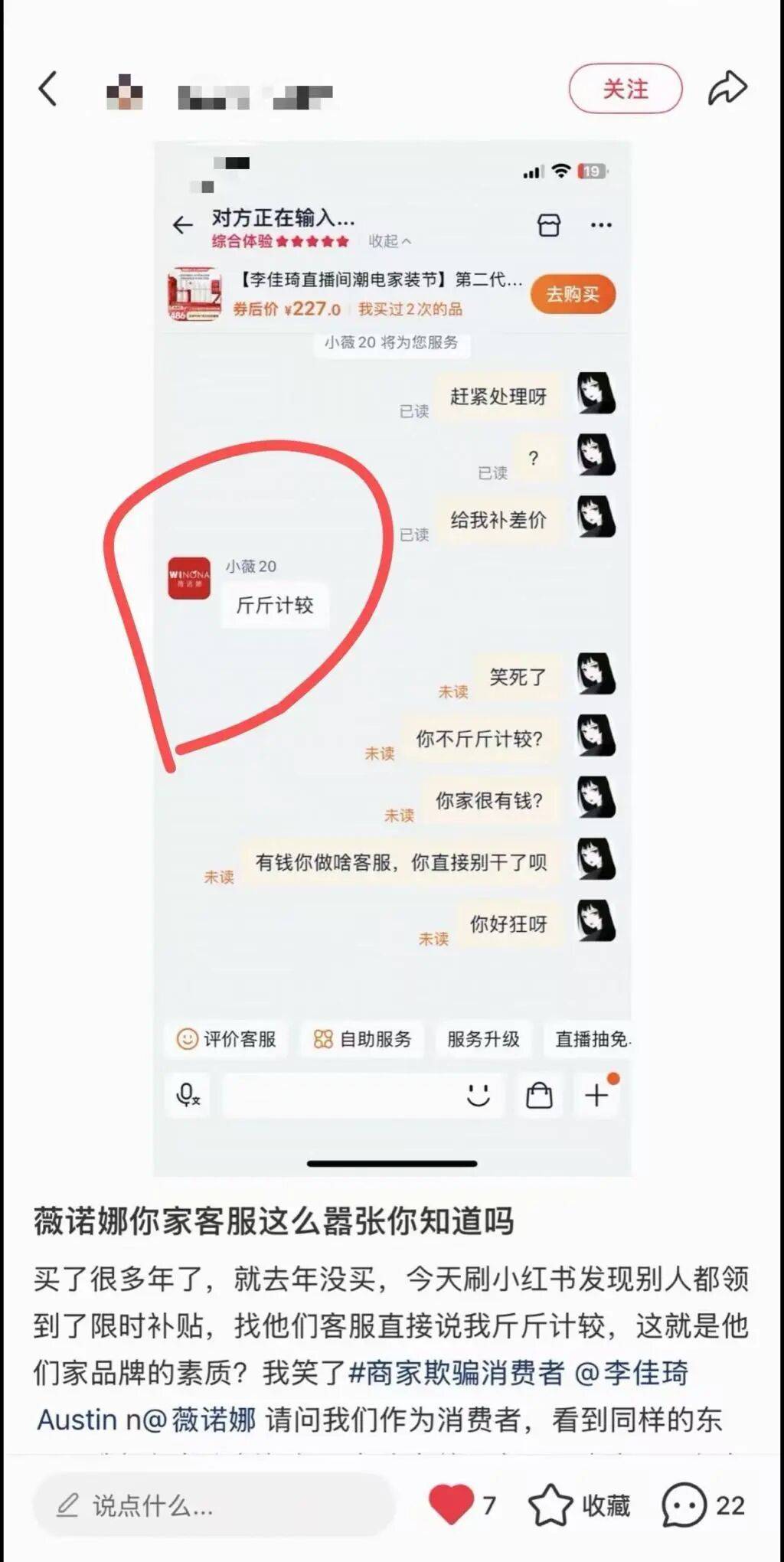
Core Viewpoint - The sudden termination of the "limited-time subsidy" activity by Taobao has led to a significant backlash from consumers, resulting in a wave of returns and complaints about price discrepancies during the "Double Eleven" shopping event [1][2][4]. Group 1: Consumer Reactions - Many consumers reported that prices of products in live streaming sessions increased by tens to hundreds of yuan after the subsidy was halted, leading to a "return tide" [2][4]. - The hashtag "Double Eleven is not cheaper" trended on social media, with users sharing their experiences and expressing dissatisfaction with Taobao's practices [2][4]. - Some consumers felt misled, claiming that the platform's actions made them feel like "big fools" [2]. Group 2: Live Streamer Responses - Influencers, particularly in Li Jiaqi's live stream, stated that the price changes were due to platform decisions and not the merchants' fault, leading to accusations of the platform shifting blame [2][9]. - Li Jiaqi mentioned that the platform had issued over a thousand orders with limited-time subsidies, indicating that other brands also participated in this promotion [9]. - The platform's representatives clarified that the limited-time subsidies do not support price protection for returns, suggesting that consumers could use the discounts for other purchases instead [9]. Group 3: Pricing Discrepancies - On October 20, a significant number of consumers were waiting to pay their final amounts, only to find that the prices had changed due to the sudden subsidy adjustments [4][10]. - For example, a product that was available for 680 yuan in Li Jiaqi's live stream was found for as low as 600 yuan in another influencer's stream after applying various discounts [10] - The abrupt end of the "Taobao coins" discount activity left many consumers unprepared, especially those who had just canceled pre-orders to take advantage of the new prices [10].

从线下渠道看美护企业差异化竞争力:线下渠道变革,美护破局增长
Shenwan Hongyuan Securities· 2025-05-29 09:16
Investment Rating - The report maintains a "Positive" investment outlook for the beauty and personal care industry, emphasizing the potential of domestic brands in the offline channel [3]. Core Insights - The report highlights the transformation of offline channels as a key growth driver for beauty brands, especially in the context of slowing e-commerce growth [4][5]. - It identifies the need for brands to enhance their offline presence to create a differentiated competitive advantage [5][7]. Summary by Sections 1. Online Channel Competition Intensifies, Offline Channel Advantages Emerge - E-commerce growth is slowing, with China's physical goods online retail expected to reach 13.1 trillion yuan in 2024, growing at 6.5% [4][15]. - The number of internet users in China is projected to reach 1.108 billion by the end of 2024, with an internet penetration rate of 78.6% [4][15]. - New consumption policies are being implemented to boost offline consumption, enhancing brand influence and customer engagement [4][27]. 2. Multi-Dimensional Analysis of Offline Channel Formats - Offline channels serve both sales and brand marketing functions, with a variety of formats emerging to meet consumer needs [40]. - High-end beauty counters are experiencing a phase of quality improvement, with a significant increase in average sales per counter from 3.36 million yuan in 2019 to nearly 5 million yuan in 2023 [46][50]. - The report notes that high-end brands are increasingly occupying the beauty counter space, with a 32% increase in high-end counters from 2019 to 2023 [50][53]. 3. Brand Strategies in Offline Channel Development - Domestic brands are actively expanding their offline presence, with several launching flagship stores in major cities [38][39]. - The report recommends specific companies for investment, including: - Shangmei Co., which is developing a balanced multi-brand matrix [5]. - Shanghai Jahwa, known for its extensive presence in supermarkets and counters [5]. - Proya, which is focusing on offline channels with its energy series [5]. - Betaini, leveraging pharmacy channels to establish a professional image [5]. - Maogeping, which has a unique offline counter layout [5]. - Runben, a leading brand in maternal and infant products, expanding its offline market [5].


