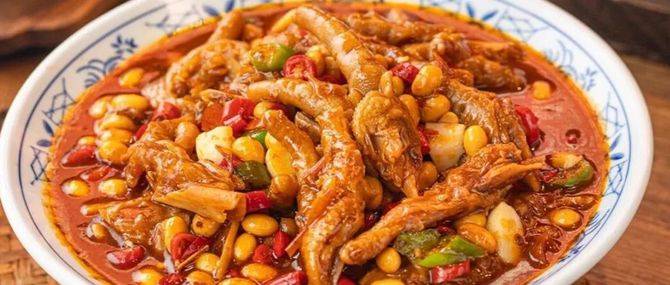
藜蒿炒腊肉

Search documents
江西小炒发展报告
Hong Can Chan Ye Yan Jiu Yuan· 2025-12-26 08:11
Investment Rating - The report indicates a positive investment outlook for the Jiangxi Xiaochao industry, highlighting its transition towards standardization and industrialization with over 20,000 stores nationwide as of December 2025 [5][31]. Core Insights - Jiangxi Xiaochao has evolved from informal dining represented by family-run restaurants to a more structured chain restaurant model, with significant growth potential in chain development as 97.5% of stores have five or fewer locations [3][31]. - The distribution of Jiangxi Xiaochao stores is heavily concentrated in the East China region, with over 80% of stores located there, particularly in Zhejiang province, which leads in store numbers outside Jiangxi [3][34]. - The industry faces challenges such as low efficiency in fresh cooking, talent shortages, and insufficient brand recognition, which can be addressed through efficiency optimization, talent development, and brand building [3][4]. Summary by Sections Industry Overview - Jiangxi Xiaochao has surpassed 20,000 stores nationwide, marking a new phase of standardized and industrialized development [5][11]. - The popularity of Jiangxi Xiaochao continues to rise, driven by online and offline synergy, with significant engagement on social media platforms [10][18]. Store Distribution - Over 80% of Jiangxi Xiaochao stores are located in East China, with Zhejiang province having the highest number of stores outside Jiangxi [34][36]. - The brand shows strong penetration in lower-tier cities, with 26.5% of stores in second-tier cities and over 20% in third-tier cities [40]. Development Characteristics - The industry is characterized by a shift towards standardization and efficiency in chain brands, while family-run shops maintain flexible product strategies [48][56]. - Brands are increasingly drawing inspiration from various regional cuisines in Jiangxi to create differentiated positioning [49]. Future Trends - The industry is expected to see differentiated expansion paths, the emergence of diversified business models, and multi-dimensional competition [3][4]. - Government policies and brand building efforts are facilitating the transition of Jiangxi Xiaochao from a local delicacy to a nationally recognized dining category [21][28]. Consumer Behavior - Consumer preferences are shifting towards dining experiences that emphasize freshness, affordability, and local flavors, aligning with the characteristics of Jiangxi Xiaochao [20][66]. - The pricing strategy is primarily focused on affordability, with a significant portion of menu items priced between 15 to 30 yuan [68]. Brand Evolution - The Jiangxi Xiaochao sector is witnessing the emergence of multiple brands with distinct styles, including "market-style," "fast fashion," and "beautiful meals," each targeting different consumer segments [75]. - The industry is moving towards a more structured and recognizable brand identity, supported by government initiatives and consumer engagement strategies [30][66].
年增速600%的草根爆款,能接棒湘菜吗?
Sou Hu Cai Jing· 2025-08-06 09:59
Core Insights - The article highlights the rapid growth of Jiangxi stir-fry cuisine, with a nationwide store growth rate exceeding 600% and over 10,000 stores in the Yangtze River Delta region, employing more than 50,000 people [2] - Jiangxi stir-fry has gained popularity as a cost-effective dining option, with a unique flavor profile that differentiates it from other regional cuisines [5][6] - The market currently lacks a dominant national brand, presenting an opportunity for growth and brand establishment [2][14] Market Dynamics - Jiangxi stir-fry aligns with three key consumer demands: flavorful dishes, extreme cost-effectiveness, and a diverse menu that caters to various tastes [5][6][7] - The pricing strategy of "20 yuan to fill up, 50 yuan for a good meal" positions Jiangxi stir-fry competitively against traditional Chinese dining options [6] - The cuisine's adaptability allows for a wide range of dishes, enhancing customer retention and broadening market appeal [7] Competitive Landscape - The current market features several emerging brands, with Xiao Jiangxi leading at 105 stores, followed by Lan Bian Wan (60+), Tian Geng Ji (55+), and La Zhang Lao (29+) [2][3] - Despite the rapid growth, the market is characterized by a lack of leading brands, which hinders the establishment of a unified category identity [14] - The reliance on popular dishes from other regional cuisines has led to a lack of distinct signature dishes that could enhance brand recognition [14] Operational Advantages - The business model is characterized by low investment requirements and high operational efficiency, making it easy to replicate [10] - The small store format (50-80 square meters) allows for flexible operations across various locations, significantly enhancing survival and expansion capabilities [10] - Cultural momentum and tourism growth in Jiangxi are driving consumer interest and brand visibility [11][13] Future Outlook - The next 3-5 years are expected to see the emergence of 1-2 leading brands in Jiangxi stir-fry, with increased market concentration and potential for national expansion [26] - The competition will likely shift towards supply chain management and brand strength, with successful players establishing robust supply chains and digital management systems [28] - The industry may witness a bifurcation into "fast casual stir-fry" and "quality dining" segments, catering to diverse consumer preferences [27]