蚂蚁花呗

Search documents
分期乐商城贴息力度加码,3C数码类产品扩容至全品类
Xin Lang Cai Jing· 2026-02-03 09:50
Core Viewpoint - The "Hundred Billion Interest Subsidy" campaign launched by Fenqile Mall, a subsidiary of Lexin (NASDAQ: LX), aims to reduce consumer costs and stimulate consumption through competitive pricing and flexible installment plans, contributing to economic growth and high-quality development [1][7]. Group 1: Campaign Details - The interest subsidy activity has been ongoing for several months, gradually expanding its coverage and subsidy intensity from popular 3C products to a full range of goods [1][8]. - For example, the price of the iPhone 17 Pro 256G is 8,849 yuan on Fenqile Mall, which is lower than the official price, and a winter down jacket is priced at 533 yuan, also below the official store price [1][7]. - During the "New Year Goods Festival" (January 22 - February 3), customers can receive a 50 yuan supermarket voucher when placing orders, enhancing the price advantage of Fenqile Mall [1][7]. Group 2: Market Context - Recent fiscal interest subsidy policies are aimed at guiding financial resources towards reasonable consumer demand, further releasing consumption potential [2][8]. - The effective implementation of interest subsidy activities requires clear and verifiable transaction scenarios, which Fenqile Mall provides through real product transactions and installment features [2][8]. Group 3: Business Model and Development - There are two main types of installment malls: those with over 10 years of development history, like Fenqile Mall, and newer ones emerging after the 2025 lending regulations [3][9]. - The differences between these two types include aspects such as self-operated products, supply chain systems, focus on essential consumer needs, and the presence of interest subsidies [3][9]. Group 4: Company Overview - Fenqile Mall, launched in October 2013, has become a key component of Lexin's ecosystem, focusing on the consumption needs of young users and providing flexible installment options [4][10]. - The mall has established partnerships with numerous well-known brands and has implemented innovative service models like "Zhenpin Hui" and "Factory Store" to enhance consumer experience [4][10]. - The company aims to continue exploring consumer-friendly products and services while ensuring compliance and stable operations to support consumption recovery [4][10].

2026年中国先买后付(BNPL)行业概述、发展历程、市场现状及发展趋势研判:行业规模持续增长,年轻一代消费者为主要用户群体[图]
Chan Ye Xin Xi Wang· 2026-01-24 02:30
Core Insights - The Buy Now Pay Later (BNPL) service is entering a "2.0" phase, particularly in China, where the market is experiencing strong growth, with BNPL accounting for 2% of e-commerce transaction volume and projected to reach 928.2 billion yuan in 2024, a year-on-year increase of 2% [1][9]. Group 1: Industry Overview - BNPL, also known as "buy now, pay later," is a new payment method that allows consumers to receive products before making payment, essentially functioning as a short-term credit product [4]. - The BNPL service is primarily provided by local leading applications or well-known e-commerce platforms in China, such as Ant Group's Huabei, JD's Baitiao, and WeChat's Fenfu, which significantly promote its adoption and growth [1][9]. Group 2: Market Dynamics - The BNPL industry is characterized by a high concentration of major players, with e-commerce platforms like JD and Pinduoduo leading the market by integrating BNPL services into their shopping processes [11]. - The main user demographic for BNPL services is the younger generation, who prefer flexible payment options over traditional credit cards due to simpler application processes and lower barriers to entry [9]. Group 3: Competitive Landscape - The competitive landscape of the BNPL industry is defined by a dominance of e-commerce platforms, collaboration with payment networks, and the presence of niche vertical platforms that fill market gaps [11]. - JD Group has developed its BNPL product, JD Baitiao, which allows users to enjoy flexible payment options across various scenarios, including online and offline purchases [12]. Group 4: Future Trends - Future innovations in the BNPL industry will focus on smart, personalized, and secure solutions, leveraging big data and AI for better credit assessments and utilizing blockchain for transaction security [14]. - The market competition is expected to intensify, with smaller BNPL providers facing potential acquisitions or mergers, while innovative companies may emerge as industry leaders [15]. - Regulatory scrutiny is anticipated to increase, with governments likely to implement stricter regulations on BNPL services regarding fees, terms, and transparency to protect consumer rights [16].






5年6次增资,腾讯旗下小贷再增45亿
2 1 Shi Ji Jing Ji Bao Dao· 2025-11-25 02:50
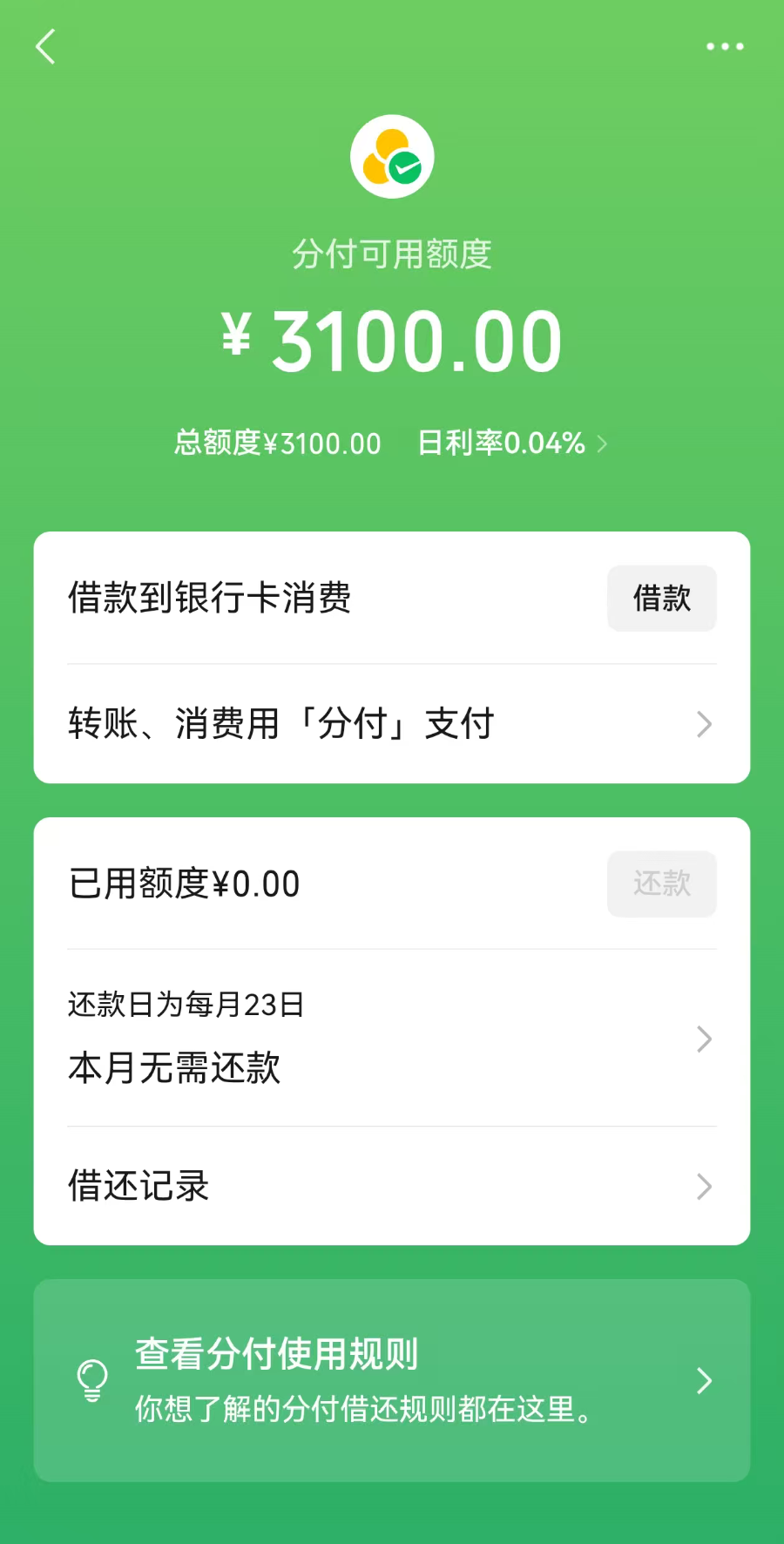
Core Viewpoint - Tencent's financial subsidiary, WeChat Pay's microloan service, has received approval to increase its registered capital from approximately 10.526 billion yuan to 15 billion yuan, marking a significant capital expansion in response to regulatory requirements and business needs [2][4]. Group 1: Capital Increase Details - The recent capital increase amounts to approximately 4.474 billion yuan, bringing the total registered capital to 15 billion yuan, a 50-fold increase from the initial 300 million yuan since 2020 [2][4]. - Tencent has contributed 4.25 billion yuan through Shenzhen Tencent Network and 224 million yuan through Shenzhen Tencent Computer, resulting in a 95% ownership stake for Tencent Network and 5% for Tencent Computer [4]. - Since 2020, WeChat Pay's microloan service has undergone six capital increases, with the most recent one approved in November 2025 [4]. Group 2: Industry Context - Nearly 30 microloan companies have undertaken capital increases this year, with WeChat Pay's microloan service, ByteDance's Zhongrong Microloan, and Ping An's Jinlian Yuntong Microloan being the top three in terms of registered capital [5]. - As of September 2025, the number of microloan companies in China has decreased to 4,863, down from 5,257 at the end of 2024, indicating a trend of consolidation in the industry [5]. - The regulatory environment has changed, with new rules requiring a minimum of 30% co-funding from commercial banks for online loans, which emphasizes the importance of capital strength for microloan companies [7]. Group 3: Product Comparison - WeChat Pay's microloan service, launched in 2020, has a loan balance of 112.588 billion yuan as of June 2025, with a daily interest rate of 0.04% and an annualized rate of 14.6% [8]. - In contrast, Ant Group's Huabei service has a daily interest rate of 0.05% but offers a maximum interest-free period of 41 days, with approximately 65% of Huabei users not paying any interest in 2024 [8]. - Tencent currently lacks a consumer finance license, which limits its financing channels compared to competitors like Ant Group, which has a consumer finance license allowing for higher leverage and lower financing costs [7][8].

5年6次增资,腾讯旗下小贷再增45亿
21世纪经济报道· 2025-11-25 02:42
Core Viewpoint - Tencent's financial subsidiary, WeChat Pay's microloan service, has received approval to increase its registered capital from approximately 10.526 billion yuan to 15 billion yuan, marking a significant capital expansion driven by regulatory requirements and business needs [2][4]. Group 1: Capital Increase and Growth - WeChat Pay's microloan company has undergone six capital increases since 2020, growing its capital from an initial 300 million yuan to 15 billion yuan, representing a 50-fold increase over five years [2][5]. - The latest capital increase involved Tencent contributing approximately 4.474 billion yuan, with Tencent Network contributing 4.25 billion yuan and Tencent Computer contributing about 224 million yuan [4]. - The company has seen a trend of capital increases across the industry, with nearly 30 microloan companies increasing their capital this year alone [5]. Group 2: Comparison with Consumer Finance - WeChat Pay's microloan service, which competes with Ant Group's Huabei, operates under a microloan license, while Huabei operates under a consumer finance license, which offers advantages in leverage and financing costs [8][9]. - The leverage limit for consumer finance companies can exceed 12.5 times, while microloan companies are limited to about 5-6 times, indicating that consumer finance companies can mobilize significantly larger loan amounts with lower financing costs [8]. - As of June 2025, the loan balance for WeChat Pay's microloan service reached 112.588 billion yuan, reflecting its growth in the consumer finance sector [8]. Group 3: Market Position and Regulatory Environment - The microloan sector is experiencing consolidation, with a reduction in the number of microloan companies from 5,257 at the end of 2024 to 4,863 by September 2025 [5]. - Tencent's financial services are benefiting from its large user base of over 1 billion, contributing to a positive growth trend in its financial technology and enterprise services, which reported a revenue of 58.2 billion yuan in Q3 2025, a 10% year-on-year increase [9].

5年增资6次,腾讯旗下小贷注册资本增至150亿
2 1 Shi Ji Jing Ji Bao Dao· 2025-11-24 12:40
Core Viewpoint - Tencent's subsidiary, WeChat Pay's microloan service, has received regulatory approval to increase its registered capital from approximately 10.526 billion yuan to 15 billion yuan, reflecting a significant growth in capital over the past five years [1][2] Group 1: Capital Increase Details - The recent capital increase amounts to approximately 4.474 billion yuan, marking the sixth increase since 2020, with total capital rising from 300 million yuan to 15 billion yuan, a 50-fold increase [1][2] - Tencent contributed 4.25 billion yuan through Shenzhen Tencent Network and 224 million yuan through Shenzhen Tencent Computer, resulting in ownership stakes of 95% and 5% respectively [1] Group 2: Industry Context - Nearly 30 microloan companies have undertaken capital increases this year, with Tencent's WeChat Pay microloan service ranking among the top three in the industry alongside ByteDance's Zhongrong Microloan and Ping An's Jinlian Yuntong [3] - The total number of microloan companies in China has decreased from 5,257 at the end of 2024 to 4,863 by September 2025, indicating a trend of consolidation in the industry [3] Group 3: Regulatory and Competitive Landscape - The implementation of new regulations in January 2025 has set capital adequacy requirements that directly influence the business scale of microloan companies, with the leverage ratio for microloan companies capped at approximately 5-6 times compared to over 12.5 times for consumer finance companies [4] - WeChat Pay's microloan service, which competes with Ant Group's Huabei, operates under a microloan license, while Huabei operates under a consumer finance license, highlighting the differences in regulatory frameworks and operational capabilities [4][5] Group 4: Financial Performance - As of June 2025, the loan balance for WeChat Pay's microloan service reached 112.588 billion yuan, with a daily interest rate of 0.04%, translating to an annualized rate of 14.6% [5] - Tencent's financial technology and enterprise services reported a revenue of 58.2 billion yuan in Q3 2025, reflecting a 10% year-on-year growth, driven by increased commercial payment activities and consumer loan services [5]
腾讯旗下财付通小贷 注册资本增至150亿
Zheng Quan Shi Bao· 2025-11-20 22:36
Core Insights - Shenzhen Qianhai Financial Technology Co., Ltd. (referred to as "Qianhai Small Loan") has received approval to increase its registered capital from 10.526 billion to 15 billion yuan, marking an increase of 4.474 billion yuan [1] - After this round of capital increase, Qianhai Small Loan's registered capital reaches 15 billion yuan, ranking second among online small loan institutions in China, only behind ByteDance's Shenzhen Zhongrong Small Loan Co., Ltd. with a registered capital of 19 billion yuan [1] - The capital increase was completed by two Tencent-affiliated companies, with Shenzhen Tencent Network Computing Company contributing 4.25 billion yuan and Shenzhen Tencent Computer Systems Company contributing 224 million yuan [1] Company Overview - Qianhai Small Loan, established in October 2013, specializes in small loan services and provides credit services for the WeChat ecosystem's consumer credit product "WeChat Fenfu," which is similar to Ant Group's Huabei and JD's Baitiao [1] - The company's capital strength has been consistently improving, with significant increases in registered capital over the years, from 300 million yuan in 2020 to 1 billion yuan in 2023 [2] Regulatory Context - The continuous capital increases of small loan companies are driven by regulatory policies and business expansion needs, with a notable regulatory signal from the draft guidelines issued by the former CBIRC and the People's Bank of China in November 2020, which set a capital threshold of 5 billion yuan for cross-provincial operations [2] - The January 2025 guidelines from the National Financial Supervision Administration do not set a unified capital threshold but require that the contribution ratio of online small loan companies in joint loans must not be less than 30%, linking business scale directly to capital strength [2]
腾讯旗下财付通小贷注册资本增至150亿
Zheng Quan Shi Bao· 2025-11-20 18:29
Core Insights - Shenzhen Qianhai Financial Technology Co., Ltd. (referred to as "Qianhai Small Loan") has received approval to increase its registered capital from 10.526 billion to 15 billion yuan, adding 4.474 billion yuan [1] - After this round of capital increase, Qianhai Small Loan's registered capital ranks second among online small loan institutions in China, only behind ByteDance's Shenzhen Zhongrong Small Loan Co., Ltd. with a registered capital of 19 billion yuan [1] - The capital increase was completed by two Tencent-affiliated companies, with Shenzhen Tencent Network Computing Company contributing 4.25 billion yuan and Shenzhen Tencent Computer Systems Company contributing 224 million yuan [1] Company Overview - Qianhai Small Loan, established in October 2013, specializes in small loan services and provides credit services for the WeChat ecosystem's consumer credit product "WeChat Fenfu," which is similar to Ant Group's Huabei and JD's Baitiao [1] - The company's capital strength has been consistently improving, with significant increases in registered capital over the years, from 300 million yuan in 2020 to 10 billion yuan, then to 25 billion yuan, and further to 100 billion yuan in 2022 [2] Regulatory Environment - The continuous capital increases of small loan companies are driven by regulatory policies and business expansion needs, with a notable regulatory signal from the draft guidelines issued by the former CBIRC and the central bank in November 2020, which set a capital threshold of 5 billion yuan for cross-provincial operations [2] - The January 2025 regulations from the National Financial Supervision Administration do not set a unified capital threshold but require that the contribution ratio of online small loan companies in joint loans must not be less than 30%, linking business scale directly to capital strength [2]
笔均贷款近60元、微信分付贷款余额超千亿
2 1 Shi Ji Jing Ji Bao Dao· 2025-10-23 13:00
Core Insights - The article reveals the rapid growth and operational details of WeChat's consumer credit product "Fenfu," which has gained traction among younger consumers for small, frequent purchases [1][3][9]. Group 1: Product Overview - "Fenfu" has a total of 2.76 million borrowers and 10.02 million loans, with an average loan balance of 217.14 yuan and an average loan amount of 59.83 yuan [1]. - The weighted average annual interest rate for "Fenfu" is 15.02%, translating to a daily interest rate of 0.041% [1]. - The product has been operational since 2020 and has seen significant growth, with a loan balance projected to exceed 100 billion yuan by June 2025, reaching 112.588 billion yuan [1][12]. Group 2: Borrower Demographics - The average age of borrowers is approximately 34 years, with a significant portion of loans (91.2%) being under 2,000 yuan [6][13]. - Over 800,000 loans are issued to borrowers aged between 20 and 40, indicating a strong appeal to the "post-90s" and "post-00s" demographics [13]. Group 3: Financial Performance - The operating entity, Chongqing Weiheng Technology Co., Ltd., reported a net profit of 124 million yuan last year [2][12]. - As of the end of 2024, Weiheng Technology's total assets were 1.605 billion yuan, with liabilities of 1.415 billion yuan, and it achieved a revenue of 373.5 million yuan [12]. Group 4: Market Positioning - "Fenfu" is positioned similarly to Ant Group's "Huabei," focusing on daily high-frequency consumption needs, but differs in its daily interest calculation method [9]. - The product is integrated into WeChat's wallet feature, allowing users to utilize it for everyday expenses like dining and shopping [6]. Group 5: Industry Trends - The consumer finance market is increasingly competitive, with various licensed financial institutions focusing on "scenarios" for consumer loans, leveraging payment data to assess borrower creditworthiness [16]. - The trend shows a growing interest in installment payment options among consumers, with 59.5% of surveyed users having engaged in installment services in 2023 [15].