
赛力斯问界

Search documents
全面推进智能网联新能源汽车之都建设 重庆如何迎接产业“下半场”
Zhong Guo Xin Wen Wang· 2026-01-30 08:10
Core Insights - Chongqing aims to produce 1.296 million new energy vehicles (NEVs) by 2025, a significant increase from 43,000 units in 2020, indicating a more than 30-fold growth in just a few years [1] - The city government has committed to building a smart connected NEV hub, supported by the establishment of major enterprises and advancements in technology [1] Group 1: Industry Growth and Development - The establishment of China Changan Automobile Group in Chongqing and its acquisition of the first national L3-level autonomous driving model approval are pivotal for the local NEV industry [1] - The "14th Five-Year Plan" emphasizes the rapid development of Chongqing's modern manufacturing cluster, transitioning from traditional fuel vehicles to new energy and independent brands [1] Group 2: Strategic Recommendations - Suggestions from local policymakers include enhancing the collaboration between vehicle manufacturers and component suppliers, focusing on upgrading vehicle technology and optimizing the industrial ecosystem [2][4] - Emphasis on differentiated development strategies, increased R&D support, and the establishment of a global R&D framework to boost innovation capabilities [2] Group 3: Policy and Infrastructure - Recommendations include creating local standards for L3/L4 autonomous driving and enhancing the service support system for the NEV industry [6] - The proposal to strengthen core product supply by fostering collaboration between major vehicle manufacturers and local suppliers to improve product customization and local production capabilities [6] Group 4: Investment and Ecosystem - Chongqing's industrial investment fund, totaling 200 billion yuan, plays a crucial role in supporting the NEV sector, alongside the collaboration of over 3,000 software companies [7] - The city is leveraging new ecosystems such as "whole vehicle and parts collaboration" and "cloud integration" to enhance its competitive edge in the NEV market [7]

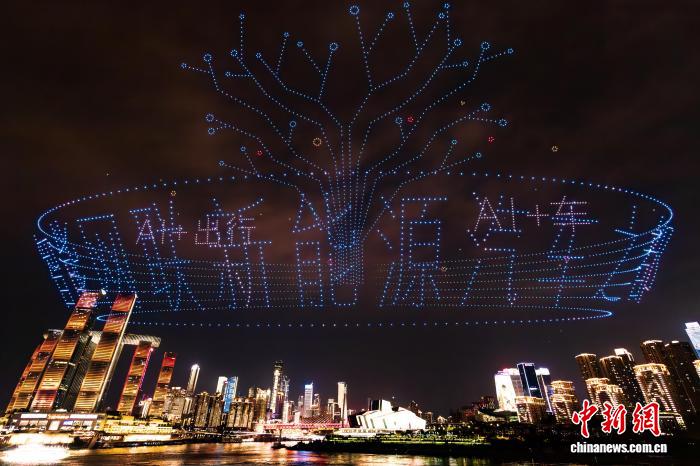
大反转,赛力斯上市破发,股价暴跌
Xin Lang Cai Jing· 2025-11-06 11:27
Core Viewpoint - Seres, a Chinese electric vehicle manufacturer, faces challenges after its IPO, with its stock price dropping below the issue price shortly after listing, highlighting concerns about its reliance on Huawei and declining sales performance [3][6][9]. Group 1: IPO Details - Seres listed on the Hong Kong Stock Exchange, raising approximately 14.016 billion HKD, marking the largest IPO for a Chinese car company to date and the largest global car IPO in Hong Kong since 2025 [6][9]. - The stock opened at 131.5 HKD but fell to 118 HKD, a drop of over 10%, and closed at 125.9 HKD, reflecting a decline of 4.26% [3][6]. Group 2: Financial Performance - In January, Seres sold 22,430 vehicles, a year-on-year decrease of 45.82%, with new energy vehicle sales down 51.39% [9]. - Despite a booming industry, Seres' performance lagged behind, as the overall new energy vehicle market in China saw production and sales nearing 7 million units, both growing over 40% [9]. Group 3: Dependency on Huawei - Seres' revenue heavily relies on its partnership with Huawei, with income from the "Aito" brand rising from 60% in 2022 to over 90% in the first half of 2025 [9][10]. - The company faces risks if its relationship with Huawei deteriorates, as highlighted in its prospectus [9][10]. Group 4: Strategic Initiatives - Seres plans to allocate 70% of its IPO proceeds to research and development, with 20% aimed at developing new energy vehicle models and 10% for enhancing overseas model adaptations [6][9][22]. - The company is also pursuing a partnership with ByteDance to explore embodied intelligence technology, indicating a shift towards reducing reliance on Huawei [22][24].

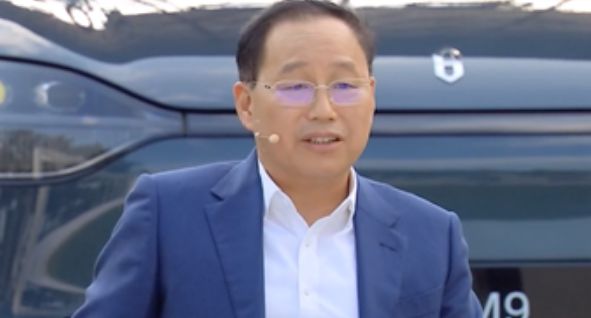
瑞立科密:公司的AEBS产品目前覆盖的客户主要以商用车客户为主,暂未与赛力斯问界开展实质性业务合作
Mei Ri Jing Ji Xin Wen· 2025-10-10 09:23
Core Viewpoint - The company is actively engaged in the advanced driving assistance systems (ADAS) sector, with its automatic emergency braking system (AEBS) being a key product that has entered mass production and sales [2]. Group 1: Company Developments - The AEBS product primarily serves commercial vehicle customers, indicating a focus on enhancing safety in this segment [2]. - Currently, there is no substantial business collaboration between the company and the automotive brand Seres (赛力斯问界) [2]. Group 2: Industry Context - The company's initiatives in the ADAS field reflect a broader trend in the automotive industry towards improving vehicle safety through advanced technology [2].
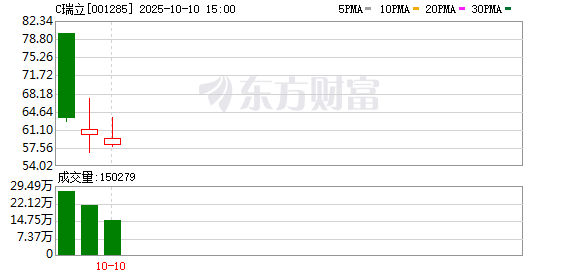
再落一子?华为注册“绝界”商标
Jing Ji Guan Cha Bao· 2025-08-28 05:30
Group 1 - Huawei successfully registered the "绝界" trademark on August 27, covering key areas such as automotive wheels, seats, electric vehicles, and hybrid/automated driving cars [1] - The registration is part of Huawei's ongoing trademark strategy, which includes over ten trademarks like "仙界," "天界," "君界," "峥界," and "江界," creating a robust brand protection framework [1] - The registration has dual strategic significance: defensive to avoid malicious trademark registrations amid intense competition in the smart automotive sector, and proactive to reserve naming space for advanced driving systems and potential niche markets [1] Group 2 - Huawei is deepening collaboration with car manufacturers through a three-tier cooperation model: providing basic hardware like motors and controllers, offering full-stack solutions for smart cockpits and autonomous driving under the HI model, and leading R&D and sales in the "智选" model [2] - The "智选" model has become a core driver of growth, with partnerships expanding rapidly after the successful validation with the Seres Aito brand, leading to collaborations with Chery, BAIC, Jianghuai, and SAIC [2] - The "鸿蒙智行" alliance aims to build a comprehensive brand matrix, targeting a price range from 150,000 to 1,500,000 yuan, with the youngest model, 尚界H5, set to launch in the fall [1][2]