路特斯Eletre

Search documents
东南亚出海解码:中国车企“卷”向东南亚,本土化成争夺新杠杆
3 6 Ke· 2026-02-02 08:22
Core Insights - Southeast Asia's automotive industry is entering a policy adjustment window from late 2025 to early 2026, with Thailand significantly reducing electric vehicle (EV) tax rates and Malaysia ending tax exemptions for imported pure electric vehicles, shifting from broad consumer subsidies to more refined industrial guidance [1][2]. Policy Adjustments - Southeast Asian automotive markets are revising their industrial incentive policies, aiming to use tax and access regulations to attract international capital and technology [2]. - Thailand's new vehicle consumption tax will reduce the tax rate for pure electric vehicles to 2% by 2026, with conditions for plug-in hybrid vehicles to include local manufacturing of batteries and advanced driver-assistance systems (ADAS) [2]. - Malaysia has ended the road tax exemption for imported pure electric vehicles, implementing a tiered tax system based on motor power, encouraging local production while maintaining consumer interest [4]. Market Dynamics - Indonesia shows significant potential, with electric vehicle sales projected to grow by 49% in 2025, accounting for over 15% of total new car sales, making it the fourth largest export market for Chinese electric vehicles globally [5]. - By the end of 2025, 16 Chinese automotive brands will have entered the Indonesian market, surpassing Japanese brands, although Japanese brands still dominate in new car sales with Toyota holding a 31.6% market share [7]. - In Malaysia, Chinese brands are leading the electric vehicle market, with seven out of the top ten pure electric vehicle models being Chinese, and BYD emerging as the top-selling brand [7][8]. Competitive Landscape - The competition is shifting from product export to a comprehensive localization strategy that includes manufacturing, research and development, sales, and ecosystem integration [9]. - Geely aims for an export target of 640,000 vehicles by 2026, expanding its presence in Thailand with plans for new showrooms and service centers [11]. - Chery is establishing Malaysia as a regional production and export hub, investing 2.2 billion ringgit in a new factory with a capacity of 100,000 vehicles per year [11]. Future Outlook - The future of the Southeast Asian automotive market will be determined by refined policy guidance, infrastructure development, and the depth of localization by automotive companies [12]. - Chinese automotive companies will need to deepen their full industry chain localization to consolidate and expand their market share, moving beyond initial advantages gained through product cost-effectiveness and early electric vehicle adoption [12].


4.9万辆电车名额放出,加拿大消费者在热议什么?
3 6 Ke· 2026-01-30 13:02
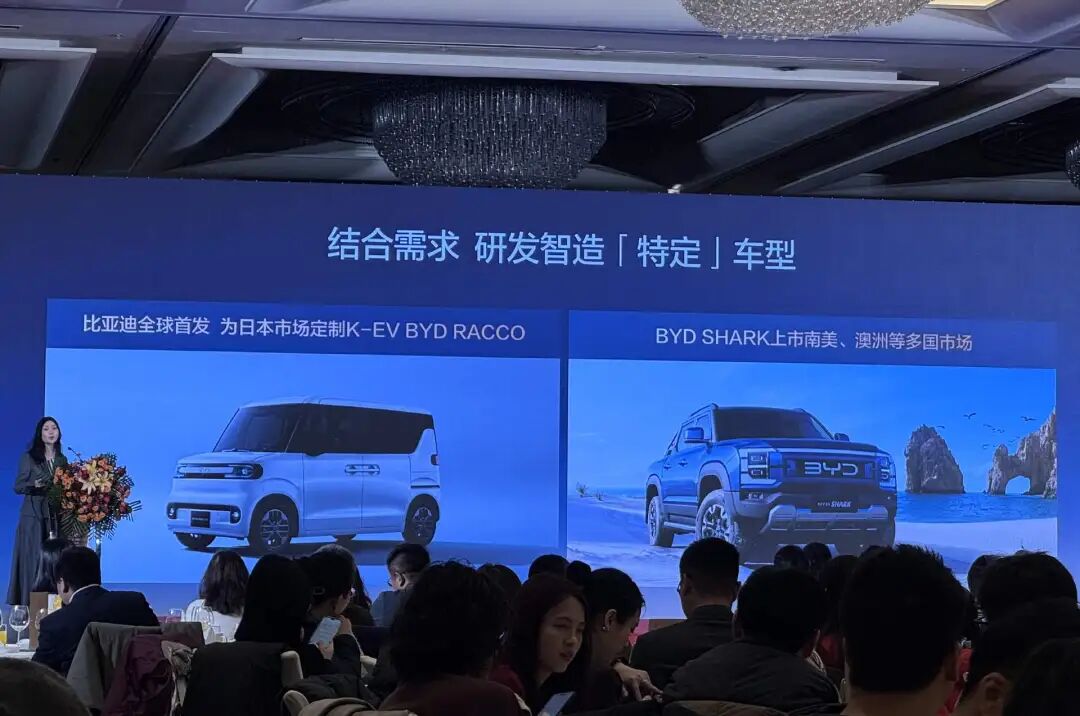
Core Viewpoint - The Canadian government has released a quota allowing 49,000 Chinese electric vehicles (EVs) to enter the market at a reduced tariff, which will gradually increase to 70,000 over five years, amidst a heated public debate on the implications for consumers and the automotive industry [1]. Group 1: Government Policy and Market Impact - Starting in 2026, Canada will permit an annual import of up to 49,000 Chinese EVs under a 6.1% Most-Favored-Nation tariff, with plans to increase this quota to 70,000 over five years [1]. - By 2030, at least 50% of the imported Chinese EVs must be priced below CAD 35,000 (approximately RMB 177,000) [1]. - The 49,000 quota is expected to represent about 44.5% of the projected 110,000 EV sales in Canada for 2025, which is similar to the sales volume before the imposition of punitive tariffs [12]. Group 2: Consumer Preferences and Expectations - Canadian consumers have expressed a strong interest in specific Chinese brands, with BYD's Atto1 and Seal being frequently mentioned as desirable models [2][4]. - The BYD Shark pickup truck has garnered significant attention due to its suitability for Canadian climates and its hybrid structure, which addresses range anxiety [2][4]. - Other brands like Zeekr and Xiaomi's SU7 have also been highlighted as potential entrants, with consumers showing a preference for models that offer competitive pricing and features compared to traditional luxury brands [6][10]. Group 3: Concerns and Challenges - Consumers are worried about the adequacy of charging infrastructure in Canada, which is currently below that of EU countries, and the need for significant investment to meet future EV sales targets [16]. - There are concerns regarding the after-sales service and parts availability for Chinese EVs, as experiences from other markets indicate potential delays in repairs and maintenance [18][20]. - The lack of established dealer networks and compliance with North American safety standards poses additional barriers for Chinese EVs entering the Canadian market [20].
4.9万辆电车名额放出,加拿大消费者在热议什么? | 电厂
Xin Lang Cai Jing· 2026-01-30 11:41
Core Viewpoint - The Canadian government has released a quota allowing 49,000 Chinese electric vehicles (EVs) to enter the market at a reduced tariff, which will gradually increase to 70,000 over five years, amidst a heated public debate on the implications for consumers and the automotive industry [1]. Group 1: Government Policy and Market Impact - Starting in 2026, Canada will allow up to 49,000 Chinese EVs annually, with a tariff of 6.1%, increasing to 70,000 over five years [1]. - By 2030, at least 50% of the imported Chinese EVs must be priced below CAD 35,000 (approximately RMB 177,000) [1]. - The 49,000 quota is expected to represent about 44.5% of the projected 2025 Canadian EV sales, which is similar to pre-tariff sales levels [13]. Group 2: Consumer Sentiment and Preferences - Canadian consumers have expressed a desire for specific Chinese models, with BYD's Atto1 and Seal being highly mentioned, alongside the Shark pickup, which is seen as a strong contender due to its hybrid structure [3][6]. - There is a general positive sentiment among Canadian consumers towards the introduction of Chinese EVs, as they believe it will not significantly disrupt the local automotive ecosystem [13]. - Concerns about the availability of charging infrastructure and after-sales service are prevalent among consumers, with many highlighting the inadequacy of current public charging facilities [16][17]. Group 3: Market Viability of Chinese Brands - Tesla's Shanghai factory has been a significant source of EVs for Canada, with 44,400 units shipped in 2023, indicating a strong existing market presence for Chinese-manufactured vehicles [9][10]. - Geely is viewed as a likely candidate for market entry due to its established presence in Canada through brands like Volvo and Polestar [10]. - The Lotus Eletre, a luxury electric SUV, has successfully passed North American certification and is expected to see a significant price reduction due to the new tariff policy, potentially boosting its sales in Canada [11]. Group 4: Challenges for Chinese EVs - The lack of a robust sales and service network for Chinese brands in Canada poses a significant barrier to market entry, as compliance with North American safety standards is still a challenge [19]. - Concerns about the supply chain for parts and the time required for repairs have been raised, particularly in light of experiences from other markets like Mexico and Australia [17]. - The current infrastructure for charging EVs in Canada is insufficient, with a need for 40,000 new chargers annually to meet federal sales targets, which could hinder the adoption of new EV models [16].