
车路协同系统

Search documents
物联网向智而行应用场景垂直深化 交通车联商业化进程提速加码
Jing Ji Wang· 2025-12-03 07:11
Group 1 - The World Internet of Things Conference focused on the theme "Technology Navigation, Smart Reshaping of the International Automotive Trade New Landscape," highlighting the strong growth trajectory of China's automotive industry [1] - China's automotive sales are projected to exceed 34 million units this year, with new energy vehicle sales expected to reach 16 million units and exports anticipated to surpass 6.8 million units, indicating a significant increase in competitiveness on the global stage [1] - The forum facilitated discussions on key topics such as technological iteration in new energy vehicles, collaborative ecosystems, cross-border trade facilitation, global standard interoperability, and innovative digital transformation paths [1][2] Group 2 - The transition from "Made in China" to "Intelligent Manufacturing in China" emphasizes technological innovation as the core driving force for the automotive industry's global expansion [2] - China is not only the largest automotive production and sales market but also leads globally in new energy vehicle penetration and the integration of connected vehicle technologies [2] - The forum served as an efficient platform for cross-border cooperation, aiding Chinese automotive companies in expanding overseas market channels and enhancing technological collaboration [2][3] Group 3 - The importance of technological innovation in industry transformation was a key focus, with electric and intelligent transformations driving the international expansion of Chinese automotive companies [3] - Leading companies like Desay SV and Qianfang Technology are establishing competitive advantages in smart cockpit and intelligent transportation infrastructure, respectively, contributing to the overall ecosystem of the connected vehicle industry [3] - These companies are enhancing China's automotive industry's intelligent upgrade and showcasing strong technological competitiveness in the global market [3]
“车路协同技术发展”建设试点通过验收 让汽车驶上“智慧的路”
Si Chuan Ri Bao· 2025-08-28 06:53
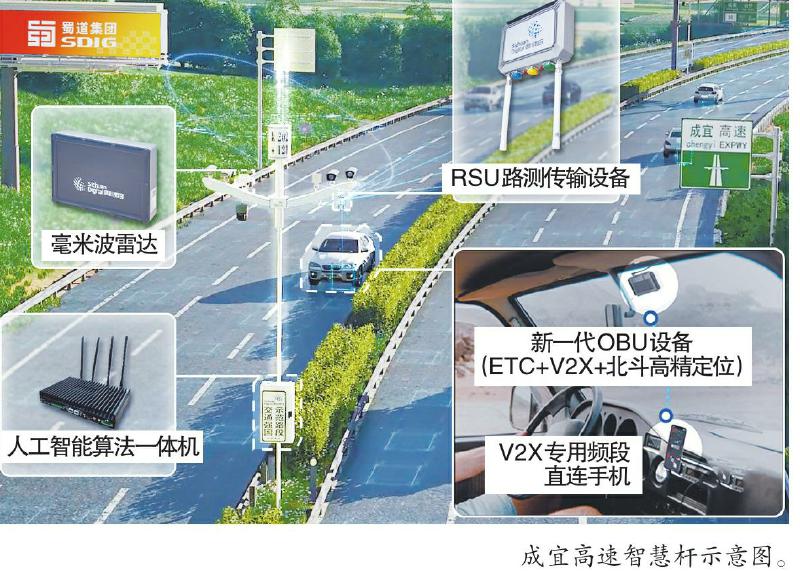
Core Insights - The pilot project of vehicle-road collaboration in Sichuan integrates "smart vehicles," "intelligent roads," and "powerful cloud" to create a closed-loop system of perception, decision-making, and control, enhancing traffic safety beyond single-vehicle intelligence [3][4][5] Implementation Strategy - Sichuan's pilot tasks are divided into three phases: identifying business scenarios, constructing test sites, and ultimately promoting the technology across entire highways [5][6] - The project has achieved breakthroughs in 15 key technologies, including low-cost perception technology and heterogeneous network transmission technology, covering a demonstration line of 340 kilometers [3][5][8] Technological Advancements - The Chengdu Ring Expressway and Chengdu Second Ring Expressway have implemented a "smart eye" management platform for real-time monitoring of traffic incidents and congestion, leading to significant advancements in traffic management [4][5] - The Chengyi Expressway, equipped with advanced cloud computing and AI technologies, has seen a 60% reduction in traffic accidents and a 30% improvement in accident response efficiency [6][9] Future Developments - Sichuan plans to further promote the pilot experiences through the construction of grid-based smart units, enhancing the intelligence level of its highways [7][9] - The province is also focusing on the integration of traffic big data and smart driving algorithms to attract more technology companies to its intelligent connected vehicle ecosystem [9][10] Market Potential - The roadside intelligent perception market is expected to exceed 40 billion yuan by 2025, driven by policy support and rich application scenarios [9] - The development of vehicle-road collaboration standards and the accumulation of data resources position Sichuan as a unique advantage in the intelligent connected vehicle industry [9][10]

一月引入3家企业总部,武汉凭什么?
Guan Cha Zhe Wang· 2025-06-24 12:34
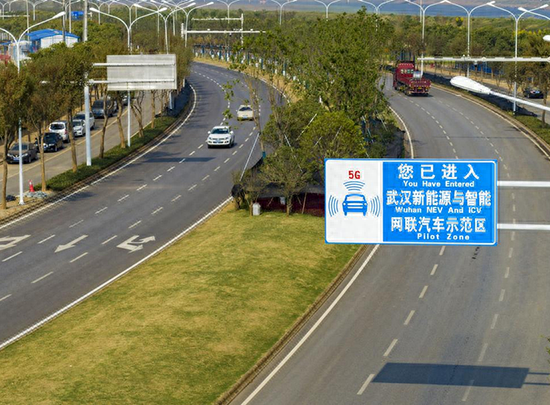
Core Insights - Wuhan has attracted major companies to establish their regional headquarters, indicating its growing appeal as a business hub [1][2][3] - The city has made significant improvements in its business environment, ranking among the top ten provincial and sub-provincial cities in a national evaluation [1][2] - Innovative service models, such as the "zero employee" service, have facilitated the rapid establishment of new businesses in the region [1][3] Business Environment - Wuhan's business environment has been enhanced through various reforms, leading to its recognition in the "Ten Thousand Private Enterprises Evaluation" [1][2] - The Wu Chang District has achieved the highest provincial ranking in business environment assessments three times in the past four years, with a GDP surpassing 200 billion yuan in 2024 [2] - The "three certificates in one" initiative in the Cai Dian District has streamlined administrative processes, reducing approval times by over 90% [2][3] Government Services - The city has implemented the "Four Ones" reform to create a more efficient government service system, allowing for the integration of multiple administrative tasks into single processes [3][4] - In 2023, Wuhan achieved "one-time handling" for 134 high-frequency administrative tasks, significantly reducing the time and effort required for businesses and citizens [3][4] - The 2025 Action Plan for Improving the Business Environment outlines six key areas for development, including market, legal, open, efficient, ecological, and innovative environments [4][5] Smart Living - The integration of smart living services is enhancing the quality of life in Wuhan, with advancements in transportation, healthcare, education, and community management [6][8] - The city has established a comprehensive smart traffic system, with 191 kilometers of coordinated roads and over 1,300 acres of testing areas [6][10] - Smart healthcare initiatives have improved diagnostic capabilities in local hospitals, enabling rapid remote consultations and diagnoses [8][9] Community and Elderly Care - The city is focusing on smart elderly care solutions, with pilot projects like the AI-assisted Rose Bay community providing various intelligent services for seniors [9][10] - Significant investments in educational digital transformation have been made, with over 12 billion yuan allocated to enhance smart education infrastructure [9][10] - The development of intelligent community governance models is addressing safety and care needs for residents, particularly the elderly [10]
车路协同产业即将进入爆发期(深度)| 国君计算机李沐华团队
计算机文艺复兴· 2024-06-15 07:59
车路协同是新质生产力在交通领域的重要表现形式,市场空间超千亿。 发展新质生产力是2024年政府十大任务之首,车路协同是新质生产力在交通领 域的重要表现形式,其重要性不言而喻,且相对于量子计算等未来技术,短期落地的可能性高,在政策端受到大力支持。随着北京车路云一体化项目大 单落地,车路协同行业将进入爆发期。我们测算,城际高速信息化市场空间超千亿,城市内部道路信息化试点城市市场空间也达千亿。 车路协同串联人车路云。 车路协同是指车辆与道路基础设施之间通过无线通信技术进行信息交换和共享,实现协同工作的一种智能交通系统。 其目的是优化系统资源、提高道路交通安全、缓解交通拥堵,构建更加安全、高效、环保的交通出行。主要包括四大关键技术:智能车载技术、 智能路侧技术、通信技术、云控技术。 车、路、云三端智能化市场前景广阔。 单车智能化方面,智能车载终端是车路协同中安装在汽车中的与路侧单元进行通讯交互的核心设备,通过 C-V2X车载终端可以实现包括车与车、路、人、网络之间的交互,政策催化下预计未来将迎来大规模装车。路端智能化方面,包括激光雷达、毫 米波雷达、摄像头在内的传感器相互融合是实现车路协同的必要条件。云端智能化方面, ...