通用大语言模型(LLM)

Search documents
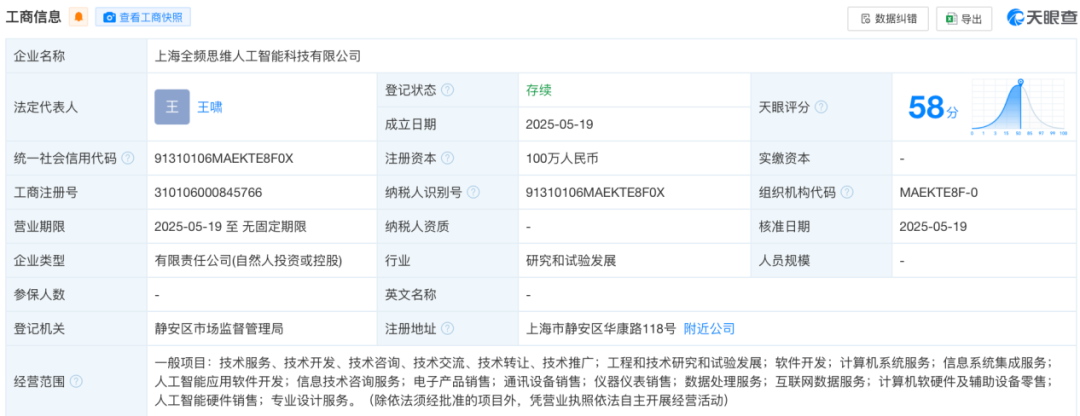
AI投资进入关键验证期、自动驾驶出行渐行渐近……高盛预测2026年十大焦点行业主题
硬AI· 2025-12-12 09:34
Core Insights - 2026 is viewed as a critical year for the commercialization of AI, with Goldman Sachs identifying ten key industry themes that include the rise of generative AI, the integration of advertising and e-commerce, and the acceleration of autonomous driving [2][3] Group 1: AI Commercialization and Investment - The focus will shift from capital expenditure to the actual utility and commercial returns of AI applications in 2026, marking a potential turning point in consumer computing habits [3][6] - Despite concerns over "overbuilding," Goldman Sachs expects high levels of AI-related capital investment to continue in 2026, with a significant increase in capital expenditure forecasts for Amazon, Google, and META [4] Group 2: Consumer AI Landscape - The rise of generative AI and agentic capabilities will redefine consumer experiences, blurring the lines between search and application functionalities [5][7] - The market will increasingly focus on diverse monetization strategies for AI, including advertising and commercial applications, beyond just subscription models [6] Group 3: Advertising and E-commerce Integration - The boundaries between traditional advertising and e-commerce are dissolving, with social platforms enhancing user experiences and e-commerce platforms leveraging retail media networks for advertising revenue [8][9] - Goldman Sachs projects Amazon's advertising business to maintain an approximately 8% compound annual growth rate from 2025 to 2030, with the creator economy playing a crucial role in driving traffic and conversions [9] Group 4: AI's Impact on Advertising - Digital advertising is currently the most mature vertical for AI product development and adoption, with platforms like Google's Performance Max and META's Advantage+ leading in AI automation tools [11][12] Group 5: Local Business Competition Dynamics - On-demand delivery platforms like UBER, DASH, and CART are expanding product categories to enhance user retention and engagement, particularly in grocery and retail sectors [16][17] Group 6: Autonomous Driving and Mobility - The large-scale adoption of autonomous vehicles (AV) is expected to unfold over the next 5-7 years, with a hybrid model of human drivers and AVs emerging to meet global demand [18][19] Group 7: Interactive Entertainment Evolution - Interactive entertainment companies are expanding into new media and verticals to increase consumer engagement, with trends including the integration of live entertainment and AI tools to enhance content development [19][20] Group 8: Health and Wellness Market Opportunities - Post-pandemic, consumer focus on health outcomes has intensified, leading to a trend of integrating physical hardware with subscription services, such as AI-enhanced fitness systems [22][23] Group 9: Balancing Growth and Investment - Companies are increasingly differentiating between growth investments and profit margins, with some prioritizing long-term growth plans over short-term profit maximization [26][27]





AI投资进入关键验证期、自动驾驶出行渐行渐近……高盛预测2026年十大焦点行业主题
Hua Er Jie Jian Wen· 2025-12-12 07:21
Core Insights - 2026 is projected to be a pivotal year for AI technology validation, shifting market focus from capital expenditure to practical utility and commercialization returns [1] - The report by Goldman Sachs indicates that the adoption of general large language models (LLMs) and chatbots will significantly increase in 2025, marking a turning point in consumer computing [2] Group 1: Capital Expenditure and Investment Trends - Despite concerns over "overbuilding," Goldman Sachs expects AI-related capital expenditures to remain high in 2026, with capital spending expectations for Amazon, Google, and META raised by approximately 46% and 80% for the fiscal years 2025 and 2026, totaling an increase of about $250 billion [2] - The ability of these substantial investments in AI development to translate into visible profit returns will be a key factor influencing investor sentiment and company performance over the next 12 to 18 months [2] Group 2: Evolution of Consumer AI Landscape - The discussion around AI is shifting from infrastructure to application, with 2026 potentially being a critical point for changes in consumer computing habits, focusing on diverse monetization models beyond paid subscriptions [2] - The integration of "agentic AI" that can plan multi-step processes and make autonomous decisions is expected to blur the lines between search and applications, significantly impacting consumer behavior [2] Group 3: Advertising and E-commerce Dynamics - The boundaries between traditional advertising and e-commerce are dissolving, with social platforms enhancing user experiences and logistics partnerships to accelerate social commerce [3] - Amazon's advertising business is projected to maintain an annual compound growth rate of about 8% from 2025 to 2030, with the creator economy playing a crucial role in driving traffic and conversions [3] Group 4: AI's Impact on Advertising Landscape - Digital advertising is currently the most mature vertical for AI product development and adoption, with platforms like Google's Performance Max and META's Advantage+ leading in AI automation tools [5] - AI is expected to redistribute profit pools within the advertising industry, with large platforms benefiting from their data and computational advantages [6] Group 5: Local Business Competition Dynamics - On-demand delivery platforms like UBER, DASH, and CART are expanding product categories to improve user retention and engagement, particularly in grocery and retail sectors with low online penetration [8] - Cross-platform consumer retention rates are higher, with spending three times that of single-use consumers, leading to intensified competition in delivery speed [9] Group 6: Future of Mobility Networks - Discussions around autonomous vehicles (AVs) focus on partnerships, urban expansion, and market share, with large-scale adoption expected over the next 5-7 years [10] - Waymo is expanding its operations as a leading AV operator in the U.S., with costs expected to decrease as dedicated hardware scales, enhancing affordability and penetration in shared mobility [10] Group 7: Evolution of Interactive Entertainment - Interactive entertainment companies are increasing consumer touchpoints by expanding into new media and verticals, with trends including the integration of live entertainment and AI to enhance content development efficiency [11] Group 8: Transition to Spatial Computing - Major companies like META, Google, and Apple are investing in spatial computing, transitioning from mobile devices to more immersive interaction methods, with advancements in hardware, software, and connectivity being crucial [12][13] Group 9: Health and Wellness Market Opportunities - Post-pandemic, consumer focus on health outcomes has increased, with a trend towards the integration of hardware and software in health tracking, driving downloads and subscriptions for related applications [14] Group 10: Balancing Growth and Incremental Investment - Companies are showing a divergence in balancing growth investments with profit margins, with some prioritizing long-term growth plans over short-term profit maximization [15]
百亿私募大动作 成立AI公司!
Zhong Guo Ji Jin Bao· 2025-05-26 14:50
Core Insights - The article discusses the increasing involvement of billion-dollar quantitative private equity firms in the artificial intelligence (AI) sector, highlighting the establishment of Shanghai AllMind Technology Co., Ltd. by Nian Kong Technology to explore cutting-edge AI topics [1][2] - Several major private equity firms, including Jiukun, Kuande, Mingshi, and Heiyi, are actively investing in AI, driven by the success of DeepSeek and the potential to enhance their competitive edge and expand business boundaries [1][8] Company Developments - Nian Kong Technology founded AllMind on May 19, 2025, focusing on foundational research and engineering technologies related to general large language models (LLMs) [2][3] - The company aims to address current challenges in large models, such as improving logical reasoning capabilities and reducing hallucination issues, while also exploring applications in various fields like new materials and pharmaceutical research [3][5] Academic Collaborations - AllMind collaborated with Shanghai Jiao Tong University to write a paper titled "Step-wise Adaptive Integration of Supervised Fine-tuning and Reinforcement Learning for Task-Specific LLMs," submitted to NIPS on May 20, 2025 [2][3] - The paper introduces a new training framework that alternates between supervised fine-tuning (SFT) and reinforcement learning (RL), demonstrating superior performance over traditional methods [6][5] Industry Trends - Kuande Investment has established an AI talent recruitment initiative, focusing on developing general-purpose AI technologies, while also launching an independent AI research lab [8] - Jiukun Investment has previously published research on AI, successfully replicating DeepSeek-R1's work and identifying issues related to language mixing that affect reasoning capabilities [8] - Mingshi Fund has integrated AI into its entire investment research process, enhancing efficiency in factor mining, model optimization, and risk control since establishing its AI lab in 2021 [8][9] - Heiyi Asset has implemented AI throughout its investment research process, utilizing large language models to analyze complex data and improve prediction accuracy [9] Future Outlook - The quantitative private equity sector is expected to see increased investment in AI, including talent acquisition and infrastructure development, leading to a competitive landscape for AI professionals [9]