谷歌Gemini

Search documents
繁荣的暗面:6620 亿美元影子杠杆,AI 数据中心的债务炸弹
美股研究社· 2026-03-02 11:18
Core Viewpoint - The true risks in the capital market, particularly in the context of AI, often lie beyond the balance sheet, with a significant focus on "shadow leverage" accumulating outside traditional financial statements [2][3]. Group 1: Shadow Leverage and Financial Structures - Major tech companies in the U.S. are accumulating up to $662 billion in "hidden debt" through data center leasing commitments, which do not fully reflect on their balance sheets but represent future cash outflows [6]. - By the end of 2025, the total undiscounted future leasing commitments of these companies are expected to reach $969 billion, with over two-thirds yet to take effect, creating a situation where liabilities are not recognized until specific conditions are met [6][10]. - The shift from a "light asset internet model" to a "heavy asset infrastructure model" is evident, with capital expenditures for large-scale data centers projected to reach $646 billion in 2026, accounting for about 2% of U.S. GDP [7]. Group 2: Risks of Long-term Leasing and Fixed Costs - The financing structure of tech giants has shifted towards long-term leasing and complex financial arrangements, which may optimize reported returns but increase future fixed costs [8]. - If revenue from generative AI does not cover long-term leasing and energy costs, companies may face a "fixed cost trap," where they are unable to reduce these obligations despite lower demand [15]. - The anticipated surge in global data center electricity consumption, projected to reach 600 TWh in 2026, poses additional risks as energy infrastructure struggles to keep pace with data center growth [15]. Group 3: Accounting Standards and Market Implications - Current accounting standards allow significant liabilities to remain off the balance sheet until lease terms begin, creating a financial buffer for companies but also leading to information asymmetry in the market [10]. - The mismatch between the rapid depreciation of AI hardware and the long-term nature of leasing contracts presents a structural challenge, potentially inflating reported profits while hiding cash flow pressures [12]. - Rating agencies are expected to adjust their models to account for off-balance-sheet leasing commitments, which could lead to downgrades for previously investment-grade tech companies, increasing their financing costs [17]. Group 4: Future Outlook and Investment Considerations - The market is likely to shift focus from growth narratives to the ability of companies to cover real cash flows, indicating a potential return to traditional valuation metrics [17]. - Companies that can transparently disclose their debt structures and maintain robust cash flow coverage are expected to outperform, while those relying on off-balance-sheet leverage may face significant valuation and credit risks [19].


OpenAI完成1100亿美元融资,获亚马逊、英伟达、软银投资
Xin Lang Cai Jing· 2026-02-27 13:55
Core Insights - OpenAI has raised $110 billion in its latest funding round, marking a significant increase from its previous valuation [1][7][10] - Major investments include $50 billion from Amazon, $30 billion from Nvidia, and $30 billion from SoftBank, leading to a pre-money valuation of $730 billion [5][8] - OpenAI is experiencing rapid growth but faces increasing competition from Anthropic and Google [6][9] Funding Details - The recent funding round is the largest private financing in history and has set a new high for late-stage tech company valuations [10] - Amazon's investment will be phased, with an initial $15 billion followed by an additional $35 billion contingent on certain conditions [8][9] - OpenAI plans to expand its existing $38 billion agreement with Amazon Web Services (AWS) by an additional $100 billion over the next eight years [2][8] Strategic Partnerships - OpenAI and Amazon have established a long-term strategic partnership to co-develop customized models for Amazon's customer-facing applications [8] - AWS will serve as the exclusive third-party cloud distribution provider for OpenAI's recently launched enterprise platform, Frontier [2][8] Financial Projections - OpenAI aims to invest approximately $600 billion in total computing expenditures by 2030, a revised figure from earlier projections of $1.4 trillion [9] - The company anticipates total revenues exceeding $280 billion by 2030, with consumer and enterprise segments contributing nearly equally [3][9]



速递|Claude逆袭:去年11月以来每日新申请量已增长了两倍,靠Code和Cowork带飞
Z Potentials· 2026-02-27 02:48
Core Insights - Anthropic's Claude chatbot has seen a significant increase in paid users, more than doubling since October, while free users grew by 60% last month [3] - The company reported a tripling of daily signups for the Claude chatbot since November, indicating strong consumer interest [3] - Anthropic is intensifying its focus on consumer business, hiring a former Instagram product head to lead this effort and promoting its ad-free model in contrast to competitors [4] User Growth - The paid user base for Claude chatbot has increased by over 100% since October, with free users also experiencing a 60% growth last month [3] - Daily new applications for the Claude chatbot have doubled since November, showcasing a surge in user engagement [3] Competitive Landscape - Despite the growth, Anthropic's user base is still significantly smaller compared to competitors like ChatGPT, which has 910 million weekly active users, and Google's Gemini with 750 million monthly active users [4] - Anthropic anticipates that by 2025, approximately 86% of its projected $4.5 billion revenue will come from model sales through APIs, with chatbot sales expected to contribute around $600 million [4] Strategic Initiatives - The company has made strategic hires to bolster its consumer product efforts, including bringing on a former Instagram executive [4] - Anthropic has publicly criticized OpenAI's plans to introduce ads in ChatGPT, emphasizing that it will not incorporate ads into Claude [4]

私有数据,是AI应用唯一的“护城河”?
Sou Hu Cai Jing· 2026-02-26 00:42
Core Insights - The article discusses the transformation of business survival logic in the AI era, highlighting the decline of traditional competitive advantages established during the mobile internet age [2][6] - It emphasizes the shift from user loyalty and network effects to a focus on data accumulation and AI capabilities as the new competitive moat for companies [8][23] Group 1: AI Impact on Business Models - During the Spring Festival, over 130 million people experienced AI shopping, indicating a significant shift towards everyday AI applications [2] - The traditional "moats" of mobile internet, such as user habits and traffic logic, are being redefined in the face of AI advancements [2][6] - Companies must adapt to a new competitive landscape where user loyalty is minimal, and switching costs are low, as users prioritize functionality and performance over brand allegiance [6][7] Group 2: Data as a Competitive Advantage - The concept of "data compounding" is introduced as a crucial element for retaining users, where accumulated data about business processes and user habits becomes invaluable [9][23] - Three core dimensions of a data moat are identified: private context, interactive feedback loops, and industry-specific "dark knowledge" [12][14][16] - Companies that can structure and leverage internal data effectively will create barriers that competitors cannot easily overcome [14][24] Group 3: The Future of AI Applications - The article argues that the focus should shift from merely selecting AI models to designing systems that generate high-value feedback data during user interactions [20][23] - Successful B2B AI applications will integrate deeply into business processes, making data an essential part of operational flows [18][24] - As technology evolves, the true value lies in the unique data accumulated over time, which cannot be easily replicated by new models [23][24]

三星Galaxy S26系列发布:AI三引擎融合+隐私屏首发,两款机型涨价100美元
Xin Lang Cai Jing· 2026-02-25 21:15
Core Insights - Samsung Electronics has launched its latest flagship smartphone series, with two models priced $100 higher than their predecessors, amid a global storage chip shortage impacting the industry [1][9] - The average smartphone price is projected to increase by 6.9% by 2026 due to the storage chip shortage, as reported by Counterpoint Research [1][9] - The S26 Ultra's starting price remains the same as the previous S25 series, while the S26 and S26+ have seen a price increase of $100 [1][9] Product Features - The S26 series is Samsung's third generation of "AI phones," featuring faster processing chips and AI tools for photo editing and document scanning [3][11] - A standout feature of the S26 Ultra is its privacy display, which controls pixel illumination to limit side-angle visibility, claimed to be a global first [3][11] - The S26 integrates three independent AI engines: Google Gemini for task execution, Perplexity for web-based queries, and an upgraded Samsung Bixby as a more powerful on-device assistant [12] Market Dynamics - The storage chip shortage is expected to persist until 2027 or early 2028, driven by rapid AI infrastructure expansion diverting chip supply from smartphones and other consumer electronics [7][14] - Storage chip prices have doubled in the past two quarters, affecting broader global industries [14] - Samsung is diversifying its supplier base to mitigate risks associated with the storage chip shortage, reflecting a strategic shift in the industry [5][14]

中信证券:AI发展的刚性叙事与多维约束
Zhi Tong Cai Jing· 2026-02-25 00:31
Core Viewpoint - The current AI industry in the U.S. exhibits characteristics of a "rigid bubble," supported by deep integration into national strategy and strong policy backing, while also facing significant valuation pressures and competition between capital expenditure and output efficiency [1][2]. Group 1: Economic Importance and Policy Support - The development of AI has become central to U.S. national strategy and political correctness, receiving robust policy support and backing from major corporations [1]. - AI-related industries have rapidly increased their share of U.S. GDP from 5.35% in Q1 2020 to 7.36% by Q3 2025, indicating its role as a core growth pillar [1]. - The market capitalization of AI giants, represented by "MAG7," accounts for over 30% of the S&P 500 index, contributing significantly to market growth [1]. Group 2: Political Dynamics - The economic significance of AI has been deeply politicized, with influential figures like Musk and Sachs forming a closed loop of "personnel-policy-interest" through substantial political donations and direct participation [2]. - The U.S. government has systematically dismantled previous regulatory frameworks to facilitate AI industry growth, linking its political survival to the prosperity of the AI sector [2]. Group 3: Valuation and Market Dynamics - The valuation of AI stocks is currently high, with the Nasdaq index's forward P/E ratio stabilizing despite rising stock prices, indicating a rational basis for market growth [3]. - The 12-month forward EPS for the Nasdaq index has risen from approximately $610 at the end of 2024 to $826, suggesting strong earnings growth is absorbing stock price increases [3]. - Unlike the tech bubble era, current tech giants maintain steady revenue growth, supported by robust cash-generating core businesses [3]. Group 4: Constraints on AI Industry Expansion - The AI industry's expansion faces four significant constraints: a dangerous gap between capital expenditure and output efficiency, impending cash flow pressures, physical limitations in semiconductor production and energy supply, and unresolved competition in technology pathways [4][5][6]. - Major companies plan to increase capital expenditures to a total of 640.4 billion yuan by 2026, a 55% increase year-on-year, which may lead to a reliance on future revenue growth [5]. - The industry debt has rapidly escalated to over $150 billion, indicating a potential cash flow gap as companies strive to meet high shareholder return commitments [5]. Group 5: Investment Strategy Recommendations - The company suggests constructing a three-tier dynamic asset allocation strategy in anticipation of a narrative reversal in the AI bubble [7]. - The first tier focuses on "rock-solid" opportunities in internet giants with stable cash flows, providing downside protection and liquidity support [7]. - The second tier emphasizes "shovel-type" opportunities in computing infrastructure, benefiting from increased AI capital expenditure and potential profit increases due to supply constraints [8]. - The third tier targets "contrarian" opportunities in the software sector, where concerns about AI applications may be overblown, allowing for strategic positioning after market corrections [8].

AI武器化红线之争!传美国防部下最后通牒:Anthropic必须允许军方无限制使用AI技术
智通财经网· 2026-02-24 23:33
Core Viewpoint - The U.S. Department of Defense (DoD) threatens to invoke a Cold War-era law to compel Anthropic, an AI startup, to allow military use of its technology if it does not comply with government terms by Friday [1][2]. Group 1: Company Position and Response - Anthropic's CEO, Dario Amodei, outlined conditions during a meeting with the Defense Secretary, including prohibiting the military from using its products for autonomous strikes against adversaries or mass surveillance of U.S. citizens [1][3]. - Anthropic emphasizes its commitment to responsible AI use and aims to avoid catastrophic outcomes, positioning itself as a company focused on ethical boundaries in providing services to government clients [3]. Group 2: Government Actions and Implications - The DoD's ultimatum escalates tensions between the military and Anthropic, particularly regarding the use of the Claude AI tool, which the military believes should not have usage restrictions [1][2]. - If deemed a supply chain risk, Anthropic's products would be banned from use by other military suppliers, who would need to verify they are not using Anthropic's technology [4]. Group 3: Competitive Landscape - Anthropic, valued at approximately $380 billion, faces increasing competition in the national security sector from companies like Elon Musk's xAI, OpenAI, and Google's Gemini [2]. - The dispute arises shortly after the DoD's new AI strategy, which encourages the military to adopt "AI-first" approaches without usage policy restrictions that could hinder legitimate military applications [2].
今天,全线大涨!A股开市在即,能否喜提“开门红”?机构纷纷表示……
Mei Ri Shang Bao· 2026-02-23 13:20
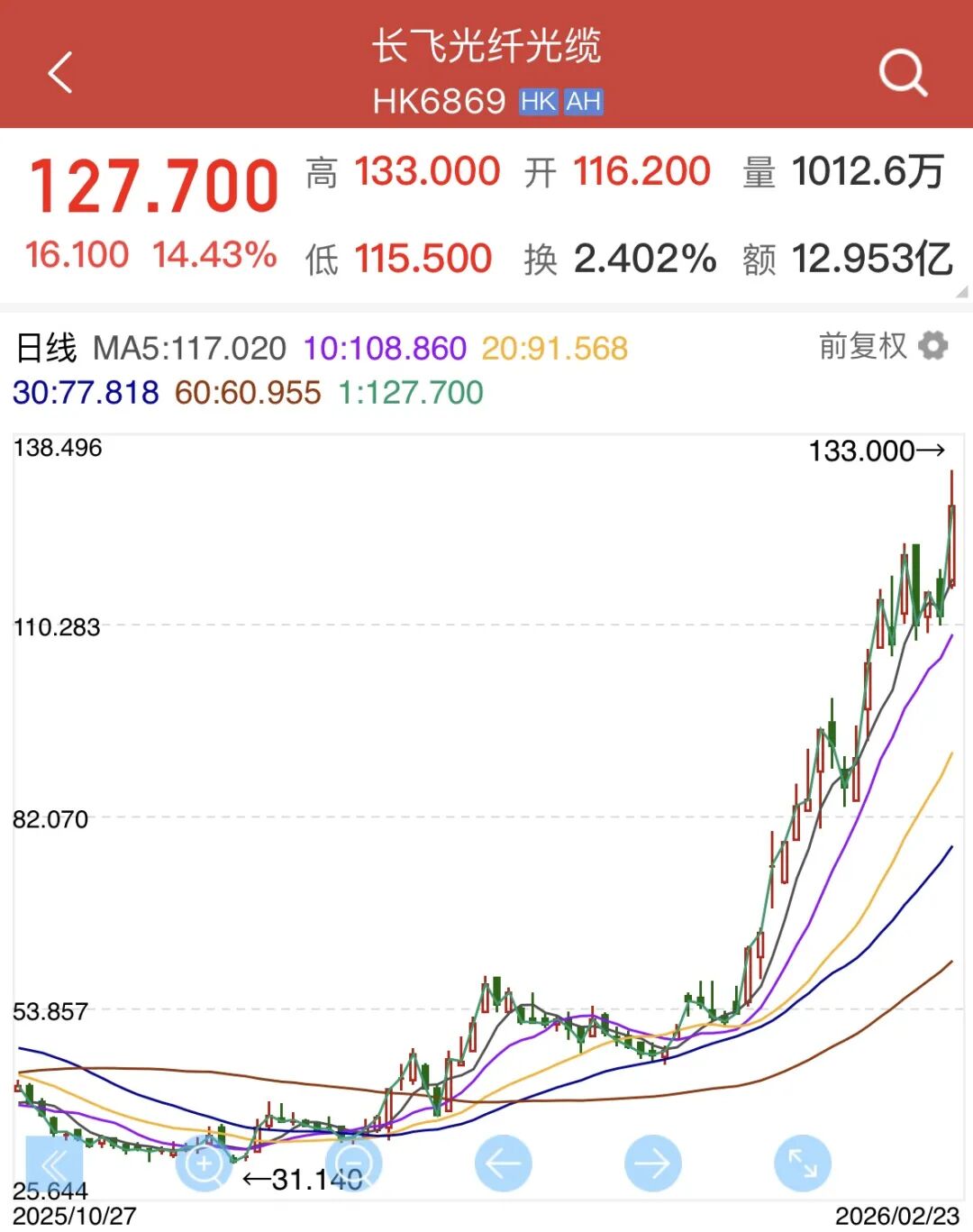
Group 1 - The Hong Kong stock market opened strongly after the Spring Festival, with the Hang Seng Index rising by 2.53% and the Hang Seng Tech Index increasing by 3.34% on February 23 [2] - Notable performers included technology stocks such as SMIC and Meituan, which rose over 5%, and gold stocks like Chifeng Jilong Gold Mining, which increased by approximately 8% [2] - The communication equipment sector also saw significant gains, with Putian Communication Group surging over 30% and Longi Green Energy's stock price reaching a peak of 133 HKD per share [2] Group 2 - Recent breakthroughs in optical communication and 6G technology by Chinese scientists have led to a record data transmission rate, which may positively impact related sectors [4] - A report from Open Source Securities anticipates a significant "siphon effect" from AI investments, with major companies like Google and Meta increasing their AI capital expenditures [4] - The report suggests focusing on three core themes: "optical, liquid cooling, and domestic computing power," while also highlighting opportunities in AI applications, telecommunications, and satellite internet & 6G sectors [4] Group 3 - During the Spring Festival, several funds heavily invested in Hong Kong stocks saw substantial gains, which could positively influence A-share related sectors [5] - Stocks such as Longi Green Energy, WanGuo Gold Group, and Chifeng Jilong Gold Mining experienced increases of over 10%, primarily in AI hardware upstream, gold, innovative pharmaceuticals, and oil transportation sectors [5] Group 4 - Historical data indicates a 70% probability of the A-share index rising on the first trading day after the Spring Festival, with an 80% probability of gains over the first five trading days [7] - The liquidity environment remains supportive, with broad money (M2) growing by 9.0% year-on-year and social financing scale increasing by 8.2% in January [7] - Analysts expect structural opportunities in A-shares to continue, particularly in resource and AI sectors, driven by geopolitical risks and high-performance industry earnings [7] Group 5 - Global asset performance during the holiday showed significant increases in oil prices and rebounds in gold and silver, while U.S. Treasury yields rose [8] - The market is anticipated to experience a "two-phase upward trend," with the current phase being a high point, followed by a potential period of consolidation [8] - Analysts from various firms, including Morgan Stanley and JPMorgan, express optimism about the Chinese market, citing a "slow bull" market driven by steady earnings growth [9]
从1.4万亿到6000亿美元,OpenAI为何大改“烧钱”计划
Mei Ri Jing Ji Xin Wen· 2026-02-23 07:07
Core Viewpoint - OpenAI has revised its total compute spending target to $600 billion by 2030, significantly lower than the previously announced $1.4 trillion commitment, sparking discussions about potential reductions in AI investment [1][2]. Group 1: Investment Strategy - The new $600 billion plan focuses solely on compute spending over a six-year period (2025-2030), contrasting with the previous eight-year plan that included broader infrastructure costs [1][2]. - OpenAI's projected revenue for 2025 is $13 billion, with a cash loss of $8 billion, indicating a high-revenue, high-loss model that may not be sustainable [2][8]. - The revised spending plan aligns better with OpenAI's financial and fundraising strategies, potentially enhancing investor confidence and facilitating future financing and an IPO in 2026 [2][8]. Group 2: Market Competition - The competitive landscape in the large model industry has intensified, with new entrants like Google Gemini and Anthropic Claude increasing pressure on OpenAI [3][9]. - OpenAI's previous focus on long-term AGI development has diluted its core model iteration and product deployment, prompting a shift towards prioritizing commercial viability [3][9]. Group 3: Supply Chain Constraints - The global demand for compute power has led to a tightening in the memory market, with prices expected to rise due to limited supply [4][10]. - If OpenAI had maintained its original $1.4 trillion plan, it would have exacerbated supply constraints, making it difficult to expand compute capabilities as anticipated [4][10]. - The shift in OpenAI's strategy reflects a broader transition in the AI industry from a "weak constraint" to a "strong constraint" environment, influenced by capital market dynamics [4][10]. Group 4: Market Trends - The performance of newly listed AI companies like Zhiyu and MiniMax has been driven by scarcity and limited free float, with their price-to-sales ratios reaching over 700 times, compared to OpenAI's approximately 65 times [6][11]. - OpenAI's valuation logic changes may impact the market perception of these newly listed companies, warranting close attention [6][11].
智能体商务崛起:当AI聊天机器人成为“新中介”
Zhi Tong Cai Jing· 2026-02-18 11:22
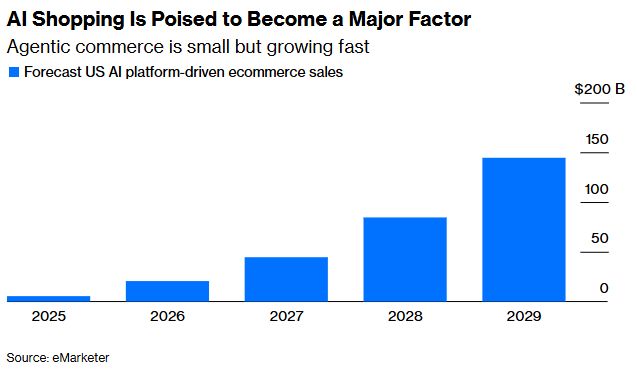
Core Insights - The rise of Agentic Commerce signifies a transformative shift in retail, where AI chatbots will become central to product selection and purchasing, fundamentally altering the power dynamics and profit distribution in the industry [1][2] - Retailers must adapt quickly to this change or risk obsolescence, as the era of AI-driven shopping is already underway [1] Group 1: Industry Trends - Major retailers like Walmart, Etsy, and Shopify are already integrating AI tools for direct ordering, indicating a swift industry-wide adoption of this new commercial wave [2] - Companies like Wayfair and JD Sports are collaborating with tech giants like Google and Microsoft to enable direct purchases through AI platforms, showcasing the competitive landscape [2] Group 2: Business Model Adjustments - Retailers need to ensure their products are easily identifiable and retrievable by AI systems, necessitating a shift in business models to survive in an AI-driven marketplace [4][5] - Understanding the information retrieval mechanisms of large language models is crucial for retailers to align their product descriptions with consumer intent, requiring an upgraded SEO strategy [5][6] Group 3: Challenges and Risks - AI platforms may begin charging commissions on transactions, which could erode profit margins for retailers already struggling with lower digital channel profitability compared to physical stores [7] - The potential for AI platforms to require payment for visibility in search results could further compress profit margins and limit retailers' operational space [7][10] Group 4: Data Ownership and Control - The issue of data ownership arises, as AI platforms may possess a more comprehensive understanding of consumer behavior, creating new barriers to entry for retailers [10] - Major players like Walmart and Amazon are in a position to develop their own AI tools, which could shift the competitive landscape and control over consumer interactions [10]