
速冻包子

Search documents
“年味儿”国货加速出口 “洋年货”走俏市场 节前外贸进出口持续火热
Yang Shi Wang· 2026-02-01 03:02
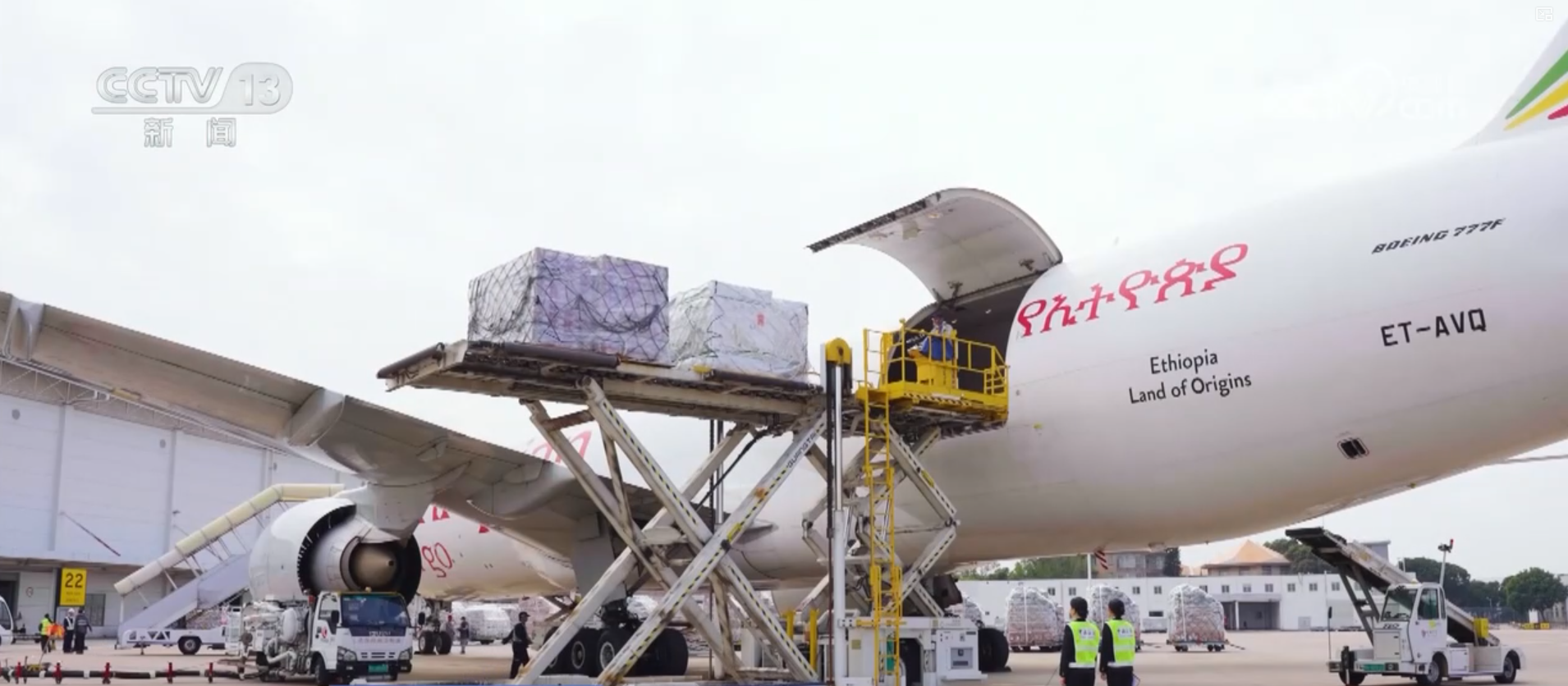
Group 1 - The article highlights the increasing richness of the New Year goods market as the Spring Festival approaches, with a significant rise in both imports and exports of seasonal products [1][5] - The "BRICS Special Line" at Xiamen Airport has been operational for nearly three years, primarily transporting fresh products, and has seen a substantial increase in the volume of imported fresh goods [1][5] - In January, Xiamen Customs reported over 1,400 tons of imported fresh products, including live lobsters and salmon, marking a year-on-year growth of over 40% [1][5] Group 2 - The "BRICS Special Line" has facilitated the import of over 10,000 tons of fresh products since its inception, with a significant portion of seasonal fruits and salmon contributing to the total import volume [5] - The customs process for fresh products has been optimized to ensure 24-hour uninterrupted clearance, allowing for quick access to the market during the festive season [5] - In Shenyang, the customs has reported a significant increase in the import of ornamental fish and flowers, with nearly 400,000 ornamental fish and 5.22 million flower bulbs imported in January [8][14] Group 3 - In Yangzhou, a food company has been exporting frozen buns for over 20 years, with a focus on the overseas Chinese market, and has recently expanded to the German market [16][19] - The company has upgraded its production line and implemented a comprehensive quality control system to meet international standards, resulting in increased trust from overseas clients [18][19] - Shenzhen has seen a rise in the production of traditional New Year cakes, with expectations of over 570,000 pieces produced this year, reflecting a year-on-year growth of over 10% [21][23]

下周来红星,品尝记忆里的浏阳味道丨“工”筑精品 惠享万家
Xin Lang Cai Jing· 2026-01-10 17:26
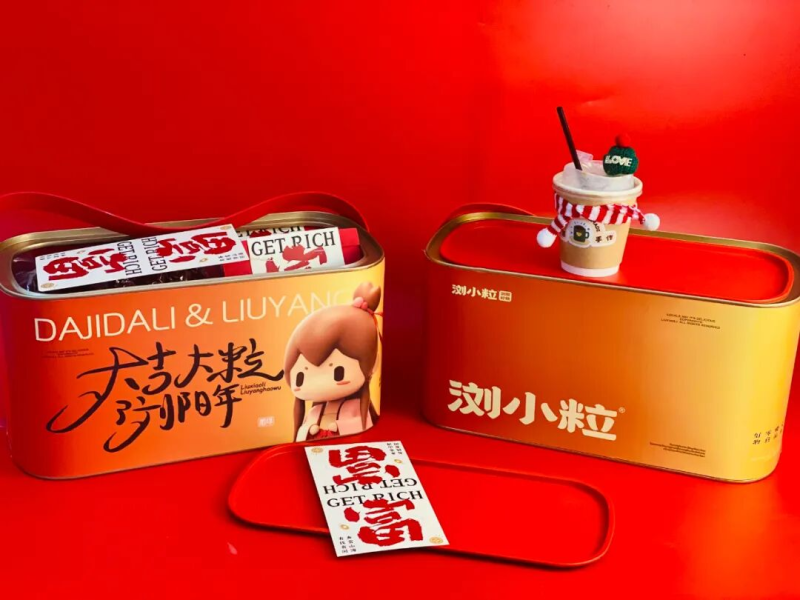
Group 1 - The event "Shared Plan" will take place from January 16 to 18 at the Changsha Hongxing International Convention and Exhibition Center, showcasing local products and brands from Liuyang [1] - The "Jinyang Goodies" exhibition area will feature well-known local brands and products, highlighting the craftsmanship of "Liuyang manufacturing" [1][9] - The event aims to present the rich culinary culture of Liuyang, emphasizing local flavors and traditional food items [2] Group 2 - Local companies such as Hunan Daowushan Food Co., Ltd. and Hunan Dewang Agricultural Technology Development Co., Ltd. will present traditional dishes that evoke nostalgia and local flavors [2] - Hunan Xianola Agricultural Development Co., Ltd. and Hunan Xiangnuo Food Co., Ltd. will showcase unique local products like pickled vegetables and smoked bamboo shoots, which are integral to local cuisine [2] - The event will also feature innovative food solutions, including pre-packaged meals from Hunan Xincongchu Food Co., Ltd., making it easier for families to prepare festive meals [5] Group 3 - The Liuyang food industry is providing new solutions for traditional cooking, allowing for easier meal preparation with high-quality pre-cooked dishes [5] - Local beverage companies like Hunan Aosili Food Technology Co., Ltd. will offer refreshing drinks to complement the festive meals [7] - The "Jinyang Goodies" platform aims to enhance the brand image of Liuyang manufacturing by ensuring quality and traceability for over 20 local enterprises [9]
速冻食品行业2025年回顾与2026年展望:需求恢复可期,产品创新突围
ZHONGTAI SECURITIES· 2025-12-06 12:00
Investment Rating - The industry investment rating is "Increase" [4][32]. Core Viewpoints - The frozen food industry is expected to see demand recovery, with product innovation playing a crucial role in overcoming challenges [6][29]. - The revenue from the downstream catering sector is anticipated to maintain a recovery trend in 2026, while profit margins are expected to gradually improve due to cost control and product innovation [6][29]. - The market size of China's frozen food sector is projected to reach 213.1 billion by 2025, up from 168.8 billion at the end of 2022 [8]. Summary by Sections Industry Overview - The frozen food industry faced a slowdown in growth during the first three quarters of 2025 due to fluctuations in catering demand and other adverse factors, but signs of recovery were noted in Q4 [6][29]. - The total market value of the industry is approximately 45,795.07 billion [1]. Market Trends - The national catering revenue from January to October 2025 reached 46,188 billion, showing a year-on-year growth of 3.3% [7]. - The chain rate in the catering industry is expected to rise to 25% in 2025, indicating significant room for growth compared to the U.S. and Japan [8]. Product Performance - In the first half of 2025, the frozen food category in supermarkets grew by 5%, contrasting with a decline of 9.5% in the same period last year [9]. - There is a structural shift in the market, with traditional staple categories under pressure while snack categories like pizza and frozen dim sum show strong growth potential [9]. Channel Development - The frozen food companies are actively responding to the demand from large chain supermarkets, leading to an increase in sales through these channels [15]. - New retail channels are also showing significant growth, contributing to the overall performance of the industry [15]. Cost and Profitability - The prices of most food raw materials have decreased, alleviating some cost pressures for frozen food companies, although packaging costs remain high [21]. - The combined revenue growth of key companies in the frozen food sector was 3.0% year-on-year for the first three quarters of 2025, with a notable acceleration in Q3 [29]. Company-Specific Insights - Anjiu Foods is expected to benefit from the gradual recovery in catering and the continuous expansion of new customers, leading to a potential increase in profitability [31]. - Qianwei Yangchu is focusing on product innovation and expanding its market presence through both B2B and B2C channels, indicating strong long-term growth potential [31]. - Lihai Foods is actively developing new products and strengthening partnerships with key clients, positioning itself well for future growth in the baking sector [31].



月饼品类展现新趋势 品牌破解日常隐身“困局”
Zhong Guo Jing Ying Bao· 2025-09-17 14:15
Core Insights - The mooncake market is experiencing a sales peak as the Mid-Autumn Festival approaches, with low-temperature mooncakes emerging as a significant growth driver, showing a sales growth rate of 73% [1][2][3] - The 2025 mooncake market is expected to exhibit five major trends: lightweight gifts, health consciousness, snackification, practicality, and multi-dimensional marketing [1][2][3] Market Dynamics - The supply side has seen a substantial increase, with 950 brands and nearly 50,000 new products launched on JD.com [2] - On the demand side, the user base for mooncake purchases on JD.com has grown by 32% year-on-year, with consumers planning to buy an average of over 4 boxes [2] - Low-temperature mooncakes heavily rely on cold chain logistics, with JD.com's "211 timeliness" cold chain delivery addressing consumer concerns about storage and delivery [2] Consumer Preferences - 73% of consumers prioritize "healthy ingredients," leading to a notable increase in low-sugar and additive-free products [3] - 54% of users now consider mooncakes as everyday snacks, expanding the consumption scenarios beyond traditional gifting [3] - 39% of consumers desire more practical packaging, while 31% prefer gift boxes that incorporate local cultural elements [3] Brand Strategy - The mooncake industry faces a challenge of seasonal branding, where brands often fade from consumer awareness post-festival [5][6] - To combat this, brands are encouraged to extend the festive cycle and integrate products into daily consumption, such as pre-sale strategies and post-festival promotions [6] - Successful brands are adapting by introducing popular festive flavors into their everyday product lines, thereby reducing reliance on seasonal sales [6][7]

2025年中国速冻包子行业市场政策、产业链图谱、供需现状、竞争格局及发展趋势研判:低脂肪、低糖、低盐、无添加剂产品更受市场欢迎[图]
Chan Ye Xin Xi Wang· 2025-06-20 01:44
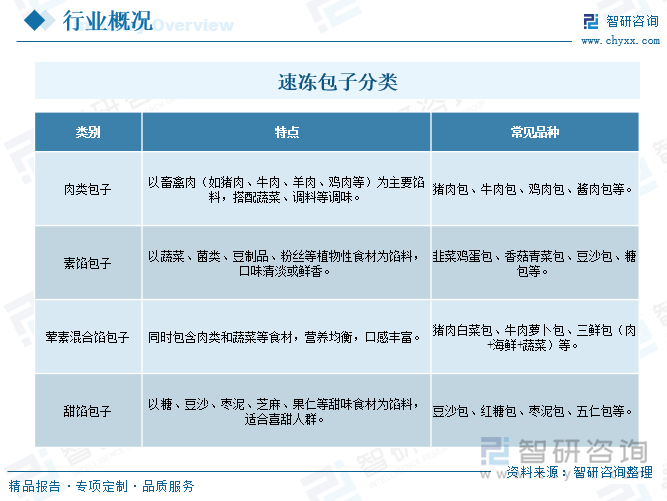
Overview - The demand for frozen buns in China is projected to reach 474,900 tons by 2024, with a market size of 11.872 billion yuan, and an average product price of approximately 25,000 yuan per ton. The increasing income levels and consumer preferences for convenient and high-quality frozen foods are expected to drive market expansion, particularly in urban areas [1][11]. Market Policy - Recent food safety regulations in China have become increasingly stringent, impacting various stages of the frozen bun supply chain, including raw material procurement, production, packaging, storage, and sales. These regulations aim to standardize market practices and protect consumer rights, promoting sustainable industry development in the long term [4]. Industry Chain - The frozen bun industry consists of upstream suppliers of raw materials (flour, meat, vegetables, etc.), midstream production processes, and downstream sales channels (supermarkets, convenience stores, e-commerce, and restaurants). Consumer preferences for convenience, taste, and health are driving innovation and product upgrades across the industry chain [7][9]. Competitive Landscape - The frozen bun market in China is highly competitive, with key players including Anjijia Food Group, Sanquan Food, Guangzhou Restaurant Group, and others. In 2024, Anjijia Food is expected to achieve total revenue of 15.13 billion yuan, followed by Sanquan Food with 6.632 billion yuan, and Babi Food with 1.671 billion yuan [13][16]. Development Trends - Future trends in the frozen bun market will focus on health-conscious products, including low-fat, low-sugar, and additive-free options. There will be an emphasis on diverse flavors and the incorporation of local specialties into frozen products, catering to the evolving tastes of consumers [21].


瞄准海外预制菜市场“蓝海” 粤企打造全国首个预制菜出口平台
Nan Fang Ri Bao Wang Luo Ban· 2025-04-22 08:11
Core Insights - The article discusses the rapid growth and potential of the prepared food industry in Guangdong, particularly focusing on the export opportunities for pre-made dishes to overseas markets, especially targeting the Chinese diaspora [1][2][5] Group 1: Market Potential - The overseas market for prepared dishes has a potential consumer base of approximately 300 million people, primarily consisting of overseas Chinese, estimated at around 60 million [2] - The market for Chinese restaurants abroad is significant, with around 500,000 establishments and a market size exceeding $250 billion [2] Group 2: Company Strategy - Guangzhou Xueyin has shifted its focus from the domestic market to international exports after initial failures in the domestic prepared food sector, establishing a partnership with a U.S. company specializing in supplying prepared dishes to Chinese restaurants [2][5] - The company has set up a prepared food export platform in Nansha, leveraging its strategic location with the largest container hub in South China and various supportive policies [2][3] Group 3: Operational Challenges - Exporting prepared dishes involves navigating complex regulations, including obtaining various certifications and ensuring compliance with foreign market standards [3][4] - The company has developed a "five-fold rule" for inventory management to mitigate supply chain disruptions and ensure stable product availability in overseas markets [4] Group 4: Financial Outlook - The platform is projected to achieve a cumulative export transaction volume exceeding 10 billion RMB this year, despite challenges posed by U.S. tariff policies [5] - The company plans to expand its presence by establishing prepared food experience centers and warehouses in 20 countries, enhancing its ability to deliver products efficiently [5][6] Group 5: Competitive Advantage - The company emphasizes the importance of identifying market trends early and strategically planning to gain a competitive edge, which has allowed it to establish connections with overseas chain restaurants and adapt quickly to market demands [6]