
金小葵管家

Search documents
各大银行盯上了压岁钱:孩子存1000元,比你存20万利息高
Mei Ri Jing Ji Xin Wen· 2026-02-27 00:26
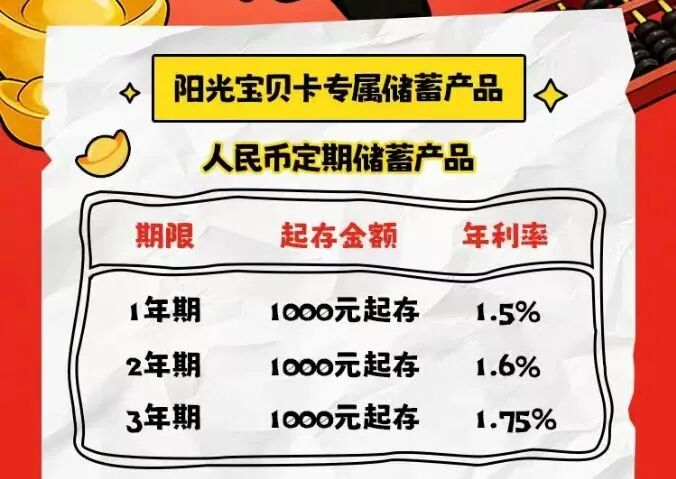
Core Insights - The article discusses the emerging trend of banks offering higher interest rates on children's savings accounts compared to traditional adult deposit products, indicating a strategic shift in the banking sector towards targeting the youth market [1][2][3]. Group 1: Interest Rate Dynamics - Beijing Rural Commercial Bank's "Sunshine Baby Card" offers a three-year interest rate of 1.75%, surpassing both the bank's standard fixed deposit rates and high-value time deposit rates [1][2]. - This "interest rate inversion" phenomenon, where children's small deposits yield higher rates than adult large deposits, is becoming a common strategy among banks to attract young customers [2][3]. Group 2: Strategic Implications - Industry experts suggest that this trend represents a long-term investment in customer lifetime value, as banks aim to establish emotional connections with young clients who will have a financial lifecycle of 50 to 60 years [3][7]. - The strategy allows banks to optimize their liability structure and manage liquidity more effectively, as children's savings typically have long retention periods and lower transaction frequencies [3][7]. Group 3: Product Offerings and Market Segmentation - Different types of banks are creating tailored product matrices to capture the significant market of "lucky money" from the Chinese New Year, focusing on specialized accounts, unique deposits, and parent-child co-management [4][5][6]. - State-owned banks leverage their comprehensive financial services to create one-stop solutions for financial management and education, while joint-stock banks emphasize differentiated account features and service experiences [4][5]. Group 4: Long-term Relationship Building - The shift towards children's financial products is seen as a transition from merely attracting deposits to building long-term relationships with families, allowing banks to access a broader range of financial needs within households [7][8]. - Successful examples include banks like China Merchants Bank and Beijing Bank, which have reported significant growth in their child account customer bases, indicating the effectiveness of this strategy in establishing family financial connections [8]. Group 5: Future Directions - Analysts recommend that banks expand their children's financial services within compliance frameworks, enhancing product offerings and integrating financial literacy education to create a comprehensive service ecosystem [9]. - The focus should be on transforming "lucky money" into a child's first financial asset, emphasizing the importance of financial education and responsible management of funds [9].





银行存款利率延续下行趋势:一年期 1.1% ,活期利率 0.05%
Shen Zhen Shang Bao· 2026-02-26 11:41
Group 1 - The A-share banking sector did not experience a "good start" at the beginning of the year, with overall fluctuations and significant differentiation in individual stock performance, indicating market expectations for the long-term growth of bank stocks but short-term profit-taking by investors [1] - The deposit interest rates continued to decline, while the yields on wealth management products showed a steady decrease, reflecting a structural characteristic of "differentiated deposit rates, recovering demand for wealth management, and highlights in children's exclusive products" [1] - Major state-owned banks maintained their three-year fixed deposit rates at around 1.55%, with one-year rates at 1.1% and savings rates at 0.05%, while some joint-stock banks and local banks offered higher rates for children's exclusive deposits [1] Group 2 - Several banks launched "children's exclusive deposits" with three-year rates generally reaching between 1.55% and 1.88%, with some products exceeding the rates of large-denomination certificates of deposit [2] - Banks are willing to offer higher interest rates for small amounts of "lucky money" compared to large-denomination deposits, which is based on precise calculations of customer lifetime value and funding costs, rather than a "rate inversion" [2] - Children's deposits are characterized by "long-term" and "low liquidity," allowing banks to use them as a low-cost, stable source of medium to long-term liabilities, which is more controllable compared to high-interest deposits or interbank liabilities [2] Group 3 - This strategy is a key measure for banks to optimize their liability structure, seek incremental customers, and enhance customer loyalty amid a continuously narrowing net interest margin [3] - Children's financial products create a topic effect through a combination of "low thresholds + high interest rates + exclusive rights," enhancing brand recognition among young families [3] - Some banks view children's accounts as an entry point for "lifecycle customer management," facilitating a long-term transition from "savings" to "comprehensive financial services" [3]
银行竞相布局儿童金融“新蓝海”
Jin Rong Shi Bao· 2026-02-26 02:44
Core Viewpoint - The article highlights the increasing importance of children's financial education, with banks actively targeting the management of "lucky money" (red envelope money) during the Chinese New Year, transforming it into a tool for wealth growth rather than mere spending [1][3]. Group 1: Bank Strategies - Banks are launching a variety of child-specific financial products, including dedicated bank cards, special savings accounts, and parent-child accounts, to attract young customers and their parents [3][4]. - Notable offerings include Guangfa Bank's "Freedom Card" and Henan Rural Commercial Bank's "Lucky Money Appreciation Plan," which incentivize saving through unique promotions and features [3][4]. - Major state-owned banks like ICBC and China Merchants Bank are also introducing specialized accounts that allow parents to manage their children's finances while providing investment planning tools [4][5]. Group 2: Interest Rate Competitiveness - Many banks are offering higher interest rates on children's savings accounts compared to standard rates, with examples such as a 1.75% rate for a three-year deposit at Huaxia Bank [6][7]. - Beijing Bank's "Little Jing Lucky Money Treasure" offers competitive rates of 1.60% and 1.75% for two and three-year deposits, respectively, showcasing the trend of banks enhancing their offerings to attract families [6][7]. Group 3: Long-term Market Potential - The children's financial market is seen as a new growth area for retail banking, with banks positioning themselves as educators in financial literacy for children [8][9]. - Historical initiatives, such as ICBC's early issuance of children's bank cards, demonstrate a long-term commitment to developing a comprehensive financial service system for young clients [8]. - Industry experts suggest that focusing on children's financial needs can also enhance overall family banking relationships, as children's accounts often correlate with broader family financial services [9].

理财从娃娃抓起:一笔9000元的“人生第一桶金”
Di Yi Cai Jing Zi Xun· 2026-02-25 15:40
Core Viewpoint - The discussion around "lucky money" during the Spring Festival highlights its evolving role from a traditional gift to a financial education tool for children, prompting banks to innovate retail financial products targeting this demographic [2][11]. Group 1: Children's Financial Products - Various banks, including state-owned and joint-stock banks, have launched children's savings accounts, family financial management plans, and customized savings certificates for "lucky money," with some products offering interest rates higher than adult deposits for the same term [2][6]. - The introduction of children's financial products is seen as a strategic move by banks to capture a new customer segment, with offerings like the "Parent-Child Exclusive Account" from ICBC and "Sunshine Growth Plan" from Huaxia Bank [6][7]. Group 2: Changing Attitudes Towards Financial Education - Families are increasingly viewing "lucky money" as a tool for financial literacy, with parents encouraging children to manage their own funds and understand financial planning from a young age [4][11]. - The trend reflects a shift in financial education from merely earning money to understanding risk and planning, as families become more aware of asset allocation and risk management [11]. Group 3: Retail Banking Transformation - Banks are focusing on retail business expansion as a response to narrowing net interest margins, with children's financial products serving as a means to secure future customer relationships [8][9]. - The retail asset management scale (AUM) is a critical growth indicator for banks, with major banks reporting significant AUM figures, indicating the importance of retail banking in overall profitability [8]. Group 4: Market Dynamics and Competitive Strategies - The competitive landscape for children's financial products is intensifying, with banks offering attractive interest rates and low entry thresholds to differentiate themselves in a crowded market [9]. - The long-term strategic value of children's accounts is recognized, as they can lead to increased customer loyalty and cross-selling opportunities in other financial services [9].

理财从娃娃抓起 银行抢滩低龄客群
Di Yi Cai Jing· 2026-02-25 12:47
Core Insights - The discussion around "lucky money" (压岁钱) has intensified post-Spring Festival, highlighting its significance as a substantial income for children and a practical lesson in financial education for parents [1] - Banks are increasingly viewing this seemingly small amount of money as a new piece in their retail transformation puzzle, launching various child-specific savings accounts and financial products [1] Group 1: Children's Financial Products - Many banks, from state-owned to commercial banks, have launched child-specific savings accounts and financial management plans, with some products offering interest rates higher than those for adult deposits [1][4] - The introduction of products like "parent-child exclusive accounts" and customized savings certificates reflects banks' strategies to capture the growing market of children's financial management [4][5] Group 2: Changing Family Financial Education - The trend of children managing their "lucky money" is shifting from a mere cultural practice to a tool for financial literacy, with parents increasingly encouraging their children to plan and manage their finances [2][8] - Families are becoming more aware of asset allocation, leading to an earlier emphasis on financial education and risk awareness among children [2][8] Group 3: Retail Banking Transformation - In the context of narrowing net interest margins, banks are focusing on retail business as a key revenue source, with children's financial products seen as a way to secure future customer relationships [6][7] - The retail asset management scale (AUM) is a crucial growth indicator for banks, with major banks reporting significant retail AUM figures, indicating a shift towards retail banking as a profit contributor [6] Group 4: Market Dynamics and Consumer Behavior - The cautious risk appetite among residents has led to a renewed interest in deposits and low-risk financial products, with children's products being offered at competitive rates to attract customers [7] - The long-term strategic value of children's accounts is recognized, despite their smaller individual amounts, due to the potential for scale effects and family asset binding [7] Group 5: Educational Focus in Financial Products - The rise of children's financial products is not solely a banking strategy but also reflects a broader parental focus on cultivating children's risk awareness and planning abilities [8] - Financial literacy for children should prioritize savings and planning over high-risk investments, emphasizing the relationship between saving, spending, and financial planning [8]
理财从娃娃抓起,银行抢滩低龄客群
Di Yi Cai Jing· 2026-02-25 12:37
Core Viewpoint - The article discusses the emerging trend of banks targeting children's financial products, particularly in the context of managing "lucky money" received during the Chinese New Year, as a strategy to enhance retail banking and customer engagement [2][5][7]. Group 1: Market Trends - Many banks, from state-owned to commercial banks, are launching children's savings accounts and financial management plans to capture the growing market of "lucky money" [2][5]. - The amount of "lucky money" received by children has increased significantly, with reports of children in major cities receiving thousands to tens of thousands of yuan, indicating a shift in how families view this money as a financial education tool [4][6]. Group 2: Product Offerings - Banks are introducing various products aimed at children, including dedicated savings accounts, customized fixed deposits, and family asset management plans [6][7]. - Notable offerings include the Industrial and Commercial Bank's "Parent-Child Exclusive Account" and Guangxi Beibu Gulf Bank's "Dream Savings No. 1," which features competitive interest rates [5][6]. Group 3: Strategic Importance - The push into children's financial products is seen as a way for banks to secure future customer relationships, as these accounts, while small in individual size, can lead to long-term customer loyalty and additional financial services [7][8]. - Retail banking is becoming increasingly important for banks as traditional interest income faces pressure, making the expansion into children's financial products a strategic necessity [7][8]. Group 4: Educational Focus - The core value of children's financial products is seen as fostering financial literacy and risk awareness among children, rather than merely focusing on returns [9]. - Parents are increasingly emphasizing the importance of teaching children about money management, shifting from a focus on earning to understanding risk and planning [9].
马年春节刚过完,聪明的家长悄悄将闲钱转入儿童银行账户
Jing Ji Guan Cha Wang· 2026-02-24 09:00
Core Insights - The article discusses the increasing trend of banks offering specialized savings products for children, particularly during the Chinese New Year, to attract young customers and their families [2][3][5]. Group 1: Children's Savings Products - Banks are launching exclusive savings products for children with higher interest rates compared to standard savings accounts. For instance, Beijing Bank's "Xiao Jing Card" offers a 3-year fixed deposit rate of 1.75%, while the standard rate is only 1.30% [2][3]. - Other banks, such as Beijing Rural Commercial Bank and Guangxi Beibu Gulf Bank, have also introduced similar products with competitive rates, indicating a market trend towards catering to children's savings [3]. Group 2: Financial Education and Services - Many banks are combining savings products with financial education initiatives, such as Minsheng Bank's "Financial Literacy Training Camp" and Ping An Bank's "Orange Baby Club," which provide age-appropriate financial courses [5]. - Banks are also creating parent-child zones that offer a range of services, including insurance, funds, and educational payments, enhancing the overall customer experience [4]. Group 3: Strategic Marketing and Customer Retention - Financial institutions view children's savings accounts as a long-term investment in customer relationships, aiming to establish emotional connections with young clients that can lead to higher conversion rates for future financial products [5]. - The strategy includes leveraging festive occasions like the Chinese New Year for proactive marketing, which helps banks secure stable deposits and enhance customer loyalty among affluent families [5].

专属存款利率“反超” 银行抢滩压岁钱生意
Bei Jing Shang Bao· 2026-02-23 16:26
Core Viewpoint - The increasing focus of banks on children's financial products, particularly for managing "lucky money" during the Spring Festival, reflects a strategic move to secure long-term low-cost funding and engage younger customers, ultimately enhancing banks' long-term profitability and customer loyalty [1][4]. Group 1: Bank Initiatives - Multiple banks, including major state-owned and joint-stock banks, have launched dedicated savings and investment products for minors, addressing the financial management needs of parents and children during the Spring Festival [2][3]. - Industrial and Commercial Bank of China (ICBC) introduced a "parent-child exclusive account" that allows children to plan their investments while parents can monitor account activities, promoting financial literacy from a young age [2]. - Other banks, such as Huaxia Bank and China Merchants Bank, have developed differentiated products like the "Sunshine Growth Plan" and "Golden Little Sun" to cater to children's savings and investment needs [3]. Group 2: Product Features and Benefits - Children's savings products often feature lower entry thresholds and higher interest rates compared to adult products, with some banks offering rates as high as 1.9% for deposits starting at 50 yuan [5][6]. - The "Sunshine Baby Card" from Beijing Rural Commercial Bank offers competitive rates for minors, outperforming adult savings accounts, highlighting the banks' strategy to attract long-term customers [5][6]. - The pricing strategy for children's accounts is seen as a customer acquisition subsidy, providing banks with a long-term customer base that can yield high returns over 50-60 years [6]. Group 3: Market Trends and Analysis - Analysts suggest that banks are shifting from traditional corporate and retail banking to a more segmented approach that includes all age groups, focusing on children's financial products as a means to secure stable funding and enhance customer engagement [4]. - The children's financial market is viewed as a strategic opportunity for banks to build relationships with entire families, potentially leading to increased demand for related financial services such as insurance and education funds [4][6]. - The operational costs associated with managing children's accounts are lower due to reduced transaction frequency and lower fraud risk, making them an attractive segment for banks [6].
孩子压岁钱存款利率竟比成人“香”?多家银行扎堆争抢“小客户”
Bei Jing Shang Bao· 2026-02-23 10:53
Core Viewpoint - The article discusses the increasing trend of banks launching specialized savings and investment products for minors, particularly targeting the management of "lucky money" received during the Spring Festival, which reflects a growing focus on financial education and long-term customer engagement in the banking sector [1][5]. Group 1: Bank Initiatives - Multiple banks, including major state-owned and joint-stock banks, have introduced dedicated savings and investment products for minors to meet the financial management needs of parents and children during the Spring Festival [3][4]. - For instance, Industrial and Commercial Bank of China has launched a "parent-child exclusive account" that allows children to plan their investments while parents can monitor the account [3][4]. - Other banks like Huaxia Bank and China Merchants Bank have also rolled out unique products, such as the "Sunshine Growth Plan" and "Golden Little Aui Manager," which offer various savings and investment options tailored for minors [4][5]. Group 2: Product Features and Benefits - The current offerings focus on three main types: exclusive savings or card accounts for minors, specialized fixed deposits or unique savings products, and parent-child co-management financial solutions [4][5]. - Some children's savings products have interest rates that surpass those of adult products, with examples like Guangxi Beibu Gulf Bank offering a maximum annual interest rate of 1.9% for a minimum deposit of 50 yuan [6][7]. - The interest rates for children's products are often more attractive than those for adults, which can help banks attract long-term customers and their families [7][8]. Group 3: Strategic Rationale - The push into children's financial products is driven by banks facing pressure on net interest margins and the need to explore new profit avenues [5][8]. - Children's financial products allow banks to secure low-cost, long-term funding while also binding the entire family as customers, which can lead to increased business in areas like wealth management, insurance, and education funds [5][8]. - The emotional connection formed with a child's first bank can foster long-term brand loyalty, making it a strategic move for banks to invest in this demographic [8][9].

从“一米高度”丈量金融服务 商业银行如何做好儿童成长的引路人
Jin Rong Shi Bao· 2025-05-30 02:32
Core Insights - The article highlights the growing trend of children's financial education and the role of banks in providing tailored financial services for children, emphasizing the importance of instilling financial literacy from a young age [1][2][6]. Group 1: Children's Financial Services - Banks are increasingly offering specialized financial products for children, such as dedicated savings accounts and financial management tools, to help them manage their money effectively [4][5]. - Beijing Bank launched the "京萤计划" (Jingying Plan) to provide a range of children's financial services, evolving from version 1.0 to 3.0, which includes features for family interaction and digital management [2][3]. - Other banks, like China Merchants Bank and Minsheng Bank, have introduced innovative services like "金小葵管家" (Golden Little Sunflower Butler) and "财富小管家" (Wealth Little Butler) to cater to the financial needs of children and their parents [2][3]. Group 2: Financial Literacy and Education - The concept of financial literacy for children is gaining traction among parents, who are increasingly focused on teaching their children about money management [1][6]. - Banks are creating child-friendly environments in their branches, including dedicated areas for financial education and activities, to engage children in learning about finance [3][5]. - The collaboration between banks and educational institutions has led to numerous events aimed at promoting financial literacy among children, with over 30,000 activities held [3]. Group 3: Market Trends and Future Directions - The children's financial market is seen as a significant growth area for banks, with the potential to enhance overall family banking services [6][7]. - As competition increases, banks are encouraged to develop differentiated financial products tailored to various age groups, ensuring that services meet the specific needs of children at different developmental stages [7]. - The future of children's financial services may involve more personalized offerings and engaging educational initiatives to foster financial literacy [6][7].