钻石珠宝

Search documents
迪阿股份跌1.28% 2021年上市即巅峰超募31.6亿元
Zhong Guo Jing Ji Wang· 2026-02-25 08:39
Core Viewpoint - The stock price of Diya Co., Ltd. (301177.SZ) has declined, closing at 32.52 yuan with a drop of 1.28% as of February 25 [1] Group 1: Company Overview - Diya Co., Ltd. was listed on the Shenzhen Stock Exchange's ChiNext board on December 15, 2021, issuing 40.01 million new shares at a price of 116.88 yuan per share [1] - On its first trading day, the stock reached a peak price of 180 yuan but has since experienced a downward trend, currently trading below its initial offering price [1] Group 2: Financial Highlights - The total amount raised from the initial public offering (IPO) was 4.676 billion yuan, with a net amount of 4.444 billion yuan after deducting issuance costs, exceeding the originally planned net fundraising amount by 3.16 billion yuan [1] - The initial prospectus indicated that Diya Co., Ltd. intended to raise 1.284 billion yuan for various projects, including channel network construction, information system development, diamond jewelry R&D, and working capital supplementation [1] - The total issuance costs for the IPO amounted to 233 million yuan, with underwriting and sponsorship fees accounting for 217 million yuan [1]
西格内特珠宝股价大跌,业绩疲软与行业调整成主因
Jing Ji Guan Cha Wang· 2026-02-13 22:45
Core Viewpoint - Signet Jewelers' stock price fell by 5.58% to $91.58, despite a 1.04% increase in the luxury goods sector, primarily due to weak performance and significant adjustments in the diamond industry, including revenue decline and a sharp drop in net profit [1] Stock Recent Trends - Over the past week (February 7 to 13, 2026), Signet Jewelers' stock exhibited significant volatility, with a high of $97.73 on February 10 and a low of $87.90 on February 13, resulting in a fluctuation of 10.13%. As of February 13, the stock closed at $89.85, reflecting a cumulative decline of 7.38% over five days. Trading volume peaked at $83.52 million on February 10, with a turnover rate of 2.21%, indicating increased market divergence; however, trading volume decreased to $2.36 million by February 13, suggesting a stabilization in market sentiment [2] Financial Report Analysis - The company's Q4 2025 financial report (ending February 1, 2025) indicated a year-over-year revenue decline of 5.81% and a substantial net profit drop of 83.93%. Although the gross margin remained at 42.59%, the net profit margin was only 4.28%, highlighting challenges in cost control and profit conversion efficiency. The latest Q4 2026 report (ending November 1, 2025) showed a year-over-year revenue increase of 3.14% and a net profit increase of 185.71%, indicating some improvement in performance, but the market remains concerned about sustainability [3] Institutional Perspectives - Institutional sentiment towards Signet Jewelers is cautious, with 50% of the 12 institutions covering the stock in February 2026 rating it as "buy" or "hold," while the other 50% recommend "hold." The average target price is $113.38, suggesting a potential upside of approximately 22.3% from the current stock price, although weak industry demand and risks from price wars are dampening optimistic sentiments [4]
西格内特珠宝股价逆势大跌,业绩疲软与行业调整双重承压
Jing Ji Guan Cha Wang· 2026-02-11 22:51
Core Viewpoint - Signet Jewelers (SIG.N) has experienced significant stock price volatility due to weak performance and a deep adjustment in the diamond industry, with a notable drop of 5.58% on February 10, closing at $91.58, while the luxury goods sector rose by 1.04% during the same period [1]. Stock Performance - The stock price showed notable fluctuations over the past week, rising by 5.01% to $97.00 on February 6, followed by a sharp decline of 5.58% to a low of $90.73 on February 10. The latest closing price on February 11 rebounded to $92.69, with a daily increase of 1.21%, resulting in a total price range fluctuation of 7.46%. Trading volume peaked at $108 million on February 6, decreased to $83.52 million on February 10, and further reduced to $4.499 million on February 11, indicating increasing market divergence and stabilizing sentiment [2]. Financial Report Analysis - The company's fiscal Q3 report for FY2025 (ending February 1, 2025) revealed a revenue decline of 5.81% year-over-year, with net profit attributable to shareholders plummeting by 83.93%. Despite maintaining a gross margin of 42.59%, the net profit margin was only 4.28%, highlighting challenges in cost control and profit conversion efficiency. The earnings per share (EPS) for the interim report was -3.17, reflecting a year-over-year decline of 192.42%, intensifying market concerns regarding the sustainability of performance [3]. Institutional Perspectives - Analysts maintain a cautious stance on Signet Jewelers, with 50% of the 12 institutions covering the stock as of February 2026 recommending "buy" or "hold" ratings, and no sell recommendations. The average target price is set at $113.38, indicating a potential upside of approximately 22.3% from the current stock price. However, weak industry demand and risks associated with price wars are dampening optimistic sentiments [4].
迪阿股份跌1.52% 2021年上市即巅峰超募32亿元
Zhong Guo Jing Ji Wang· 2026-02-10 09:16
Core Viewpoint - The stock price of Dia Shares (301177.SZ) has declined, closing at 33.09 yuan with a drop of 1.52% as of February 10 [1] Group 1: Company Overview - Dia Shares was listed on the Shenzhen Stock Exchange's ChiNext board on December 15, 2021, issuing 40.01 million new shares at a price of 116.88 yuan per share [1] - On its first trading day, Dia Shares reached a peak price of 180 yuan, but has since experienced a downward trend, currently in a state of loss [1] Group 2: Financial Details - The total amount raised from the initial public offering (IPO) was 4.676 billion yuan, with a net amount of 4.444 billion yuan after deducting issuance costs, exceeding the originally planned net fundraising amount by 3.16 billion yuan [1] - The initial prospectus indicated that Dia Shares originally intended to raise 1.284 billion yuan for projects including channel network construction, information system development, diamond jewelry R&D, and working capital supplementation [1] - The total issuance costs for the IPO amounted to 233 million yuan, with underwriting and sponsorship fees accounting for 217 million yuan [1]
迪阿股份跌12.29% 2021年上市即巅峰超募32亿元
Zhong Guo Jing Ji Wang· 2026-01-30 09:19
Core Viewpoint - The stock price of Dia Shares (301177.SZ) has dropped significantly, closing at 34.90 yuan, reflecting a decline of 12.29% and currently in a state of underperformance [1] Group 1: Company Overview - Dia Shares was listed on the Shenzhen Stock Exchange's ChiNext board on December 15, 2021, with an initial public offering (IPO) of 40.01 million shares at a price of 116.88 yuan per share [1] - The company achieved a total fundraising amount of 4.676 billion yuan from its IPO, with a net amount of 4.444 billion yuan after deducting issuance costs, which was 3.16 billion yuan more than the originally planned net fundraising of 1.284 billion yuan [1] Group 2: Financial Details - The IPO proceeds were intended for several projects, including channel network construction, information system development, a diamond jewelry R&D creative design center, and working capital supplementation [1] - The total issuance costs for the IPO amounted to 233 million yuan, with underwriting and sponsorship fees accounting for 217 million yuan [1] Group 3: Stock Performance - On the first day of trading, Dia Shares reached a peak price of 180 yuan, but has since experienced a downward trend in its stock price [1]
迪阿股份跌2% 2021年上市即巅峰超募32亿元
Zhong Guo Jing Ji Wang· 2026-01-27 08:37
Group 1 - The stock price of Diya Co., Ltd. (301177.SZ) has declined, closing at 32.30 yuan with a drop of 2.00%, currently in a state of underperformance [1] - Diya Co., Ltd. was listed on the Shenzhen Stock Exchange's ChiNext board on December 15, 2021, issuing 40.01 million new shares at a price of 116.88 yuan per share [1] - On its first trading day, Diya Co., Ltd. reached a peak stock price of 180 yuan, followed by a period of fluctuating declines [1] Group 2 - The total amount raised from the initial public offering (IPO) was 4.676 billion yuan, with a net amount of 4.444 billion yuan after deducting issuance costs, exceeding the originally planned net fundraising amount by 3.16 billion yuan [1] - The company initially planned to raise 1.284 billion yuan, which was intended for projects including channel network construction, information system development, diamond jewelry R&D creative design center, and working capital supplementation [1] - The total issuance costs for the IPO amounted to 233 million yuan, with underwriting and sponsorship fees accounting for 217 million yuan [1]
Missed payments send major retailer into Chapter 11 bankruptcy
Yahoo Finance· 2026-01-15 08:10
Industry Overview - The luxury retail industry has experienced a significant downturn since early 2025, leading to store closures and bankruptcy filings among major retailers [1][3] - Global luxury spending is under pressure due to economic upheavals, geopolitical tensions, currency fluctuations, and financial market volatility, as reported by Bain & Company [3] Company-Specific Developments - Lugano Diamonds and Jewelry filed for Chapter 11 bankruptcy in November 2025, seeking a sale to Enhanced Retail Funding [2] - Palm Beach Sandal Company, a footwear manufacturer, also filed for Chapter 11 protection in December 2025 to reorganize [2] - Saks Global Enterprises, the parent company of Saks Fifth Avenue, filed for Chapter 11 bankruptcy on January 13 and 14, 2026, citing severe liquidity constraints [6][7] Financial Challenges - Saks Global Enterprises reported assets and liabilities between $1 billion and $10 billion [7] - The company faced liquidity challenges following its $2.7 billion acquisition of Neiman Marcus in 2024, which made its capital structure unsustainable [8] - Saks listed $3.4 billion in funded debt obligations, complicating its ability to pay vendors on time [8] Consumer Sentiment - There is a growing disillusionment with luxury brands among younger generations, particularly Generation Z, contributing to weakening consumer sentiment [4]
浙江明牌珠宝修订公司章程 注册资本5.28亿元 明确多元治理架构
Xin Lang Cai Jing· 2025-10-29 11:50
Core Viewpoint - The company has revised its Articles of Association to enhance corporate governance, equity management, and profit distribution, laying a solid foundation for sustainable development in the jewelry industry [1] Company Overview - The company, originally known as Shaoxing Riyuexing Jewelry Co., Ltd., transformed into a foreign-invested joint-stock company in 2009 and was listed on the Shenzhen Stock Exchange in April 2011 under the stock code 002574. It is located in Shaoxing, Zhejiang Province, with a registered capital of RMB 528 million, and its business scope includes the production and sale of gold, platinum, and diamond jewelry, as well as diversified services like gold investment consulting and leasing [2] Shareholding Structure and Share Management - The company has a share capital structure with a par value of RMB 1 per share, all shares are centrally custodied by China Securities Depository and Clearing Corporation Limited, Shenzhen Branch. The founding shareholders include nine entities, with Zhejiang Riyue Jewelry Group Co., Ltd. holding 71.39 million shares (39.66%) and Yongsheng International Investment Group Limited (Hong Kong) holding 70.03 million shares (38.90%). There are strict restrictions on share transfers, limiting directors and senior management to a maximum of 25% of their holdings annually during their tenure, and no transfers within six months after leaving [3] Corporate Governance Structure - The shareholders' meeting is the highest authority of the company, held annually with provisions for extraordinary meetings. Voting combines in-person and online methods, ensuring the rights of minority shareholders through cumulative voting for directors [4] Board of Directors Structure - The board consists of seven directors, including three independent directors (42.86%) and one employee director. It has specialized committees such as the audit committee, which is composed of three non-executive directors, with a majority being independent directors led by an accounting professional [5] Independent Director System - The Articles of Association stipulate an independent director system, requiring independent directors to maintain their independence and not hold more than 5% of the company's shares. They have special rights to independently hire intermediaries and propose shareholder meetings, with significant transactions requiring prior approval from independent directors [6] Financial and Profit Distribution Policy - The company adopts a stable profit distribution policy, prioritizing cash dividends. It commits to distributing no less than 10% of the annual distributable profit in cash and ensuring that cumulative cash dividends over three years are at least 30% of the average distributable profit. If no cash dividend proposal is made despite profits, the board must explain the reasons and intended use of funds [7] Risk Control and Compliance Management - The Articles of Association set strict approval procedures for external guarantees, requiring board approval for guarantees exceeding 10% of the latest audited net assets or for entities with a debt ratio over 70%. The company cannot provide guarantees for shareholders or related parties without majority approval from other shareholders. Transactions with related parties exceeding certain thresholds must be reviewed by the board or submitted for shareholder approval [8]

依赖美国成致命伤!50%关税落地 印度制造业遭遇断崖式打击
Sou Hu Cai Jing· 2025-08-27 22:42
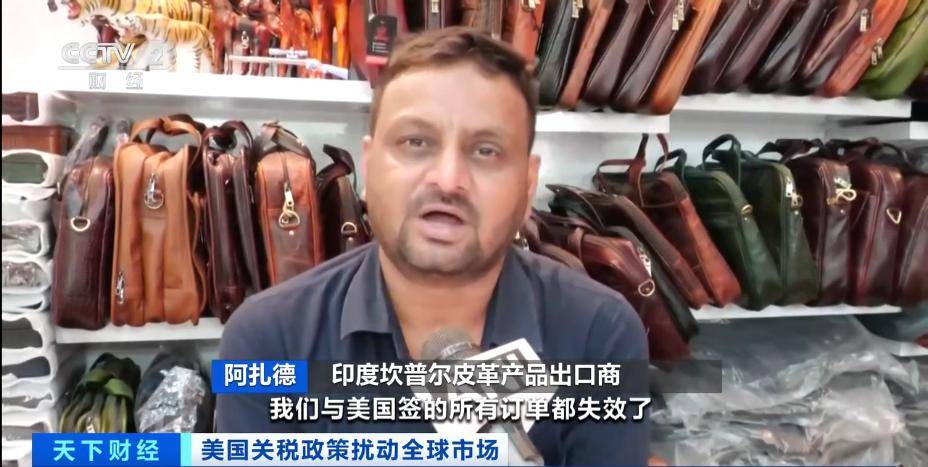
Core Viewpoint - The imposition of a 50% tariff by the U.S. has severely impacted Indian exporters, particularly in the leather and diamond industries, leading to halted orders and potential job losses [1][3][10] Group 1: Leather Industry - The leather industry in Kanpur, known for its numerous small workshops and factories, is heavily reliant on the U.S. market, which has now paused cooperation due to the new tariffs [3] - Exporters like Azad report that all orders have been canceled, leading to factory shutdowns and idle workers, highlighting the risks of dependence on a single market [3][10] - The Indian Export Organization estimates that 55% of goods exported to the U.S. will be affected, particularly in labor-intensive sectors [10] Group 2: Diamond Industry - The diamond industry, particularly in Surat, Gujarat, is facing significant challenges as the U.S. is its largest buyer, purchasing approximately $9 billion worth of jewelry annually [5] - With the new tariffs, the competitiveness of Indian diamonds has diminished, resulting in a withdrawal of orders [6] - Some factories are hesitant to purchase new raw stones and are reducing working hours, while others are resorting to selling inventory at lower prices to generate cash [8] Group 3: Market Response and Future Outlook - Major manufacturers are beginning to relocate production lines to countries like Vietnam and Bangladesh, which have lower tax rates, indicating a potential long-term shift in the supply chain [8] - The Indian government is urged to provide subsidies, tax refunds, or loan support to mitigate the immediate impact, but long-term strategies must focus on diversifying markets beyond the U.S. [10] - The situation serves as a stark reminder of the vulnerabilities in globalization, where reliance on a single market can lead to significant risks when trade policies change [10]

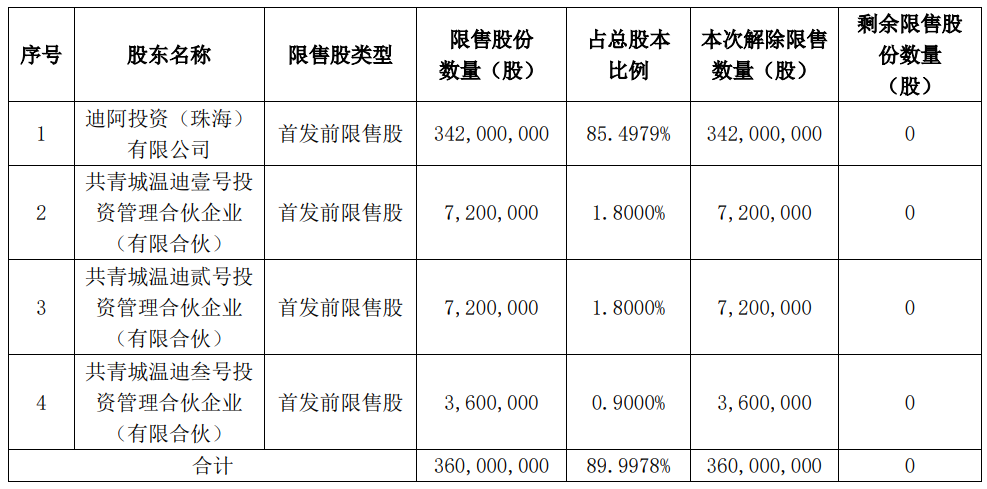
破发股迪阿股份3.6亿股解禁 2021上市即巅峰超募32亿
Zhong Guo Jing Ji Wang· 2025-06-17 03:32
Core Points - Diya Co., Ltd. (301177.SZ) announced the lifting of restrictions on 360,000,000 shares, accounting for 89.9978% of the total share capital, which will be tradable starting June 17, 2025 [1][2] - The restricted shares involve four shareholders, with a lock-up period of 42 months from the date of the company's initial public offering [1][2] - The shareholders releasing their shares do not include any current or former directors, supervisors, or senior management of the company [2] Shareholder Details - Diya Investment (Zhuhai) holds 342,000,000 shares, representing 85.4979% of the total share capital, all of which will be released [2] - Other shareholders include: - Qiongqing City Wendy No. 1 Investment Management Partnership with 7,200,000 shares (1.8000%) - Qiongqing City Wendy No. 2 Investment Management Partnership with 7,200,000 shares (1.8000%) - Qiongqing City Wendy No. 3 Investment Management Partnership with 3,600,000 shares (0.9000%) [2] Financial Overview - Diya Co., Ltd. was listed on the Shenzhen Stock Exchange's Growth Enterprise Market on December 15, 2021, issuing 40.01 million shares at a price of 116.88 yuan per share [3] - The company raised a total of 4.676 billion yuan, with a net amount of 4.444 billion yuan after deducting issuance costs, exceeding the originally planned net fundraising amount by 3.16 billion yuan [3] - The initial fundraising plan aimed for 1.284 billion yuan, intended for projects including channel network construction, information system development, and a diamond jewelry R&D center [3][4]