钻石首饰

Search documents
景福集团附属与万雅珠宝订立钻石首饰购买协议 全年上限为2000万港元
Zhi Tong Cai Jing· 2025-12-15 10:41
Core Viewpoint - The company, 景福集团, has entered into an agreement with its wholly-owned subsidiary, 景福珠宝集团有限公司, to purchase diamond jewelry from 万雅珠宝有限公司, with a total annual cap of 20 million HKD from December 15, 2025, to September 14, 2026 [1] Group 1 - The agreement is structured on a cost-plus basis, allowing the company to expand its diamond jewelry product range to meet market demand [1] - The seller, 万雅珠宝有限公司, is fully owned by Mr. 冼 and his mother, with Mr. 冼 serving as a non-executive director of the company [1] - The company has already initiated purchases from the seller, starting with a transaction worth 433,700 HKD on September 15, 2025, followed by another purchase totaling 934,000 HKD [1]
景福集团(00280)附属与万雅珠宝订立钻石首饰购买协议 全年上限为2000万港元
智通财经网· 2025-12-15 10:40
Core Viewpoint - The company, Jingfu Group, has entered into an agreement to purchase diamond jewelry from Wan Ya Jewelry Limited, with a total cap of HKD 20 million for the period from December 15, 2025, to September 14, 2026, to meet market demand and expand its product range [1] Group 1 - Jingfu Group's subsidiary, Jingfu Jewelry Group Limited, will purchase diamond jewelry from Wan Ya Jewelry Limited under a cost-plus profit margin agreement [1] - The total purchase amount for the first transaction was HKD 433,700, followed by a subsequent purchase totaling HKD 934,000 [1] - The decision to expand the diamond jewelry product range was made after evaluating various suppliers, with Wan Ya Jewelry being selected for its quality and design [1]
景福集团(00280.HK)签订2000万港元钻石首饰采购协议
Ge Long Hui· 2025-12-15 10:32
Group 1 - The core point of the article is that Jingfu Group (00280.HK) has entered into an agreement with Wan Ya Jewelry Co., Ltd. for the purchase of diamond jewelry, with a profit margin based on cost plus, for a total cap of HKD 20 million for the year [1] Group 2 - The buyer, Jingfu Jewelry Group Co., Ltd., will purchase diamond jewelry from the seller, Wan Ya Jewelry Co., Ltd., from December 15, 2025, to September 14, 2026 [1] - The seller, Wan Ya Jewelry Co., Ltd., is fully owned by Xian Ya En and her mother, with Xian Ya En serving as a non-executive director of the company [1]
2025年中国黄金珠宝行业市场研究报告
硕远咨询· 2025-12-09 14:15
Investment Rating - The report does not explicitly state an investment rating for the gold and jewelry industry. Core Insights - The gold and jewelry industry is defined as a comprehensive sector that includes the extraction, refining, and manufacturing of precious metals and gemstones, culminating in products with aesthetic, investment, and cultural value [4][5]. - The industry has a well-established supply chain and is increasingly moving towards high-end branding and innovation, driven by consumer demand for personalized and high-quality products [5][6]. - The market size of the gold and jewelry industry in China has reached several hundred billion RMB, with a stable growth trend, particularly in first-tier cities and emerging second-tier cities [15][16]. Summary by Sections 1. Industry Overview - The gold and jewelry industry encompasses various products, including gold jewelry, diamond jewelry, jade, and other precious stones, each with unique materials and market positioning [6][7]. - The industry chain is complex, involving raw material extraction, processing, design, manufacturing, and retail, with a focus on collaboration and information sharing across all stages [9]. 2. Industry Development History - The development of the gold and jewelry industry in China can be divided into three main stages: the nascent period, rapid development period, and transformation and upgrading period, reflecting changes in economic structure and consumer behavior [12]. 3. Current Industry Analysis - The market scale of the gold and jewelry industry is substantial, with annual output value in the thousands of billions RMB, driven by rising consumer income and demand for wealth preservation [15][16]. - Gold jewelry remains the dominant product category, while demand for high-end jewelry products like diamonds and jade is increasing, particularly among younger consumers [17][19]. 4. Consumer Behavior Analysis - The primary consumer demographic for gold jewelry is aged 25 to 45, with a significant proportion being female, who value aesthetics and emotional significance [20][22]. - Higher-income consumers tend to purchase luxury and customized products, while middle-income consumers focus on practicality and value [26][27]. 5. Competitive Landscape Analysis - Leading companies in the gold and jewelry industry, such as China Gold Group and Chow Tai Fook, maintain significant market positions through strong brand influence and efficient supply chains [41][42]. - New emerging brands are gaining traction by focusing on unique designs and leveraging digital marketing strategies, including social commerce and live streaming [43][45]. 6. Market Channels and Marketing Strategies - Traditional retail channels remain crucial, but the rise of e-commerce has transformed sales dynamics, with online platforms becoming significant sales drivers [54][56]. - Brands are increasingly adopting cross-industry collaborations and IP marketing strategies to enhance brand visibility and consumer engagement [66].
中方被迫出局?英巨头倒贴146亿库存送印度,结局大快人心
Xin Lang Cai Jing· 2025-12-09 13:26
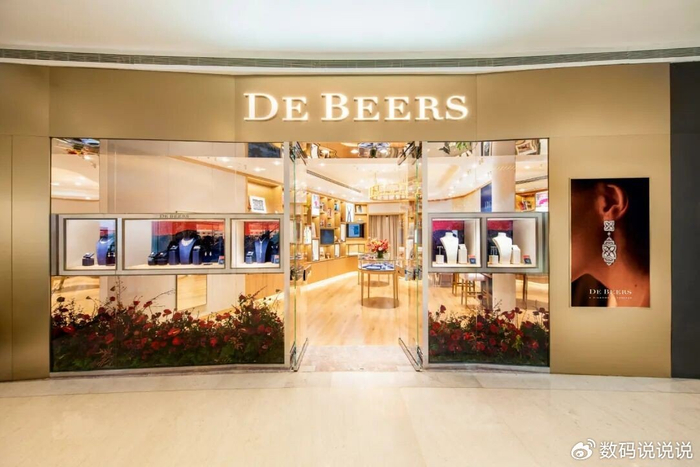
Core Insights - De Beers is shifting its focus to the Indian diamond market, committing to the largest marketing investment in its history to establish a presence in India, which is recognized as the world's second-largest diamond consumer market, valued at approximately $100 billion [2][4] - The company's strategy includes opening 15 "Forevermark" retail stores in India by 2025, with 8 in New Delhi and 7 in Mumbai [2] - De Beers executives have criticized Chinese consumers, suggesting that the Chinese market for luxury goods is stagnating, while India shows strong growth potential [4][11] Group 1 - De Beers' market share has declined to 35%, with a valuation cut in half to $4 billion, and it is facing significant inventory issues with approximately $2 billion worth of unsold diamonds [6] - In contrast, domestic brand Zheguang has seen success, achieving over 10 million in sales in the first half of 2025, with a focus on high-quality, locally sourced diamonds [6][8] - Zheguang's pricing strategy significantly undercuts De Beers, offering a 1-carat diamond for 8,000 yuan compared to De Beers' price of over 100,000 yuan for similar quality [6][8] Group 2 - The Indian diamond market's average consumer purchasing power is only 28% of that of Chinese consumers, raising concerns about profitability despite high sales volumes [11] - The Indian government has paused the import of rough diamonds to protect local businesses and stabilize market prices, complicating De Beers' operations in India [11] - De Beers' parent company, Anglo American, is reportedly looking to divest its diamond business, with potential buyers including the Botswana government, which has historical ties to De Beers [11]

赫美集团:8月25日召开董事会会议
Mei Ri Jing Ji Xin Wen· 2025-08-25 14:10
Company Overview - Hemei Group (SZ 002356) announced a temporary board meeting on August 25, 2025, to discuss investment projects related to its subsidiaries [1] - As of the report, Hemei Group has a market capitalization of 4.3 billion yuan [1] Revenue Composition - For the first half of 2025, Hemei Group's revenue composition is as follows: - Energy sales and refueling accounted for 75.15% - Diamond jewelry sales accounted for 24.34% - Shared bicycle operations accounted for 0.34% - Other revenues accounted for 0.17% [1]

研判2025!中国珠宝首饰行业产业链、发展背景、发展现状、竞争格局及发展趋势分析:市场竞争十分激烈[图]
Chan Ye Xin Xi Wang· 2025-05-29 01:53
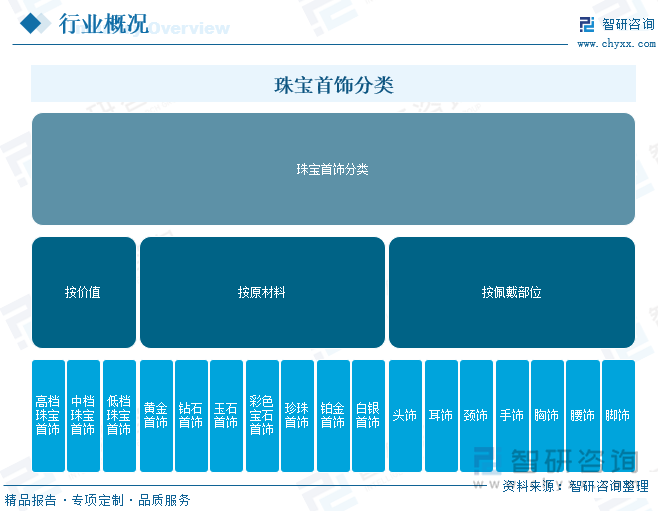
Overview - The jewelry industry in China has seen a steady increase in demand due to rising consumer purchasing power and a shift in consumer preferences towards quality, brand, and cultural significance [1][11] - In 2023, the market size of China's jewelry industry reached 820 billion yuan, a year-on-year growth of 14.05%. However, in 2024, the market is expected to shrink to 778.8 billion yuan due to macroeconomic slowdown and decreased consumer confidence [1][11] Market Size - The market size breakdown for 2024 includes: - Gold products: approximately 568.8 billion yuan (73.0%) - Diamond products: approximately 43 billion yuan (5.5%) - Jade products: approximately 98 billion yuan (12.6%) - Colored gemstones: approximately 27 billion yuan (over 3.5%) - Pearl products: approximately 21 billion yuan (nearly 2.7%) - Platinum and silver products: approximately 8 billion yuan (1.0%) - Fashion jewelry and other categories: approximately 13 billion yuan (1.7%) [1][11] Industry Chain - The upstream of the jewelry industry includes suppliers of raw materials such as gold, diamonds, jade, colored gemstones, pearls, platinum, and silver, as well as suppliers of processing equipment [4] - The midstream involves design, research and development, and manufacturing processes [4] - The downstream consists of sales channels including jewelry specialty stores, department stores, and e-commerce platforms [4][6] Sales Channels - Offline channels, including jewelry specialty stores and department stores, remain the most important sales channels in China, accounting for over 80% of the market share due to the preference for in-person shopping experiences for high-value items [6] Economic Context - In 2024, China's GDP is projected to reach 13.49 trillion yuan, growing by 5.0%. However, both GDP growth and per capita disposable income growth are expected to decline compared to previous years [8] - Retail sales of gold and silver jewelry are projected to decline by 3.1% in 2024, reflecting the sensitivity of non-essential goods to economic fluctuations [8] Competitive Landscape - The jewelry industry in China is highly competitive, with major players including China Gold, Lao Feng Xiang, Yu Garden, and others. In 2024, China Gold is expected to lead with total revenue of 60.46 billion yuan [13][15] - Lao Feng Xiang is projected to have total revenue of 56.79 billion yuan, with jewelry sales contributing 82.6% of its total revenue [17] Development Trends - The jewelry market is expected to see a polarization in consumer spending, with high-end jewelry appealing to high-net-worth individuals, while the mass market focuses on cost-effectiveness and trendy, affordable options [19] - Increasingly, Chinese jewelry companies are integrating cultural elements into their branding, promoting a shift towards a brand economy [19]


万邦珠宝:营收上涨+毛利率下滑 难挡黄金上涨引发的“蝴蝶效应”
Zhi Tong Cai Jing· 2025-05-19 14:27
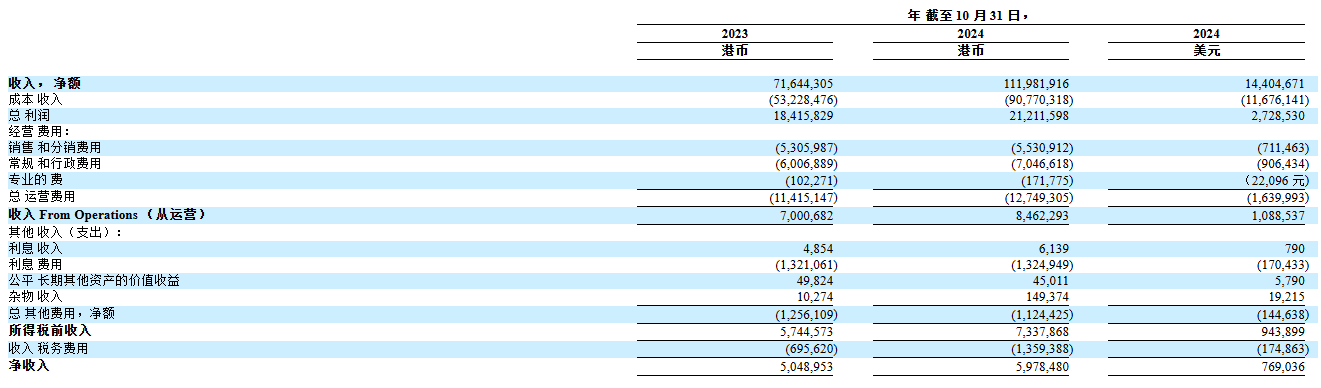
Group 1: Market Overview - The Chinese jewelry market has shown significant growth, with the market size increasing from 580 billion yuan in 2018 to 820 billion yuan in 2023, reflecting a compound annual growth rate (CAGR) of 7.2%. The market is expected to exceed 920 billion yuan in 2024 [1] - The gold price has surged, reaching historical highs, with international spot gold prices hitting $3,500.16 per ounce on April 22, 2023 [5][6] - Despite rising gold prices, the overall consumption of gold in China is projected to decline, with a total consumption of 985.31 tons in 2024, down 9.58% year-on-year [5] Group 2: Company Profile - Wanbang Jewelry, established in 2010, operates as a jewelry retailer and wholesaler based in Hong Kong, with five retail stores targeting the mid-market segment [3] - The company plans to go public on NASDAQ under the ticker MPJS, aiming to issue 1.5 million shares at a price range of $4 to $5, with an expected market capitalization of $130 million [1] Group 3: Financial Performance - For the fiscal year 2023-2024, Wanbang Jewelry reported revenues of 71.64 million HKD and 111.98 million HKD, with net profits of 5.05 million HKD and 5.98 million HKD respectively [4] - The company's gross profit margin has declined significantly, from 25.70% in 2023 to 18.94% in 2024, primarily due to a drop in the gross margin of pure gold products from 16.68% to 11.55% [6] Group 4: Market Challenges - The surge in gold prices has led to a decrease in consumer demand, impacting sales across the jewelry sector, as evidenced by a 15% drop in revenue for a competitor, Chow Sang Sang [6] - Wanbang Jewelry's cash flow from operating activities was negative at -158,300 HKD, necessitating reliance on external financing for business growth [7] - The jewelry market in Hong Kong is characterized by high concentration, with a few large retailers holding over 60% market share, posing competitive challenges for Wanbang Jewelry [9]