
锂电池叉车

Search documents
叉车行业系列报告(一)之电动叉车:锂电领航电动化,出海打开成长空间
Dongguan Securities· 2026-01-21 09:30
Investment Rating - The report maintains a "Market Perform" rating for the forklift industry, emphasizing the importance of lithium battery replacement and product export as key investment themes [1]. Core Insights - The forklift industry is experiencing a clear transition towards electrification, driven by increasing domestic demand and favorable policies. The focus is shifting towards safety regulations, emission controls, and digital supervision, which guide the industry's upgrade direction [4][11]. - The electrification of forklifts, particularly through lithium batteries, is identified as a primary growth driver. The advantages of electric forklifts include environmental friendliness, low noise, and low energy consumption, leading to increased penetration in high-demand sectors [4][38]. - The report highlights the competitive landscape, noting that domestic leaders are enhancing their core competitiveness through high-performance products and deepening international market presence. The industry is characterized by significant barriers to entry, including technology, brand, and distribution channels [4][29]. Summary by Sections 1. Domestic Demand and Market Overview - The forklift industry in China has seen rapid growth, with a projected 2024 sales volume of 1.45 million units, reflecting a year-on-year increase of 12.93% [18]. - The global forklift market is expected to reach 21.598 million units in 2024, with Asia accounting for 52.01% of sales [18][29]. - The competitive landscape is dominated by foreign companies, with the top three (CR3) holding approximately 53% market share in 2024 [29]. 2. Electrification and Lithium Battery Market - The report emphasizes that lithium batteries will lead the electrification transition, with electric forklifts expected to replace internal combustion models due to stricter environmental regulations [4][38]. - The market for electric forklifts is projected to grow significantly, with a compound annual growth rate (CAGR) of 4.16% from 2025 to 2030, reaching a market size of $71.85 billion [29]. 3. Investment Recommendations - The report suggests focusing on companies with lithium battery technology barriers and strong overseas channels, such as Hangcha Group, Anhui Heli, Zhongli Group, and Noli Group, which are expected to benefit from tightening environmental policies and the electrification wave [4][29].


安徽合力(600761):公司动态研究报告:出海深化拓展全球增量,锂电化、智能化引领产业新生态
Huaxin Securities· 2025-07-31 09:02
Investment Rating - The report maintains a "Buy" investment rating for the company [10] Core Views - The company has achieved significant success in its overseas expansion, with a notable increase in export volume and a growing share of overseas revenue, which now accounts for nearly 40% of total income [4][10] - The company is advancing its lithium battery technology, which is expected to enhance its competitive position in the industrial vehicle sector, particularly in electric forklifts [5][10] - The integration of smart logistics solutions and partnerships with key players in the industry is transforming the company from a manufacturer to a comprehensive intelligent solution provider [6][10] Summary by Sections Market Performance - The company’s export volume reached 126,400 units in 2024, marking a year-on-year growth of 34.08%, significantly outpacing the industry average [4] Lithium Battery Technology - In 2024, the total sales volume of industrial vehicles was 1.286 million units, with electric forklifts making up 73.6% of the market. The company has successfully developed a 55-ton lithium battery forklift and is ramping up production capacity for lithium batteries [5] Smart Logistics Ecosystem - The company has established a smart logistics industrial park and integrated various automated guided vehicle (AGV) product lines with intelligent systems, enhancing its service offerings across multiple sectors [6] Financial Forecast - Projected revenues for 2025, 2026, and 2027 are 186.73 billion, 203.56 billion, and 220.23 billion yuan respectively, with corresponding EPS of 1.61, 1.80, and 1.99 yuan. The current stock price reflects a PE ratio of 11.3, 10.1, and 9.1 for the respective years [10][12]
安徽合力:打造制造业数字化转型和智能物流产业发展标杆企业
Zhong Guo Jin Rong Xin Xi Wang· 2025-06-02 07:11
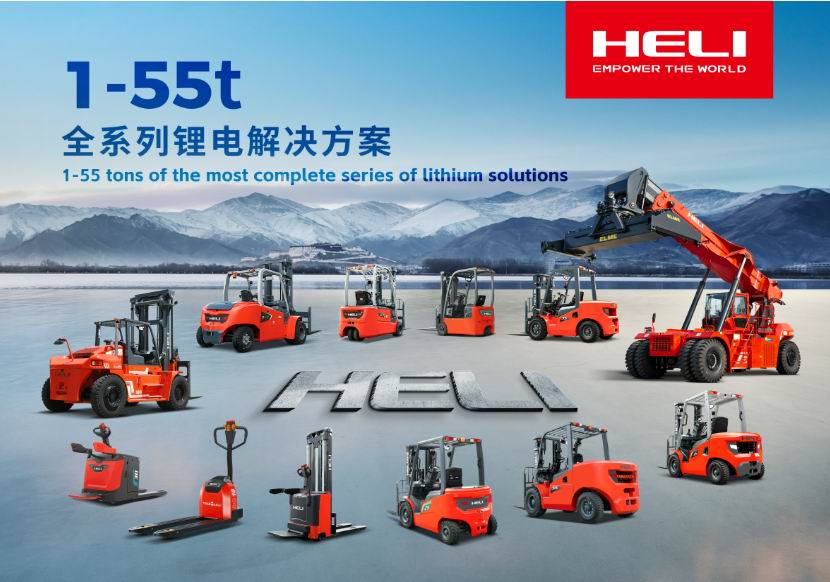
Core Viewpoint - The industrial vehicle industry is undergoing a transformation towards high-end, intelligent, and green development, with Anhui Heli Co., Ltd. actively embracing this trend to become a benchmark in digital transformation and intelligent logistics [1] Group 1: Technological Innovation - Anhui Heli focuses on technological innovation to meet new market demands, leveraging its extensive experience in industrial vehicle R&D and advanced production management [2] - In 2024, Anhui Heli aims to achieve breakthroughs in key technologies, expanding its product range, including the development of a 55-ton lithium battery forklift and 42 low-temperature models [4] - The company plans to invest 1.086 billion yuan in R&D, accounting for 6.27% of its revenue, to enhance its core competitiveness [4] Group 2: Industry Ecosystem - Anhui Heli is committed to leveraging its brand influence to gather upstream and downstream resources, creating an industry co-creation ecosystem to promote sustainable development [5] Group 3: Smart Logistics - The company is positioning itself in the smart logistics sector, extending its industrial chain and establishing the Heli Smart Logistics Industrial Park to transition from equipment manufacturing to system solutions [7] - Strategic partnerships with Huawei and JD.com aim to explore digital transformation and technological integration in logistics [7] Group 4: International Expansion - Anhui Heli maintains a dual market strategy, with plans to open several international centers in 2024, achieving an export of 126,400 units, a 34.08% increase year-on-year [8] - The company is actively integrating into the RCEP market, enhancing its global brand presence and investment strategies [8][9]

企业竞争图谱:2025年锂电池叉车 头豹词条报告系列
Tou Bao Yan Jiu Yuan· 2025-02-26 13:16
Investment Rating - The report indicates a positive investment outlook for the lithium battery forklift industry, highlighting its rapid growth and technological advancements. Core Insights - The lithium battery forklift market is experiencing significant demand growth driven by e-commerce logistics and automation, with a market size increase from 2.097 billion RMB in 2020 to 4.815 billion RMB in 2023, reflecting a compound annual growth rate (CAGR) of 31.93% [33] - The industry benefits from lower operational costs and environmental advantages compared to traditional lead-acid battery forklifts, with lithium batteries offering a cycle life of 2,000-5,000 times compared to 300-500 times for lead-acid batteries [5][4] - The report emphasizes the importance of technological innovation in lithium battery materials, which has led to reduced costs and improved safety, further driving market penetration [6] Industry Definition - Lithium battery forklifts are defined as industrial vehicles powered by lithium batteries, including electric balance forklifts, electric ride-on warehouse forklifts, and electric walk-behind warehouse forklifts [2] Industry Characteristics - The industry is characterized by low emissions and environmental benefits, economic advantages, and growth driven by market demand and technological innovation [3] Development History - The lithium battery forklift industry in China has evolved from the first electric balance forklift developed in the 1950s to a rapid expansion phase post-2016, with increasing applications and market acceptance [7][11][12] Industry Chain Analysis - The industry chain consists of upstream raw materials (steel, batteries, motors), midstream manufacturing, and downstream applications in logistics and industrial sectors [12][26] Upstream Analysis - Upstream raw materials account for a significant portion of costs, with fluctuations in prices of lithium battery materials impacting overall manufacturing costs [14][20] Midstream Analysis - Leading companies in the midstream sector include Zhongli Machinery, which has maintained a market share of 35% in 2023, and has a comprehensive product range [15][24] Downstream Analysis - The downstream market is broad, encompassing logistics, manufacturing, and transportation, with demand driven by economic growth and rising labor costs [28][30] Market Size and Forecast - The market size is projected to grow from 5.706 billion RMB in 2024 to 9.944 billion RMB in 2028, with a CAGR of 14.90% [33] Competitive Landscape - The competitive landscape features a tiered structure with leading companies like Zhongli Machinery and Noli Intelligent holding over 50% of the market share, emphasizing technological innovation and market expansion [41][42]
2025年头豹词条报告系列:企业竞争图谱:2025年锂电池叉车
Tou Bao Yan Jiu Yuan· 2025-02-26 13:04
Investment Rating - The report indicates a positive investment outlook for the lithium battery forklift industry, driven by technological advancements and increasing market demand [1]. Core Insights - The lithium battery forklift market is experiencing rapid growth due to the advantages of lithium batteries over lead-acid batteries, including lighter weight, higher energy density, faster charging, longer lifespan, and lower maintenance costs [1][2]. - The industry is benefiting from the dual carbon goals, stable economic growth, and rising labor costs, which are driving demand for lithium battery forklifts [1][33]. - The report highlights the increasing demand for lithium battery forklifts in e-commerce logistics and automated vehicle networks, as well as the ongoing development of lithium battery materials technology [1][6]. Industry Definition - Lithium battery forklifts are powered by lithium batteries, which drive the electric motor and hydraulic system, enabling maneuverability in industrial applications [2]. - Compared to traditional lead-acid battery forklifts, lithium battery forklifts offer significant advantages in terms of weight, size, energy density, charging speed, lifespan, and environmental impact [2]. Industry Characteristics - The industry is characterized by low emissions and environmental benefits, economic advantages, and growth driven by market demand and technological innovation [3][4][5][6]. Development History - The lithium battery forklift industry has evolved significantly since the 1950s, with key milestones including the introduction of electric forklifts and the shift towards lithium battery technology in recent years [7][11][12]. Industry Chain Analysis - The lithium battery forklift industry chain consists of upstream raw materials (steel, batteries, motors, etc.), midstream manufacturing, and downstream applications in logistics and industrial sectors [12][26]. - Upstream raw materials account for a significant portion of costs, with fluctuations in prices of lithium battery materials impacting overall manufacturing costs [14][19]. Market Demand and Growth - The market size for lithium battery forklifts has grown from 2.097 billion RMB in 2020 to 4.815 billion RMB in 2023, with a compound annual growth rate (CAGR) of 31.93% [33]. - Future growth is projected to continue, with expectations of reaching 9.944 billion RMB by 2028, driven by economic stability and rising labor costs [33][37]. Competitive Landscape - The competitive landscape features leading companies such as Zhongli Machinery, Nolu Intelligent Equipment, and Linde Forklift, which collectively hold over 50% of the market share [41]. - Companies are increasingly expanding into overseas markets, with Zhongli Machinery establishing a strong international presence [42]. Policy Overview - Various policies are in place to support the development of electric vehicles, including lithium battery forklifts, emphasizing the importance of safety, innovation, and environmental sustainability [39][40].