锅碗瓢盆

Search documents
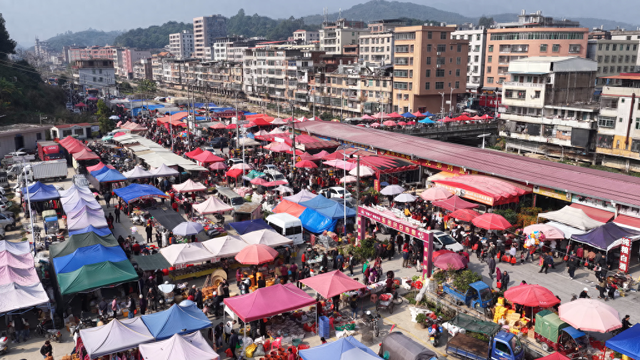
赶大集丨已延续400多年的乡村大集何以红火依旧
Xin Lang Cai Jing· 2026-02-15 12:41
Core Insights - The article highlights the vibrant atmosphere of the Dongtian Town market in Quanzhou, Fujian, as it prepares for the upcoming Spring Festival, showcasing the enduring popularity of traditional rural markets despite the rise of online shopping and supermarkets [1][3]. Group 1: Market Dynamics - The Dongtian Town market, known as "Guanxi," has a history of over 400 years and attracts thousands of visitors on market days, generating significant consumer spending, with daily sales exceeding one million yuan [1][3]. - The market features a variety of stalls selling local specialties, handmade crafts, and traditional foods, with popular items including seasonal produce and local delicacies, leading to long queues at certain stalls [3][6]. Group 2: Visitor Experience - Visitors, including families and tourists from other regions, express a strong emotional connection to the market, viewing it as a place to relive childhood memories and experience local culture [6]. - The market not only serves as a shopping venue but also as a platform for cultural performances, showcasing local arts such as Nanyin music and traditional crafts during the festive season [6]. Group 3: Infrastructure and Community Engagement - The Dongtian Town government has responded to the increasing popularity of the market by enhancing infrastructure, including expanding parking facilities and adding amenities like public rest areas and charging stations for electric vehicles [6]. - Local volunteers are organized to provide services that improve the overall visitor experience, reflecting the community's commitment to maintaining the market's appeal and accessibility [6].

又要TACO?传特朗普拟削减钢铝制品关税 以应对通胀及选情压力
智通财经网· 2026-02-13 08:27
Group 1 - The Trump administration plans to reduce tariffs on certain steel and aluminum products to address inflation pressures and improve voter support ahead of the midterm elections [1][2] - High tariffs, up to 50%, imposed last summer on imported steel and aluminum have significantly impacted U.S. consumers and businesses, contradicting claims that foreign exporters bear the cost [1][3] - The U.S. Trade Representative's office is reviewing the list of products affected by tariffs and may exempt certain items while launching targeted national security investigations [2] Group 2 - The overall tariff levels in the U.S. have reached their highest point since before World War II due to the extensive tariff actions initiated by the Trump administration [3] - A recent poll indicates that over 70% of American adults view the current economic situation as only fair or poor, with 52% believing Trump's economic policies have worsened conditions [3] - The complexity of the current tariff system has led to difficulties in enforcement, with businesses facing inconsistent tax rates on identical products, highlighting the need for simplification [3]
不说了,我要干活了!
Xin Lang Cai Jing· 2026-02-08 03:01
Group 1 - The annual cleaning ritual in Sanya is approaching, marking a significant cultural practice as families prepare for the Spring Festival [1] - The cleaning tasks include challenging activities such as washing intricately carved mahogany sofas, which can be time-consuming and labor-intensive [4] - Heavy winter quilts, referred to as "big flower quilts," pose a significant challenge when washing due to their weight when wet, requiring considerable effort from family members [7] Group 2 - Many households in Sanya have unused kitchenware that is typically stainless steel, which must be cleaned annually in preparation for the New Year [10] - Red plastic stools, commonly used for entertaining guests, are easy to store but difficult to clean, often requiring two people to manage the task [13] - The final cleaning tasks include scrubbing stainless steel stair railings and security grilles, which are meticulous and physically demanding, often leading to dissatisfaction with the cleaning results [15]

“小切口”撬动大产业
Xin Lang Cai Jing· 2026-02-06 21:59
Core Insights - The article emphasizes the importance of focusing on "small niches" within industries to build comprehensive industrial chains, moving away from broad and extensive models that are no longer advantageous [1][2] - Companies that identify and target unmet needs and pain points in the market can achieve competitive advantages and drive resource aggregation along the industrial chain [1] Group 1: Industry Examples - The kitchen industry in Shandong Province has generated a market value of 30 billion yuan through specialized production of kitchenware [1] - Dalian Rongke Energy has become a unicorn enterprise in the vanadium flow battery sector, holding nearly 70% market share, and has established a complete innovation ecosystem in the energy storage industry [1][2] Group 2: Strategic Approaches - The success of the Chinese electric vehicle industry is attributed to companies focusing on key materials that affect battery energy density, leading to the development of a global-leading full industrial chain [2] - Continuous technological innovation is essential for deepening "small niches" to avoid falling into intense competition; companies must invest in R&D to maintain technological and industrial advantages [2] Group 3: Broader Implications - The concept of "small niches" reflects a strategic approach that combines market demand sensitivity, core technology pursuit, and systematic thinking about industrial ecosystems [2] - By deeply exploring and refining "small niches," companies can activate broader market dynamics and achieve significant impacts on the overall industry [2]
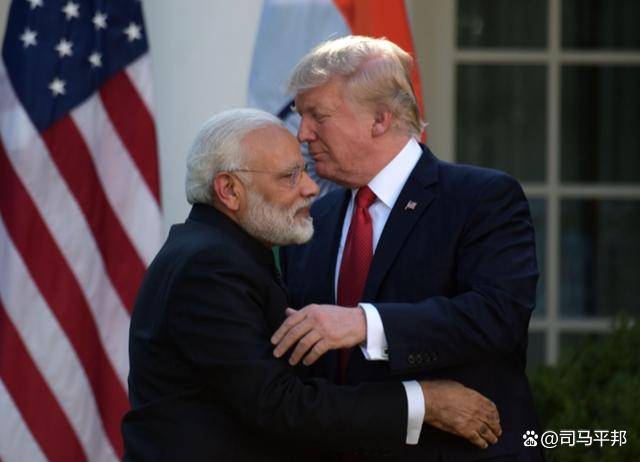
美印谈判开始前,莫迪主动给特朗普递降表?中国的招式印度学不来
Sou Hu Cai Jing· 2025-05-19 15:15
Group 1 - India's dramatic shift from proposing a "zero tariff" trade agreement with the US to planning to raise tariffs on certain American goods highlights the complexities of its trade strategy [1][3] - Modi's government is under pressure domestically to adopt a firmer stance against US tariffs, particularly after witnessing China's successful negotiations with the US [3][5] - The bilateral trade between India and the US reached $129.1 billion in 2024, with India exporting $87.5 billion and importing $41.6 billion, resulting in a trade surplus of $45.9 billion for India [5][6] Group 2 - The potential for a "zero tariff" agreement could benefit India by facilitating smoother trade flows and enhancing its manufacturing sector, particularly in labor-intensive goods [5][6] - India's strategy to focus on mid to low-end manufacturing, such as clothing and household items, aims to replicate China's economic model, leveraging its large population for labor [6][8] - However, India's negotiating position is weaker compared to China, lacking the same level of manufacturing capability and economic scale, which may hinder its ability to secure favorable terms with the US [8][10] Group 3 - The Modi government is expected to adopt a flexible approach in negotiations, balancing between seeking concessions from the US and addressing domestic pressures [10] - The outcome of these negotiations could determine whether India becomes the third country, after the UK and China, to sign a trade agreement with the US [10]