
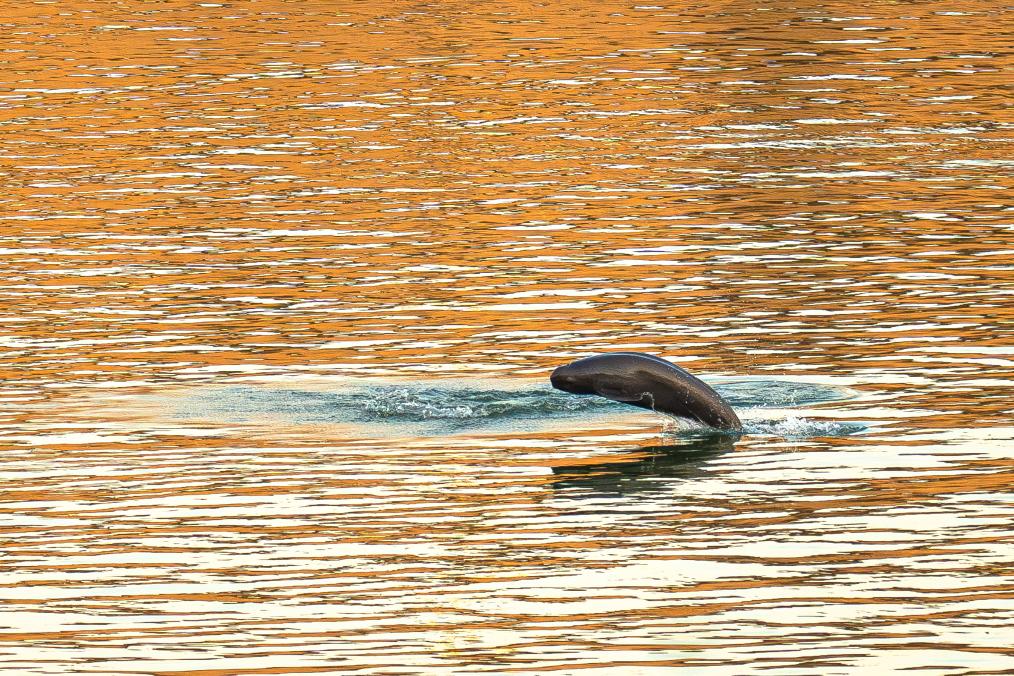
长江江豚

Search documents
新华时评|长江十年禁渔还需久久为功
Xin Hua She· 2026-02-02 15:20
Group 1 - The core viewpoint of the articles highlights the recovery of the Yangtze River dolphin population, which has increased to 1,426 individuals, marking a rise of 177 from 2022, indicating the gradual restoration of the Yangtze River's ecological vitality after a decade-long fishing ban [1] - Monitoring data shows that the number of fish species in the Yangtze River basin has increased by 43 since the fishing ban, with breakthroughs in the protection of rare species such as the Chinese sturgeon and Yangtze sturgeon [1] - Despite the positive trends, the Yangtze River's ecological environment still faces significant challenges, including the dolphin population remaining at about half of its numbers from the 1990s, threats from extreme weather, human activities, and illegal fishing [1] Group 2 - The articles emphasize the need for strict enforcement against illegal fishing, the establishment of a robust livelihood support network for retired fishermen, and the focus on overcoming technical challenges in protecting flagship species [2] - There is a call for comprehensive deployment by relevant departments to enhance the overall integrity and systemic approach to the Yangtze River ecosystem, aiming to inject continuous green momentum into high-quality development [2] - The commitment to ecological protection and improving livelihoods is underscored, with a long-term goal of achieving clearer waters, richer biodiversity, and more prosperous communities, promoting harmony between humans and nature [2]
探寻大湖“精灵”丨从捕鱼人到江豚卫士 守护鄱阳湖的“微笑天使”
Xin Lang Cai Jing· 2026-01-31 17:26
Core Viewpoint - The population of the Yangtze finless porpoise, a critically endangered freshwater species, has increased to 1,426 individuals, indicating improvements in the ecological health of the Yangtze River [3][5]. Group 1: Population Recovery - The Yangtze finless porpoise population has increased by 177 individuals compared to the 2022 survey [3]. - The species is considered a flagship species for the Yangtze River ecosystem, serving as an indicator of the river's health [5]. Group 2: Conservation Efforts - Following a complete fishing ban in Poyang Lake, local fishermen have been recruited as patrol members to protect the porpoises, transforming from fishers to guardians [3]. - The patrol teams are crucial during the dry season when water levels drop, limiting the porpoises' activity range [3]. Group 3: Ecological Significance - The increase in the finless porpoise population reflects better water quality and greater biodiversity in the Yangtze River [5]. - The species' habitat requirements highlight the importance of maintaining a healthy ecosystem in the Yangtze River [5].

禁渔五年,长江母亲河重现生机活力!
Xin Hua She· 2026-01-31 11:32
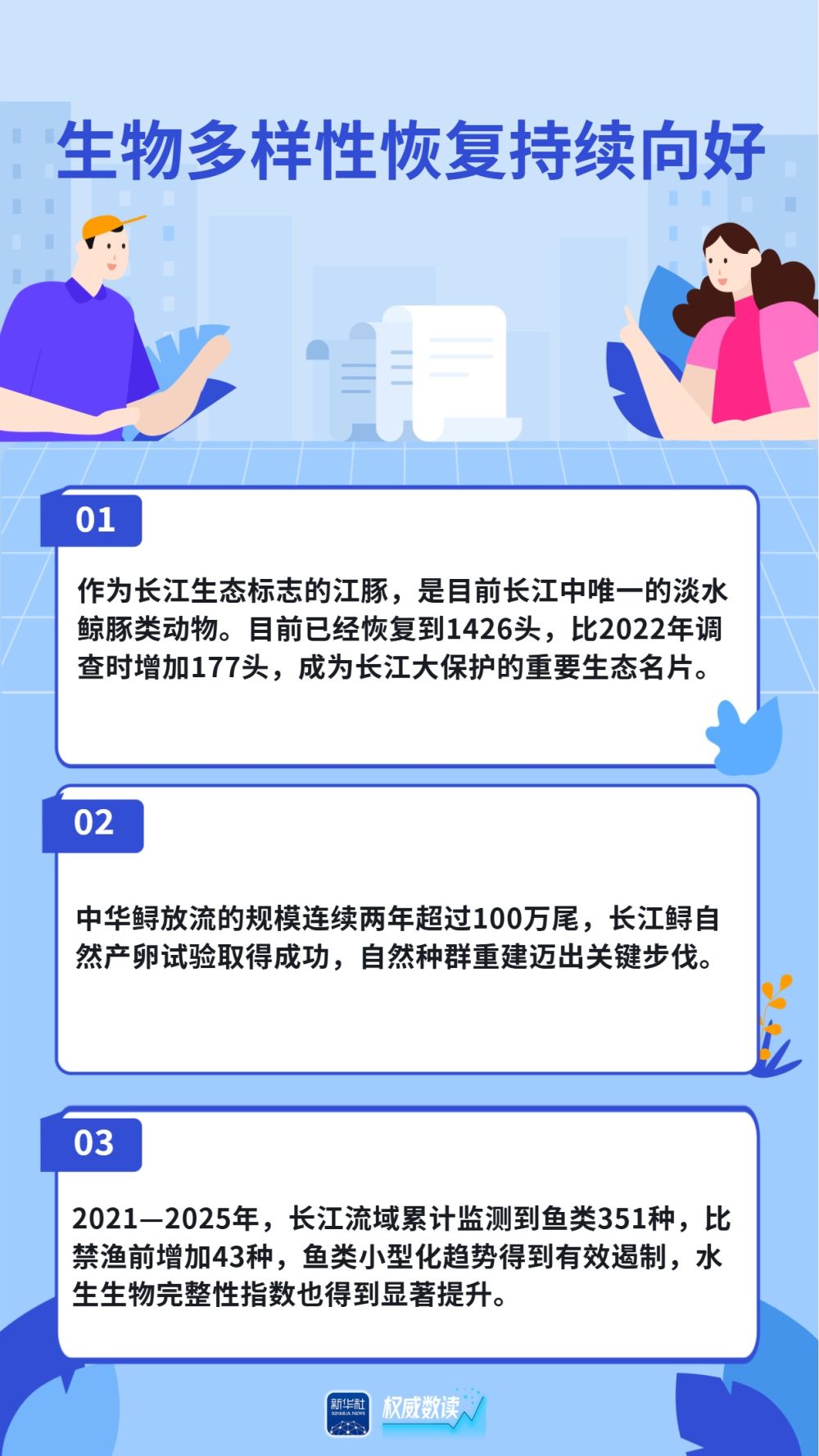
Core Viewpoint - The Yangtze River's biodiversity has shown significant recovery over the past five years due to the implementation of a ten-year fishing ban, with notable increases in species populations and successful conservation efforts [1][4]. Group 1: Biodiversity Recovery - The population of Yangtze finless porpoises has increased to 1,426, marking a recovery from 1,249 in 2022, indicating a positive trend [9]. - The number of fish species monitored in the Yangtze River basin has reached 351, an increase of 43 species compared to pre-ban levels [4]. - The restoration of core species' reproductive functions has been significant, with the average resource quantity of 134 endemic fish species increasing by 39% compared to pre-ban levels [13]. Group 2: Conservation Efforts - Continuous joint law enforcement actions, such as "China Fishery Administration Sword" and "Safe Yangtze," have effectively reduced illegal fishing activities [6]. - The establishment of five designated protection areas for relocated porpoise populations has resulted in over 150 individuals, with more than 10 calves born annually [10]. - Advanced technologies like radar video monitoring and drone patrols have significantly enhanced law enforcement efficiency [8]. Group 3: Community Engagement - There has been a growing involvement of volunteers in the "Fish Guardian" patrol teams, reflecting a stronger community commitment to protecting the river [8]. - Public awareness campaigns have been strengthened, promoting the concept of "protecting the river" among local residents [8].
1426头!长江江豚新数据见证长江十年禁渔新成效
Xin Hua Wang· 2026-01-31 01:45
Core Viewpoint - The population of the Yangtze River dolphin has increased to 1,426, marking a significant recovery due to the ten-year fishing ban implemented in the Yangtze River [1][3]. Group 1: Ecological Recovery - The increase in the Yangtze River dolphin population indicates improved water quality and greater biodiversity in the Yangtze River [3]. - The Yangtze River, once severely impacted by overfishing and human activities, is witnessing a resurgence in aquatic life, with 351 fish species monitored since the ban, an increase of 43 species compared to pre-ban levels [4][7]. - The ban has led to a notable improvement in the integrity of aquatic ecosystems, with larger fish sizes and clearer water reported [7]. Group 2: Fishing Ban Implementation - The ten-year fishing ban, initiated on January 1, 2021, is a crucial decision for ecological preservation, emphasizing the importance of the Yangtze River's health for future generations [5][14]. - The government has established a comprehensive support system for 231,000 retired fishermen, ensuring their livelihoods through job placement and social security measures [12]. - Enforcement against illegal fishing has been strengthened, resulting in a decline in illegal fishing activities within the Yangtze River basin [13]. Group 3: Socioeconomic Impact - Former fishermen, like Chen Lanxiang, have successfully transitioned to new livelihoods, with her company expanding from 7 to 79 employees and achieving over 3 million yuan in revenue by 2025 [11]. - The socioeconomic adjustments for retired fishermen are crucial for the success of the fishing ban, ensuring that their basic living needs are met while promoting sustainable practices [12].

长江干流“鱼类密度”5年增一倍
Ren Min Ri Bao· 2026-01-31 01:10
Core Viewpoint - The Yangtze River Basin has implemented a ten-year fishing ban since January 1, 2021, with a mid-term evaluation showing positive results in biodiversity recovery and ecological health over the past five years [1][2]. Group 1: Biodiversity and Ecological Recovery - The population of the Yangtze River dolphin has increased to 1,426, up by 177 from 2022, indicating significant ecological recovery [2]. - A total of 351 fish species have been monitored in the Yangtze River Basin, an increase of 43 species compared to pre-ban levels, with a notable improvement in the integrity index of aquatic life [2][4]. - The unit resource quantity of fish in the Yangtze mainstream has doubled compared to 2020, reaching 2.4 kg, reflecting a recovery in fish density [4]. Group 2: Enforcement and Regulation - Joint enforcement actions have been conducted to combat illegal fishing, resulting in a decrease in illegal activities and improved regulatory effectiveness through the use of technology such as radar and drones [3]. - The overall stability of the fishing ban has been maintained, with various departments collaborating to ensure compliance and public awareness [3]. Group 3: Support for Fishermen - Policies for the resettlement of 231,000 retired fishermen have been effectively implemented, ensuring stable income and employment opportunities for those affected by the fishing ban [3][7]. - Measures have been taken to provide targeted assistance to fishermen facing difficulties, including inclusion in social welfare programs [3]. Group 4: Future Directions - The next five years are critical for consolidating the achievements of the fishing ban, with a focus on protecting endangered species and enhancing biodiversity [7][8]. - Future efforts will involve balancing high-level protection with quality development, emphasizing the restoration of aquatic habitats and the overall health of the ecosystem [8].
“巩固好已经取得的成果”
Ren Min Ri Bao· 2025-11-27 22:30
Core Points - The article emphasizes the importance of the Yangtze River's ten-year fishing ban, which aims to restore the river's ecological balance and biodiversity, marking a significant shift in the relationship between humans and nature [2][14][18] - The ban has led to a notable recovery of aquatic species, including an increase in the population of the Yangtze River dolphin and other native fish species, indicating positive ecological changes [3][4][11] - The article highlights the socioeconomic impact of the fishing ban on local fishermen, who have transitioned to alternative livelihoods, supported by government policies and training programs [7][9][10] Summary by Sections Ecological Recovery - The Yangtze River's biodiversity has improved significantly, with the population of the Yangtze dolphin increasing to 1,249 in 2022, up by 237 from 2017 [3] - Key species such as the Yangtze sturgeon and other native fish have shown signs of recovery, with the population of the Yangtze knife fish increasing to four times its pre-ban levels [4] - The aquatic biological integrity index has improved, with the Yangtze River and Poyang Lake moving up two levels from the "no fish" status [4] Habitat Restoration - Efforts to restore aquatic habitats have included the removal of 342 small hydropower stations on the Chishui River, enhancing water connectivity [5] - The introduction of natural restoration concepts aims to create diverse habitats for various fish species, improving their breeding conditions [5] Species Protection - The article discusses the ongoing efforts to protect endangered species through artificial breeding and release programs, with over 1 million Chinese sturgeons released in recent years [6] - The focus on full lifecycle protection of species is crucial for restoring aquatic ecosystems [6] Socioeconomic Transition - The fishing ban has affected 231,000 fishermen, prompting government initiatives to ensure their transition to new livelihoods, such as eco-tourism and aquaculture [7][9] - Training programs and financial support have been implemented to assist fishermen in adapting to new economic activities, with some achieving significant income from crab farming [9][10] Policy and Enforcement - The article highlights the need for strict enforcement against illegal fishing activities, as the ban's success faces challenges from poaching [12][13] - Future policies will focus on enhancing biodiversity monitoring and implementing targeted ecological management strategies [14][18]
“巩固好已经取得的成果” ——长江禁渔五年观察
Ren Min Ri Bao· 2025-11-27 22:18
Core Points - The article emphasizes the significant progress made in the ecological restoration of the Yangtze River due to the implementation of a ten-year fishing ban, which has led to an increase in aquatic biodiversity and the recovery of key species [2][4][12] Summary by Sections Ecological Restoration - The Yangtze River's aquatic biodiversity has improved, with the population of the Yangtze finless porpoise increasing to 1,249 in 2022, up by 237 from 2017 [3] - The population of the Yangtze knife fish has quadrupled since the fishing ban, and previously extinct species like the Chinese sturgeon are being monitored for recovery [4][6] Fishing Ban Impact - The ten-year fishing ban, initiated on January 1, 2021, has shown positive results, with a 9.5% increase in resource density in the Yangtze River by 2024 [4] - The number of indigenous fish species has increased by 36 since the ban, with a total of 344 species recorded [4] Habitat Restoration - Significant efforts have been made to restore aquatic habitats, including the removal of 342 small hydropower stations in the Chishui River, enhancing water connectivity [5] - The ecological compensation funding for fishing-related projects has risen from 13% in 2021 to 76% [5] Species Protection - The article highlights ongoing efforts to protect endangered species through artificial breeding programs, with over 1 million Chinese sturgeons released in recent years [6] - The focus is on enhancing the life cycle protection of aquatic species to ensure their survival and recovery [6] Economic Transition for Fishermen - The fishing ban has led to the transition of 142,000 fishermen into new livelihoods, with many engaging in eco-tourism and aquaculture [7][11] - Training programs and financial support have been established to assist fishermen in adapting to new economic activities [10][11] Regulatory Measures - The article discusses the need for improved regulatory measures to combat illegal fishing, as the pressure from poaching has increased with the success of the fishing ban [12][14] - A comprehensive monitoring and evaluation system for biodiversity is recommended to ensure the effectiveness of conservation efforts [14][18] Future Directions - The article calls for a coordinated approach across regions and departments to maintain the ecological balance of the Yangtze River and its tributaries [18] - Emphasis is placed on the importance of continued support for the fishing ban and the implementation of targeted ecological management strategies [18]
新思想引领新征程丨加强生物多样性保护 共建万物和谐的美丽家园
Yang Guang Wang· 2025-05-26 03:50
Group 1 - The core viewpoint emphasizes the importance of strengthening biodiversity protection and accelerating the construction of a natural protection system centered on national parks [1][2] - China has made significant progress in national park construction, with flagship species like the giant panda and Tibetan antelope showing population growth [2][3] - The establishment of a clear and effective natural protection system in Hainan has led to the discovery of new species, highlighting ongoing biodiversity efforts [2] Group 2 - The survival status of flagship species like the Yangtze River dolphin reflects the health of the Yangtze River, with measures like a ten-year fishing ban contributing to biodiversity recovery [3] - The monitoring of resources in the Yangtze River is showing positive trends, with a 9.5% increase in resource quantity year-on-year expected in 2024 [3] - China's biodiversity protection strategy has been elevated to a national level, integrating various ecosystems into a comprehensive management approach [3][4]