长盛量化红利混合A

Search documents
长盛量化红利混合A:2025年第四季度利润2267.90万元 净值增长率3.98%
Sou Hu Cai Jing· 2026-01-24 08:32
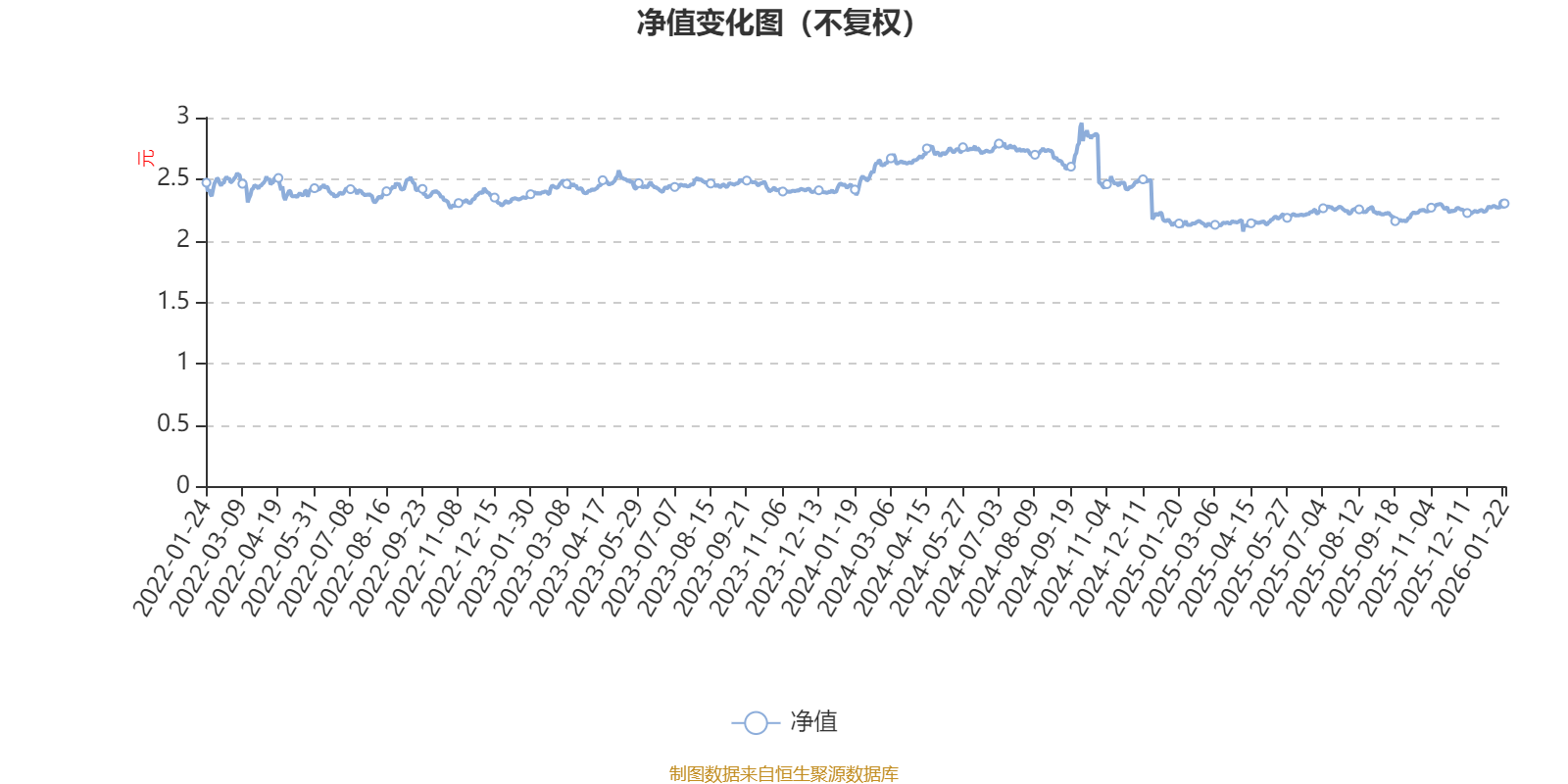
Core Viewpoint - The AI Fund Changsheng Quantitative Dividend Mixed A (080005) reported a profit of 22.679 million yuan for Q4 2025, with a weighted average profit per fund share of 0.0903 yuan. The fund's net value growth rate for the period was 3.98%, and the fund size reached 481 million yuan by the end of Q4 2025 [3]. Fund Performance - As of January 22, the fund's three-month cumulative net value growth rate was 2.90%, ranking 226 out of 265 comparable funds. The six-month growth rate was 1.15%, ranking 261 out of 265. The one-year growth rate was 9.07%, also ranking 261 out of 265. Over three years, the growth rate was 25.60%, ranking 97 out of 256 [4]. Risk and Return Metrics - The fund's three-year Sharpe ratio was 0.7605, ranking 64 out of 254 comparable funds [9]. - The maximum drawdown over the past three years was 8.42%, with the worst quarterly drawdown occurring in Q2 2019 at 13.33% [11]. Investment Strategy - The fund maintained an average stock position of 75.76% over the past three years, compared to a peer average of 86.12%. The highest stock position was 93.63% at the end of Q1 2021, while the lowest was 61.46% at the end of Q3 2022 [14]. - The fund's top ten holdings as of Q4 2025 included Yutong Bus, Zhongchuang Zhiling, Midea Group, Beijing Bank, Yili Group, China Petroleum, Gree Electric Appliances, Gibit, Sheneng Co., and Ping An Insurance [18]. Market Observations - The fund manager noted that sectors with strong dividend quality and cash flow, such as metals and manufacturing, performed well, while sectors like banking, transportation, and food and beverage showed weaker performance. The market's risk appetite has improved, shifting from a focus on "risk aversion" to "recovery expectations + profit improvement," favoring high-profit and high-growth stocks [3].

上海银行股价连续4天上涨累计涨幅7.07%,长盛基金旗下1只基金持152.21万股,浮盈赚取100.46万元
Xin Lang Cai Jing· 2025-11-04 07:27
Group 1 - Shanghai Bank's stock price increased by 3.2% to 9.99 CNY per share, with a trading volume of 1.364 billion CNY and a turnover rate of 0.97%, resulting in a total market capitalization of 141.948 billion CNY [1] - The stock has risen for four consecutive days, with a cumulative increase of 7.07% during this period [1] - Shanghai Bank was established on January 30, 1996, and listed on November 16, 2016, focusing on corporate finance, retail finance, and funding operations, with wholesale finance contributing 77.82% to revenue [1] Group 2 - Changsheng Fund holds a significant position in Shanghai Bank through its Changsheng Quantitative Dividend Mixed A Fund, which held 1.5221 million shares, accounting for 1.74% of the fund's net value, ranking as the eighth largest holding [2] - The fund has generated a floating profit of approximately 471,800 CNY today and 1,004,600 CNY during the four-day increase [2] - The fund was established on November 25, 2009, with a current size of 586 million CNY, and has reported a year-to-date return of 1.59% and a one-year return of 4.49% [2]

长盛量化红利混合A基金经理变动:增聘陈亘斯为基金经理
Sou Hu Cai Jing· 2025-08-14 02:08
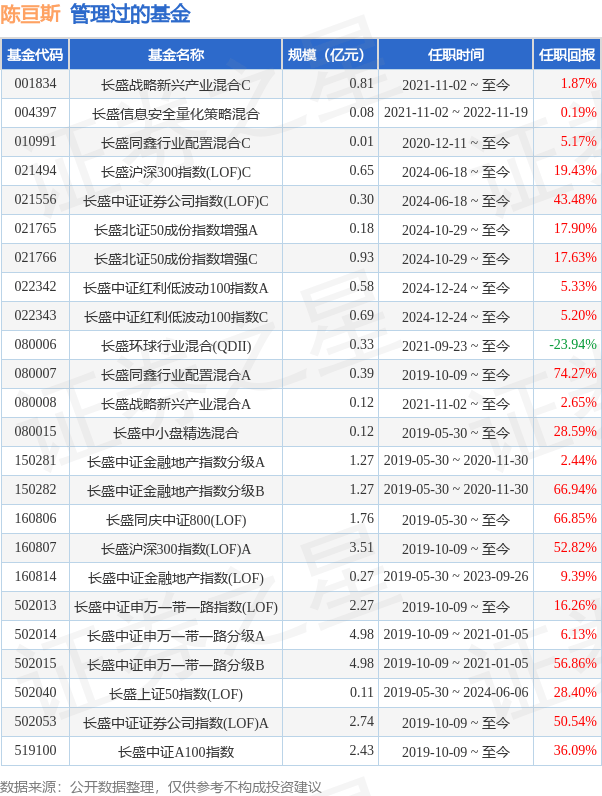
Group 1 - The core point of the article is the appointment of Chen Gengsi as a new fund manager for Changsheng Quantitative Dividend Mixed Fund (080005), effective from August 14, 2025, alongside Wang Ning [1] - As of August 13, 2025, the net value of Changsheng Quantitative Dividend Mixed Fund was 5.5244, reflecting a decrease of 0.43% from the previous day, while it has increased by 8.34% over the past year [1] Group 2 - Chen Gengsi is a Chinese national with a master's degree and has held various positions in asset management and investment, including roles at PineRiver Asset Management and Guoyuan Futures [2] - Since joining Changsheng Fund Management in February 2017, Chen has served as a fund manager assistant and is currently the assistant general manager of the quantitative investment department [2] - Chen has managed multiple public funds, including Changsheng Small and Medium Cap Selected Mixed Fund and Changsheng Strategic Emerging Industries Mixed Fund, among others [3][4] Group 3 - The table lists various funds managed by Chen Gengsi, detailing their codes, names, sizes (in billions), tenure, and returns, with notable performances such as a 74.27% return for Changsheng Tongxin Industry Allocation Mixed Fund A [4] - The performance of Changsheng Tongxin Industry Allocation Mixed Fund A included a significant estimated return of 167.57% from a stock adjustment in 2021 [4]
低至0.1折,部分中小银行代销基金再降费
Mei Ri Jing Ji Xin Wen· 2025-08-13 08:26
Core Viewpoint - The competition among banks in fund distribution is intensifying, leading to a significant reduction in fee rates, with some banks offering discounts as low as 0.1% to attract customers [1][3][5]. Group 1: Fee Discounts and Promotions - Shenzhen Rural Commercial Bank announced a 0.1% discount on certain open-end funds, a move mirrored by Changshu Bank, which also offers similar discounts on over 120 funds until the end of the year [1][3]. - The fee structure for the funds includes a significant reduction; for example, a fund with a standard 1.5% fee would drop to 0.15% for a 100,000 yuan investment, resulting in a fee of only 15 yuan [3]. - Other banks, such as Minsheng Bank and China Merchants Bank, have also implemented fee reductions, with many large banks maintaining a minimum discount of 1% [4][5]. Group 2: Competitive Landscape - Smaller banks are struggling to compete with larger banks in terms of channels and services, leading them to lower fees to maintain stability in their scale [1][5]. - The market is experiencing a "Matthew Effect," where larger banks gain more recognition and customer flow, while smaller banks face challenges due to weak customer bases and outdated systems [5][6]. Group 3: Revenue Pressure and Strategic Shifts - The reduction in fees is putting pressure on the intermediary income of banks, with major banks like China Merchants Bank and China Construction Bank reporting significant declines in their fund distribution income [6][7]. - Banks are urged to rethink their strategies in wealth management to offset the loss in income from fund distribution, with some already moving towards more customized and tailored wealth management solutions [8].



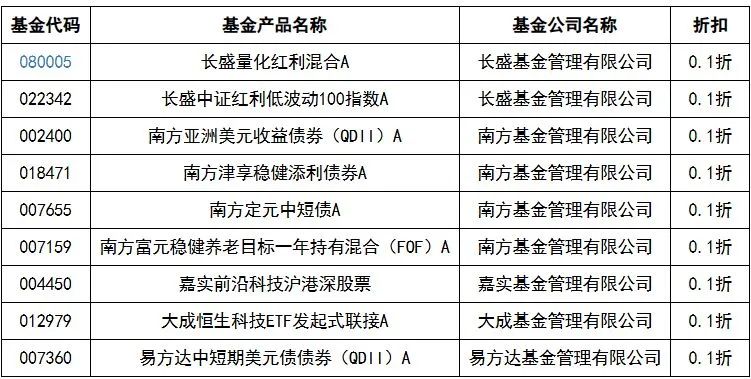
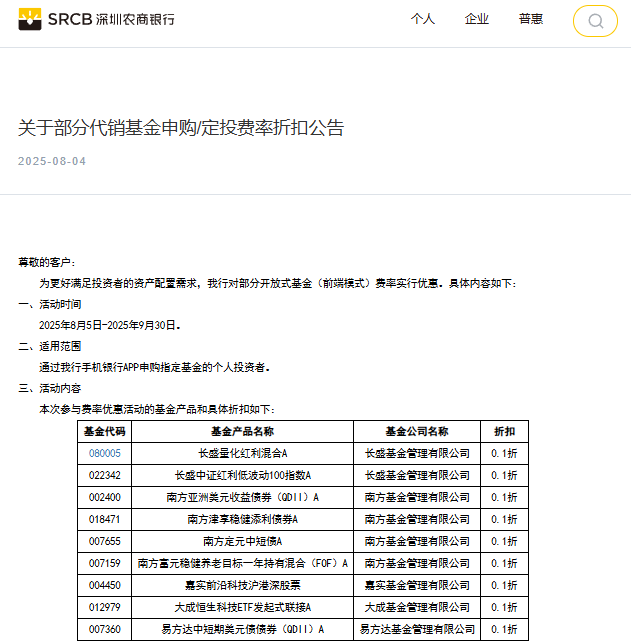
银行代销基金忙“让利”,部分中小行费率折扣低至0.1折
Huan Qiu Wang· 2025-08-13 05:18
Core Viewpoint - The competition in the bank distribution market is intensifying, leading to a focus on fee discounts, with some small and medium-sized banks reducing fund distribution fees to as low as 0.1% [1][4] Group 1: Fee Discounts and Promotions - Shenzhen Rural Commercial Bank announced a promotional period from August 5 to September 30, offering a 0.1% discount on front-end fees for certain open-end funds through its mobile banking app [1][4] - The promotional funds include nine open-end funds, with an example showing that a subscription amount of 100,000 yuan, which originally had a fee of 1,500 yuan, would only cost 15 yuan after the discount [3] - This is not the first time Shenzhen Rural Commercial Bank has offered such discounts; a similar promotion was announced in June for two funds, valid until September 30 [4] Group 2: Industry Trends and Responses - Other banks, such as Changshu Bank, have also implemented similar fee discounts, with over 120 fund products included in their promotion lasting until the end of the year [4] - Major banks like China Merchants Bank have previously introduced a 10% fee for fund purchases across all channels, indicating a trend towards lower fees in the industry [4][6] - Smaller banks are adopting aggressive discount strategies to maintain stability in their scale, as they struggle to compete with larger banks in terms of channels, sales, and comprehensive services [6]