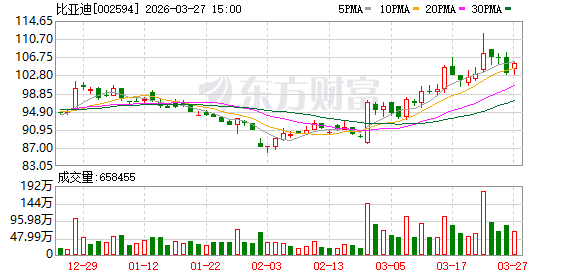
闪充技术

Search documents
比亚迪(002594) - 2026年3月30日投资者关系活动记录表
2026-03-31 10:32
Group 1: Company Performance - BYD maintained its position as the global leader in electric vehicle sales for four consecutive years, ranking fifth among global automotive groups, an improvement from the previous year [2] - The company's total vehicle exports exceeded 1 million units for the first time, representing a year-on-year increase of 140% [2] - The sales of high-end brands, including Yangwang, Tengshi, and Fangchengbao, reached nearly 400,000 units, significantly increasing their share of the total passenger vehicle sales compared to 2024 [2] Group 2: Technological Innovations - BYD introduced the new generation Haohan energy storage system, featuring the world's largest 2,710Ah blade battery, achieving unprecedented energy density and volume utilization rates of 52.1% [2] - The company launched its flash charging technology, which significantly reduces charging time, with a 1,500kW charger comparable to a 5G mobile phone, enhancing user experience and addressing range anxiety [3][4] Group 3: Future Outlook - BYD anticipates that overseas markets will become a crucial growth driver, with plans to promote flash charging technology internationally [5] - The second-generation blade battery, released in March 2026, allows for rapid charging, achieving 97% charge in just 9 minutes at room temperature, addressing efficiency and low-temperature charging challenges [5] - The company aims to continue its high R&D investment, projected at 63.441 billion yuan in 2025, a 17.13% increase year-on-year, to maintain its technological leadership [9] Group 4: Market Challenges and Strategies - The competitive landscape in the electric vehicle industry is intensifying, necessitating a focus on technological innovation and product quality [3] - Despite challenges from rising storage prices, BYD's high-end strategy and product optimization are expected to support stable performance [11] - The company is actively expanding its AI computing infrastructure, with a strategic focus on server and liquid cooling systems, anticipating strong growth in this sector [11]

比亚迪:2025年年报点评:海外业务多点开花,技术+产品迎来新周期-20260331
Huajin Securities· 2026-03-31 10:24
Investment Rating - The investment rating for BYD is maintained as "Buy" [2][3] Core Insights - The company reported a revenue of 803.97 billion yuan for 2025, a year-on-year increase of 3.46%, while the net profit attributable to shareholders was 32.62 billion yuan, a decrease of 18.97% [3] - The overseas sales reached 1.05 million units, representing a significant year-on-year growth of 145%, contributing to approximately 24% of total sales [3] - The gross margin for 2025 was 17.74%, a decrease of 1.70 percentage points year-on-year, while the net margin was 4.20%, down by 1.15 percentage points [3] - The company has expanded its overseas presence, achieving sales in 119 countries and regions, with notable market leadership in Thailand, Singapore, and Brazil [3] - The high-end brands, including Fangchengbao, Tengshi, and Yangwang, saw a combined sales increase of 109%, with their market share rising from 4.5% in 2024 to 8.7% in 2025 [3] - The introduction of the second-generation blade battery and flash charging technology is expected to enhance product competitiveness, with plans to establish 20,000 flash charging stations by the end of the year [3] - Revenue projections for 2026-2028 are estimated at 922.54 billion yuan, 1,041.30 billion yuan, and 1,161.19 billion yuan, respectively, with corresponding net profits of 41.14 billion yuan, 53.06 billion yuan, and 60.99 billion yuan [3][5] Financial Data Summary - For 2025, the company achieved a revenue of 803.97 billion yuan and a net profit of 32.62 billion yuan, with a gross margin of 17.74% and a net margin of 4.20% [3][5] - The projected revenues for 2026, 2027, and 2028 are 922.54 billion yuan, 1,041.30 billion yuan, and 1,161.19 billion yuan, respectively, with net profits of 41.14 billion yuan, 53.06 billion yuan, and 60.99 billion yuan [5][6] - The earnings per share (EPS) for 2026, 2027, and 2028 are projected to be 4.51 yuan, 5.82 yuan, and 6.69 yuan, respectively [5][6]
比亚迪(002594):公司信息更新报告:Q4单车利润环比提升,海外业务有望持续支撑业绩
KAIYUAN SECURITIES· 2026-03-31 09:15
Investment Rating - The investment rating for BYD is "Buy" (maintained) [1] Core Views - The report highlights that BYD's Q4 single-vehicle profit has improved, supported by the growth of overseas business. The company has released its 2025 annual report, showing a revenue of 803.965 billion yuan, a year-on-year increase of 3.5%, while the net profit attributable to shareholders decreased by 19.0% to 32.619 billion yuan due to industry competition and increased R&D expenses. The report anticipates a recovery in the domestic market and continued growth in overseas sales, particularly with the launch of high-value models [4][5][6]. Financial Summary - For 2025, BYD's total revenue is reported at 803.965 billion yuan, with a year-on-year growth of 3.5%. The net profit attributable to shareholders is 32.619 billion yuan, reflecting a decline of 19.0% [4][7]. - The report projects revenues for 2026 to be 905.516 billion yuan, with a net profit of 40.689 billion yuan, indicating a recovery with a year-on-year growth of 24.7% [7]. - The gross margin for 2025 is reported at 17.7%, with expectations for gradual improvement to 19.7% by 2028 [7]. Overseas Business Performance - In Q4 2025, BYD's overseas sales reached 349,000 units, a significant increase of 95.1% year-on-year, with overseas sales accounting for 26.3% of total sales, up 18.4 percentage points from the previous quarter [5]. - The report notes that the geopolitical situation has led to rising oil prices, which benefits the penetration of new energy vehicles globally, presenting significant opportunities for BYD's international expansion [5]. Technological Advancements - BYD continues to enhance its electric and intelligent technology, including the launch of the second-generation blade battery and fast-charging technology, which allows charging from 10% to 70% in just 5 minutes. The company plans to build 20,000 fast-charging stations nationwide by the end of the year [6]. - The report anticipates breakthroughs in the smart driving sector, with flagship products expected to be launched under the main brand, including new models and upgrades to existing ones [6].
比亚迪:关注国内闪充平权及海外销量高增-20260330
HTSC· 2026-03-30 05:50
Investment Rating - The report maintains a "Buy" rating for the company with a target price of RMB 115.17, adjusted from the previous RMB 130.63 [7][12]. Core Insights - The company reported a revenue of RMB 804 billion for 2025, a year-on-year increase of 3%, but a decline in net profit attributable to shareholders to RMB 32.6 billion, down 19% year-on-year, primarily due to intensified industry competition affecting gross margins [1][2]. - The company is expected to benefit from advancements in fast-charging and intelligent driving technologies, which are anticipated to enhance domestic market share. Additionally, European carbon emission policies are expected to create opportunities for new installations, and localized production is projected to unlock profit potential [1][2]. - The company plans to launch a comprehensive new vehicle lineup in 2026, featuring the second-generation blade battery and fast-charging technology, which significantly reduces charging times [3]. - The company's overseas revenue reached RMB 310.7 billion in 2025, increasing its revenue share from 29% to 39%. The outlook for 2026 is optimistic, with expectations of a 49% year-on-year increase in export volume, driven by demand in Europe and localized production in various regions [4]. Financial Performance Summary - The automotive gross margin for 2025 was 20.5%, a decrease of 1.8 percentage points year-on-year. The average selling price (ASP) per vehicle and net profit per vehicle (excluding BYD Electronics) were RMB 141,000 and RMB 6,000, respectively, both showing declines of 2% and 25% year-on-year [2]. - Research and development expenses for 2025 were RMB 63.4 billion, a 17% increase year-on-year, reflecting the company's commitment to maintaining a leading position in battery technology [2]. - The company expects revenues of RMB 922.5 billion and RMB 1,075.4 billion for 2026 and 2027, respectively, with net profits projected at RMB 40 billion and RMB 52.4 billion [5][11]. Valuation and Estimates - The report employs a segmented valuation approach, estimating a price-to-earnings (P/E) ratio of 26 times for the automotive business in 2026, reflecting a 30% premium over comparable companies due to anticipated acceleration in overseas expansion [5][12]. - The estimated total market capitalization for the company is projected at RMB 1,050 billion, with the automotive segment valued at RMB 910 billion and the mobile components and assembly business at RMB 140 billion [12][13].
锂电九点半(每日早新闻)
起点锂电· 2026-03-30 01:34
Core Viewpoint - The article highlights the upcoming 2026 Second Start Lithium Battery Cylindrical Technology Forum and the release of the Top 20 Cylindrical Battery Rankings, emphasizing advancements in all-tab technology and leadership in the large cylindrical market [4]. Group 1: Event Details - The event is scheduled for April 10, 2026, at the Venus Hall, Venus Royal Hotel, Bao'an, Shenzhen [4]. - The forum is organized by Start Lithium and Start Research Institute SPIR, with multiple sponsors and speakers from leading companies in the lithium battery sector [4]. Group 2: Industry News - Lithium carbonate supply is tightening due to Zimbabwe's indefinite export ban on lithium concentrate, affecting about 5% of global lithium supply, and reduced production capacity at Australia's Fenix lithium mine due to diesel supply constraints [5]. - Overall lithium carbonate inventory remains low, with stable shipments from lithium salt manufacturers and slight increases in factory inventory, while downstream material manufacturers focus on replenishing stock based on demand [6]. - The inventory of lithium hexafluorophosphate is decreasing significantly, with prices expected to rebound in April; leading electrolyte manufacturers have turned from losses to profits, achieving a net profit of 2,000 to 3,000 yuan per ton [6]. Group 3: Company Updates - Contemporary Amperex Technology Co., Ltd. (CATL) has signed a cooperation intention letter with China National Offshore Oil Corporation (CNOOC) to jointly develop electric solutions for marine engineering and transportation operations [7]. - Zhongchu Innovation's 2025 financial report shows total revenue of 44.4 billion yuan, a 60% year-on-year increase, and a profit of 2.095 billion yuan, up 148.4% year-on-year [8]. - Fuxiang Pharmaceutical expects a net profit of 52 to 75 million yuan in Q1 2026, representing a year-on-year increase of 2,222.67% to 3,250.01%, primarily due to rising prices and volumes of electrolyte additives [10]. - Wanhu Chemical's Haiyang Green Power Industrial Park Phase I has commenced production, with Phase II expected to be operational by the end of 2026 [11]. - GAC Toyota has launched the Platinum Smart 7, equipped with 71.35 kWh and 88.13 kWh lithium iron phosphate batteries, supported by Huawei's Drive One electric drive system [12]. - Tengshi Z9GT announced that its N9, N8L, and supercars will feature fast-charging technology, benefiting the fast-charging battery supply chain [13].


比亚迪 | 2025整装待发 2026出口加电【国联民生汽车 崔琰团队】
汽车琰究· 2026-03-30 01:21
Core Viewpoint - The company is expected to see revenue growth in the coming years, with a projected revenue of 921.9 billion yuan in 2026, reflecting a 14.7% increase from 2025, despite a decline in net profit for 2025 [10][11]. Revenue and Delivery - In Q4 2025, the company's revenue was 237.7 billion yuan, a year-on-year decrease of 13.5% but a quarter-on-quarter increase of 21.9%, primarily due to a significant rise in sales volume [3]. - The sales volume in Q4 2025 reached 1.342 million vehicles, down 11.9% year-on-year but up 20.5% quarter-on-quarter, with export sales showing a remarkable increase of 191.7% year-on-year [3]. Profitability - The overall gross margin in Q4 2025 was 17.4%, with a year-on-year increase of 0.4 percentage points, while the automotive and battery gross margin was 21.6%, up 1.8 percentage points year-on-year [4]. - The net profit attributable to the parent company in Q4 2025 was 9.29 billion yuan, down 38.2% year-on-year but up 18.6% quarter-on-quarter [5]. Electric Vehicle Technology - The company launched its second-generation blade battery and flash charging technology, achieving record charging speeds, which addresses key challenges in electric vehicle charging [6]. Export Growth - The company is expected to maintain its position as the leading exporter of Chinese electric vehicles, with exports in January-February 2026 reaching 201,000 units, a year-on-year increase of 50.8% [7]. Production and Sales - The company is making steady progress in building overseas factories, with significant milestones achieved in Brazil and Thailand, enhancing its global supply chain capabilities [8]. High-End Product Strategy - The company has seen a doubling in sales of its high-end brands, with continued strong performance in early 2026, indicating a successful high-end product strategy [9].

今日新闻丨比亚迪公布2025年财报,营收8040亿元!小鹏汽车更名为小鹏集团!长安汽车巴西工厂正式投产!
Xin Lang Cai Jing· 2026-03-28 16:48
Group 1 - XPeng Motors will change its name to XPeng Group effective April 1, 2026, while the English name remains unchanged as XPeng Inc. This change does not affect shareholders' rights [1] - The name change reflects XPeng's broader vision, which includes not only selling new cars globally but also technology licensing, Robotaxi, humanoid robots, and flying cars in the low-altitude economy [3] - XPeng is differentiating itself from competitors with a unique business model and is expected to show resilience in the next decade [3] Group 2 - Changan Automobile's factory in Brazil has officially commenced production, with the first models being Changan UNI-T and Avita 11 [4] - The launch of the Brazilian factory signifies not just capacity expansion but also a landmark event for the Chinese automotive industry's full-chain overseas development, emphasizing local manufacturing and ecosystem integration [6] - This move is seen as essential for Chinese automakers to enhance global competitiveness [6] Group 3 - BYD released its 2025 annual financial report, showing revenue of 804 billion yuan, a year-on-year increase of 3.46% [4] - Revenue from automotive and related industries reached 648.6 billion yuan, up 5.06%, with a net profit attributable to shareholders of 32.6 billion yuan and R&D investment of 63.4 billion yuan [4] - BYD's continuous R&D investment has contributed to its position as the global leader in new energy vehicle sales, with high-end brands achieving significant sales growth [9]


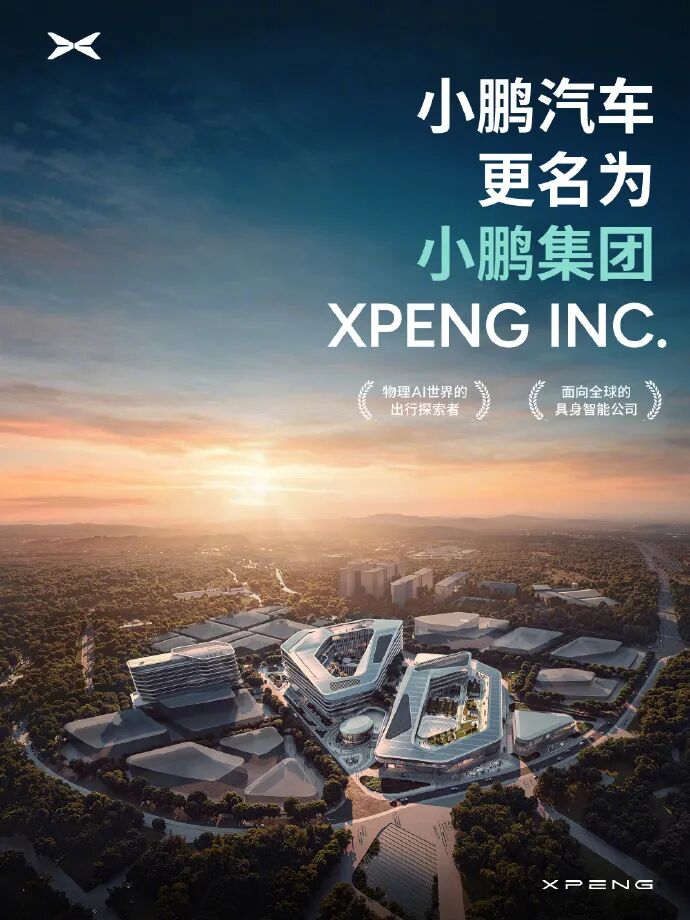
今日新闻丨比亚迪公布2025年财报,营收8040亿元!小鹏汽车更名为小鹏集团!长安汽车巴西工厂正式投产!
电动车公社· 2026-03-28 16:06
Group 1 - XPeng Motors will officially change its name to XPeng Group starting April 1, 2026, while the English name "XPeng Inc." remains unchanged. This name change does not affect the rights of shareholders [1] - The name change signifies XPeng's broader vision, which includes not only selling new cars globally but also technology licensing, Robotaxi, humanoid robots, and flying cars in the low-altitude economy sector. This strategy differentiates XPeng from other automakers and showcases its resilience [4] Group 2 - Changan Automobile's factory in Brazil has officially commenced production, with the first models being Changan UNI-T and Avita 11 [5] - The launch of the Brazilian factory represents a significant milestone for the Chinese automotive industry, marking the full-chain export of "R&D-production-service." Changan aims to reshape the global competitive landscape through localized manufacturing and ecosystem integration [7] Group 3 - BYD reported a revenue of 804 billion yuan for the year 2025, reflecting a year-on-year growth of 3.46%. Revenue from automotive and related industries reached 648.6 billion yuan, up 5.06%, with a net profit attributable to shareholders of 32.6 billion yuan and R&D investment of 63.4 billion yuan [8] - BYD's continuous investment in R&D has solidified its position as the global leader in new energy vehicle sales. In 2025, its high-end brands, including Yangwang, Tengshi, and Fangchengbao, collectively sold nearly 400,000 units, marking a 109% increase. The Yangwang U9X became the fastest globally, and BYD introduced the second-generation blade battery and fast-charging technology this year [11]

新能源汽车销量稳居全球榜首,比亚迪2025年营收超8000万元
Ju Chao Zi Xun· 2026-03-28 11:11
Core Viewpoint - BYD has demonstrated strong operational resilience and growth vitality, maintaining its position as the global leader in electric vehicle sales for four consecutive years and entering the top five global automotive groups in 2025 [2] Financial Performance - In 2025, BYD achieved an operating revenue of approximately 803.97 billion yuan, a year-on-year increase of 3.46% [2] - The net profit attributable to shareholders was approximately 32.62 billion yuan [5] - The net profit after deducting non-recurring gains and losses was about 29.45 billion yuan [5] - The net cash flow from operating activities was 59.14 billion yuan [5] - Basic and diluted earnings per share were both 3.58 yuan [5] - The weighted average return on net assets was 15.31% [5] Business Segments - Revenue from automotive and related products was approximately 648.65 billion yuan, reflecting a year-on-year growth of 5.06% [4] - BYD's total vehicle exports exceeded one million units for the first time, achieving a year-on-year growth of 140% [4] - The company has established a global presence in 119 countries and regions, with a market strategy characterized by leadership in Latin America, breakthroughs in Europe, and diversified growth in Asia-Pacific [4] Brand Development - BYD's high-end brand strategy has shown significant results, with sales from its three high-end brands—Yangwang, Tengshi, and Fangchengbao—reaching nearly 400,000 units, significantly increasing their share of total passenger vehicle sales [5] - Fangchengbao's annual sales grew by 316%, successfully transitioning from a niche to a mainstream market [6] Research and Development - BYD's R&D investment reached 63.4 billion yuan in 2025, a year-on-year increase of 17%, with cumulative R&D investment exceeding 240 billion yuan [6] - The company employs over 120,000 R&D engineers and has filed more than 71,000 patents globally, with over 42,000 patents granted [6] Technological Advancements - BYD launched the world's first mass-produced passenger vehicle with a full-domain kilovolt high-voltage architecture, addressing industry challenges such as slow charging and low-temperature charging difficulties [6] - The company introduced the "Universal Intelligent Driving" strategy and the "Tianshen Eye" technology matrix, leading the automotive industry's shift towards intelligent technology [6] - In March 2026, BYD unveiled the second-generation blade battery and fast-charging technology, setting a new record for the fastest charging speed in mass production, marking the entry into the "fast-charging era" for electric vehicles [6]
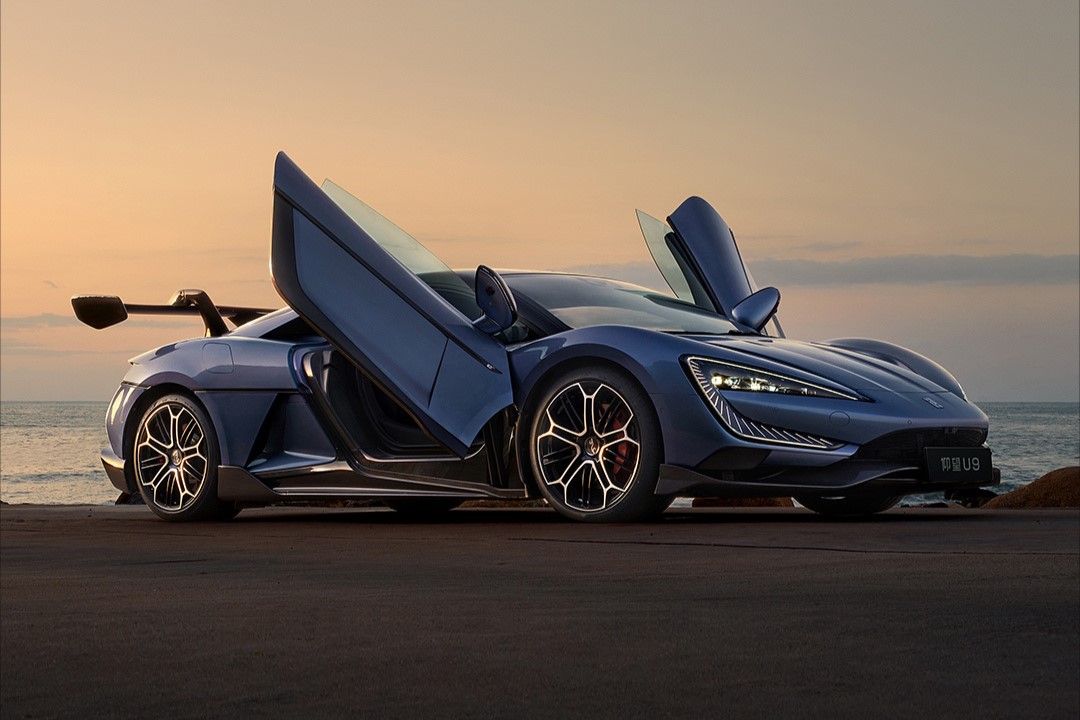
比亚迪年报:营收8040亿元居行业第一,研发投入再创新高
Nan Fang Du Shi Bao· 2026-03-28 02:13
Core Insights - BYD's financial performance in 2025 shows significant growth, with revenue reaching 804 billion yuan and net profit at 32.6 billion yuan, alongside a robust cash reserve of 167.8 billion yuan [3] Group 1: Financial Performance - In 2025, BYD's R&D investment reached 63.4 billion yuan, a 17% increase year-on-year, significantly outpacing net profit growth [3][4] - The company has cumulatively invested over 240 billion yuan in R&D [1] Group 2: Technological Advancements - BYD has accelerated the implementation of its technological innovations, including the "Tian Shen Zhi Yan" driver assistance system and the fifth-generation DM technology [4] - The second-generation blade battery and fast-charging technology were launched, achieving record charging speeds, such as charging from 10% to 70% in just 5 minutes at room temperature [4] Group 3: Sales and Market Position - BYD's total sales in 2025 exceeded 4.6 million units, marking its entry into the top five global automotive manufacturers and securing the title of global leader in new energy vehicle sales [4] - The company achieved a 145% year-on-year increase in overseas sales, totaling 1.05 million units, with operations now in 119 countries and regions [4] Group 4: Brand Development - The combined sales of BYD's brands, including Fangchengbao, Tengshi, and Yangwang, reached 397,000 units, a 109% increase, significantly enhancing the company's brand influence and profitability [4]