
防东铁路

Search documents
【流动的中国·春运第一现场】防东铁路:“钢铁纽带”连起跨境年味
Xin Lang Cai Jing· 2026-02-08 19:33
Core Insights - The opening of the Dongfang Railway has significantly boosted cross-border tourism and economic activity in Dongxing, with over 300 million visitors since its launch, transforming the city into a preferred short-distance travel destination [3] Group 1: Impact of the Dongfang Railway - The Dongfang Railway has transported over 2.2 million passengers in two years, enhancing connectivity between China and Vietnam and fostering a vibrant cross-border trade environment [1] - Daily reception of cross-border tour groups has increased by 150%, shifting from "transit-style" tours to "experiential" deep tours, indicating a change in tourist preferences [2] - The railway has led to a rise in local businesses, with over 100 registered seafood companies in the village of Zhushan, contributing to an average annual income of over 20,000 yuan per villager [2] Group 2: Tourism Growth and Services - Dongxing is expected to see 9.622 million inbound and outbound travelers by 2025, with a year-on-year growth of 13%, indicating a stable daily flow of over 20,000 passengers [3] - The railway station has increased train services from 6 to a maximum of 14 daily trains, including night trains during peak periods, to meet rising travel demands [3] - A comprehensive service upgrade at the railway station includes a "tourism comprehensive service center" offering itinerary planning, emergency supplies, and a "cross-border team reservation service" for group travelers [3] Group 3: Cross-Border Trade and Cultural Exchange - The Dongxing New Year market is bustling with a mix of Vietnamese and Chinese goods, reflecting a cultural exchange where both countries' products are in high demand [4][5] - Tourists are increasingly purchasing unique cross-border New Year goods, blending flavors and traditions from both countries, enhancing the festive atmosphere [5] - The railway has contributed to a more vibrant and warmer New Year celebration at the border, aligning with the broader vision of mutual benefit and open trade in the Western Land-Sea New Corridor [5]
广西“十四五”铁路营业里程超5900公里 成高水平开放引擎
Xin Lang Cai Jing· 2026-01-13 14:35
Core Viewpoint - The Guangxi railway network is undergoing significant expansion and modernization, with a focus on high-speed rail, which is expected to enhance connectivity and support economic development in the region by the end of the 14th Five-Year Plan. Group 1: Railway Network Expansion - By the end of the 14th Five-Year Plan, Guangxi's railway operating mileage is projected to exceed 5,900 kilometers, with high-speed rail accounting for over 2,400 kilometers [1] - The completion of the Nanning to Pingxiang high-speed rail line by the end of 2025 will reduce travel time between the two locations to 75 minutes, facilitating trade between China and ASEAN [1] Group 2: Infrastructure Development - During the 14th Five-Year Plan, Guangxi's railway network has seen historical advancements, with the initiation of seven new projects and the completion of eight projects, including the Guiyang to Nanning high-speed rail [3] - The design speed of the newly completed Guiyang to Nanning high-speed rail has been increased to 350 kilometers per hour, marking a significant upgrade in the region's high-speed rail capabilities [3] Group 3: Connectivity and Economic Impact - The completion of various high-speed rail projects has established a new high-speed rail network in Guangxi, achieving interconnectivity among all 14 prefecture-level cities, making it the first province in western China and among ethnic minority regions to accomplish this [3] - The railway developments are expected to enhance the efficiency of the Western Land-Sea New Corridor and improve connections with the Guangdong-Hong Kong-Macau Greater Bay Area, providing robust transportation support for a dual circulation market [4]

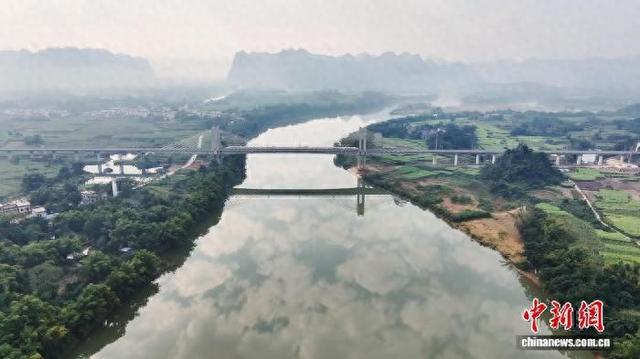
继续延伸81公里,中越边境有重大突破
虎嗅APP· 2025-12-06 09:33
Core Viewpoint - The completion of the Nanning-Pingxiang high-speed railway marks a significant enhancement in connectivity between Guangxi and Southeast Asia, establishing a new international transport corridor to ASEAN countries [6][13]. Group 1: High-Speed Railway Overview - The Nanning-Pingxiang high-speed railway, specifically the Chong-Ping section, officially opened on December 5, 2025, with the first train departing from Pingxiang East Station [6][11]. - This railway is the second high-speed line connecting Guangxi to the China-Vietnam border, enhancing the region's transportation infrastructure [9]. - The railway spans a total length of 201 kilometers, with the Chong-Ping section measuring 81 kilometers and designed for a maximum speed of 250 km/h [48][51]. Group 2: Historical Context - The railway's completion comes 130 years after the initial plans for a cross-border railway between China and Vietnam, which faced numerous historical challenges [63][95]. - The region of Longzhou, which the railway passes through, has historical significance as a former border trading hub and was intended to be part of the first international railway in China [91][95]. Group 3: Economic and Strategic Implications - The new railway significantly reduces travel time between Nanning and Pingxiang from 4 hours to under 2 hours, facilitating trade and tourism [100][105]. - The railway is expected to boost the economic integration of Guangxi with ASEAN, enhancing trade routes and passenger transport [13][110]. - The completion of this railway aligns with China's Belt and Road Initiative, promoting cross-border connectivity and economic cooperation [36][110].
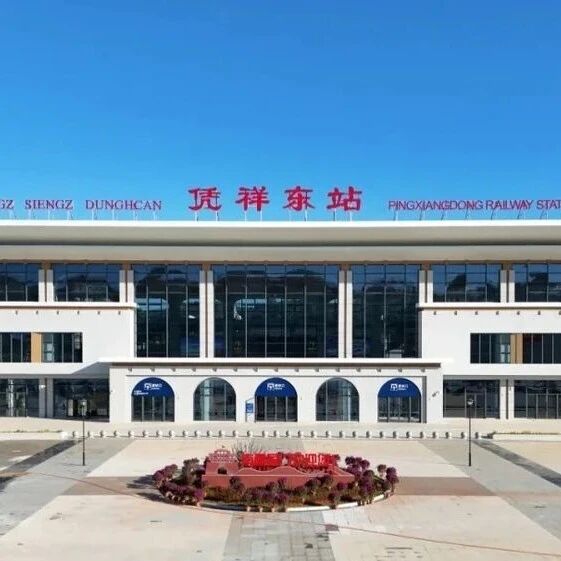
两条高铁已修到边境,中越互联互通提速
Di Yi Cai Jing· 2025-08-25 12:35
Core Points - The second high-speed railway connecting Guangxi to the Vietnam border is expected to open within this year, enhancing connectivity between China and Southeast Asia [1][2] - The Nanning-Pingxiang high-speed railway segment is approximately 81.52 kilometers long with a design speed of 250 km/h, significantly reducing travel time between Nanning and Pingxiang from over 4 hours to just over 1 hour [2][3] - This railway is a key infrastructure project for the China-Vietnam border region, aimed at improving trade and personnel exchanges between Guangxi and Vietnam [2][3] Infrastructure Development - The Nanning-Pingxiang high-speed railway is the first high-speed railway independently constructed by Guangxi, funded by the Guangxi Transportation Investment Group and built by the Nanning Railway Bureau [2] - The railway will connect with Vietnam's planned standard gauge railway from Lang Son to Hanoi, further enhancing cross-border transportation [2][3] - The opening of this railway follows the recent launch of the Fangchenggang to Dongxing railway, which is the first high-speed railway directly reaching the China-Vietnam border [2] Trade and Economic Impact - The acceleration of railway connectivity has led to a significant increase in cross-border freight transport, with Guangxi's exports via the China-Vietnam railway increasing by 283% in the first half of 2025 [4][5] - The number of China-Vietnam freight trains has surged, with a 1153% year-on-year increase in shipments in 2024, indicating a growing trade relationship [5] - Guangxi's foreign trade with ASEAN countries has also seen substantial growth, with total imports and exports reaching 387.15 billion yuan in the first half of 2025, a 13% increase year-on-year [5][6]