
阿勒泰羊

Search documents
李军:做深做细做实县域富民产业大文章
Jing Ji Ri Bao· 2026-02-10 00:07
Core Viewpoint - The development of county-level industries aimed at increasing farmers' income is crucial for promoting rural revitalization and achieving common prosperity, as emphasized in the 2026 Central Document No. 1 [1] Group 1: Importance of County-Level Industries - Cultivating and strengthening county-level industries is essential for addressing urban-rural development imbalances and promoting local employment and income growth [2] - County-level industries represent a systematic upgrade of traditional rural development models, focusing on integrated development and leveraging local resources [2] - The strategy aims to enhance the core competitiveness of counties and ensure that key links in the industrial chain retain value within the county, benefiting farmers [2] Group 2: Current Achievements and Challenges - Recent efforts in implementing rural revitalization strategies have led to significant advancements in modern agricultural systems and the emergence of new industries such as rural e-commerce and leisure tourism [3] - Despite progress, challenges remain, including short industrial chains, low efficiency, and severe homogenization, necessitating a more detailed and practical approach to developing county-level industries [3] Group 3: Focus on Local Characteristics - Emphasizing local characteristics is vital for the development of county-level industries, requiring a deep understanding of local resources and conditions to avoid homogenization and competition [4] - Successful examples include the strawberry industry in Changfeng County, Anhui, generating significant annual revenue, and the Alatai sheep in Xinjiang, which has entered high-end markets [4] Group 4: Market-Driven Development - Understanding the inherent logic of industries is crucial, focusing on market-driven approaches and technological empowerment to enhance efficiency and innovation [5] - Government roles should focus on guidance and support for dynamic business entities, such as leading enterprises and cooperatives, to improve market engagement and risk management [5] Group 5: Investment in Human Capital - The fundamental goal of developing county-level industries is to enrich farmers, necessitating the establishment of robust benefit-sharing mechanisms to ensure stable income growth for rural populations [6] - Investment in human capital through training in modern agricultural techniques and skills is essential for cultivating a new generation of skilled farmers, thereby stimulating local consumption and economic growth [6]
做深做细做实县域富民产业大文章
Xin Lang Cai Jing· 2026-02-09 22:25
Core Viewpoint - The development of county-level industries aimed at increasing farmers' income is crucial for promoting rural revitalization and achieving common prosperity, as emphasized in the 2026 Central Document No. 1 [2] Group 1: Importance of County-Level Industries - Cultivating and strengthening county-level industries is essential for addressing urban-rural development imbalances and enhancing local employment opportunities for farmers [3] - County-level industries represent a systematic upgrade and spatial restructuring of traditional rural industry development models, focusing on integrated development and leveraging local resources [3] Group 2: Current Achievements and Challenges - Recent efforts in implementing rural revitalization strategies have led to significant advancements in modern agricultural systems and the emergence of new industries such as rural e-commerce and leisure tourism [4] - Despite progress, challenges remain, including short industrial chains, low efficiency, and severe homogenization, necessitating focused efforts to deepen and solidify county-level industries [4] Group 3: Strategies for Development - Emphasizing local characteristics and adhering to a place-based approach is vital for the development of county-level industries, avoiding homogenization and fostering unique competitive advantages [5] - Understanding industry dynamics and maintaining a market-driven approach are crucial for enhancing efficiency and innovation within county-level industries [6] Group 4: Focus on Wealth Creation - The primary goal of developing county-level industries is to enrich farmers, which requires establishing diverse and close-knit benefit-sharing mechanisms to ensure stable income for rural communities [7] - Investing in human capital through training and skill development is essential for creating a new generation of professional farmers, thereby stimulating local consumption and driving further industrial growth [7]

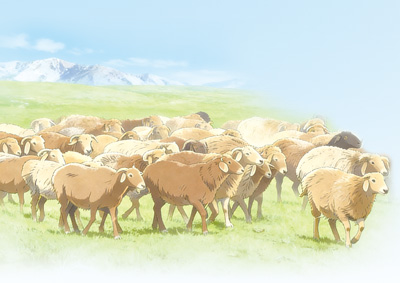
阿勒泰羊闯出热销路(神州看点·冷资源成热产业)
Ren Min Ri Bao· 2026-01-29 07:37
Core Viewpoint - The article highlights the thriving sheep farming industry in the Altay region of Xinjiang, focusing on the unique qualities of the Altay sheep and the innovative practices that enhance its marketability and quality [2][5]. Group 1: Altay Sheep Characteristics - Altay sheep are well-suited to the cold climate of the Altay region, with their unique fat distribution allowing them to thrive in harsh conditions [2]. - The meat quality of Altay sheep is enhanced by their diet of natural, pollution-free forage, which contributes to a balanced fat content and superior taste [3]. Group 2: Sales and Distribution Innovations - The company utilizes smart cold chain logistics to ensure that sheep meat can be delivered to major cities like Beijing and Shanghai within 48 hours [3]. - The sales model has shifted to online platforms, allowing consumers to select sheep directly from farms and track their growth and health data [4]. Group 3: Technological Advancements in Farming - The Altay region has seen significant improvements in sheep breeding technology, with maternal sheep achieving a lambing rate of 150% through innovative practices [5]. - The total number of Altay sheep raised in the region has reached 4 million, with a robust network of farms and cooperatives supporting the industry [5]. Group 4: Economic Impact and Future Prospects - The Altay sheep industry has become a pillar of rural revitalization in the region, transforming from subsistence farming to a profitable enterprise for local herders [5]. - Continued investment in technology is expected to further enhance the industry's growth potential, promoting sustainable development and increased income for herders [6].
阿勒泰这口“鲜”香飘全国
Zhong Guo Xin Wen Wang· 2026-01-29 04:42
Core Viewpoint - The article highlights the thriving sheep farming industry in the Altay region of Xinjiang, focusing on the unique qualities of the Altay sheep and the impact of technology on improving production and sales processes [2][4][5]. Group 1: Altay Sheep Characteristics - Altay sheep are well-adapted to the cold climate, with a unique fat distribution that enhances their quality, making them a key product for local pastoralists [2][3]. - The sheep are raised on natural, pollution-free pastures, contributing to the superior taste and nutritional value of the meat [3]. Group 2: Sales and Distribution Innovations - The introduction of smart cold chain logistics allows for rapid distribution of Altay sheep meat to major cities like Beijing, Shanghai, and Guangdong within 48 hours [3][4]. - The sales model has shifted to online platforms, enabling consumers to select and track their sheep through digital means, enhancing transparency and consumer engagement [4]. Group 3: Technological Advancements in Farming - Local farmers are adopting advanced breeding techniques, such as the two-year three-breeding technology, which has significantly increased lambing rates [4][5]. - The Altay sheep industry has seen a rise in production, with a current population of 4 million sheep and a network of 8 breeding enterprises and 42 cooperatives [4]. Group 4: Economic Impact and Future Prospects - The transformation of the Altay sheep industry represents a successful case of leveraging technology to enhance traditional agriculture, contributing to rural prosperity [5]. - The industry is expected to continue growing, driven by ongoing technological advancements and a focus on sustainable development, promising further economic benefits for local communities [6].
阿勒泰羊区域公用品牌在京发布 多方合力打造产业新生态
Zhong Guo Xin Wen Wang· 2025-09-20 16:01
Core Insights - The event held in Beijing on September 20 focused on promoting the "Aletai Sheep" regional public brand, showcasing its ecological value and industry prospects to expand its market presence nationwide [1][2] Group 1: Brand Development - The Aletai region is recognized for its unique natural endowments, producing the nationally protected geographical indication product, Aletai Sheep [1] - Aletai Sheep is positioned as a valuable local genetic resource known for its tender meat, lack of gamey flavor, and pure taste [1][2] Group 2: Industry Growth - The Aletai Sheep industry currently spans 6 counties and 1 city, covering 56 townships, with an expected breeding volume of 4 million sheep and an annual output value of 1.479 billion yuan in 2024, accounting for 28% of the region's total livestock output value [1] - The establishment of a public brand construction plan includes three systems: quality standards, traceability certification, and industry alliances to enhance brand value [2] Group 3: Scientific and Technological Support - The core advantages of Aletai Sheep include low fat, high protein, and no gamey taste, supported by national-level genetic breeding technology certification [2] - The event marked the integration of regional public branding, e-commerce giants, and research institutions, aiming to propel Aletai Sheep beyond Xinjiang and into the national market [2]