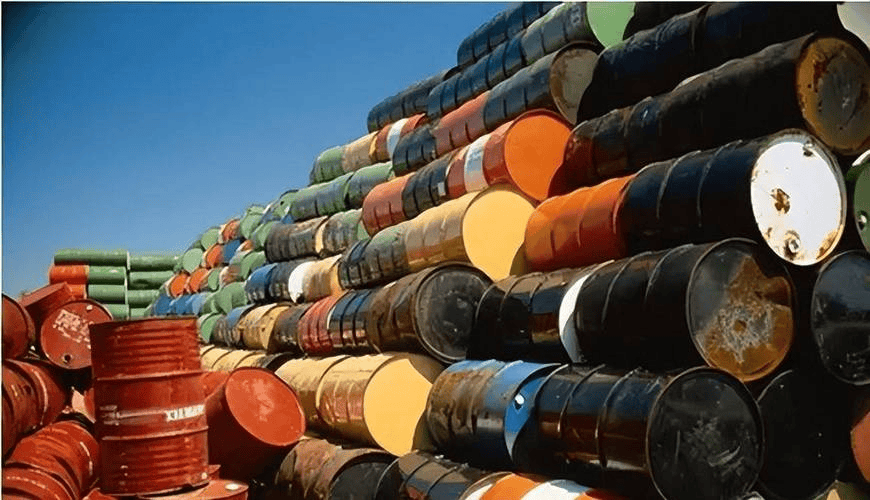
阿布扎比穆尔班原油

Search documents
原油日报:卢克石油国际资产面临制裁风险-20251111
Hua Tai Qi Huo· 2025-11-11 03:04
1. Report Industry Investment Rating - No specific industry investment rating is provided in the reports. 2. Report's Core View - Sanctions have led to uncertainties in the oil market, with Luke Oil's international assets at risk of sanctions. The company needs to sell its international assets quickly, but it is difficult to do so in a short time [2]. - Oil prices are expected to be short - term oscillating and bearish, with a medium - term short position recommendation, and a strategy of shorting the monthly spread (buying far - dated contracts and selling near - dated contracts, targeting WTI or Brent) [3]. 3. Summary by Related Catalogs Market News and Important Data - New York Mercantile Exchange's December - delivery light - sweet crude oil futures rose 38 cents to $60.13 per barrel, a 0.64% increase; January - delivery London Brent crude oil futures rose 43 cents to $64.06 per barrel, a 0.68% increase. SC crude oil's main contract closed down 0.04% at 460 yuan per barrel [1]. - Hindustan Petroleum Corporation (HPCL) bought 2 million barrels of WTI crude oil and 2 million barrels of Abu Dhabi Murban crude oil, expected to arrive in January. Mangalore Refinery and Petrochemicals Limited (MRPL) bought 1 million barrels of Basra Medium crude oil for delivery from January 1st to 7th. Both companies have suspended purchasing Russian oil [1]. - The share price of Hungarian refiner Mol rose after Prime Minister Orbán obtained a waiver from US sanctions on Russian oil. Mol's refineries in Hungary and Slovakia continue to rely on Russian crude oil, and the price difference of cheap Russian oil helps expand its refining profit margins and boost Q3 earnings [1]. - During the heating season from this winter to next spring, CNPC has arranged a 3.7% year - on - year increase in natural gas supply resources, accounting for over 60% of the domestic supply. In the first three quarters of this year, CNPC produced 123 billion cubic meters of natural gas (a 4.7% year - on - year increase), imported 80.4 billion cubic meters of natural gas (a 5.7% year - on - year increase), and injected 18.6 billion cubic meters of gas into storage facilities (an 8.8% year - on - year increase) [1]. - Luke Oil has terminated the employment of non - Russian foreign employees at the West Qurna - 2 oil field. Iraq has frozen cash and crude oil payments to Luke Oil and is seeking legal ways to ensure the continued operation of the field [1]. Investment Logic - Although the US has exempted Hungary from Russian energy imports for one year, uncertainties due to sanctions remain. The West Qurna - 2 oil field in Iraq, in which Luke Oil participates, has seen Iraq stop paying cash to the company and cancel three cargoes of equity crude oil originally allocated to it in November. Luke Oil needs to sell its international assets quickly, but it is difficult to do so in a short time, and these assets may still be affected by sanctions [2]. Strategy - Short - term, oil prices are expected to oscillate with a bearish bias; medium - term, a short position is recommended, and short the monthly spread (buy far - dated contracts and sell near - dated contracts, targeting WTI or Brent) [3].
印度停购俄油!美施压促转向中东
Sou Hu Cai Jing· 2025-08-01 01:23
Core Insights - Indian state-owned oil companies have recently suspended the import of Russian crude oil through conventional procurement channels due to a significant narrowing of price discounts and the impact of escalating U.S. sanctions against Russia [1][2] Group 1: Industry Impact - As the world's third-largest crude oil importer and the largest buyer of Russian seaborne crude, India's supply adjustments will have a significant impact on the international energy market [1] - The state-owned refining sector accounts for over 60% of India's total refining capacity, making its strategic shift a key indicator for the industry [2] Group 2: Company Actions - Major state-owned refiners such as Indian Oil Corporation, Hindustan Petroleum Corporation, Bharat Petroleum Corporation, and Mangalore Refinery and Petrochemicals have shifted to the spot market to seek alternative supply sources, primarily from the Middle East and West Africa [2][3] - Private refiners like Reliance Industries and Nayara Energy continue to maintain their purchases from Russia, highlighting a divergence in procurement strategies within the sector [3] Group 3: Regulatory Context - The backdrop for this supply chain adjustment includes new U.S. sanctions threats announced in mid-July, which propose a 100% tariff on countries continuing to purchase Russian crude unless a significant peace agreement is reached regarding the Ukraine situation [2][3] - This political pressure is reshaping the global energy trade landscape, prompting major importing countries to reassess their energy procurement strategies [3]