
霸气杨梅

Search documents
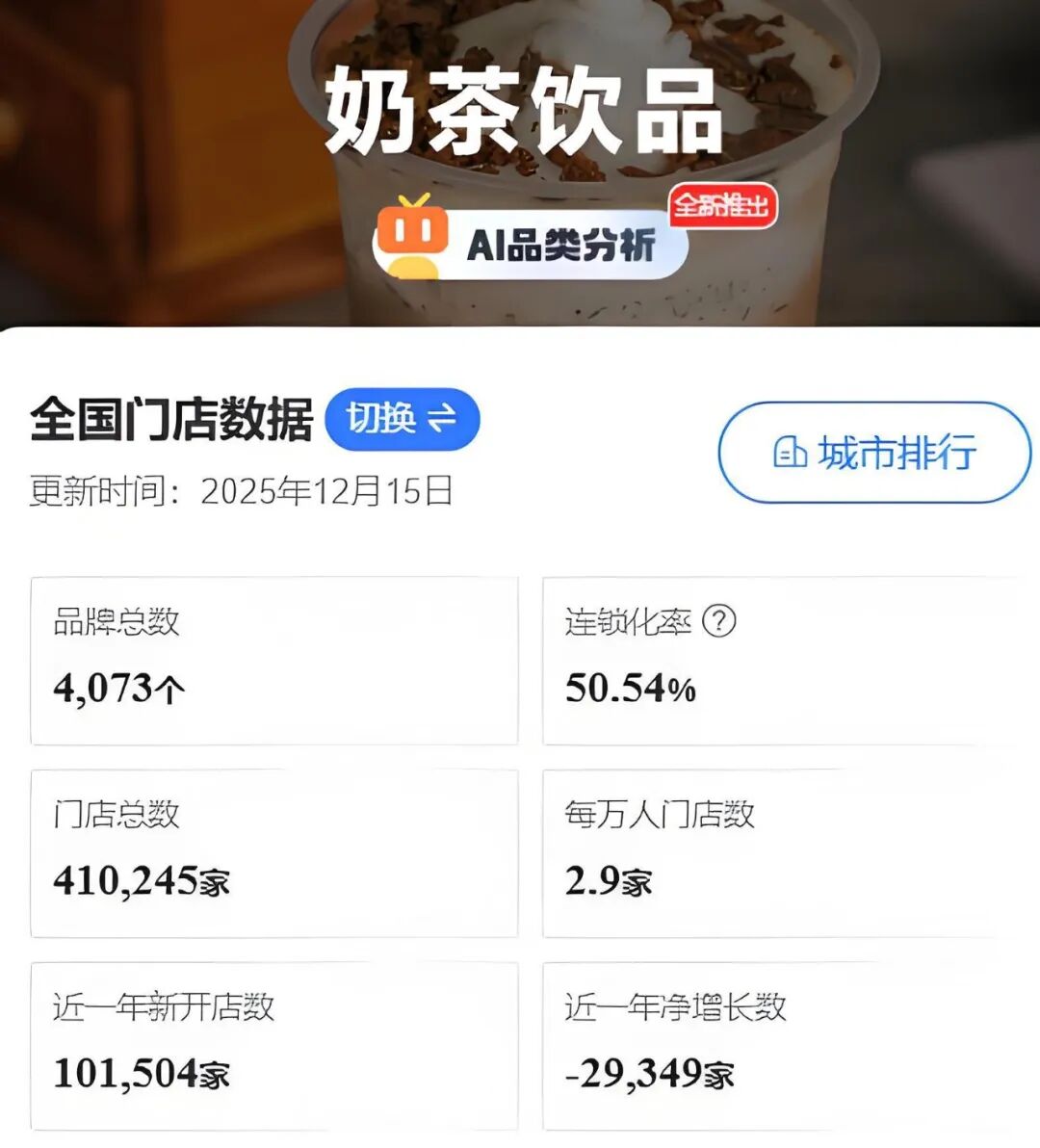
新茶饮一年消失15.7万家,品类选错了?
3 6 Ke· 2026-01-09 12:39
Core Insights - The new tea beverage sector in China has seen significant growth, with major brands like Mixue Ice City, Gu Ming, and others successfully going public, leading to the emergence of the "New Tea Beverage Six Dragons" [1][10] - The total number of tea beverage stores in China has surpassed 400,000, but the industry is experiencing a rapid "survival of the fittest" phase, with 157,000 stores closing in the past year [1][3] Industry Overview - The new tea beverage industry is characterized by a high chain rate of 50.54%, with a total of 410,245 stores and a net decrease of 29,349 stores in the past year [3] - The development of the tea beverage sector has evolved from low-cost, low-quality products in the 1980s to a focus on high-quality tea and innovative flavors in recent years [4][7] Brand Development - Major brands have adopted different strategies, with some focusing on single-hit products while others diversify their offerings [9][10] - The "single-hit" strategy has allowed brands like Shuyi Burned Fairy Grass to optimize their product development and operational efficiency, but it also poses risks if consumer preferences shift [11][13] Product Innovation - The introduction of unique products like cheese milk cap tea has revolutionized the market, leading to a focus on high-quality tea bases and innovative flavor combinations [5][7] - Brands are increasingly exploring the use of fresh fruits and unique ingredients to differentiate their products, although this also complicates supply chain management [8][17] Market Challenges - The rapid expansion of the new tea beverage market has led to intense competition and a high rate of store closures, indicating a need for brands to innovate continuously [1][13] - Supply chain complexities are increasing as brands strive to maintain quality and manage costs, with some companies investing in their own ingredient sourcing [17][18]

茶饮品牌,开始集体卷“传家宝”了
东京烘焙职业人· 2025-12-20 08:33
Core Viewpoint - The tea beverage industry is experiencing a significant shift towards nostalgia, with brands returning to classic products as a strategic response to market saturation and consumer demand for familiar flavors [3][5][41]. Group 1: Industry Trends - In 2025, tea brands are moving away from novelty and focusing on classic flavors, as the rapid innovation cycle has become unsustainable [6][7]. - The trend of "classic product returns" is driven by a need for value creation and consumer familiarity, leading to a resurgence of familiar tastes [8][9]. - Major brands are reviving historical products that once defined consumer experiences, utilizing minor innovations to reintroduce them to the market [9][10]. Group 2: Successful Product Returns - In April 2025, Shuyi Shao Xian Cao reintroduced its popular product "Chengman Mountain Tea Flower," which had previously sold over 9 million cups in 2022, marking the start of the nostalgia trend [12][10]. - Nayuki's tea is preparing for the summer with the return of "Baqi Yangmei," which achieved sales of 3 million cups in just half a month [14][16]. - Tea Baidao reintroduced classic fruit teas and upgraded its "Double Ball Ice Cream Red Tea" to enhance consumer satisfaction during the summer season [18][20]. Group 3: Consumer Engagement and Brand Strategy - The return of classic products is not merely nostalgia marketing; it is a strategic adjustment to address growth pressures and competition in a saturated market [41][50]. - Brands are leveraging the emotional connection consumers have with classic products, which often serve as a form of social currency and personal memory [51][49]. - The focus on classic products allows brands to maintain operational efficiency and quality assurance, as these items have established recipes and consumer trust [48][46]. Group 4: Innovative Marketing Approaches - Brands are employing innovative strategies to revitalize classic products, such as deconstructing traditional combinations and integrating new elements to create unique offerings [61][62]. - The marketing approach has shifted from merely selling products to creating meaningful experiences and cultural symbols that resonate with consumers [66][68]. - Engaging consumers in the product creation process, such as through DIY options and feedback mechanisms, enhances brand loyalty and anticipation for product returns [70][73]. Group 5: Long-term Value Creation - Establishing annual return rituals for classic products helps brands cultivate consumer habits and expectations, transforming short-term hits into long-term assets [75][78]. - The essence of successful classic product revitalization lies in maintaining quality while innovating, ensuring that nostalgia does not compromise brand integrity [80][81].

广州饮品圈“山野风”掀起消费新浪潮
Guang Zhou Ri Bao· 2025-05-05 16:13
Core Viewpoint - The "mountain wild" beverage trend has emerged as a new favorite among young consumers during the May Day holiday in Guangzhou, reshaping the competitive landscape of the ready-to-drink tea market [1][2]. Group 1: Market Trends - Natural ingredients such as wood ginger, papaya, sea buckthorn, and wild tomatoes have become popular in ready-to-drink tea, appealing to young consumers [2]. - The "mountain wild" theme has been successfully integrated into various products, with brands like Tea Baidao and Nayuki launching specific series that highlight these ingredients [2][3]. - The popularity of "mountain wild" beverages is reflected in high sales, with some products selling out quickly, indicating strong consumer demand [2]. Group 2: Consumer Behavior - The rise of "mountain wild" beverages aligns with the emotional needs of the younger generation, who seek stress relief through natural and nostalgic flavors [3]. - The combination of seasonal, local ingredients and traditional preparation methods resonates with consumers, enhancing their connection to childhood memories and local culture [3]. Group 3: Brand Strategy - Brands are encouraged to innovate using seasonal, contextual, and ingredient-based approaches to maintain consumer interest and promote health [4]. - The uniqueness and regional characteristics of "mountain wild" ingredients provide brands with new storytelling opportunities, enhancing emotional value for consumers [4]. - Collaborating with local farmers and securing ingredient supply chains will be essential for brands to ensure quality and freshness in their offerings [4].