青铜神坛

Search documents
神秘的神坛:构筑“天地人”三界,或是“三神”系统来源
Jing Ji Guan Cha Bao· 2025-12-18 04:12
Core Viewpoint - The article discusses the significance of the Sanxingdui archaeological site, particularly its bronze artifacts, which reflect a complex belief system involving a "three-god" system that may have influenced early Taoist practices in the region [1][23]. Group 1: Bronze Artifacts and Their Significance - The Sanxingdui site features three categories of bronze artifacts: bronze god statues, bronze human figures, and ritual vessels, indicating a structured approach to worship and offerings [1][2]. - The bronze god statues are divided into a main god and smaller gods, with the main god depicted wearing a distinctive bronze mask characterized by exaggerated features [3][4]. - The artifacts suggest a hierarchical belief system, with the main god positioned prominently and smaller gods serving in subordinate roles [10][11]. Group 2: The "Three-God" System - The concept of "three" is emphasized as significant to the Sanxingdui culture, leading to the proposal of a "three-god system" where three main deities are worshipped [8][9]. - The largest bronze god statue measures 1.42 meters between the ears, suggesting a central figure flanked by two smaller deities, possibly representing various aspects of nature or ancestral spirits [9]. - The arrangement of the deities in ritual contexts indicates a structured belief system with clear distinctions in the roles of gods and humans during worship [10][13]. Group 3: Ritual Practices and Beliefs - Ritual scenes depicted in artifacts suggest a connection between the heavens, earth, and humanity, with the belief that offerings could reach the divine through intermediaries [23]. - The artifacts reflect a unique cultural atmosphere distinct from other ancient Chinese civilizations, emphasizing a "heaven, earth, and human" worldview [23]. - The Sanxingdui culture may represent an early form of Taoist belief, with the worship of a triad of deities that laid the groundwork for later religious practices in the region [23].
文博日历丨细节拉满!历经30余年“跨坑”组装的三星堆“积木”
Yang Shi Xin Wen Ke Hu Duan· 2025-12-09 23:50
Core Viewpoint - The article discusses the assembly of a complex bronze altar from the Sanxingdui archaeological site, highlighting its unique design and the advanced technology used in its reconstruction over 30 years [6][11]. Group 1: Discovery and Assembly - The bronze altar, described as the most complex bronze artifact in the world, was discovered in parts starting in 1986 and was fully assembled using digital technology by 2022 [6][11]. - The assembly involved components from multiple sacrificial pits, showcasing a collaborative effort in archaeological research [8][11]. Group 2: Structure and Design - The altar consists of three main parts: the bronze base, the bronze beast, and the bronze top figure, each contributing to a grand sacrificial scene [11][40]. - The base features a hollow platform adorned with plant-like patterns and includes 13 small bronze figures, reflecting the intricate details of ancient rituals [18][19]. Group 3: Cultural Significance - The bronze beast on the altar symbolizes the ancient Shu people's reverence for nature and their desire to conquer it, indicating a blend of cultural influences [24][40]. - The altar's design suggests a complex understanding of ritual practices and social roles within the ancient Shu civilization, potentially revealing insights into their religious beliefs [38][40].

文物活化、非遗传承、文旅融合 多视角感知中华文脉在传承中创新、在开放中焕彩
Yang Shi Wang· 2025-10-18 08:43
Core Perspective - The article highlights the significant advancements in cultural heritage and tourism in China during the "14th Five-Year Plan" period, showcasing the integration of technology and cultural preservation efforts [1]. Group 1: Cultural Heritage and Technological Integration - Over 130,000 new cultural heritage sites have been discovered, and nearly 2,000 national protection units are undergoing restoration [1]. - The use of virtual reality (VR) technology at the Sanxingdui Museum allows visitors to experience archaeological sites, enhancing engagement with ancient artifacts [3][7]. - AI technology has been employed to reconstruct ancient artifacts, such as the 2.53-meter bronze bird-foot statue, by accurately matching and assembling fragments from different excavation sites [9]. Group 2: Cultural and Tourism Industry Growth - The cultural tourism industry in China has seen a revenue surge, exceeding 10 trillion yuan, with museums receiving nearly 1.5 billion visitors annually [1]. - The Sanxingdui Museum has introduced various creative cultural products, such as bags and keychains featuring bronze figures, making ancient culture more accessible and appealing to younger audiences [10][12]. - In Gansu, the "Digital Dunhuang" project aims to reunite lost artifacts through digital means, attracting nearly 30,000 visitors from 29 countries since its launch [21]. Group 3: Regional Cultural Developments - Tibet's cultural tourism sector has welcomed over 57 million visitors in the first eight months of 2025, marking an 11.3% increase year-on-year, with cultural industry output exceeding 10 billion yuan [28]. - The "Village T" fashion show in Guizhou has gained national attention, showcasing local ethnic cultures and significantly boosting sales of traditional handicrafts [38].

文明的力量 | 残片堆里拼出古蜀华章 他在三星堆修文物
Yang Shi Wang· 2025-06-03 08:46
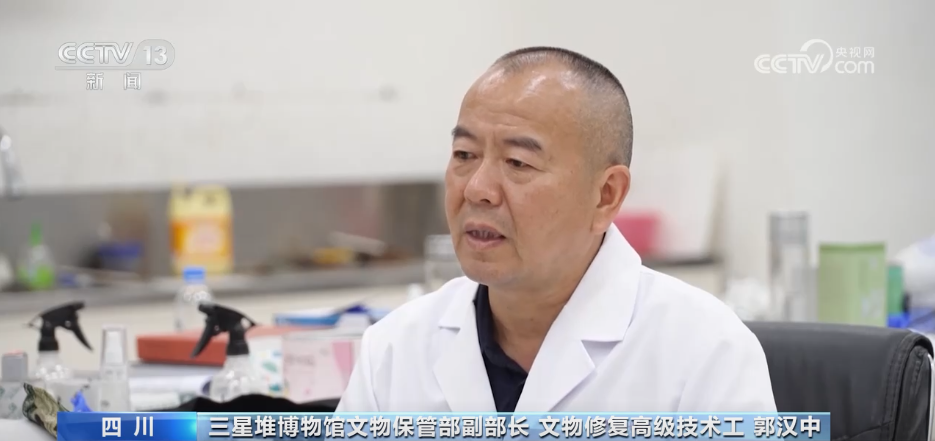
Group 1 - The core viewpoint emphasizes the importance of coordinating material and spiritual civilization as a key feature of Chinese modernization, highlighting the continuous improvement in societal awareness and moral standards since the 18th National Congress of the Communist Party of China [1] - The article introduces Guo Hanzhong, a senior technician in cultural relic restoration at the Sanxingdui Museum, who has dedicated 41 years to reviving over 6,000 ancient artifacts, showcasing the renewed value orientation and moral standards in contemporary China [1][3] - Guo Hanzhong's innovative restoration techniques, including traditional soldering combined with modern riveting and pouring methods, were crucial in reconstructing the nearly 4-meter tall bronze sacred tree, which was found in over 200 fragmented pieces [3][6] Group 2 - Guo Hanzhong has invented over a hundred tools tailored for different types of cultural relic damage, significantly enhancing the efficiency of the restoration process [6][8] - He developed wax mold solidification technology, which was instrumental in safely extracting hundreds of decayed ivory pieces from a newly discovered sacrificial pit at the end of 2019 [8] - Guo Hanzhong emphasizes the importance of knowledge transfer to his apprentices, advocating for a blend of traditional craftsmanship and modern technology, and has established a master workshop for cultural relic restoration skills to cultivate young professionals in the field [10]