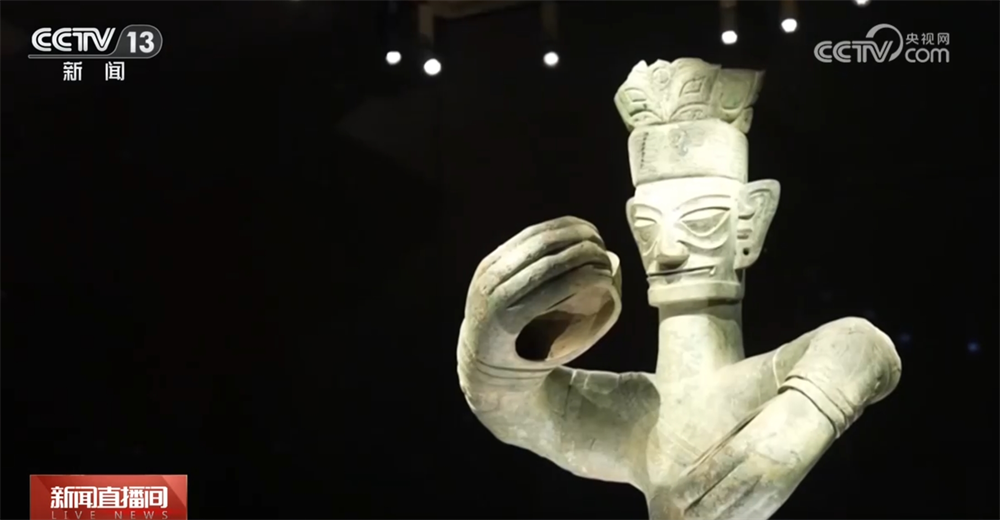
青铜大立人

Search documents
戴冠纵目面具首次同台 三星堆—金沙遗址古蜀文明展亮相国家博物馆
Xin Lang Cai Jing· 2026-01-18 18:29
Core Viewpoint - The exhibition "Double Stars Shine in the World - Sanxingdui and Jinsha Site Ancient Shu Civilization Exhibition" showcases over 200 cultural relics, highlighting the archaeological journey and rich cultural heritage of the Sanxingdui and Jinsha sites, revealing the close connections between ancient Shu civilization and the Central Plains as well as the middle and lower reaches of the Yangtze River [1][6]. Group 1: Exhibition Highlights - The exhibition features the first-ever joint display of two crowned vertical-eyed masks from the Sanxingdui Museum and the National Museum of China, marking a historic gathering since their discovery in 1986 [3][4]. - The exhibition includes 37 sets of Jinsha relics that are being displayed outside the museum for the first time, showcasing significant artifacts such as the bronze standing figure and beast-head jade [6][8]. - The Sun God Bird gold ornament, a treasure of the Jinsha Museum, is highlighted in the exhibition, known for its high gold content of 94.2% and intricate design, representing the pinnacle of ancient Shu gold craftsmanship [4][6]. Group 2: Archaeological Significance - The Sanxingdui and Jinsha sites are recognized as two of the most significant archaeological discoveries in China, with the Sanxingdui site being re-excavated in 2019, leading to the discovery of six new sacrificial pits [3][4]. - The exhibition utilizes 3D technology to recreate significant artifacts, enhancing the visitor experience and understanding of ancient Shu civilization [5][8]. - The exhibition aims to deepen public awareness of the multi-faceted development of Chinese civilization, showcasing the results of archaeological excavations since 2020 and the upcoming research progress to be presented at the Sanxingdui Forum in September 2025 [8].

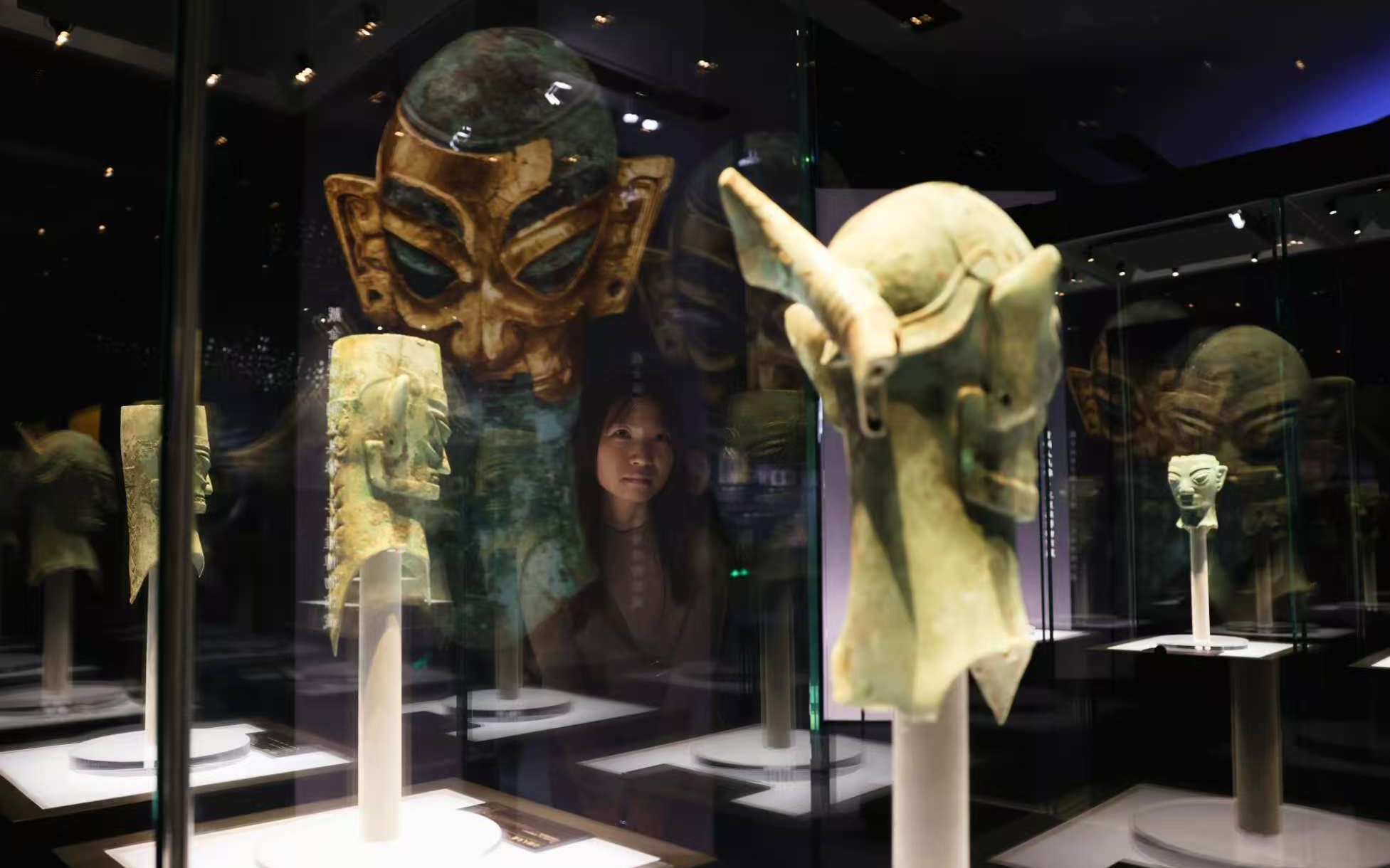
“神鸟”领衔、戴冠纵目面具首次聚首,三星堆—金沙遗址古蜀文明展亮相国博
Xin Lang Cai Jing· 2026-01-18 11:14
Core Viewpoint - The exhibition "Twin Stars Shine - Sanxingdui and Jinsha Site Ancient Shu Civilization Exhibition" showcases over 200 exquisite artifacts from the Sanxingdui and Jinsha sites, highlighting the archaeological journey and rich cultural heritage of the ancient Shu civilization, and revealing its close ties with the Central Plains and the lower reaches of the Yangtze River, thus illustrating the diversity and unity of Chinese civilization [1][4]. Group 1: Exhibition Overview - The exhibition is guided by the National Cultural Heritage Administration and hosted by the National Museum of China and the Sichuan Provincial Cultural Heritage Administration, with support from various local archaeological institutions. It will run until August 18, 2026 [3]. - The exhibition is divided into four main chapters: "Stunning Treasures," "Human and Divine Dance," "Worship of Heaven and Earth," and "Mutual Integration and Appreciation," which collectively unveil the grandeur of ancient Shu civilization [4]. Group 2: Key Artifacts and Cultural Insights - "Stunning Treasures" presents the discovery journey of the Sanxingdui and Jinsha sites, with significant finds from 1986 and 2001 recognized as major archaeological discoveries of the 20th and early 21st centuries, respectively [4]. - "Human and Divine Dance" illustrates the rich bronze civilization of ancient Shu, revealing the spiritual beliefs and social structure of the Shu people through artifacts like bronze figures and masks, indicating a dual power structure of religious and secular authority [5]. - "Worship of Heaven and Earth" showcases artifacts that reflect the ancient Shu people's reverence for nature and the divine, emphasizing the high status of religious rituals in their society and the civilization's strength during the Shang and Zhou dynasties [7]. - "Mutual Integration and Appreciation" details how the Sanxingdui and Jinsha cultures innovatively absorbed surrounding civilizations, exemplified by the advanced bronze and gold craftsmanship, which represents the pinnacle of early Chinese metallurgy [8]. Group 3: Notable Exhibits - The exhibition features the "Sun God Bird" gold ornament from the Jinsha site, renowned for its intricate design and high gold content of 94.2%, symbolizing the brilliance of ancient Shu gold craftsmanship [10]. - A total of 37 artifacts from the Jinsha site are being exhibited for the first time, including significant items that depict the daily life, production techniques, and spiritual beliefs of the ancient Shu society [11]. - The exhibition also includes notable artifacts from the Sanxingdui site, such as the gold mask and bronze figures, which together portray a vibrant ancient Shu society and highlight the grandeur of Chinese civilization [13].
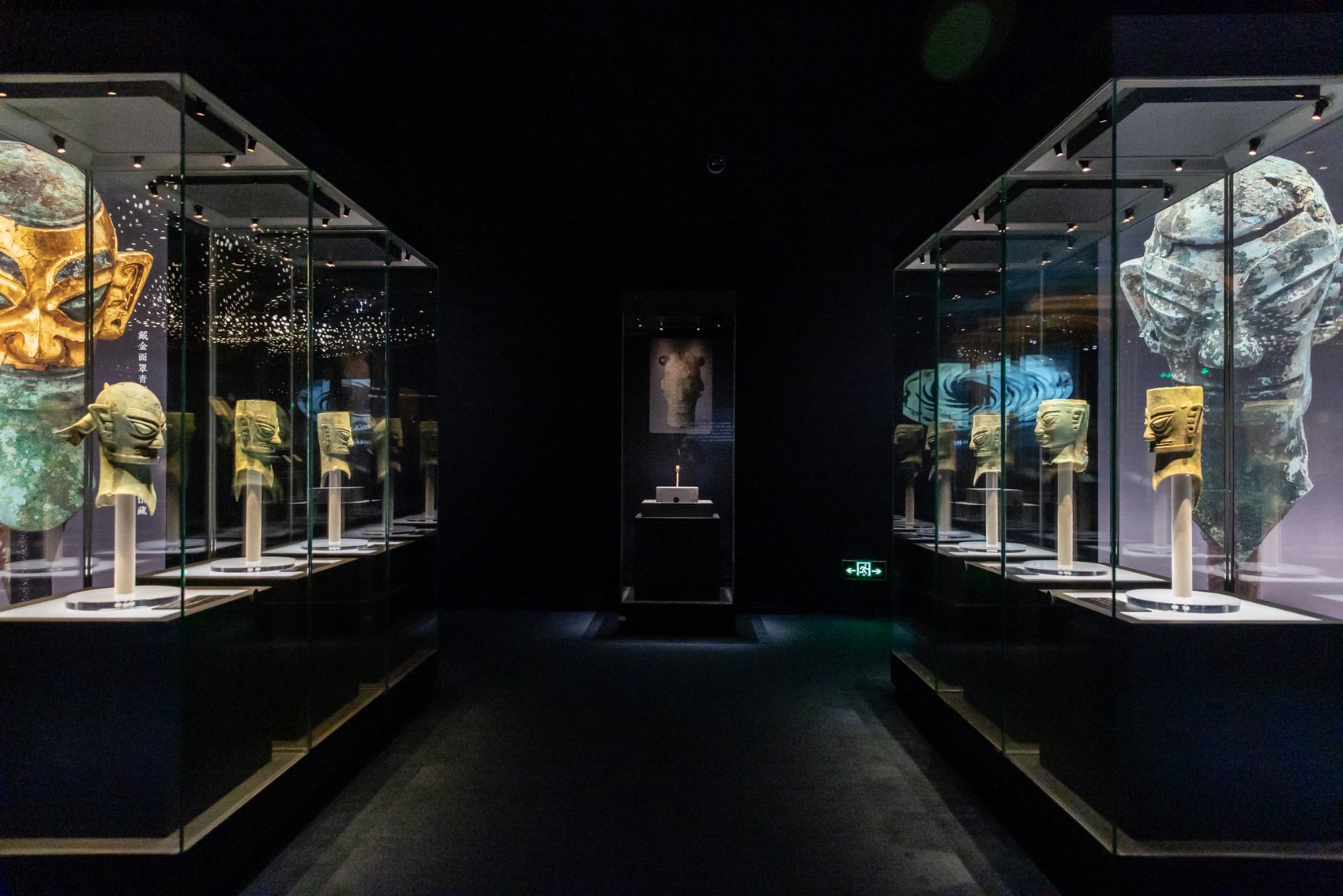
成都45分钟直达!这座藏着三星堆的宝藏小城,才是真正的“益州门户”
Sou Hu Cai Jing· 2026-01-10 04:32
Core Insights - The article emphasizes the hidden charm of Guanghan, a city near Chengdu, which is often overshadowed by the famous Sanxingdui archaeological site. It highlights the importance of exploring Guanghan beyond just visiting Sanxingdui to fully appreciate its cultural and historical significance [1][24]. Group 1: Understanding Guanghan - Guanghan is a county-level city in Sichuan Province, located 45 kilometers from Chengdu, and is known as the "open-air museum" of ancient Shu civilization. It has a rich history dating back to the Western Han Dynasty and has undergone various administrative changes [3][11]. - The city is characterized by its unique blend of cultural influences from both Chengdu and Deyang, resulting in a distinctive local culture and cuisine [3][11]. Group 2: Sanxingdui Insights - Sanxingdui is recognized as a world-class archaeological site, featuring remarkable artifacts such as the bronze trees and masks that challenge conventional understanding of ancient civilizations [6][8]. - Visitors are advised to explore the archaeological site before the museum to enhance their understanding of the ancient Shu civilization, as the site provides a contextual backdrop for the artifacts displayed in the museum [7][8]. Group 3: Additional Attractions in Guanghan - Guanghan is not limited to Sanxingdui; it also boasts historical sites like the ancient military stronghold of Luocheng, which played a significant role during the Three Kingdoms period [12][11]. - The city is recognized as a pioneer in rural reform in China, with historical significance tied to the implementation of the "household responsibility system" in the late 1970s [13][11]. - Guanghan is home to the Civil Aviation Flight University of China, known as the "Huangpu Military Academy" of civil aviation, which trains a significant number of China's pilots [15][11]. Group 4: Culinary Highlights - Guanghan is renowned as the "capital of hot pot ingredients" in China, with a thriving market for fresh and affordable hot pot supplies, making it a paradise for food lovers [16][11]. - Local delicacies such as Chansi Rabbit and Lianshan Twice-Cooked Pork are must-try dishes that reflect the region's culinary richness [16][11]. Group 5: Travel Recommendations - The article suggests tailored travel itineraries for different demographics, including families, couples, seniors, and young adults, ensuring that each group can enjoy a fulfilling experience in Guanghan [16][20][22]. - Visitors are encouraged to spend more time in Guanghan to explore its local culture, cuisine, and historical sites, rather than treating it merely as a stopover [24][26].
通天“神作”:三星堆人的自然、图腾与祖先崇拜
Jing Ji Guan Cha Bao· 2025-12-16 04:46
Core Viewpoint - The article discusses the unique cultural significance of the Sanxingdui archaeological site, highlighting its religious artifacts and the complex belief systems of the ancient civilization that created them [1]. Group 1: Archaeological Findings - The Sanxingdui site has revealed eight burial pits containing a wealth of bronze, jade, and ivory artifacts, with distinct characteristics that allow them to be categorized into two groups [2][3]. - The burial pits show evidence of intentional burning, with many artifacts charred or deformed, suggesting a ritualistic context rather than a violent burial [4]. - The artifacts' stratified arrangement within the pits indicates a systematic approach to their burial, closely linked to ritual practices [5]. Group 2: Ritual Significance - Experts largely agree that the burial pits are associated with sacrificial activities, rather than being the result of a violent conflict [6][7]. - The concept of "yi mai" (burial for sacrifice) is referenced, indicating a cultural practice of interring offerings as part of religious ceremonies [5]. - Different interpretations exist regarding the nature of the pits, with some experts categorizing them as direct products of sacrificial activities, while others view them as burial sites for sacrificial artifacts [6]. Group 3: Belief Systems - The Sanxingdui culture exhibits three primary forms of worship: nature, totem, and ancestor worship, reflecting a rich spiritual life [8]. - Nature worship is exemplified by artifacts such as the bronze sacred tree and sun-shaped vessels, indicating a deep reverence for natural elements [9]. - Ancestor worship is represented by the unique "Zongmu" masks, which are believed to connect the living with their ancestors [10]. Group 4: Artistic Expression - The bronze sacred tree, standing at 396 cm, is noted as the largest of its kind discovered, symbolizing a connection between the earthly and divine realms [11]. - The intricate design of the sacred tree, featuring multiple branches and symbolic elements, showcases the advanced bronze casting techniques and artistic imagination of the Sanxingdui civilization [12].
东西问|杨雨霏:相隔万里,三星堆为何与爱琴海“金面撞脸”?
Zhong Guo Xin Wen Wang· 2025-09-11 12:34
Core Viewpoint - The exhibition "Journey of Ancient Greece - Exhibition of Archaeological Treasures from Greece" at the Sanxingdui Museum highlights the similarities between the gold masks from Sanxingdui and Mycenae, reflecting the artistic expressions and aesthetic preferences of early human civilizations across vast distances [1][5]. Group 1: Exhibition Details - The exhibition is a collaboration between the Greek Ministry of Culture and China, marking the fourth such exhibition, with a focus on the close cooperation in cultural heritage and archaeology between Sichuan and Greece [3]. - The exhibition will take place from July to December 2025, featuring 172 valuable artifacts, including 9 replicas [4]. - The Mycenaean gold mask was initially unable to be displayed due to scheduling conflicts, but after coordination, it was included to create a dialogue between the two artifacts [4]. Group 2: Cultural Significance - The choice of gold for mask-making by both the Sanxingdui and Mycenaean civilizations indicates a shared human appreciation for shiny materials, which has been a common practice since prehistoric times [5]. - Despite the similarities, the two masks serve different purposes: the Sanxingdui mask is likely a ritual item from the late Shang Dynasty, while the Mycenaean mask is a funerary object from around the 16th century BC [6]. - The artistic expressions in the sculptures from both cultures reflect their respective approaches to human representation, with Sanxingdui's art being more abstract and Mycenaean art being more detailed and realistic [8]. Group 3: Future Prospects - The exhibition aims to enhance the international influence and cultural interpretation capabilities of the Sanxingdui and Jinsha sites, especially in the context of their joint application for World Heritage status [10]. - The limited ability to showcase artifacts abroad emphasizes the need for innovative display techniques to present the beauty of these cultural treasures [12]. - The dialogue between the two civilizations serves as a profound reflection on the origins and commonalities of human civilization, highlighting that despite cultural differences, the appreciation for beauty in artifacts is universal [12].

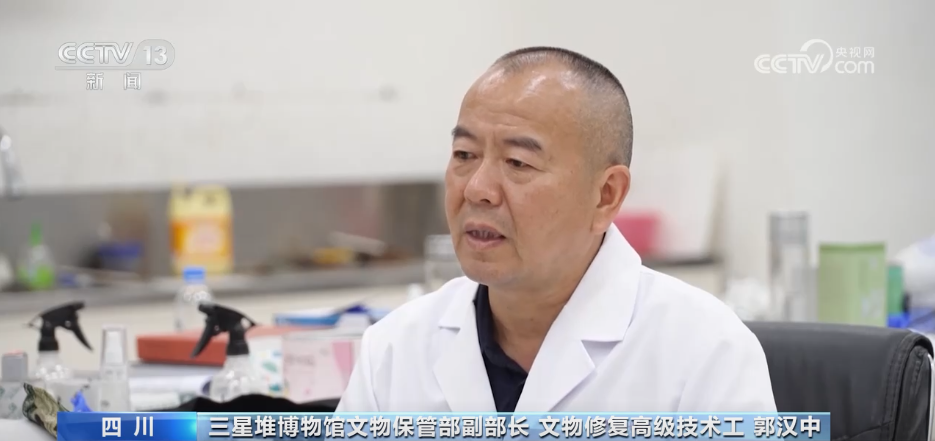
文明的力量 | 残片堆里拼出古蜀华章 他在三星堆修文物
Yang Shi Wang· 2025-06-03 08:46
Group 1 - The core viewpoint emphasizes the importance of coordinating material and spiritual civilization as a key feature of Chinese modernization, highlighting the continuous improvement in societal awareness and moral standards since the 18th National Congress of the Communist Party of China [1] - The article introduces Guo Hanzhong, a senior technician in cultural relic restoration at the Sanxingdui Museum, who has dedicated 41 years to reviving over 6,000 ancient artifacts, showcasing the renewed value orientation and moral standards in contemporary China [1][3] - Guo Hanzhong's innovative restoration techniques, including traditional soldering combined with modern riveting and pouring methods, were crucial in reconstructing the nearly 4-meter tall bronze sacred tree, which was found in over 200 fragmented pieces [3][6] Group 2 - Guo Hanzhong has invented over a hundred tools tailored for different types of cultural relic damage, significantly enhancing the efficiency of the restoration process [6][8] - He developed wax mold solidification technology, which was instrumental in safely extracting hundreds of decayed ivory pieces from a newly discovered sacrificial pit at the end of 2019 [8] - Guo Hanzhong emphasizes the importance of knowledge transfer to his apprentices, advocating for a blend of traditional craftsmanship and modern technology, and has established a master workshop for cultural relic restoration skills to cultivate young professionals in the field [10]
“五一”假期“文博热”持续升温 新场景、新业态带火文化消费
Yang Shi Wang· 2025-05-02 02:49
Group 1: Cultural Tourism and Visitor Experience - The Sanxingdui Museum has become a top destination in the cultural tourism market during the "May Day" holiday, attracting visitors from across the country to experience the charm of ancient Shu culture [1] - Visitors are impressed by the museum's exhibits, including the bronze giant figure, delicate gold masks, and gold scepters, which symbolize power [1] - The museum features various interactive technology projects, with the "Searching for Sanxingdui" VR immersive exploration experience being the most popular, allowing visitors to "travel" to archaeological sites [5] Group 2: Cultural Products and Innovation - The Sanxingdui Museum's cultural and creative store offers a wide range of products that cleverly incorporate Sanxingdui elements into various cultural items, including daily necessities, fashion accessories, and educational toys [7] Group 3: Historical Artifacts and Research Value - A thousand-year-old crown recently restored is on display at the Haixi National Museum, attracting significant attention from visitors [8] - The crown features exquisite craftsmanship and is made from over 2,500 pearls, turquoise, lapis lazuli, and garnet, showcasing a blend of cultural elements from Central Asia, the Central Plains, and Tibetan regions, highlighting its research value in the study of ethnic integration along the Silk Road [10][12] - The museum utilizes 3D scanning technology to create a 3D image of the crown, allowing visitors to enjoy a 360-degree view and listen to historical explanations through interactive multimedia screens [14]