
韩国产汽车

Search documents
特朗普宣布对韩加征关税,韩政府:将冷静对待
Guo Ji Jin Rong Bao· 2026-01-27 12:19
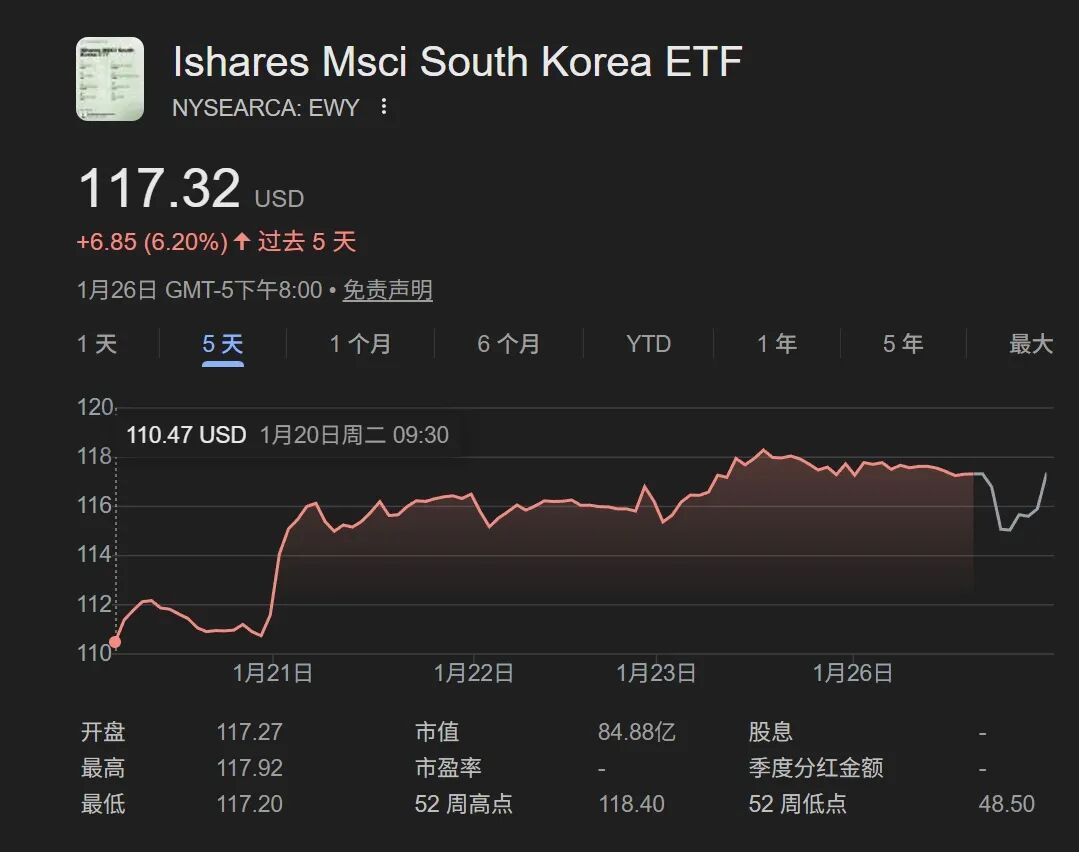
Group 1 - The U.S. President Trump announced a sudden increase in tariffs on South Korean goods from 15% to 25%, citing the lack of approval from the South Korean National Assembly for a trade agreement [1][2] - The trade agreement framework, reached in July 2025, includes South Korea investing $350 billion in the U.S. and purchasing $100 billion worth of liquefied natural gas and other energy products from the U.S. [2] - Following the announcement, the iShares MSCI South Korea ETF, which tracks the MSCI Korea 25/50 Index, experienced a decline, reversing previous gains [2] Group 2 - There is significant opposition within South Korea regarding the trade agreement, with the ruling Democratic Party arguing that the agreement does not require National Assembly approval, while the opposition party insists it does due to the substantial financial commitments involved [5] - The opposition party criticized the government's negotiation as "humiliating diplomacy," claiming that other competitors like Japan and the EU received better tariff conditions [5] - Some opinions in South Korea suggest that accepting a 25% tariff may be more beneficial for corporate profits than making large investments in the U.S. [5] Group 3 - As of now, it is unclear whether the U.S. will immediately implement the tariff increase, and the South Korean government is preparing to engage in discussions with U.S. officials [6] - South Korean officials are set to meet with U.S. Commerce Secretary to discuss the situation and express their commitment to fulfilling the trade agreement [6] - Earlier in January, the U.S. had threatened to impose tariffs on South Korean semiconductor investments, causing concern within the South Korean semiconductor industry [7]

韩国总统府:将向美方表达履行韩美关税协议意愿
Xin Lang Cai Jing· 2026-01-27 04:21
Group 1 - The core viewpoint of the article is that the South Korean government is preparing to respond to U.S. President Trump's announcement of increased tariffs on South Korean products, including automobiles, due to the lack of approval of the U.S.-Korea trade agreement by the South Korean National Assembly [1] - The South Korean government held a meeting to discuss countermeasures and expressed its intention to convey its willingness to adhere to the U.S.-Korea tariff agreement [1] - President Trump announced on social media that tariffs on South Korean exports to the U.S., including automobiles, wood, and pharmaceuticals, would be raised from 15% to 25% [1]
韩总统府称将围绕特朗普加关税一事开会研究对策
Yang Shi Xin Wen· 2026-01-26 23:18
Core Viewpoint - The South Korean government has not yet received formal notification or explanation from the United States regarding President Trump's announcement of tariffs on South Korean automobiles and other products [1] Group 1 - The South Korean government will hold a meeting with relevant departments to discuss countermeasures in response to the potential tariffs [1] - The Minister of Trade, Industry and Energy of South Korea, Kim Jong-hwan, who is currently visiting Canada, will travel to the United States for consultations [1]
美韩达成协议缓解韩元压力
Jin Tou Wang· 2025-10-30 02:29
Group 1 - The core point of the news is the agreement between the US and South Korea regarding a $350 billion investment fund, which includes $200 billion in cash, aimed at alleviating pressure on the Korean won and easing short-term financing burdens in the local bond market [1][3] - The 25% tariff on South Korean automobiles will be reduced to 15%, with most other goods maintaining current tariff levels, effective from a likely date of November 1 [3] - The reduction in tariffs is expected to significantly mitigate the downside risks faced by the South Korean automotive industry, which is heavily reliant on US demand [3] Group 2 - The role of the National Pension Service (NPS) in the foreign exchange market may become increasingly important as the Bank of Korea is required to remit investment earnings from foreign reserves to the US [3] - There is a potential risk of depreciation for the Korean won in the coming years as the proportion of dollar export revenues converted to won by private enterprises may decrease [3] - The impact of these developments on South Korea's monetary policy is expected to be neutral [3] Group 3 - Technical analysis indicates that the USD/KRW exchange rate is trading around 1420, with resistance levels at 1430-1450 and support levels at 1400-1420 [4]
